Wayground logo

Free Printable Worksheets

Font size

S
M
L
XL
Worksheets

PBS Unit 3 Review

Total questions: 80

Worksheet time: 2hrs 45mins

Name
Class
Date
1.

Which of the following is NOT a part of blood?

a)

Red blood cells

b)

White blood cells

c)

Plasma

d)

Protein

2.

These blood cells carry oxygen, carbon dioxide, and enzymes through the bloodstream.

a)

Red blood cells

b)

White blood cellss

c)

Plasma

3.

How many letters make up codons?

a)

3

b)

2

c)

4

d)

1

4.

What is the only start codon?

a)

AUG

b)

GUC

c)

CGU

d)

UGG

5.

When DNA replaces one nucleotide for another (G for an A), what type of mutation has occurred?

a)

Substitution

b)

Deletion

c)

Insertion

6.

When DNA gets rid of one or more nucleotides it is called what kind of mutation?

a)

Deletion

b)

Substitution

c)

Insertion

7.

When DNA adds nucleotides it is called what type of mutation?

a)

Deletion

b)

Substitution

c)

Insertion

8.

Is this genotype homozygous or heterozygous?

Gg

a)

Heterozygous

b)

Homozygous

9.

How many chromosomes do you get from each parent?

a)

23

b)

24

c)

46

d)

28

10.
How many cells are created at the end of meiosis?
a)
2
b)
4
c)
6
d)
8
11.
A person with an infection would have a high ______ count.
a)
white blood cell
b)
red blood cell
c)
platelet
d)
plasma
12.
What is the term for distinct segments of DNA that differ from person to person?
a)
genes
b)
traits
c)
chromosomes
d)
nucleotides
13.
If someone has a low hematocrit count, then they have a reduced amount of what?
a)
plasma
b)
red blood cells
c)
white blood cells
d)
 platelets
14.
Which is NOT a symptom of sickle cell disease?
a)
shortness of breath
b)
pain and tissue damage
c)
increased infections
d)
enlarged blood vessels
15.

Why does the body have to continually make red blood cells?

a)

They only live 90-120 days.

b)

They are released daily through excretion.

c)

They are absorbed by the digestive system as nutrients.

d)

They have a limited amount of stored glucose.

16.

Which of the following is a treatment for sickle cell anemia? (choose ALL that apply)

a)

antibiotics

b)

radiation therapy

c)

blood transfusion therapy

d)

bone marrow transplant

17.

Which statement about RNA is true?

a)

RNA is used to make DNA.

b)

RNA is made from DNA and used as a script for making proteins.

c)

RNA forms genes that code for proteins.

d)

RNA carries new chromosomes to cells.

18.

In meiosis, a cell containing 50 chromosomes will create cells with ___ chromosomes.

a)

25

b)

50

c)

100

d)

an unknown amount

19.

What is the complementary mRNA strand to: GTCAAC

a)

CAGTTG

b)

GTCAAC

c)

CAGUUG

d)

GUCAAC

20.

Unlike DNA, RNA contains:

a)

adenine

b)

uracil

c)

guanine

d)

thymine

21.

Which is the correct sequence for protein synthesis?

a)

protein --> DNA --> RNA

b)

RNA --> DNA --> protein

c)

DNA --> RNA --> protein

d)

RNA --> protein --> DNA

22.

The test used to diagnose anemia is called:

a)

gel electrophoresis

b)

hematocrit test

c)

ELISA test

d)

thrombocyte analysis

23.

tRNA carries the 3 nucleotide complement to mRNA and is called a(n):

a)

codon

b)

amino acid

c)

anticodon

d)

rRNA

24.

Two identical daughter cells are produced from a parent cell during:

a)

meiosis

b)

replication

c)

transcription

d)

mitosis

25.

Meiosis results in the production of which type of cells?

a)

body cells

b)

egg or sperm cells

c)

skin cells

d)

chromosomes

26.

_____ results in the production of sex cells, each with _____ number of chromosomes as the original.

a)

Mitosis; half the

b)

Mitosis; the same

c)

Meiosis; half the

d)

Meiosis; the same

27.

A person inherits one mutated copy of an allele and expresses a disease. This disease must be:

a)

dominant

b)

recessive

c)

homozygous

d)

homologous

28.
Any of the alternative forms of a gene that may occur.  
a)
Allele
b)
Autosome
c)
Chromosome
d)
Gene
29.
A rare change in the DNA of a gene, ultimately creating genetic diversity.  
a)
Mutation
b)
Protein Synthesis
c)
Transcription
d)
Autosome
30.
 Making mRNA from a DNA template
a)
Translation
b)
Protein synthesis
c)
Transcription 
d)
Hydrolysis
31.
Where does translation occur?
a)
in the nucleus
b)
 in the mitochondria
c)
 outside the cell
d)
in the cytoplasm
32.
What is the function of tRNA?
a)
 to read the DNA and produce a complementary sequence of mRNA
b)
 to form a long molecule complementary to the mRNA sequence
c)
it brings amino acids to the ribosome 
d)
to bind with proteins to form ribosomes 
33.
One codon codes for how many amino acids?  
a)
1
b)
2
c)
3
d)
20
34.
DNA molecule segment is : TTACGCAAG
The mutated DNA segment is TTCGCAAG. This is an example of ___ mutation.
a)
Substitution
b)
Deletion
c)
Insertion
d)
Inversion
35.
What mutation has occurred here? 
T-G-A-C-C-A
T-G-A-G-C-A
a)
Substitution
b)
Deletion
c)
Insertion
d)
Frameshift 
36.
Who has sickle cell anemia?
a)
Carlos
b)
Jason
c)
Eric
d)
Juanita
37.
This image represents ________________
a)
Mitosis
b)
Meiosis
c)
Apoptosis
d)
Cellular Respiration
38.
The following image represents
a)
Apoptosis
b)
Cellular Respiration
c)
Meiosis
d)
Mitosis
39.
Which of the following is homozygous dominant?
a)
Yy
b)
Y
c)
yy
d)
YY
40.

What sex has an X and a Y chromosome?

a)

male

b)

female

41.

The name for a chromosome that is not directly involved in determining sex, as opposed to a sex chromosome

a)

Chromosome

b)

Autosome

c)

Sex Chromosome

d)

Pedigree

42.

A diagram of a family tree showing the occurrence of heritable characteristics in parents and offspring over multiple generations.

a)

Pedigree

b)

Punnett Square

c)

Karyotype

d)

Genotype

43.

A type of RNA, synthesized from DNA and attached to ribosomes in the cytoplasm; it specifies the primary structure of a protein.

a)

Messenger RNA

b)

Transfer RNA

c)

Ribonucleic Acid

d)

Ribosomal RNA

44.

At then end of meiosis, _____ cells are formed with ____ chromosomes each

a)

2, 46

b)

4, 23

c)

2, 23

d)

4, 46

45.

Where are proteins produced in a cell?

a)

cytoplasm

b)

nucleus

c)

mitochondria

d)

ribosome

46.

Having an affinity for water or being "water loving" is known as

a)

Hydrophilic

b)

Hydrophobic

c)

Protein synthesis

d)

Autosome

47.

Having an aversion for water or being "water fearing" is known as

a)

Hydrophilic

b)

Hydrophobic

c)

Protein synthesis

d)

Autosome

48.

What are the chances person III-1 will be completely unaffected?

a)

25%

b)

50%

c)

75%

d)

100%

49.
How many chromosomes do humans have?
a)
23 chromosomes
b)
23 pairs
c)
46 chromosomes
d)
46 pairs
50.
How many copies of the sickle cell gene are needed for a person to have the disorder?
a)
0
b)
1
c)
2
d)
3
51.
If two parents who do NOT have a disorder have a child with a disorder, the disorder is
a)
dominant
b)
recessive
c)
neutral
52.
What is the PRIMARY factor that determines the 3D shape of a protein?
a)
the order of amino acids
b)
the sequence of peptide bonds
c)
the structure of amino acids
d)
the genes involved
53.
Sickle red blood cells have a decreased ability to carry 
a)
nutrients
b)
wastes
c)
oxygen
d)
proteins
54.
If someone has a low hematocrit count, then they have a reduced amount of what?
a)
plasma
b)
red blood cells
c)
white blood cells
d)
 platelets
55.
Where in the cell are proteins produced?
a)
cytoplasm
b)
ribosome
c)
nucleus
d)
mitochondria
56.
What is the function of tRNA?
a)
 to read the DNA and produce a complementary sequence of mRNA
b)
 to form a long molecule complementary to the mRNA sequence
c)
it brings amino acids to the ribosome 
d)
to bind with proteins to form ribosomes 
57.
An organic monomer which serves as a building block of proteins.
a)
Sugar
b)
Amino Acid 
c)
Lipid 
d)
Nucleotide
58.
DNA molecule segment is : TTACGCAAG
The mutated DNA segment is TTACGCAAC. This is an example of ___ mutation.
a)
Substitution
b)
Insertion
c)
Inversion
d)
Translocation
59.
Which of the following would result in a frameshift mutation?
a)
Insertions only
b)
Substitution only
c)
Deletion only
d)
Insertions and Deletions
60.
Dante wants to match the types of cells with how they are produced. Which choice correctly matches a type of cell with how it is produced? 
a)
Egg cell --> meiosis in males 
b)
Sperm cell --> mitosis in males
c)
Body cell --> mitosis in females
d)
Body cell --> meiosis in females
61.
Which of these choices is made from the process of mitosis?
a)
Egg
b)
Sperm
c)
Sex Cell
d)
Skin Cell
62.
Select the best description of a chromosome.
a)
material used to form the cell membrane
b)
tightly wound DNA that is ready for cell division
c)
long, stretched out strands of DNA
d)
molecules that form the sex cells
63.
Which of these choices is not a reason for mitosis taking place in a multi-cellular organism?
a)
growth
b)
repairing wounds
c)
asexual reproduction
d)
making sex cells
64.
Replicate the following strand of DNA: 
AATCATGGA
a)
AATCATGGA
b)
TTAGTACCT
c)
UUAGUACCU
d)
GGATAUCUA
65.
Which organelle is DNA usually found in?
a)
cell membrane
b)
vacuole
c)
chloroplast
d)
nucleus
66.

The process by which the sequence of nucleotides in a messenger RNA is converted by a ribosome and transfer RNAs into a polypeptide with a specific sequence of amino acids is called

a)

Transcription

b)

Translation

c)

Mutation

d)

Replication

67.

The process in which a strand of DNA is copied into an RNA strand for the purpose of protein synthesis is

a)

Transcription

b)

Translation

c)

Mutation

d)

Replication

68.
What is the function of the red blood cells?
a)
carry oxygen and carbon dioxide
b)
fight infection
c)
circulates cells and maintains blood pressure and body temperature
d)
stops bleeding by clumping and clotting
69.
Which component is needed for clotting?
a)
white blood cells
b)
red blood cells
c)
platelets
d)
plasma
70.
 Making mRNA from a DNA template
a)
Translation
b)
Protein synthesis
c)
Transcription 
d)
Hydrolysis
71.
Who is normal?
a)
Jason
b)
Juanita
c)
Carlos
d)
Eric
72.
Who has sickle cell anemia?
a)
Carlos
b)
Jason
c)
Eric
d)
Juanita
73.
What is the probability that the child will NOT have sickle cell anemia?
a)
0%
b)
50%
c)
75%
d)
100%
74.
What is the probability that the child will be a carrier for sickle cell disease?
a)
25%
b)
50%
c)
75%
d)
100%
75.
An affected female and a carrier male had a child, what is the chance that the child has sickle cell disease? 
a)
0%
b)
50%
c)
25%
d)
100%
76.
What is the mode of inheritance shown here?
a)
 Recessive
b)
Sex Linked
c)
 Dominant
77.
What gender has an X and a Y chromosome?
a)
male
b)
female
c)
transgender 
d)
all of the above
78.
What gender has two X chromosomes?
a)
Male
b)
Female
79.
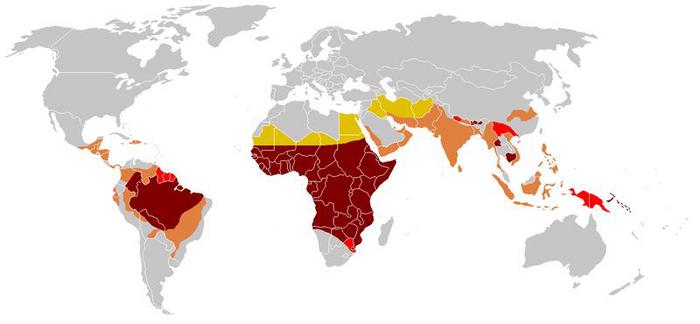
Why is sickle cell more common near the equator than it is in the upper northern or lower southern hemisphere?
a)
The sickle gene provides protection from Malaria that is transported by mosquitoes.
b)
The sickle gene has always had a higher frequency in those areas.
c)
Sickle cell is common everywhere.
d)
More fishermen live in these areas.
80.
Having one allele for sickle cell disease (Ss) is an advantage in tropical areas because...
a)
An Ss individual is better able to survive Malaria infection.
b)
An Ss individual is not affected by sickle cell disease.
c)
An Ss individual will not pass on sickle cell disease.
d)
An Ss individual has no advantage.