Wayground logo

Free Printable Worksheets

Font size

S
M
L
XL
Worksheets

Cell Theory

Total questions: 50

Worksheet time: 50mins
Name
Class
Date
1.

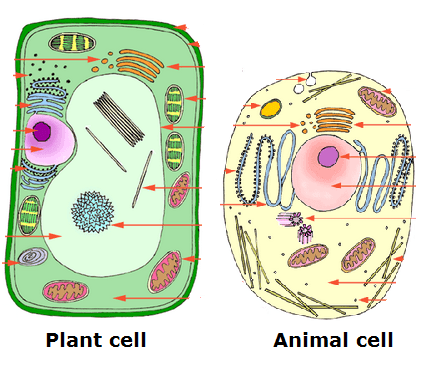
What distinguishes a plant cell from an animal cell? (How do you tell them apart) Hint: There's 3 ways (Check all 3)

a)

Central Vacuole

b)

Mitochondria

c)

Cell Wall

d)

Ribosomes

e)

Chloroplasts

2.

The 3 parts of the Cell Theory are...?

a)

All living things are composed of cells

Cells are the basic units of structure and function in living things

All cells are produced from other cells

b)

All living things are composed of cells

Cells are the basic units of dance and vibes in living things

All cells are destroyed from other aliens

c)

All living things are composed of Jell-O

Cells are the basic units of structure and function in living things

All cells are produced from factories in Canada

d)

All living things are composed of cells

Cells do karate and practice eating whole pies in their free time

All cells are produced from other cells

3.

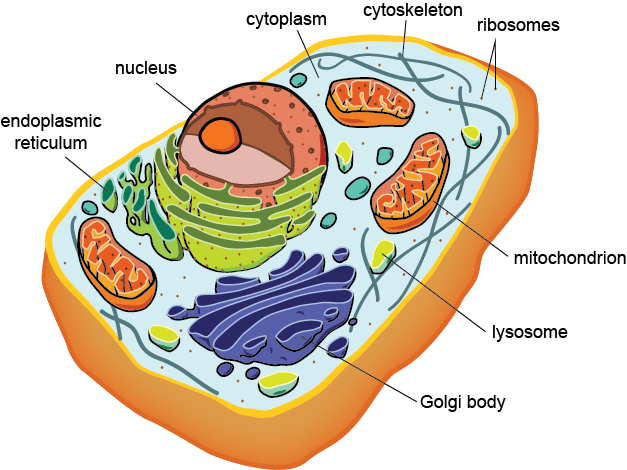
Cellular Respiration occurs within me and I am in BOTH plant and animal cells. I am a....

a)

Nucleus

b)

Golgi Body

c)

Cytoskeleton

d)

Mitochondria

4.

I am the "brain" of the cell or the "control center" for everything happening within the cell. I am a...

a)

Golgi Body/Apparatus

b)

Nucleus

c)

Ribosome

d)

Lysosome

5.

Photosynthesis takes place within me. I am a...

a)

Mitochondria

b)

Cell Wall

c)

Chlorine

d)

Chloroplast

6.

I am often referred to as the "packaging system" within a cell. I "package" proteins and ship them to the Golgi Body. I am a...

a)

Cytoplasm

b)

Endoplasmic Reticulum

c)

Baconidis

d)

Golgi Body

7.

I am the "waste removal expert" within a cell, removing unwanted material. Like a garbage man, I am a...

a)

Waste Management

b)

Nucleus

c)

Ribosome

d)

Lysosomes

8.

I decide what goes in and out of the cell. I am fluid like and found in BOTH plant and animal cells. I am a...

a)

Cell Wall

b)

Cell Membrane

c)

Cytoplasm

d)

Golgi Apparatus

9.

I provide plant cells their rigid shape. I am the...

a)

Basketball that Nic Quarne left in Mr. Woller's room last week

b)

Cytoskeleton

c)

Cell Membrane

d)

Cell Wall

10.

I am found in a plant cell and I provide a "central" and LARGE amount of storage. I am a...

a)

Central Vacuole

b)

Cytoplasm

c)

Central Membrane

d)

Mitochondria

11.

I provide structure from within the cell so it doesn't collapse inwards upon itself. I am made of micro-filaments. I am the...

a)

Cytoskeleton

b)

Cytoplasm

c)

Baconidis

d)

Cell Wall

12.

Plant Cells can perform which reactions? Check ALL that apply.

a)

Photosynthesis

b)

Rock and Roll

c)

Cellular Respiration

d)

Surprised reactions

13.

Animal and Plant Cells are...

a)

Shopkoytes

b)

Eukaryotes

c)

Prokaryotes

d)

The building blocks of non-living things
14.
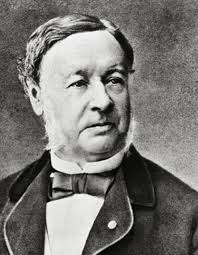
Which of the following scientists concluded that all animals are made of cells?
a)
Rudolf Virchow
b)
Matthais Schleiden
c)
Robert Hooke
d)
Theodor Schwann
15.
Which of the following scientists was the first to observe bacteria?
a)
Anton van Leuwenhoek
b)
Matthais Schleiden
c)
Robert Hooke
d)
Theodor Schwann
16.
Which of the following statements is not part of the cell theory?
a)
Cells are the basic unit of structure and function in all living things.
b)
All cells are produced from other cells.
c)
Only animal cells are composed of cells.
d)
All living things are composed of cells.
17.
The invention of the microscope made it possible for people to discover and learn about
a)
Plants
b)
Skin 
c)
Animals 
d)
Cells
18.
What is one way in which all living things on Earth are alike?
a)
All living things have hair.
b)
All living things are made of cells and come from other cells.
c)
The cells of all living things have chloroplast.
d)
All living things can move. 
19.
The ___ is the basic unit of sturucture and function of organisms
a)
atom
b)
cell
c)
matter
d)
all other answers are correct
20.
Which statement is a part of the cell theory?
a)
all cells come from preexisting cells
b)
bacteria are prokaryotic cells
c)
eukaryotic cells are complex
d)
humans are multicellular
21.
Which of the following is NOT a cell theory.
a)
All non-living things are made of cells
b)
All cells come from pre-existing cells
c)
Cells are the basic unit of structure and function of all living things
22.
Which scientist did NOT contribute to the cell theory?
a)
Anton Van Leeuwenhoek
b)

Robert Hooke
c)
Albert Einstein 
d)

Matthias Schleiden
23.
Which of the following statements is not part of the cell theory?
a)
Cells are the basic unit of structure and function in all living things.
b)
All cells are produced from other cells.
c)
Only animal cells are composed of cells.
d)
All living things are composed of cells.
24.
Who looked at cork and named the cell?
a)
Robert Hooke
b)
Van Leeuwenhoek
c)
Robert Brown
d)
Francesco Redi
25.

All living things are made up of

a)

Prokaryotic Cell

b)

Eukarytoic Cells

c)

Either prokaryotic or eukaryotic cells
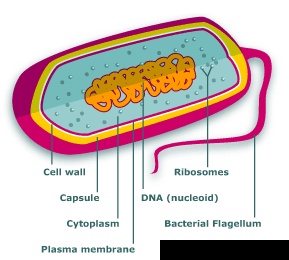
26.
What is one way in which all living things on Earth are alike?
a)
All living things have hair.
b)
All living things are made of cells and come from other cells.
c)
The cells of all living things have chloroplast.
d)
All living things can move. 
27.
What tool do you use to view the cells?
a)
metric ruler
b)
centrifuge
c)
microscope
d)
pipette
28.
Rocks are not living because
a)
they never move
b)
they aren't needed for humans
c)
they are not made of cells
d)
they don't break down
29.
The smallest unit that can perform the basic activities of life is
a)
a cell 
b)
a tissue
c)
an organ
d)
an organism
30.
Which of the following statements is not part of the cell theory?
a)
Cells are the basic unit of structure and function in all living things.
b)
All cells are produced from other cells.
c)
Only animal cells are composed of cells.
d)
All living things are composed of cells.
31.
surrounds the cell; controls what enters/leaves cell; maintains homeostasis
a)
vacuole
b)
cell wall
c)
cell membrane
d)
lysosome
32.
control the cell's activities; contains the cell's DNA
a)
mitochondria
b)
cell membrane
c)
nucleus
d)
golgi body
33.
breaks down food to release energy
a)
nucleus
b)
lysosomes
c)
mitochondria
d)
vacuole
34.
cells that contain a true nucleus
a)
prokaryotes
b)
eukaryotes
c)
carbohydrate
d)
plant cells
35.
cells that lack a true nuclues
a)
animal
b)
prokaryotes
c)
eukaryotes
d)
fungus
36.
What is the function of the cytoplasm?
a)
Stores water and mineral ions
b)
It holds all the organelles in place
c)
a.Controls what enters and leaves the cell
d)
Supports the cell
37.
What organelle is associated with the production of proteins?
a)
nucleus
b)
ribosome
c)
mitochondria
d)
cell membrane
38.
What organelle is also known as the "gate keeper"?
a)
nucleus
b)
mitochondria
c)
ribosome
d)
cell membrane
39.
What organelle is responsible for energy production?
a)
nucleus
b)
mitochondria
c)
ribosome
d)
cell membrane
40.
Has membrane bound organelles
a)
Prokaryote
b)
Eukaryote
c)
both
41.
One example of a prokaryote is a...
a)
fungus
b)
bacteria
c)
animal
d)
plant
42.
Which of the following provide evidence for the hypothesis that prokaryotes evolved before eukaryotes.
a)
prokaryotes are more complex
b)
prokaryotes have no nucleus and fewer genes
c)
eukaryotes are multicellular which makes them simpler
d)
prokaryotes grow into eukaryotes
43.
Which type of cell?
a)
Prokaryote
b)
Eukaryote
44.
Which type of cell?
a)
Prokaryote
b)
Eukaryote
45.
Where is the DNA found in a prokaryotic cell? 
a)
floating around in the cytoplasm 
b)
in the nucleus 
c)
in the ribosomes
d)
attached to the cell membrane
46.
Where is the DNA found in a eukaryotic cell? 
a)
floating around in the cytoplasm 
b)
in the nucleus 
47.
Bacteria are a type of...
a)
Prokaryote
b)
Eukaryote
c)
both
48.
Which has a chloroplast?
a)
Prokaryote
b)
Plant Cell
c)
Animal Cell
49.

What is labeled "E?"

a)

DNA

b)

pili

c)

ribosomes

d)

flagella

50.
Oldest type of cell
a)
Prokaryote
b)
Eukaryote
c)
both