Wayground logo

Free Printable Worksheets

Font size

S
M
L
XL
Worksheets

Organismal & Evolutionary Biology

Total questions: 80

Worksheet time: 1hrs 18mins

Name
Class
Date
1.

Relating or denoting to the most recent era

a)

Paleozoic

b)

Mesozoic

c)

Cenozoic

2.

Era comprising of the Triassic, Jurassic, and Cretaceous periods

a)

Paleozoic

b)

Mesozoic

c)

Cenozoic

3.

Largest extinction in Earth's history

a)

Cambrian

b)

Ordovician

c)

Devonian

d)

Permian

4.

Period characterized by the greatest development, rise of modern insects and flowering plants

a)

Jurassic

b)

Triassic

c)

Neogene

d)

Cretaceous

5.

Development of many sea reptiles;early large dinosaurs; later,flying reptiles, and earliest known birds

a)

Triassic

b)

Jurassic

c)

Cretaceous

d)

Carboniferous

6.

Time period of diverse marine life, including vertebrates; vascular plants

a)

Ordovician

b)

Devonian

c)

Permian

d)

Paleogene

7.

Numerous fishes, other sea life; many plants, first trees; wingless insects appeared when?

a)

Ordovician

b)

Devonian

c)

SIlurian

d)

Cretaceous

8.

Formation of oceans, atmosphere, and continents; bacteria

a)

Archaean

b)

Precambrian

c)

Triassic

d)

Proterozoic

9.

Oldest and longest geologic time period

a)

Hadean

b)

Phanerozoic

c)

Precambrain

d)

Jurassic

10.

Subdivisions of eras

a)

Eon

b)

Epoch

c)

Period

11.

What is the eon, era, period, and epoch we are living in?

a)

phanerozoic, quaternary, holocene, and cenozoic

b)

phanerozoic, cenozoic, quaternary, and holocene

c)

quaternary, cenozoic, holocene, and phanerozoic

d)

quaternary, cenozoic, phanerozoic, and holocene

12.

Mammals first appeared or emerged in this era:

a)

Paleozoic

b)

Mesozoic

c)

Cenozoic

d)

Industrial

13.

Which of the following is the correct sequence of geologic time from smallest to largest unit?

a)

era, eon, period, and epoch

b)

epoch, eon, era, and period

c)

epoch, period, era, and eon

d)

era, eon, epoch, and period

14.

The first three eons were: Hadean, Archaean, and Proterozoic. They are better known as:

a)

PreCambrian Time

b)

Phanerozoic

c)

Mesozoic

d)

Cenozoic

15.

What was the earth like during PreCambrian time?

a)

tropical climate with warm shallow seas

b)

vegetation and tectonic movement

c)

cooler temperatures because of nuclear winter

d)

intense volcanic activity, very warm temperatures

16.

Which of the following are not early invertebrates that existed during the Paleozoic era?

a)

arachnid

b)

trilobite

c)

amphibians

d)

crustaceans

17.

Which is NOT an ideal condition for bacteria to grow?

a)

warm

b)

moist

c)

cool

d)

dark places with a food supply

18.

Bacteria are found in many different shapes. What are the 3 most common shapes of bacteria.

a)

rod, sphere, spiral

b)

square sphere, spiral

c)

spiral, rectangle, sphere

19.

Penicillin works by:

a)

attacking bacterial cell walls

b)

attacking bacterial DNA replication

c)

attacking bacterial the cell membrane

20.

All answers listed below are true about bacteria except

a)

all

are prokaryotes

b)

all are harmful

c)

all are unicellular

d)

they do not have nucleus

21.

the Gram-positive bacteria stain purple because

a)

they form endospore

b)

they have cellulose layer

c)

they have thick peptidoglycan layer

d)

they have thin peptidoglycan layer

22.

which of the following statements about the TWO Domains of Prokaryotes is NOT TRUE

a)

the lipid composition of the plasma membrane in archaebacteria is different from eubacteria

b)

both archaebacteria and eubacteria has cell wall but archaebacteria lack peptidoglycan

c)

of the two groups, eubacteria are more closely related to domain eukarya

d)

eubacteria includes the blue green algae

23.

Cyanobacteria are…

a)

Photoheterotrophs

b)

Photoautotrophs

c)

Chemoautotrophs

d)

Chemoheterotrophs

24.

Bacteria, along with having its main chromosome, has small circular pieces of DNA. What are these small pieces of DNA called?

a)

Plasmids

b)

Nucleoid

c)

Ribosome

d)

Flagellum

25.

The prefix "halo" such as in halophile most likely means...

a)

Salt

b)

High temperatures

c)

Self-serving

d)

Gram

26.

What kind of Archaea would you find in places such as volcanoes and hot vents on the ocean floor?

a)

Thermophiles

b)

Halophiles

c)

Cyanobacteria

d)

Plasmophiles

e)

Volcanophiles

27.

What does the suffix "troph" indicate?

a)

How a creature acquires its energy

b)

What kind of temperature a creature prefers

c)

Whether its gram positive or negative

d)

Whether its an Archaea or not

28.

Which of the following terms describes this group of creatures: slime molds, diatoms, red algae.

a)

Protists

b)

Archaea

c)

Bacteria

d)

Methanogens

29.

Can bacteria be photosynthetic?

a)

Yes, like cyanobacteria

b)

No, there are no phototrophic bacteria

30.

Which of the following groups of organisms are all chemotrophs?

a)

Cyanobacteria

b)

Methanogens

c)

Slime molds

d)

Red algae

31.
What type of organism can be found in extreme environments such as hot springs?
a)
viruses
b)
archaea 
c)
eukaryotes
d)
None of these
32.
Bacteria can form ________ to protect itself from harsh conditions.
a)
endospores
b)
armor
c)
spores
d)
mushrooms
33.
A plasmid is
a)
A type of bacteria
b)
a type of archaea
c)
A small ring of DNA
d)
A virus
34.
Conjugation occurs when ________________.
a)
None of these.
b)
a virus injects DNA into the bacterium.
c)
a plasmid is transferred from one bacteria to another.
d)
bacteria take up DNA from the environment.
35.

Which of the following statements are TRUE about organisms in the Domain Bacteria?

I. Consist of bacteria and archaebacteria

II. Some are photoautotrophs

III. Genetic material is associated with histone protein

IV. Membrane-enclosed organelles are not present

a)

I and II

b)

I and III

c)

II and III

d)

II and IV

36.

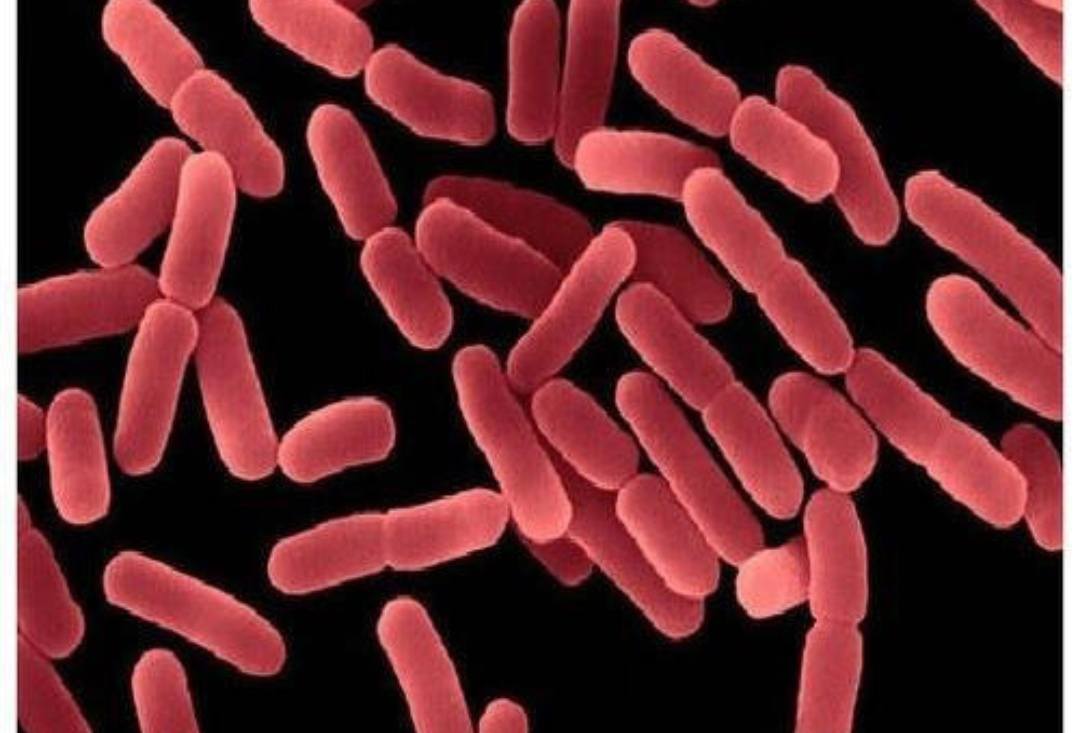
The shape for this bacteria is called .............

a)

spiral

b)

bacillus

c)

coccus

d)

vibrio

37.

Which of following is NOT example of bacteria?

a)

S. aureus

b)

Chlamydomonas sp.

c)

Nitrosomonas sp.

d)

Lactobacillus sp.

38.

Organisms from which kingdom are most likely to chemically digest their food outside their bodies?

a)

Fungus

b)

Plant

c)

Protists

d)

Animal

39.

The relationship between a fungus and an alga in lichen is an example of -

a)

mutualism

b)

commensalism

c)

parasitism

d)

predation

40.

Fungi are like animals because they -

a)

have cell walls

b)

contain chitin

c)

are heterotrophic

d)

have filamentous bodies

41.

Fungi are like insects because they both -

a)

have cell walls

b)

contain chitin

c)

are autotrophic

d)

have filamentous bodies

42.
Which of the following is NOT a characteristic of Kingdom Fungi?
a)
Autotrophic
b)
Cell walls of chitin
c)
Eukaryotic
d)
Saprotrophic
43.
Fungi are made up of filaments known as _________, which allow the fungus to digest substances and absorb nutrients.
a)
Hyphae
b)
Spores
c)
Roots
d)
Fruiting Bodies
44.
What is the tangled, underground network of hyphae that makes up the largest portion of a fungus?
a)
Mycelium
b)
Basidia
c)
Gills
d)
Fruiting Body
45.
What is the above-ground, reproductive structure produced by fungi?
a)
Fruiting body
b)
Hyphae
c)
Mycelium
d)
Chitin
46.
Certain fungi exists in mutualistic relationships with plants, wrapping around the roots of the plant. This increases the surface area of the plant roots and allows them to absorb more nutrients. Fungi in this relationship are known as _____________.
a)
Mychorrizae
b)
Lichen
c)
Diatoms
d)
Bracket Fungi
47.
There are three main categories of protists:  animal like, plantlike, and _________  like ?
a)
bacteria 
b)
fungus
c)
virus
d)
slime
48.
A hazardous algal bloom can be caused by ?
a)
Too much oxygen in the water
b)
The dumping of raw sewage into the water.
c)
A large number of fish dying in the water.
d)
Too little oxygen in the water. 
49.
Which gas was introduced by stromatolites and allowed for more complex life to exist on Earth?
a)
oxygen
b)
carbon dioxide
c)
sulfur oxides
d)
water vapor
50.
This gas was in high concentrations in the early atmosphere, and later condensed to form Earth's oceans. 
a)
oxygen
b)
carbon dioxide
c)
sulfur oxides
d)
water vapor
51.

What was the main ingredients that caused heat energy to be trapped, creating a greenhouse effect, in the ealry atmosphere?

a)

water and carbon dioxide

b)

oxygen

c)

carbon dioxide and oxygen

d)

nitrogen and carbon dioxide

52.
What produced oxygen within the early stages of our atmosphere?
a)
Plants
b)
Volcanos
c)
Galactic Debris
d)
Bacteria
53.

This gas was in high concentrations in the early atmosphere, and later condensed to form Earth's oceans.

a)

oxygen

b)

carbon dioxide

c)

sulfur oxides

d)

water vapour

54.
Why is Earth's atmosphere important?
a)
It is beautiful.
b)
It prevents pollution from happening.
c)
Life on Mars could not exist without it.
d)
Life on Earth could not exist without it.
55.

What was the effect of volcanoes on the Earth's early atmosphere?

a)

Volcanoes released gases to form the atmosphere

b)

Volcanoes released water vapour

c)

Volcanoes released gases and water vapour

d)

Volcanoes changed the landscape

56.
This experiment was conducted by the scientists:
a)
Stanley Miller and Harold Urey
b)
Harold Urey and Albert Einstine
c)
Harrison Ford and Denzel Washington
d)
James Watson and Francis Crick
57.
Which question were the scientists trying to answer with this experiment?
a)
Where do cells come from?
b)
What came first the chicken or the egg?
c)
How are biomolecules formed?
d)
What gave rise to the Eukaryotic cell?
58.
The apparatus in the experiment was used to mimic what?
a)
proteins
b)
Earth's present conditions
c)
early Earth's conditions
d)
they didn't mean to mimic anything in particular
59.
The electrical sparks mimicked?
a)
heat waves
b)
lightening
c)
volcano
d)
hurricane
60.
What was the result of the Miller-Urey Experiment?
a)
amino acids
b)
nucleotides
c)
lipids
d)
glucose
61.
Which type of cell came first?
a)
Eukaryotic
b)
Prokaryotic
c)
Plant
d)
Both Eukaryotic and Prokaryotic cells evolved around the same time
62.
Based upon the conditions of the early Earth, which forms of live most likely appeared first?
a)
Prokaryotic and aerobic
b)
Prokaryotic and anaerobic 
c)
Eukaryotic and aerobic
d)
Eukaryotic and anaerobic
63.
The idea that Earth's early oceans had organic molecules that became the first life is called the...
a)
Primordial soup hypothesis
b)
Bubble hypothesis
c)
Miller-Urey Experiment
d)
Radioactive dating theory
64.
The theory of Endosymbiosis explains...
a)
The origin of eukaryotes
b)
How species develop
c)
How bacteria evolved
d)
Why cells rely on one another
65.
The Miller-Urey experiment of 1953 was designed to test the hypothesis that lightning supplied the energy needed to turn atmospheric gases into organic molecules such as amino acids. Which of the following describes why the Miller-Urey theory is widely accepted today? 
a)
Amino acids spontaneously form from molecules in the atmosphere today
b)
 Organic molecules are present today in extremely high concentrations
c)
The process of synthesizing organic molecules from a mixture of gases has been successfully modeled in the laboratory
d)
No other alternative hypotheses have been introduced
66.

What was the Pangaea known as?

a)

The super continent

b)

plate tectonics

67.

When did the Pangea start to drift apart?

a)

100 million years ago

b)

150 million years ago

c)

175 million years ago

d)

50 million years ago

68.

what is a supercontinent

a)

Pangaea

b)

each of several landmasses thought to have divided to form the present continent in the geological past

c)

Alfred wegener

d)

continental drift

69.

when was pangaea starting to form

a)

Cambrian time period

b)

1 year ago

c)

at my house

d)

99999999999

70.

The preserved remains or trace of an organism that was once living

a)

Fossil

b)

Rock Strata

c)

Stratigraphy

d)

Fossil Record

71.
A _____________________ is an extinct ocean shellfish.
a)
paleontologist 
b)
 fossil
c)
Trilobite
d)
extinct
72.
What evidence shows that parts of Utah were once the sea floor of   an ancient ocean?
a)
Mammoth fossils found in caves.
b)
 Saber tooth tiger claws found in rocks.
c)
Trilobites found in limestone.
d)
Cooper and gold found in mines.
73.

Has a head and thorax

a)

Trilobite

b)

Gastropod

c)

Amber

d)

pelecypod

74.
What does the variable q represent?
a)
Frequency of the heterozygote genotype
b)
Frequency of the homozygous recessive genotype
c)
The frequency of the recessive allele
d)
The frequency of the dominant allele 
75.
In a population of humans, the frequency of no dimples is 0.36. If having no dimples is the recessive phenotype, what is the frequency of the recessive allele?
a)
0.6
b)
0.36
c)
0.64
d)
0.18
76.
Which is a mechanism for change in allele frequency?
a)
gene flow
b)
genetic drift
c)
natural selection
d)
all answers are correct
77.
The purpose of selective breeding is to 
a)
Get bigger animals
b)
get smaller animals
c)
create animals with desirable traits
d)
create animals with bad traits
78.

It is very common for yellow labs to have bad hips. This is because owners want purebred yellow labs who are good hunting dogs. This is an example of

a)

Natural Selection

b)

Inbreeding

c)

Hybridization

d)

Fossil Record

79.

Which of the following best represents inbreeding?

a)

removing DNA from an organism

b)

changing traits based on environment

c)

crossing 2 similiar animals

d)

crossing 2 different animals

80.

Treponema Pallidium is what shape

a)

spiral

b)

bacillus

c)

coccus

d)

ameoboid