Wayground logo

Free Printable Worksheets

Font size

S
M
L
XL
Worksheets

Electricity

Total questions: 47

Worksheet time: 24mins

Name
Class
Date
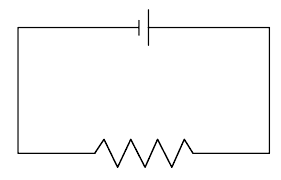
1.
The circuit on the left is
a)
open
b)
closed
2.
What supplies the energy in an electric circuit?
a)
light bulb
b)
conductor
c)
wire
d)
battery
3.

What is electricity?

a)

an object that electrons do not flow through

b)

energy created by moving charged particles

c)

when two objects repel each other

d)

a circuit that has only one path for electricity to flow

4.
The flow of electricity in a circuit-
a)
current
b)
flow
c)
circuit
5.
To complete a circuit the switch must be
a)
unattached
b)
open
c)
closed
6.
Which word means how hard it is for electrons to flow?
a)
Current
b)
Voltage
c)
Resistance
d)
Power
7.
If the Voltage is increased and the resistance stays the same, Current will
a)
Increase
b)
Decrease
c)
Stay the same
d)
Not enough info
8.
If the Voltage stays the same and Resistance is increased, Current will 
a)
Increase
b)
Decrease
c)
Stay the same
d)
Not enough info
9.
What is current measured in?
a)
Ω (Ohms)
b)
V (Volts)
c)
A (Amps)
d)
W (Watts)
10.
What is resistance measured in?
a)
Ω (Ohms)
b)
V (Volts)
c)
A (Amps)
d)
W (Watts)
11.
What is voltage?
a)

The flow of protons

b)
The number of charged particles that pass each second
c)
The difference in potential energy of charged particles
d)
The rate at which energy is being transformed
12.
What voltage is needed to produce 2A of current through a 10Ω resistor?
a)
20V
b)
0.2V
c)
5V
d)
2V
13.
Resistance is...
a)
What "slows down" electrons
b)
What "speeds up" electrons
c)
Moving electrons
d)
What "pushes" electrons
14.
If the current increases it could be because of...
a)
increasing voltage
b)
decreasing resistance
c)
both
15.

A potential difference of 24 V is applied to a 150 resistor. How much current flows through the resistor?

a)

0.15 A

b)

3600 A

c)

6.25 A

d)

0.16 A

16.
What size resistor would produce a 3 Amp current flow with a 12 Volt battery
a)
1 Ohm
b)
3 Ohms
c)
4 Ohms
d)
12 Ohms
17.
This circuit has a 24 volt battery and the resistor is 8 ohms. How many amps are running through the circuit?
a)
3 Amps
b)
192 Amps
c)
2 Amps
d)
4 Amps
18.

Which equation can be rearranged to calculate the the electric current given?

a)

I = Q ÷ t

b)

Q = It

c)

I = Qt

d)

I = t ÷Q

19.

Quantity of charge can be measured in

a)

time (s)

b)

Ampere (A)

c)

coulombs (C)

d)

Joule (J)

20.

Which equation can be rearranged to calculate the time?

a)

t = Q ÷ I

b)

t = IQ

21.

What is a current?

a)

A rate of charges flow through a cross-sectional area of a wire

b)

A closed path that a current can flow along

22.

The amount of energy used to move one coulomb of electrons through the circuit is its

a)

current

b)

voltage

c)

resistance

23.

An electric current that has constant intensity and direction over time is known as a(n)

a)

direct current

b)

alternating current

c)

simple current

24.
The unit for the rate of current is the ______________.
a)
ampere
b)
volt
c)
ohm
d)
joule
25.
_________________ found that current, voltage, and resistance are always related.
a)
Isaac Newton
b)
Albert Einstein
c)
Georg Ohm
26.

Which equation defines Ohm's Law?

a)

V=IV

b)

R=VI

c)

I=VR

d)

V=IR

27.

Batteries and Generators are examples of

a)

Energy Sources

b)

energy conduction

c)

energy transformation

28.

Each circuit needs a source of electrical energy. Select two sources of electrical energy.

a)

the sun

b)

cells

c)

wind

d)

batteries

29.
A voltmeter should be placed ........... in a circuit
a)
in parallel
b)
in series
c)
in order
d)
upside down
30.
What is the formula for resistance?
a)
V x I = R
b)
R = V/I
31.
what is this symbol for?
a)
light bulb
b)
switch
c)
battery
d)
resistor
32.
As voltage increases, current
a)
Increases
b)
Decreases
c)
Stays the same
33.
Which instrument is shown in the picture?
a)
voltmeter
b)
ammeter
c)
galvanometer
d)
multimeter
34.
What is the function of a dry cell?
a)
A conductor that connect the components together.
b)
A method of opening or closing the circuit.
c)
A source of electromotive force that drives electric charges around the circuit.
d)
A load in which moving charges can do a useful job.
35.
What is the following component?
a)
fixed resistor
b)
rheostat
c)
fuse
d)
ammeter
36.

This measures electromotive force.

a)

ampere

b)

coulomb

c)

volt

d)

ohm

37.

What is a voltmeter?

a)

The liquid part of the electrochemical cell

b)

The metal part of the electrochemical cell

c)

The part that measures the voltage in an electrochemical cell

38.
What does the voltmeter reading show?
a)
The eletromotive force of the electrical source
b)
The electromotive force of the bulb
c)
The potential difference across the bulb
d)
The potential difference across the electrical source
39.
Determine the resistance of the light bulb.
a)
0.25 Ω
b)
1 Ω
c)
2 Ω
d)
4 Ω
40.

Charge

a)

a relative excess of electrons compared to some other point.

b)

Product of resistance and capacitance in seconds.

c)

Unit of potential difference or electromotive force.

d)

Quantity of electrical energy.

41.

Opposition to current flow and dissipation of energy in the form of heat.

a)

Omega

b)

Ground

c)

Farad

d)

Resistance

42.

Voltage is also referred to as?

a)

Electromotive Pressure

b)

Electromotive Force

c)

Electric Current

d)

Electricity

43.

All of the following are used to measure the electric current intensity except.........

a)

ampere

b)

joule/coulomb

c)

volt/ohm

44.

Ohmmeter is used to measure the.....................

a)

resistance

b)

current intensity

c)

potential difference

d)

quantity of electricity

45.

The joule equals.......................

a)

volt/coulomb

b)

coulomb / sec.

c)

Volt.coulomb

46.

As the length of the wire of the rheostat increases, the current intensity .....................

a)

increases

b)

decreases

c)

remains constant

47.

The unit of measuring work is .........................

a)

ampere

b)

joule

c)

coulomb

d)

ohm