wayground logo

Free Printable Worksheets

NEW

Font size

S
M
L
XL
Worksheets

Matter

Total questions: 50

Worksheet time: 54mins

Name
Class
Date
1.
What are the three states of matter?
a)
solid, volume, mass
b)
density, volume, mass
c)
solid, liquid, gas
d)
density, gas, volume
2.
Something that takes up space and has mass.
a)
volume
b)
matter
c)
mass
d)
density
3.
A state of matter that has a definite volume and shape.
a)
solid
b)
liquid
c)
gas
d)
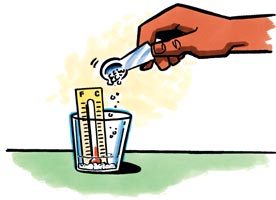
matter
4.
The amount of space something takes up
a)
density
b)
volume
c)
mass
d)
matter
5.
A watermelon has more matter than a grape, so it has more
a)
mass
b)
eat
c)
solid
d)
greater
6.
You can measure ______ with grams.
a)
mass
b)
volume
c)
conductivity
d)
melting point
7.
Liquid matter takes the shape of _______.
a)
a gas
b)
water
c)
a pet
d)
Its container
8.
The amount of matter something contains is its ______________.
a)
gas
b)
solid
c)
weight
d)
mass
9.
The picture below is an example of _________________.
a)
osmosis
b)
isotonic
c)
diffusion
d)
active transport
10.
What is diffusion?
a)
when molecules move 
b)
when molecules move from a high concentration to a low.
c)
no movement 
d)
molecules move everywhere
11.

Diffusion occurs only in solids

a)

True

b)

False

12.

What is a solute?

a)

A substance dissolved in another substance

b)

the substance doing the dissolving

13.

What is a solvent

a)

The one doing the dissolving

b)

The substance dissoved in another substance

14.

How do the particles move in diffusion?

a)

From a region of low concentration to a region of high concentration

b)

From a region of high concentration to a region of low concentration

c)

From a region of low concentration to a region of low concentration

d)

From a region of high concentration to a region of high concentration

15.

Which diagram best shows the end result of diffusion?

a)

F

b)

G

c)

H

d)

J

16.
Taking energy away from a substance will make its particles move
a)
more slowly
b)
more quickly
c)
at the same speed
17.
The change from a gas to a liquid is called 
a)
condensation
b)
evaporation
c)
sublimation
d)
deposition
18.

The change in state from liquid to gas is called

a)

vaporization

b)

sublimation

c)

condensation

d)

deposition

19.
The state that matter exists in depends on its 
a)
volume 
b)
weight
c)
temperature 
d)
mass
20.
What is the melting point of water?
a)
212°C
b)
100°C
c)
32°C
d)
0°C
21.
What is it called when the state of matter changes from a liquid to a solid?
a)
Vaporization
b)
Freezing
c)
Condensation
d)
Melting
22.
Melting (changing from a solid to a liquid) is a chemical change. (True or False)
a)
False
b)
True
23.

A substance's melting point is the same as its

a)

freezing point.

b)

condensation point.

c)

boiling point.

24.

If you have a sample of water that is 144 °C, what state is it in?

a)

solid

b)

liquid

c)

gas

25.

On a hot, humid summer day drops of water form on a can of cold soda. What process caused this to happen?

a)

condensation

b)

freezing

c)

vaporization

d)

deposition

26.

It rained yesterday, but today there are no puddles left on the ground. What process caused this to happen?

a)

condensation

b)

vaporization

c)

sublimation

d)

deposition

27.

Transparent and brittle

a)

Metal

b)

Sponge

c)

Glass

d)

Plastic

28.

Shiny and conducts electricity

a)

Methane

b)

Polythene

c)

Rubber

d)

Metal

29.

Soft and a good thermal insulator

a)

Fabric/cotton/sponge

b)

Rubber/metal/tissue

c)

Wood/polythene/plastic

30.

Hard and attracted to a magnet

a)

Wool

b)

Wood

c)

Metal

d)

Cotton

31.

An electrical and thermal insulator

a)

Wood/glass/plastic

b)

Fabric /tissue/silk

c)

Metal/polythene/cotton

d)

None of them

32.

Weak and absorbent

a)

Fabric /faabrick

b)

Paper /tissue paper

c)

Polythene/plastic

d)

None of theme

33.
What is matter composed of?
a)
Cells
b)
Atoms
34.
The positive particles of an atom are 
a)
Electrons 
b)
Positrons 
c)
Neutrons 
d)
Protons 
35.
The central region of an atom where its neutrons and protons are is its _______.
a)
Nucleus 
b)
Electron cloud
c)
Core 
d)
Center 
36.
Particles in an atom that are neutral and have no charge are ______. 
a)
Negatrons 
b)
Electrons 
c)
Neutrons 
d)
Protons 
37.
The particles that are found in the nucleus of an atom are _____.
a)
Neutrons and electrons
b)
Electrons only
c)
Protons and neutrons
d)
Protons and electrons
38.
The atomic number of an elements is the total number of which particles in the nucleus?
a)
Neutrons
b)
Protons
c)
Electrons
d)
Protons and electrons
39.
What are the 3 particles that make-up the atom?
a)
Protons, neutrons, and isotopes
b)
Neutrons, isotopes, and electrons
c)
Positives, negatives, and electrons
d)
Protons, neutrons, and electrons
40.
Which statement best describes an electron?
a)
Smaller mass than a proton and a negative charge
b)
Smaller mass than a proton and a positive charge
c)
Greater mass than a proton and a negative charge
d)
Greater mass than a proton and a positive charge
41.
An element is made up of only one kind of _____.
a)
isotope
b)
plastic
c)
atom
d)
metal
42.
Which is a proton?
a)
A
b)
B
c)
C
43.
Which is an electron?
a)
A
b)
B
c)
C
44.
In an exothermic reaction, heat is ...
a)
taken in or absorbed
b)
given out or released
45.
In an endothermic reaction, heat is ...
a)
taken in or absorbed
b)
given out or released 
46.
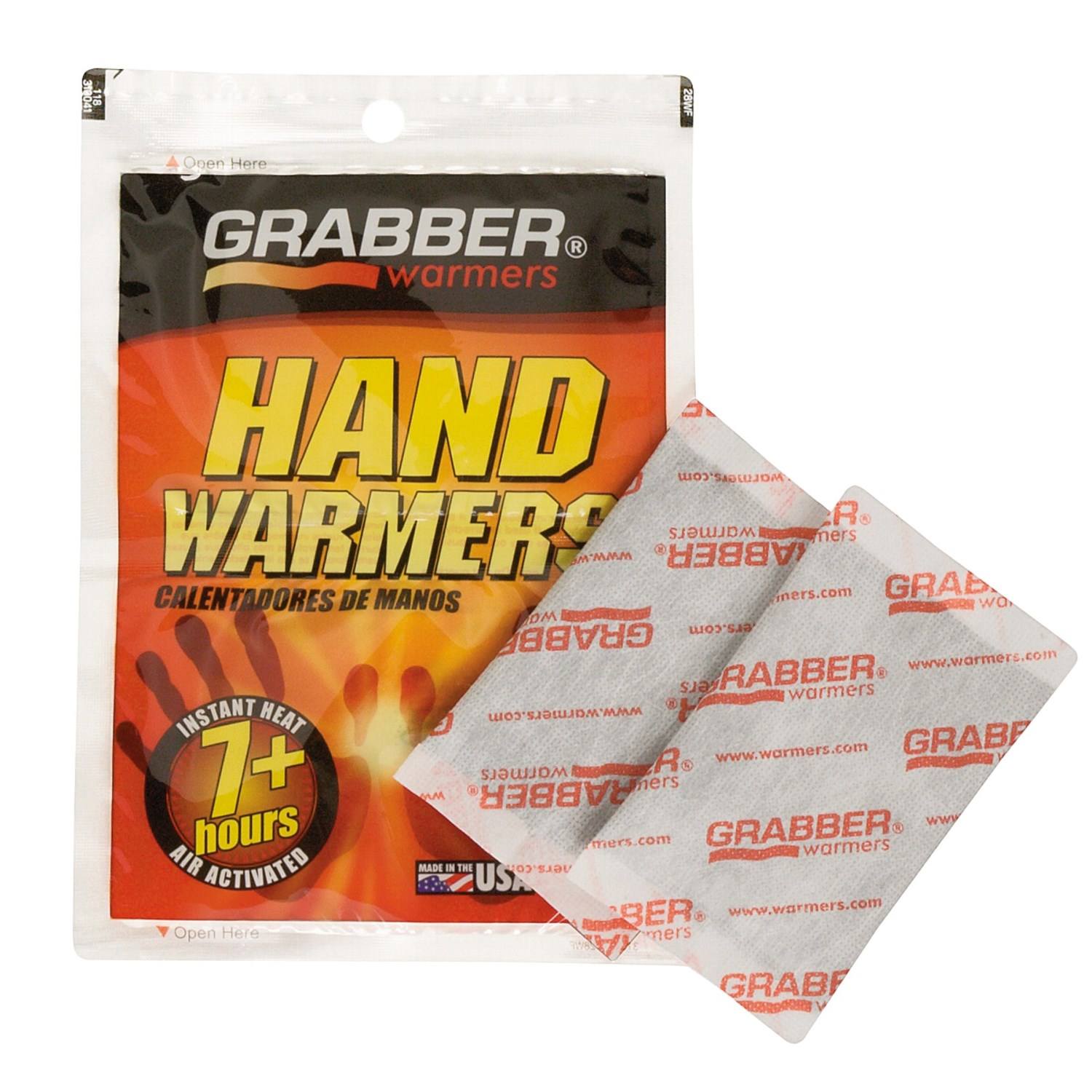
What type of reaction occurs in a hand warmer
a)
exothermic
b)
endothermic
47.
If a chemical reaction is EXOTHERMIC, the temperature would....
a)
Stay the same
b)
Increase
c)
Decrease
48.
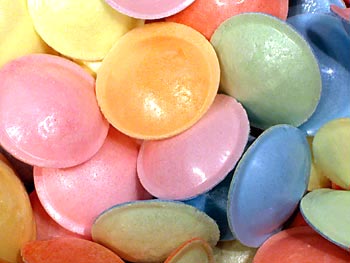
Have you ever eaten sherbet sweets candy? They fizz in your mouth and your tongue feels cold. Why do you think that is?
a)
It is an exothermic reaction
b)
It is an endothermic reaction
c)
It is made of ice
d)
It is dissolving your mouth
49.
After you mix two substances together, a new substance forms.  This is an example of:
 
a)
 Physical Change
b)
 Chemical Change
50.
The ability of a metal to allow heat or electricity to pass through it.
a)
conductivity
b)
insulator
c)
mass
d)
density