wayground logo

Free Printable Worksheets

Font size

S
M
L
XL
Worksheets

Distance Learning Test #1

Total questions: 43

Worksheet time: 39mins

Name
Class
Date
1.

Genotype represents...

a)

your physical traits

b)

your genetic make up

c)

your mRNA

d)

your tRNA

2.

What is the result of transcription?

a)

The synthesis of RNA from protein

b)

The synthesis of protein from RNA

c)

The synthesis of protein from DNA

d)

The synthesis of RNA from DNA

3.

What is the result of translation?

a)

The synthesis of RNA from protein

b)

The synthesis of protein from RNA

c)

The synthesis of protein from DNA

d)

The synthesis of RNA from DNA

4.

In which organelle does transcription occur?

a)

Nucleus

b)

Ribosome

c)

Mitochondria

d)

Golgi apparatus

5.

At which organelle does translation occur?

a)

Nucleus

b)

Ribosome

c)

Mitochondria

d)

Golgi apparatus

6.

Which of the following is a difference between DNA and RNA? CHOOSE 3

a)

DNA has thymine, whereas RNA has uracil

b)

DNA is double-stranded, RNA is single-stranded

c)

DNA contains a sugar, RNA does not

d)

DNA cannot leave the nucleus, RNA can

7.

Nucleotides are to nucleic acids, as ____________ are to proteins.

a)

codons

b)

peptides

c)

DNA

d)

amino acids

8.

What is the role of RNA polymerase?

a)

To synthesize DNA

b)

To synthesize RNA

c)

To synthesize amino acids

d)

To synthesize protein

9.

What role does the mRNA play in protein synthesis?

a)

mRNA modifies the original DNA strand

b)

mRNA mutates to form protein

c)

mRNA is the transcribed message from a DNA sequence

d)

mRNA moves the amino acids

10.

What is the role of tRNA?

a)

To treat the DNA strand

b)

To transfer codons

c)

To transfer amino acids

d)

To tackle mutations

11.

Codons are located on the...

a)

DNA

b)

mRNA

c)

rRNA

d)

tRNA

12.

What is the start codon?

a)

UAC

b)

TAC

c)

AUG

d)

GUA

13.

When reading the codon chart, which molecule do you reference?

a)

DNA

b)

mRNA

c)

tRNA

d)

rRNA

14.
What mutation has occurred here? 
T-G-A-C-C-A
T-G-A-G-C-A
a)
Substitution
b)
Deletion
c)
Insertion
d)
Frameshift 
15.
Are all mutations bad?
a)
Yes
b)
No
16.
Translation occurs in the
a)
nucleus
b)
mitochondria
c)
cytoplasm
d)
golgi apparatus
17.
DNA molecule segment is : TTACGCAAG
The mutated DNA segment is TTCGCAAG. This is an example of ___ mutation.
a)
Substitution
b)
Deletion
c)
Insertion
d)
Inversion
18.
What is a Gene?
a)
A segment of RNA that encodes for a protein
b)
A chromosome
c)
A segment of DNA that encodes for a protein
d)
Your genome
19.
What do helpful mutations do? 
a)
Increases chances of survival 
b)
Decreases changes of survival 
c)
Increases chances of developing cancer
d)
Decreases skills
20.

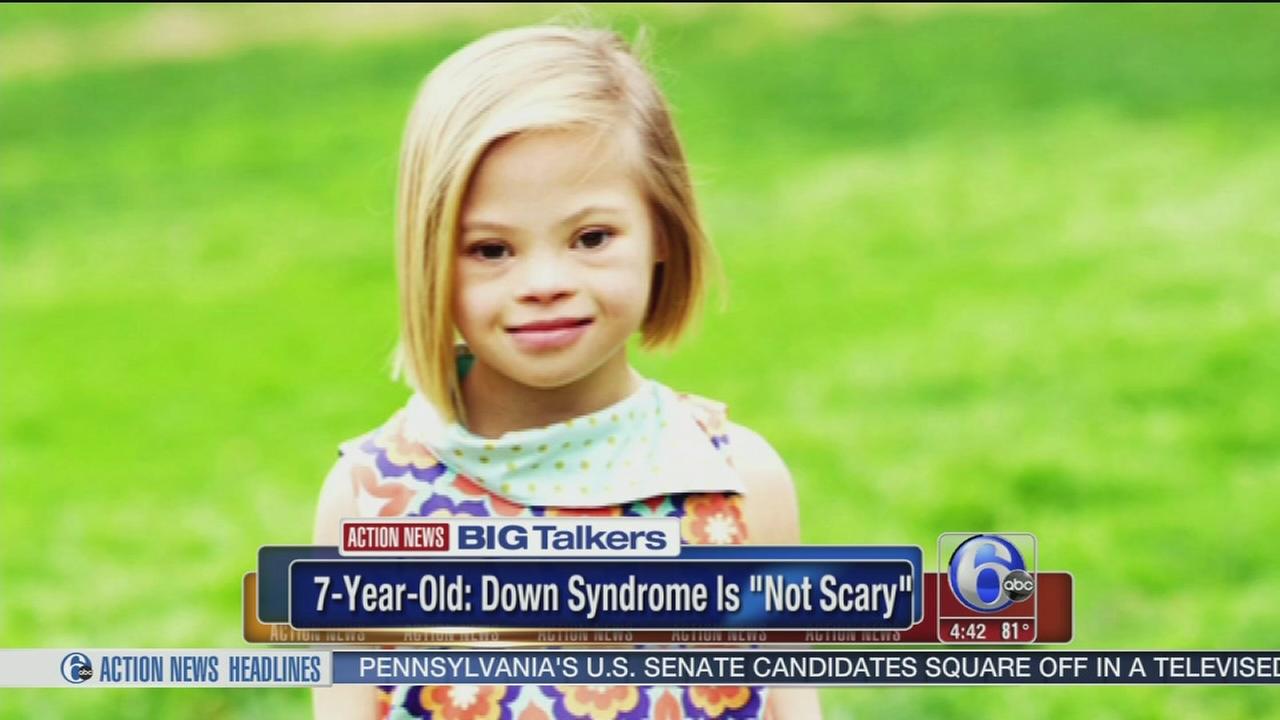
Which Karyotype displays a female with Down syndrome?

a)
b)
c)
d)
21.
Which mutation will cause translation to stop? 
a)
Mutations 1 and 3 only
b)
Mutation 1 only
c)
Mutation 2 only
d)
Muations 1, 2, 3
22.

A mutation is defined as:

a)

A change in the cell's structure

b)

Anything that changes in an embryo

c)

Any change in the physical features of a human

d)

A change in the DNA sequence

23.
The cells produced via meiosis are called:
a)
sex cells
b)
somatic cells
c)
body cells
d)
skin cells
24.
Meiosis makes sperm and egg cells. In humans, sperm and egg cells each have _____ chromosomes. Therefore a fertilized human egg cell (sperm and egg cell combined) would create a cell with _____ chromosomes.
a)
23, 46
b)
46, 23
c)
2, 4
d)
50, 100
25.
A male shark has 40 chromosomes in each of its sex cells. How many would be present in its body cells?
a)
20
b)
40
c)
80
d)
160
26.
Chromosomes exchange genetic material during 
a)
crossing over
b)
replication
c)
synthesis
d)
translation
27.

CROSSING OVER INCREASES

a)

LIFE SPAN

b)

GENETIC VARIATION

c)

THE NUMBER OF OFF-SPRING

d)

ALL ARE TRUE

28.
What phase is shown here?
a)
Prophase II
b)
Metaphase I
c)
Metaphase II
d)
Anaphase I
29.
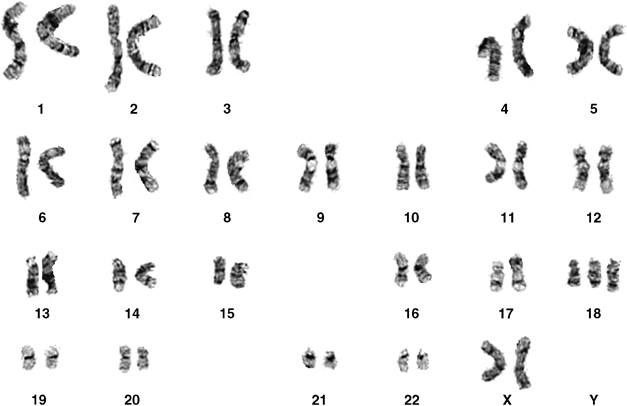
What is the chromosomal condition of the individual whose karyotype is seen in the image?
a)
Monosomy X (Turner's Syndrome)
b)
Trisomy 21 (Down's Syndrome)
c)
Trisomy 13 (Patau Syndrome)
d)
Trisomy 18 (Edwards's Syndrome)
30.
A pair of identical chromosomes shown in a karyotype, one inherited from mom, and one inherited from dad are called
a)
sister chromotids
b)
centromeres
c)
homologous chromosomes
d)
autosomes
31.
Nondisjunction can result in 
a)
trisomy conditions
b)
monosomy conditions
c)
additional sex chromosomes
d)
all of these
32.
Down's syndrome occurs because of a(n)
a)
missing sex chromosome
b)
extra sex chromosome
c)
additional 21st chromosome
d)
additional 18th chromosome
33.
The structures labeled B are
a)
centrioles
b)
chromatids
c)
centromeres
d)
chromopheres
34.
A heterozygous yellow pea plant's genotype would be:
a)
YY
b)
yy
c)
Yy
d)
Yg
35.
B - black, b - brownTwo black mice mate and have some black and some brown mice.  What is the genotype of the parents?
a)
BB x Bb
b)
BB x bb
c)
Bb x Bb
d)
Bb x bb
36.
What are the possible genotypes for this cross?
(Click the picture to see it without the text)
a)
TT = 25% Tt= 50% tt=25%
b)
all tall
c)
TT= 75% tt = 25%
d)
Tt = 100%
37.
In the Punnett square shown, what must the genotype of the missing parent be?
a)
BB
b)
Bb
c)
bb
d)
Tt
38.
What is the dominant trait?
a)
yellow pea seeds
b)
green pea seeds
c)
there is no dominant seed
d)
Jolly green giant
39.
Purple (P) is dominant to the white (p).
According to the Punnett Square, what is the probability of an offspring being purple?
a)
25%
b)
0%
c)
100%
d)
50%
40.

having two of the same genes for the trait (sometimes called purebred)

a)

homozygous

b)

hetrozygous

c)

protein

d)

chromosome

41.

having two different genes for a trait (sometimes called hybrid)

a)

protein

b)

homozygous

c)

heterozygous

d)

genotype

42.
An allele whose trait only shows up when no dominant allele is present.
a)
hidden allele
b)
dominant allele
c)
recessive allele
d)
present allele
43.
An organism's appearance is known as its
a)
heredity
b)
phenotype
c)
genotype
d)
pedigree