
Font size
 Worksheets
Chapter 19 - Cycles in Nature
Total questions: 84
Worksheet time: 2hrs 6mins
The Earth's supply of fresh water is renewed by ________________.
evaporation
precipitation
Lichens are important early contributors to _________________.
pioneer species
succession
During ______________, carbon is returned to the environment.
succession
decomposition
During _____________, the carbon in coal, oil, and natural gas is returned to the atmosphere.
combustion
decomposition
Water helps with the regulation of body temperature through perspiration and
precipitation
evaporation
Which of the following statements about cycles of matter is true?
Matter is lost in each cycle.
Human activity has little or no impact on cycles.
Each cycle involves evaporation and condensation.
Matter is moved between the physical environment and living organisms.
Most of the precipitation that falls to the Earth’s surface
falls directly into oceans.
remains in ponds and lakes.
seeps into underground rock formations.
quickly evaporates into the atmosphere.
Which of the following best describes a plant that is suited to being a pioneer species?
tall; produces few seeds
grows quickly; makes many seeds
fragile; cannot tolerate direct sunlight
grows slowly; seeds dispersed by animals
Which of the following substances must be chemically transformed before it can be used by plants?
oxygen
carbon dioxide
nitrogen gas
water
Carbon from the nonliving environment becomes a part of living organisms through
photosynthesis
respiration
transpiration
absorption
The first plants to grow on abandoned farmland would be
ferns.
shrubs.
mosses.
weedy plants.
TorF: The process of succession ends.
True
False
TorF: Succession proceeds until a forest fire clears the area, which starts the cycle of succession over again.
True
False
Which of these describes the role bacteria play in the nitrogen cycle?
Nitrogen-fixing bacteria in the soil change nitrogen gas into forms that can be used by plants.
When organisms die, bacteria decompose their bodies and break down nitrogen compounds, which releases nitrogen into the soil.
Bacteria in the soil return nitrogen to the atmosphere by changing nitrogen back into a gas.
All of these are correct
Carbon returns to the atmosphere as carbon dioxide through which three methods?
evaporation, condensation, and transpiration
combustion, respiration, and decomposition
succession, regrowth, and ecology
photosynthesis, precipitation, and lush oasis
Coal and oil were formed from ancient _____________________.
plants and animals
winds and storms
trees and rocks
clouds and precipitation
Carbon returns to the atmosphere as carbon dioxide through RESPIRATION in which an organism's cells break down sugar molecules.
True
False - COMBUSTION
False - DECOMPOSITION
Carbon returns to the atmosphere as carbon dioxide through DECOMPOSITION of remains of plants and animals by microscopic bacteria and fungi.
True
False - COMBUSTION
False - RESPIRATION
Carbon returns to the atmosphere as carbon dioxide through DECOMPOSITION of coal and oil which forms from ancient plants and animals.
True
False - COMBUSTION
False - RESPIRATION

The picture shows what type of succession?
primary
secondary
tertiary
rock and roll


Natural disasters such as flooding and tornadoes are linked to ________________ succession.
primary
secondary
old field
ecosystem

Organisms that break down dead plants & animals- like Norbert the dead rat- and release nitrogen back into atmosphere:
bacteria
plants
animals
secondary consumers

Respiration serves what purpose in the carbon cycle
absorbs CO2
releases CO2
fixes carbon
kills the invading Red Lectroids

How does carbon in a grass plant get into a lion?
The lion eats the grass because it is an herbivore
Carbon from the grass doesn't end up in a lion.
The carbon is eaten by animals that become food the lion eats.
The lion breathes in carbon given out by the plant
Lions don't need any carbon!

What is it called when plants give off water vapor as a waste product?
condensation
evaporation
sublimation
transpiration
farting

Which processes from the carbon cycle removes carbon from the atmosphere?
animal respiration
plant respiration
combustion
photosynthesis

What is a pioneer organism? It is one of the ______ organism(s) in _________ succession.
first , primary
last, secondary
Fish, friends

Secondary succession forms after a catastrophic event like a forest fire and has a/an ___________ growth rate than primary succession because soil already exists.
extremely slower
slower
faster
equal

The first "soil" layer during primary succession is usually made of rock broken down by acid and this:
dirt from underground
dead lichens
old Justin Bieber T-shirts
dead animals

Which of the following is represented in this picture?
the water cycle
the carbon cycle
the nitrogen cycle
the hydrogen cycle
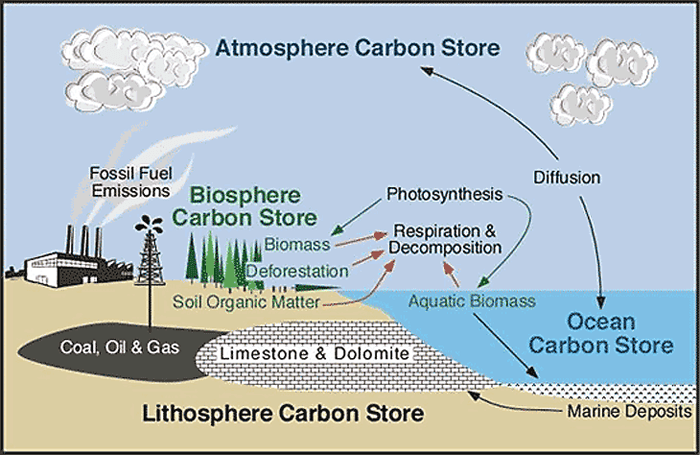
Which of the following is represented in this picture?
the water cycle
the carbon cycle
the nitrogen cycle
the hydrogen cycle

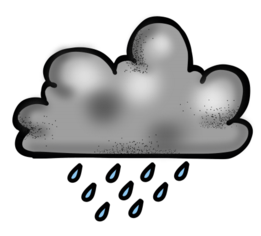
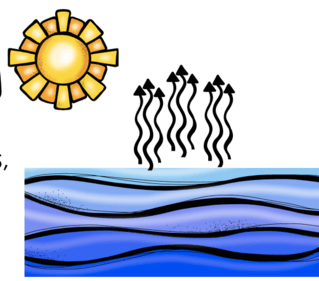
Which of the following is represented by this picture?
the water cycle
the carbon cycle
the nitrogen cycle
the hydrogen cycle
Which of the following cycles needs different types of bacteria to make the most common gas in the atmosphere useful to plants?
the water cycle
the carbon cycle
the nitrogen cycle
the hydrogen cycle
What is the most abundant gas in earth's atmosphere?
nitrogen
oxygen
carbon dioxide
helium
Death and decomposition are part of many life cycles. What else helps return nitrogen and carbon to the ground?
animal waste
lightning
rain
DNA
Which of the following cycles does photosynthesis produce oxygen and respiration produce carbon dioxide?
the water cycle
the carbon cycle
the nitrogen cycle
the hydrogen cycle
How does nitrogen get to the ground from the atmosphere?
rain and lightning
thunder
heat
dangifino
Carbon can be found in
the ocean and seas
rock and mantle of the Earth
the atmosphere
all of these are correct
Earth's atmosphere is made up of 78% _______________ and 21% ___________________.
nitrogen, oxygen
oxygen, nitrogen
hydrogen, carbon monoxide
hydrogen, carbon dioxide
Carbon exists in the atmosphere as part of
carbon trioxide
carbon dioxide
water
none of these answers are correct
What "fixes" nitrogen in the soil so that it can be used by plants?
decomposing plants
bacteria
viruses
rocks
All living things contain carbon.
True
False
Nitrogen can only be found in DNA in living things.
True
False
Decomposing plant and animal matter are MAJOR parts of which natural life cycles?
nitrogen cycle
carbon cycle
water cycle
both nitrogen and carbon cycles
What is a major contributor to global warming?
excess oxygen
excess carbon dioxide
excess carbon monoxide
excess hydrogen
The nitrogen cycle is a process in which nitrogen is moving from the air to the ground to ____________________________ and back again.
plants, animals, and humans (living things)
lava
clouds
hydrogen
Precipitation is a MAJOR part of which cycle?
both nitrogen and water cycles
carbon cycle
nitrogen cycle
water cycle
How do humans get nitrogen?
eating plants and animals
breathing it in
absorbing it through our skin
none of these are correct
A change in water from vapor to liquid is
evaporation
condensation
combustion
decomposition
Replacement of one type of community by another over time
condensation
combustion
decomposition
succession
Breakdown of substances into simpler molecules
condensation
combusiton
decomposition
succession
Change is water from liquid to gas
evaporation
condensation
combustion
decomposition
Burning of a substance is called
evaporation
condensation
combustion
succession
During what process is rock slowly transformed into soil?
photosynthesis
nitrogen fixation
primary succession
secondary succession
Which would most likely be a pioneer species?
conifer
lichens
crab grass
hardwoods
How does secondary succession differ from primary succession?
Secondary succession takes place on bare rocks
Secondary succession occurs in an area that has soil.
Secondary succession begins with lichens
Secondary succession takes thousands of years.
Which of the following statements about groundwater is true?
It is an important part of the water cycle.
It is trapped inside rocks.
It is not involved in the water cycle.
It is formed by evaporation.
Which process does NOT release carbon dioxide into the environment?
combustion
respiration
photosynthesis
decomposition
All of the following are processes that release carbon dioxide into the environment except
respiration
combustion
decomposition
evaporation
After one year, the burned forest in Yellowstone National Park
had barely changed
had begun to grow back
had completely grown back
was still completely destroyed.



Name the process where plants release water vapor.
Combustion
Decomposition
Respiration
Transpiration
Precipitation that is stored underground is ___________.
Biodiversity
Condensation
Groundwater
Runoff
The gradual change of a community over time is ________.
Ecosystem
Ecology
Ecological succession
Pioneer species
Precipitation that runs from land to rivers and lakes is _______________.
Condensation
Evaporation
Precipitation
Run off
Select an example of a disturbance that starts secondary succession.
Forest fire
Island forming
Volcanic eruption

