Wayground logo

Free Printable Worksheets

Font size

S
M
L
XL
Worksheets

Quarter 3 Grade Recovery WHS 19-20

Total questions: 60

Worksheet time: 45mins

Name
Class
Date
1.
the process in which populations change over time
a)
basketball
b)
natural selection
c)
evolution
d)
mutation
2.
I formed the theory of evolution by natural selection after my research of various species of finches on the Galápagos Islands. Who am I?
a)
Reginald Punnett
b)
Charles Darwin
c)
Mr. St. Louis
d)
Gregor Mendel
3.
Nature has a way of causing organisms that inherit advantageous traits to survive and reproduce more successfully than the ones that don't. This process is known as...
a)
natural selection
b)
genetic variation
c)
adaptation
d)
overproduction
4.
A lion makes more cubs than the Sahara Desert can support (there's not enough prey around), so only a few of the cubs survive to become adults. They live on to reproduce.
Of the four parts of natural selection, which is this an example of?
a)
overproduction
b)
genetic variation
c)
selection
d)
adaptation
5.
Due to a mutation, some jaguars inherit larger jaw sizes than other jaguars within that population and this trait is passed down from parent to offspring. This gives those jaguars an advantage when it comes to hunting down turtles as prey.
Of the four parts of natural selection, which is this an example of?
a)
overproduction
b)
genetic variation
c)
selection
d)
adaptation
6.
Tigers with larger paws hunt deer more easily to survive in an environment where resources are limited. As a result, the tigers with larger paws are “selected” (the larger paws become more common in the next generation of tigers).
Of the four parts of natural selection, which is this an example of?
a)
overproduction
b)
genetic variation
c)
selection
d)
adaptation
7.
A beetle's ability to camouflage (blend in) with a nearby leaf allows it to escape a hungry frog's appetite.
Of the four parts of natural selection, which is this an example of?
a)
overproduction
b)
genetic variation
c)
selection
d)
adaptation
8.
Populations of species which do not adapt to their environment can eventually become...
a)
stronger
b)
humans
c)
extinct
d)
angry
9.
Four present-day realities that some scientists use to support Darwin's theory of evolution?
a)
fossils
DNA
common bone structures
developmental similarities
b)
fossils
DNA
common bone structures
saliva
c)
fossils
common bone structures
plants
developmental similarities
d)
H2O
DNA
common bone structures
developmental similarities
10.
In both the past and the present, humans have selected plants or animals for breeding based on desirable traits. This process is known as...
a)
artificial selection
b)
natural selection
c)
farming
d)
cropping
11.
term used to describe the idea of changing from one kind of organism into another kind of organism
a)
micro-evolution
b)
adaptation
c)
macro-evolution
d)
extinction
12.
term used to describe small gradual changes within a certain kind of organism (speciation)
a)
micro-evolution
b)
adaptation
c)
macro-evolution
d)
extinction
13.

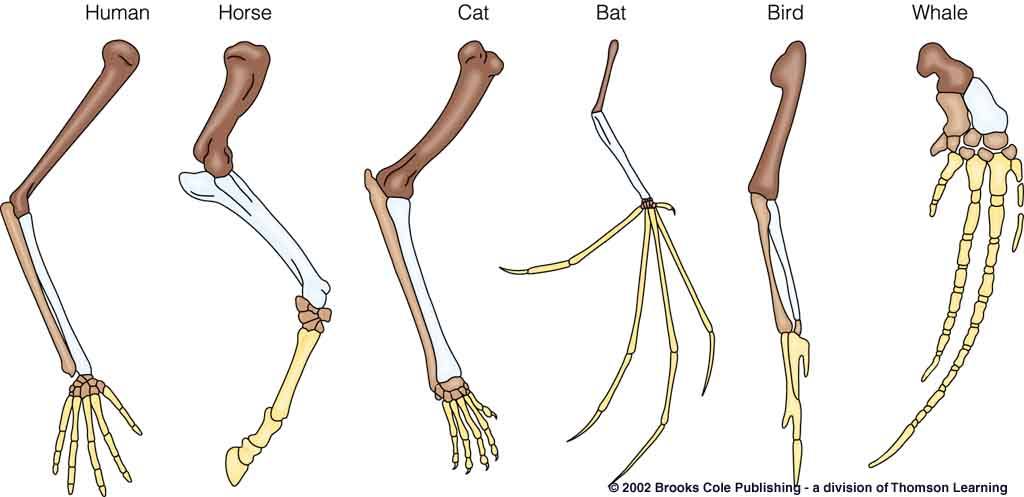
Examples of homologous structures include

a)

the wings of a bat and a bird

b)

the wings of a bat and the limbs of a cat

c)

the limbs of a cat and the limbs of a tortoise

d)

none of the above

14.

Examples of analogous structures include

a)

the wings of a bat and a bird

b)

the wings of a bat and the limbs of a cat

c)

the limbs of a cat and the limbs of a tortoise

d)

all of the above

15.

An example of a vestigial structure is

a)

the forelimb of a whale

b)

the wings of an eagle

c)

the pelvic bone of a whale

d)

the tail bone of a monkey

16.

Comparison of DNA sequences shows that we are most closely related to

a)

monkeys

b)

baboons

c)

gorillas

d)

chimpanzees

17.

Biogeography _________

a)

has taught us of the migration patterns of certain species

b)

is the science of studying maps

c)

was developed by Darwin during the voyage on the Beagle

d)

proves that all camels came from Egypt and North Africa

18.

The discovery of dinosaur bones would probably be made by____

a)

paleontologists

b)

evolutionists

c)

biologists

d)

bone doctors

19.

Darwin's book On The Origin of Species included _____

a)

lots of evidence to show that evolution had taken place

b)

an analysis of the anatomy of analogous structures

c)

an analysis of the DNA sequences of closely related animals

d)

all of the above

20.

The strongest evidence for evolution from a common ancestor is

a)

similar DNA sequences

b)

similar body structures

c)

similar fossils

d)

all of the above

21.

Fossils provide clear evidence that evolution has occurred

a)

True

b)

False

22.

Homologous structures are structures that are similar in unrelated organisms

a)

True

b)

False

23.

________ anatomy is the study of the similarities and differences in the structures of different species

a)

Human

b)

Comparative

c)

Relative

24.
Which gas was not present in early Earth atmosphere?
a)
Oxygen (O2)
b)
Methane (CH4)
c)
Carbon Dioxide (CO2)
d)
Water Vapor (H2O)
25.
The first organisms evolved on Earth around 4 billion years ago.  The fossil record indicates that the first organisms were which of the following?
a)
prokaryotes
b)
mitochondria
c)
plastids
d)
eukaryotes
26.
Which type of evidence is illustrated in this picture
a)
fossil evidence
b)
molecular
c)
anatomical
d)
embryological
27.
According to the law of superposition, the oldest fossils are found 
a)
At the top of the rock layers
b)
Near the bottom of the rock layers
c)
In the middle of the rock layers
d)
Somewhat near the surface
28.
This scientist stated that by using or not using a certain body part, organisms could change in their lifetime and that the trait gained would be passed down to their offspring.
a)
James Hutton
b)
Charles Lyell
c)
Jean-Baptiste Lamarck
d)
Thomas Malthus
29.
Which of the following is NOT an example of a fossil?
a)
a petrified dinosaur bone
b)
a footprint captured in mud
c)
a seashell found on the beach
d)
an insect stuck in amber
30.
The endosymbiotic theory proposed that eukaryotic cells arose from
a)
Individual prokaryotic cells
b)
Muticellular prokaryotes
c)
Communities formed by prokaryotes
d)
Communities formed by eukaryotes
31.
Miller and Urey experiment attempted to demonstrate
a)
how Earth first formed
b)
Whether DNA or RNA evolved first
c)
Whether organic molecules could have formed before life was present
d)
How the deepest part of Earth formed
32.
The structures shown are_________
a)
homologous
b)
heterologous
c)
analogous
d)
vestigial
33.
Scientists use radioactive decay to measure...
a)
relative time
b)
absolute time
c)
half-lives
d)
time of day
34.
What is survival of the fittest?
a)
It is where the fittest die out and therefore reproduce and pass on their genes
b)
It is where the fittest die out and therefore can't reproduce and pass on their genes
c)
It is where the fittest don't die out and therefore can't reproduce and pass on their genes
d)
It is where the fittest don't die out and therefore reproduce and pass on their genes
35.
being the "fittest" in evolutionary terms always means the biggest, strongest, fastest
a)
True
b)
False
36.
A few deer wander out of their native woods into a completely new park where no deer had ever been before. They go on to create an entirely new population.
a)
Genetic Drift
b)
Natural Selection
c)
Non-random mating
d)
Mutation
37.
Yellow toucan birds seek out one another to make babies together and tend to avoid the green toucan birds.
a)
Genetic Drift
b)
Non-random mating
c)
Gene flow
d)
Mutation
38.
During gestation (pregnancy), a developing male pig had a change in his genetic code. The result was that he was able to walk and do karate.
a)
Genetic Drift
b)
Non-random mating
c)
Mutation
d)
Natural Selection
39.
Five hundred years after the deer had established a flourishing population in the park, a few of them venture back to their original woods and have babies with the deer there.
a)
Genetic Drift
b)
Mutations
c)
Non-random mating
d)
Gene flow
40.
Bats are common in Texas, especially in rocky regions. Bats with longer hang claws have demonstrated higher fitness because of their ability to cling to rock while resting.
a)
Adaptation
b)
Non-random mating
c)
Gene Flow
d)
Mutation
41.
Wolves from the Arizona mesa were transferred to the Colorado Rockies after a forest fire destroyed their habitat. They quickly became part of the local pack and had offspring.
a)
Mutation
b)
Natural Selection
c)
Genetic Drift
d)
Gene Flow
42.
7 Wild Mustangs were taken from the prairies of Iowa after a Texan Rancher purchased them and provided them with their own pasture. Those 7 Mustangs eventually became 122.
a)
Genetic Drift (small popultaion)
b)
Non-random mating
c)
Gene flow
d)
Mutations
43.
Two track stars fell in love and after marriage had 5 children that became record-setting athletes.
a)
Non-random mating
b)
Gene flow
c)
Genetic drift
d)
Mutation
44.
What does the picture represent?
a)
Founder Effect
b)
Mutations
c)
Bottleneck effect
d)
Gene Flow
45.
What does the image represent?
a)
Founder effect
b)
Bottleneck effect
c)
Mutation
d)
Natural Selection
46.
What does the image represent?
a)
Founder effect
b)
Bottleneck effect
c)
Natural Selection
d)
Mutations
47.
What does the image represent?
a)
Gene flow
b)
Gene drift
c)
Mutation
d)
Adaptation
48.
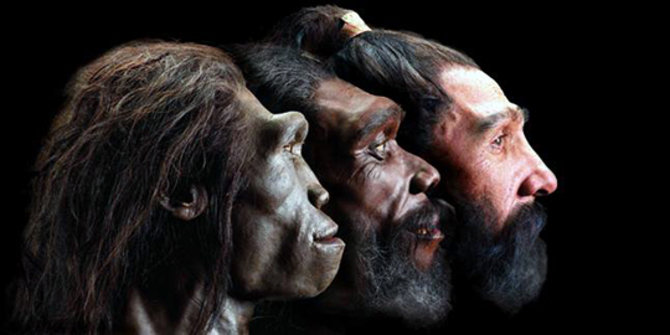
Scientists have found evidence that about 2.4 million years ago a gene regulating jaw muscles mutated and may have led to the more graceful human jaw we see today. The diagram below shows the skulls of 3 hominid species.Which statement below most closely explains the link between jaw size and hominid evolution? 
a)
The jaws of hominids evolved to be smaller and less protruding over time. 
b)
The jaws of hominids evolved to be smaller and less protruding over time. 
c)
There appears to be no change in the jaws of hominids over time.
d)
The jaws of hominids changed over time due to a change in brain size. 
49.
Scientists are studying the evolutionary history of a group of plants in the United States, and they developed an evolutionary tree, as shown below.Which statement can be inferred from the evolutionary tree?
a)
Species 1 is most closely related to Species 8.
b)
Species 2 is most closely related to Species 3.
c)
Species 3 is most closely related to Species 7.
d)
Species 5 is most closely related to Species 6.
50.
Scientists are studying the evolutionary history of a group of plants in the United States, and they developed an evolutionary tree, as shown below.What information about the organisms best helps the scientists to determine the evolutionary relationships among them?
a)
DNA sequences
b)
 Anatomical features
c)
Habitat types
d)
Reproductive Strategies
51.
One of the accepted scientific theories describing the origin of life on Earth is known as chemical evolution. According to this theory, which of the following events would need to occur first for life to evolve?
a)
 onset of photosynthesis 
b)
 origin of genetic material 
c)
 Synthesis of organic molecules
d)
formation of the plasma membrane
52.

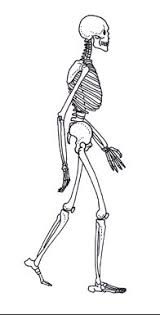
The ability to walk upright on two legs is called:

a)

bipedalism

b)

quadropedalism

c)

bicyclepedalism

d)

tripedalism

53.

A measurement of the volume of the skull, used to estimate brain size.

a)

cranial capacity

b)

foramen magnum index

c)

maxillary angle

d)

sagittal crest

54.

Modern humans and their closest relatives belong to the same family. Members of this family are called:

a)

hominids

b)

primates

c)

homo sapiens

d)

Lucy

55.

Which species evolved about 3.9 million years ago and was bipedal?

a)

Australopithecus afarensis

b)

Homo neanderthalensis

c)

Homo habilis

d)

Paranthropus aethiopicus

56.
Australopithecus Afarensis lived before Homo Erectus.
a)
True
b)
False
57.
Please place these hominids in the correct order they lived (from earliest to closest to our time)?    
1) Homo Sapiens Sapiens
2) Lucy
3)Upright Man
4) Homo Habilis
5)Neanderthals 
a)
1, 2, 4, 5, 3
b)
2, 4, 3, 5, 1
c)
2, 3, 4, 5, 1
d)
2, 5, 4, 3, 1
58.

Which social scientist studies the early development and culture of hominids?

a)

A geographer

b)

A anthropologist

c)

A historian

d)

An archaeologist

59.

Where did the earliest hominids live?

a)

Asia

b)

Australia

c)

North America

d)

Africa

60.

Connect the definiton to the word/phrase: The hominids left Africa and moved to other parts of the world

a)

Landbridge

b)

Migration

c)

Sedentary Society

d)

Hunter-gatherer society