
 Worksheets
TRANSPORT SYSTEM RMO
Total questions: 45
Worksheet time: 34mins
Which of the following are chambers of the heart?
Valves
Atrium and ventricle
Arteries and veins
Sinoatrial nerve

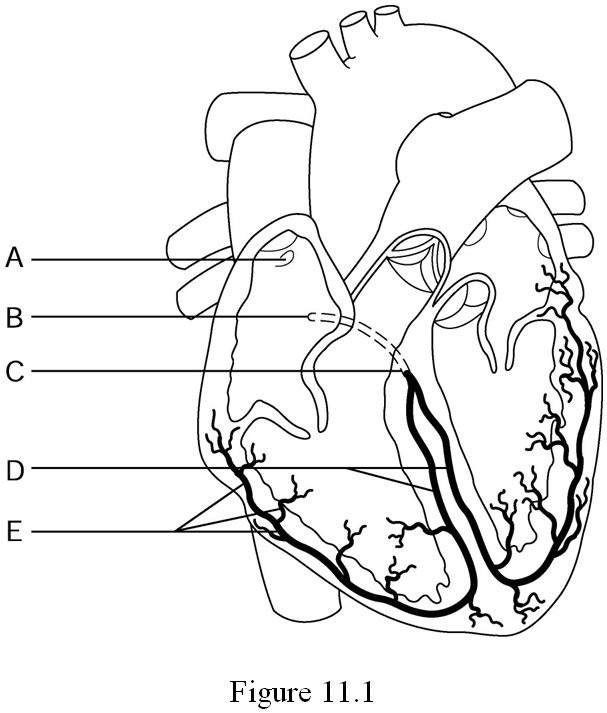
What area of the heart is responsible for the delay of conduction between the atrium and ventricles?
Right bundle branch
AV node
Bundle of his
Bachmann bundle

State the phase of cardiac cycle shown in the diagram.
Atrial systole, ventricular systole
Atrial diastole, ventricular systole
Atrial systole, ventricular diastole
Atrial diastole, ventricular diastole

What happen to the valves in the heart during the phase of cardiac cycle shown in the diagram.
Atrioventricular valves open, semilunar valves open
Atrioventricular valves open, semilunar valves close
Atrioventricular valves close, semilunar valves open
Atrioventricular valves close, semilunar valves close

State the phase of cardiac cycle shown in the diagram.
Atrial systole, ventricular systole
Atrial diastole, ventricular systole
Atrial systole, ventricular diastole
Atrial diastole, ventricular diastole
A complete of a cardiac cycle takes place for about
8 seconds
0.8 second
0.3 second
0.4 second
Atrial systole & Ventricular diastole phase takes place for about?
0.1 second
0.4 second
0.3 second
0.8 second
The first sound of heart, "lub" produced when
Atrioventricular valves open, semilunar valves open
Atrioventricular valves open, semilunar valves close
Atrioventricular valves close, semilunar valves open
Atrioventricular valves close, semilunar valves close
During Atrial diastole & Ventricular systole phase, pressure between atria and ventricles?
Pressure in atria are greater than ventricles
Equal pressure in atria and ventricles
Pressure in ventricles are greater than atria
During Atrial & Ventricular diastole phase, what happen between vena cava, right atrium & right ventricles?
Pressure in vena cava is greater than in atrium and pressure in atrium is greater than ventricles, hence blood flow from vena cava into the right atrium and into the right ventricles by passive transport.
Pressure in vena cava is lower than in atrium and pressure in atrium is lower than ventricles, hence blood flow from vena cava into the right atrium and into the right ventricles by passive transport.
Pressure in vena cava is greater than in atrium and pressure in atrium is lower than ventricles, hence blood flow from vena cava into the right atrium and into the right ventricles by passive transport.
Pressure in vena cava is greater than in atrium and pressure in atrium is greater than ventricles, hence blood flow from vena cava into the right atrium and into the right ventricles by active transport.
Which is the correct sequence of phases in cardiac cycle?
Atrial systole, ventricular diastole ; Atrial diastole, ventricular systole ; Atrial & ventricular systole
Atrial diastole, ventricular systole ; Atrial systole, ventricular diastole ; Atrial & ventricular systole
Atrial systole, ventricular diastole ; Atrial diastole, ventricular systole ; Atrial & ventricular diastole
Atrial diastole, ventricular systole ; Atrial systole, ventricular diastole ; Atrial & ventricular diastole
What is the type of muscle involves in cardiac cycle?
Smooth muscle
Cardiac muscle
Skeletal muscle

In the diagram below, which part of the tracing represents the contraction of the atria?
P
T
R
S

What shows the time a signal is delayed at the AV nodes?
PR segment
ST segment
PR interval
QRS complex
Which component of ECG cycle shows ventricular depolarisation?
P
QRS
T
U

Normal resting heart rate for adults
40-80 BPM
60-100 BPM
100-120 BPM
70-130 BPM
The functions of xylem is/are
to transport of water and mineral salts.
to translocate organic nutrients.
to provide support to the plant part by the rigidity of cell wall.
to provide metabolic energy.
Phloem is responsible
for downward translocation of organic nutrients to root cell.
for upward translocation of minerals to stem tip.
for providing support to the plant part.
for providing water to the neighbouring cells.
The loading of sucrose into sieve tubes is by ________ transport and consequently, requires ___________.
Active; ATP
Passive; energy
Active; ions
Passive;ions
What is the important of companion cell between source and sieve tube?
Provide glucose for active transport
Provide ATP for active transport
Provide ATP for passive transport
Provide glucose for passive transport
Loading of sucrose actively in the sieve tube will causes
Water pressure in sieve tube decrease
Accumulation of sucrose in sieve tube and water potential remain unchanged
Sucrose dissolved in water and lowered the water potential in sieve tube
Sucrose converted into dissolved glucose which lowered the water potential in sieve tube

