
NEW
Font size
S
M
L
XL
 Worksheets
T5 L3 Quiz:7th G (1st att)
Total questions: 13
Worksheet time: 19mins
Name
Class
Date
1.
_________ is a pattern of coloring that helps a living thing blend in with its surrounding.
a)
hibernate
b)
migrate
c)
camouflage
d)
adaptation
2.
_______ is to go into a deep sleep-like state during winter.
a)
hibernate
b)
migrate
c)
camouflage
d)
adaptation
3.
___________ is a feature that helps a living thing survive and reproduce in the place where it lives.
a)
hibernate
b)
migrate
c)
camouflage
d)
adaptation
4.
Bees dance to tell each other where to find food.
a)
Structural/Physical Adaptation
b)
Behavioral Adaptation
5.
A kangaroo has a pouch to protect its young.
a)
Structural/Physical Adaptation
b)
Behavioral Adaptation
6.
Polar bears have compact ears, a small tail, and thick fur to keep themselves warm. Are these examples of physical (structural) or behavioural adaptations?
a)
Physical
b)
Behavioural
7.
The goal of every species on earth is...
a)
to survive and reproduce
b)
divide and conquer
c)
survive and conquer
d)
reproduce and die
8.
Lions often hide in the tall grass while stalking their prey. This is an example of...
a)
camouflage
b)
warning coloration
c)
mimicry
d)
hibernation
9.
A giraffe's long neck - used to reach leaves high in trees - is an example of a
a)
instinct
b)
learned behavior
c)
behavioral adaptation
d)
physical adaptation
10.
Gills on a fish
a)
structural
b)
physiological
c)
behavioral
11.
A relationship between two organisms in which both organisms benefit.
a)
Mutualism
b)
Competition
c)
Parasitsm
d)
Commensalism
12.
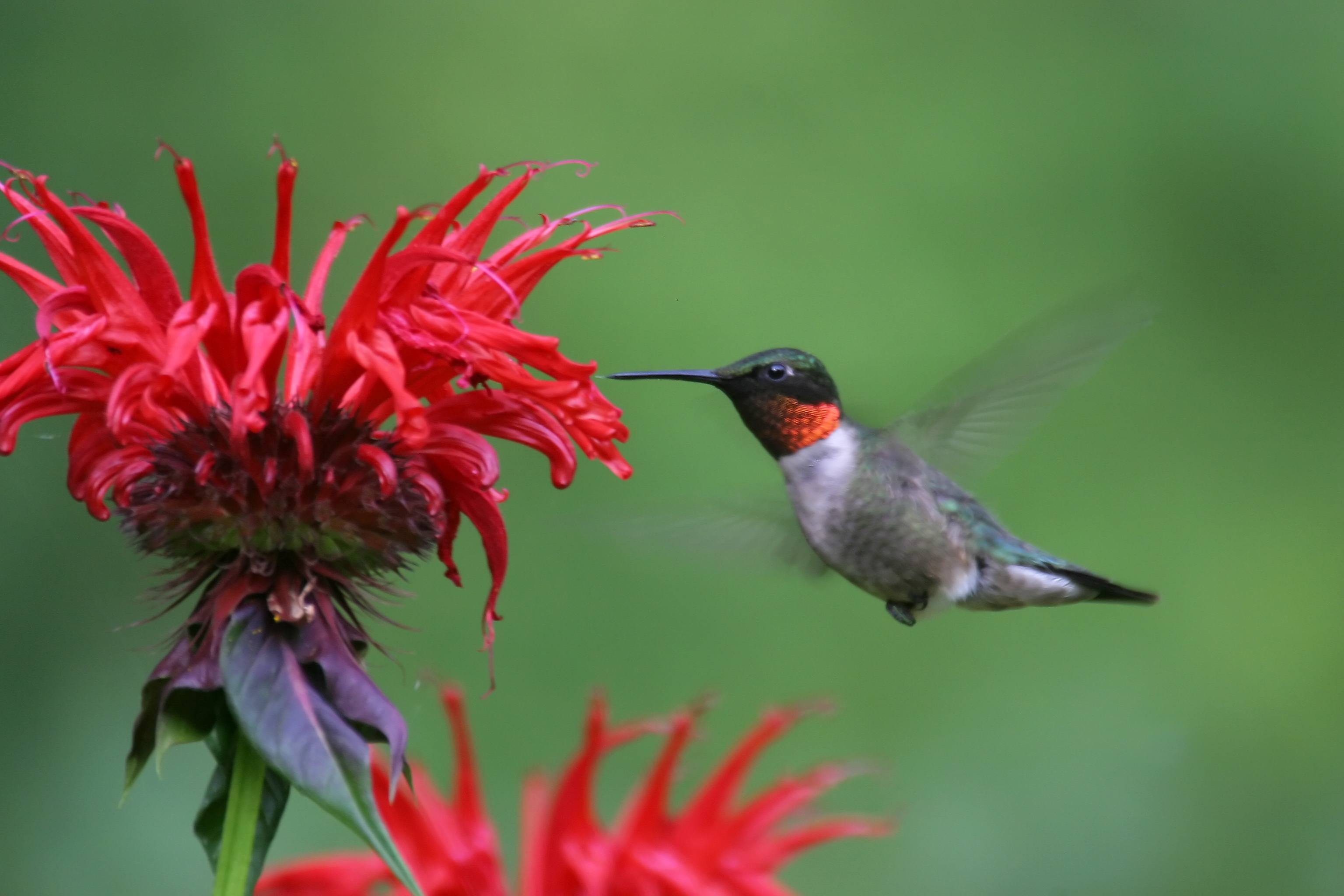
What type of symbiosis? Hummingbirds feed on nectar from flowers. The flowers are pollinated by hummingbirds as they move from flower to flower.
a)
commensalism
b)
mutualism
c)
parasitism
d)
predation
13.
A relationship between two organisms in which one organism benefits and the other is unharmed...
a)
Mutualism
b)
Competition
c)
Parasitsm
d)
Commensalism
Reset

