

wayground logo

Free Printable Worksheets

Font size

S
M
L
XL
Worksheets

6th Grade Life Science Review

Total questions: 45

Worksheet time: 46mins

Name
Class
Date
1.

The process in plant cells that converts energy from the sun into energy stored in food is ________.

a)

photosynthesis

b)

cellular respiration

c)

homeostasis

d)

cell division

2.

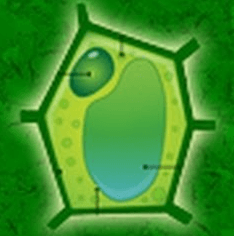
Which term best fits the level of organization pictured in the diagram?

a)

organ

b)

tissue

c)

single cell

d)

organ system

3.

The diagram shown is a useful scientific model because it shows:

a)

an animal cell as it really looks.

b)

a plant cell as it really looks.

c)

the structures of a typical plant cell.

d)

how the structures of a cell function.
4.
What tool do you use to view the cells?
a)
metric ruler
b)
centrifuge
c)
microscope
d)
pipette
5.
The Cell Theory states...
a)
atoms create all matter
b)
living things evolve
c)
the cell is the backbone of all matter
d)
cells are the basic unit of structure and organization of organisms
6.
Who looked at cork and named the cell?
a)
Robert Hooke
b)
Van Leeuwenhoek
c)
Robert Brown
d)
Francesco Redi
7.
In what organelle is the genetic material found inside?
 
a)
Endoplasmic Reticulum
b)
Golgi Complex
c)
Ribosomes
d)
Nucleus
8.
A rigid layer that lies outside the cell's  membrane is...
a)
Cytoskeleton
b)
Cilia
c)
Cell Wall
d)
Flagella
9.
The ______________ is the brain of the cell.
a)
Vacuole
b)
Nucleus
c)
Chromosomes
d)
60 W light bulb
10.
Which of the following is a phenotype?
a)
BB
b)
Bb
c)
bb
d)
Blue eyes
11.

____________ is having two of the same genes for the trait.

a)

homozygous

b)

hetrozygous

c)

protein

d)

chromosome

12.

_____________________ is having two different genes for a trait.

a)

protein

b)

homozygous

c)

heterozygous

d)

genotype

13.
G = green, g = yellow
The genotype for a yellow plant is...
a)
GG
b)
Gg
c)
gg
d)
all of the choices result in yellow
14.
Two heterozygous (Tt) tall pea plants are crossed. Which describes their offspring?
a)
50% tall and 50% short
b)
75%tall and 25% short
c)
100%short
15.
Every living organism is made up of one or more cells
a)
True
b)
False
16.
A cell is...
a)
the basic unit of structure and function in living organism
b)
an organism
c)
a basic part of everything that we see
d)
found only in animals, not plants
17.
The nucleus is like the ____________ of the cell.
a)
foot
b)
hand
c)
stomach
d)
brain
18.
What is one basic function of the vacuoles?
a)
circulating oxygen
b)
producing food
c)
controlling cell processes
d)
storing water
19.
What is the function of a cell wall?
a)
to protect and support the cell
b)
to perform different functions in each cell
c)
to prevent water from passing through it
d)
to prevent oxygen from entering the cell
20.
The __________ is the main organ of the nervous system.
a)
heart
b)
lungs
c)
brain
d)
skin
21.
When tissues come together, they form ___________.
a)
cells
b)
atoms
c)
organs
d)
systems
22.
In multicellular organisms, tissues are comprised of _______.
a)
organs
b)
systems
c)
cells
d)
blood
23.
What system receives oxygen and gets rid of carbon dioxide?
a)
Heart
b)
Muscular System
c)
Veins 
d)
Respiratory System
24.
What system is the body's way of fighting off pathogens that would make it sick?
a)
Excretory
b)
Immune
c)
Digestive
d)
Endocrine
25.
What is the body system that sends and recieves electrical signals from the brain?
a)
Skeletal System
b)
Nervous System
c)
Muscular System
d)
Digestive System
26.

____________________ helps warm the human body when we are cold.

a)

sweating

b)

shivering

c)

inhaling oxygen

d)

exhaling carbon dioxide

27.
What is mean by homeostasis?
a)
Controls and coordinates body activities through chemical 
b)
controls and coordinates body activities through electrical impulses
c)
For maintenance of a steady state in the internal environment
d)
remove metabolic waste products from the cel
28.
Which feature of a rose helps it grow without being eaten by large animals?
a)
flowers with bright colors
b)
sharp thorns
c)
small seeds
d)
deep roots
29.
Which feature helps an animal hide from other animals?
a)
looking like a dangerous animal
b)
being the same color as the place it lives (camoflauge)
c)
having sharp claws or a strong shel
d)
having only a few young and caring for them
30.
A giraffe has a long neck in order to better reach leaves to eat.  This is an example of _____. 
a)
an adaptation
b)
environment
c)
response
d)
stimulus
31.
Which of the following is a physical adaptation for the underlined animal?
a)
A butterfly has bright colors to warn predators that it is poisonous.
b)
A hognose snake rolls over, slows its breathing, and hangs its tongue out to play dead.
c)
A herd of buffalo encircle their young to protect them from a pack of wolves.
d)
A dung beetle rolls a piece of dung across the desert.
32.
How do adaptations help animals?
a)
To escape animals
b)
to hunt for food
c)
to survive in their habitats
d)
All of these are correct
33.
Why do animals use camouflage?
a)
To look pretty
b)
To stay safe
c)
To play Hide and Go Seek
d)
To eat food
34.
Traveling done by an animal to find food and water. 
Adaption: birds flying south for the winter
a)
Camouflage
b)
Migration
c)
Hibernation
d)
Locomotion
35.

What are you most worried about next year?

a)

The Lunch Room

b)

Getting Lost

c)

Keeping Up With the Work

d)

Not Seeing the Awesome 6th Grade Teachers

36.
Which of the following is the smallest unit of life that can carry out all life functions?
a)
the mitochondria
b)
the vacuoles
c)
the nucleus
d)
the cell
37.
Which structures are found in every living cell?
a)
cell membrane and cytoplasm
b)
chloroplasts and mitochondria
c)
a cell wall and nucleus
d)
chloroplasts and cell wall
38.

____ is credited with being the first scientist to observe cork cells.

a)

Leewenhoek

b)

Shleidon

c)

Hooke

39.

Which scientist was credited as being the first in observing cells?

a)

Hooke

b)

Leewenhoek

c)

Virchow

40.
Plants and animals are made up of millions of tiny what?
a)
atoms
b)
cells
c)
particles
d)
dots
41.
Michael looked at a cell through a microscope.  He identified a nucleus, chloroplast, and cytoplasm.  What kind of cell did Michael observe?
a)
animal
b)
plant
c)
vertebrate
d)
bacteria
42.
Which piece of equipment is the best to use to observe the structure of a cell?
a)
magnifying glass
b)
binoculars
c)
telescope
d)
microscope
43.
Directs all cell activities and the DNA is located there. "The brain"
a)
Lysosomes
b)
Nucleus
c)
Cell Wall
d)
Cytoplasm
44.
A rigid layer that lies outside the cell's  membrane is...
a)
Cytoplasm
b)
Cell membrane
c)
Cell Wall
d)
Flagella
45.
A rigid layer that lies outside the cell's  membrane is...
a)
Cytoplasm
b)
Cell membrane
c)
Cell Wall
d)
Flagella
