wayground logo

Free Printable Worksheets

Font size

S
M
L
XL
Worksheets

GRAVITY

Total questions: 97

Worksheet time: 2hrs 15mins
Name
Class
Date
1.
Who said that falling objects fall at the same rate?
a)
Galileo
b)
Kepler
c)
Brahe
d)
Copernicus
2.
What is the SI unit used to measure force? 
a)
pounds 
b)
grams 
c)
newtons 
d)
kg/ m2
3.
Gravity attracts all objects towards one another.
a)
False
b)
True
c)
It depends
d)
I don't care
4.
Any object with mass is surrounded by a gravitational field.
a)
True
b)
Sometimes
c)
False
d)
Never
5.
The force of gravity is also known as
a)
Mass
b)
Weight
c)
Distance
d)
Acceleration
6.
As distance between two objects increase the pull of gravity 
a)
Increases
b)
Decreases
c)
Stays the same
7.
Which of the following will not change in different gravitational fields?
a)
weight
b)
force
c)
mass
d)
pounds
8.
An object is falling but is not accelerating. What do you know?
a)
Gravity is stronger than air resistance
b)
Air resistance is stronger than gravity
c)
Air resistance is equal to gravity
d)
Forces are unbalanced
9.
Where would you have to travel to reduce your weight but not lose any mass?
a)
The moon
b)
The Sun
c)
Jupiter
d)
Saturn
10.
Both of these are measured in Netwons
a)
Force and acceleration
b)
Force and weight
c)
Mass and weight
d)
Mass and acceleration
11.
When does a falling object experienced balanced forces?
a)
Terminal velocity
b)
During free fall
c)
When it first starts to fall
d)
Just before it hits the ground
12.
This FORCE pulls things.  It PULLS things into orbit around the sun. 
a)
Newton
b)
gravity
c)
weight
d)
path
13.
A person would weigh more on Jupiter than on the Earth because . . .
a)
Jupiter has more mass, and therefore more gravity
b)
Jupiter has less mass, and therefore more gravity
c)
Jupiter has more mass, and therefore less gravity
d)
Jupiter has less mass and therefore less gravity
14.
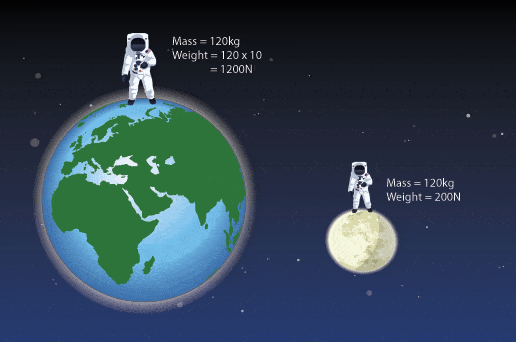
A person weighs _____ on the Earth than they do on the Moon. 
a)
less
b)
more
c)
the same
15.
A person weighs _____ on the Earth than they do on the Moon. 
a)
less
b)
more
c)
the same
16.
The law of universal gravitation is credited to whom?
a)
Einstein
b)
Galileo
c)
Darwin
d)
Newton
17.
If Earth's mass was cut in half, what would happen to your mass?
a)
increase because gravitational force increases
b)
decrease because gravitational force decreases
c)
decrease because gravitational force increases
d)
nothing, mass is not affected by gravitational force
18.
What does this tool measure?
a)
weight
b)
meters
c)
mass
d)
force
19.
If Earth's mass was cut in half, what would happen to your weight?
a)
Increase because gravitational force increases
b)
decrease because gravitational force decreases
c)
decrease because gravitational force increases
d)
nothing, weight is not affected by gravitational force
20.
What does this tool measure?
a)
weight
b)
meters
c)
mass
d)
force
21.
A force of attraction between 2 object that is directly related to mass and indirectly related to distance.
a)
mass
b)
weight
c)
gravity
d)
kilogram
22.
As mass increases, what happens to gravitational force?
a)
increases
b)
decreases
c)
stays the same
d)
i don't know
23.
As the distance between 2 objects increases, what happens to gravitational force?
a)
increases
b)
decreases
c)
stays the same
d)
i don't know
24.
Which of the following will change with different gravitational forces?
a)
mass
b)
amount of matter in an object
c)
weight
d)
kilograms
25.
The force of gravity on Jupiter is a little more than 2 times the gravitational force on Earth. If an object has a mass of 50 kg and a weight of 490 N on Earth, what would be the object's approximate mass and weight on Jupiter?
a)
50 kg and 490 N
b)
100 kg and 490 N
c)
50 kg and 980 N
d)
100 kg and 980 N
26.
What do we call the path of an object when it goes around another object?
a)
Orbit
b)
Free Fall
c)
Projectile Motion
d)
Terminal Velocity
27.
What is an unbalanced force that causes an object to move in a circular path called?
a)
Free Fall
b)
Projectile Motion
c)
Terminal Velocity
d)
Centripetal Force
28.
When only the force of gravity is acting on an object, we say that the object is in ___________________________.
a)
Terminal Velocity
b)
Free Fall
c)
Projectile motion
d)
Centripetal Force
29.
When an object is falling, and it reaches it's maximum speed because air resistance is equal to the force of gravity, the object has reached __________________________.
a)
Free Fall
b)
Terminal Velocity
c)
Projectile Motion
d)
Orbit
30.
What force causes objects falling near Earth's surface to slow down?
a)
Gravity
b)
Air Resistance
c)
Centripetal Force
d)
Newtons
31.
If a bowling ball and a feather were dropped at the same time, in a room with no air resistance (vacuum), which object will hit the ground first?
a)
Bowling Ball
b)
Feather
c)
Both would hit at the same time
d)
Neither one would hit the ground because air is what pushing things down.
32.
Which of the following features does NOT affect air resistance?
a)
Speed
b)
Size
c)
Shape
d)
Mass
33.
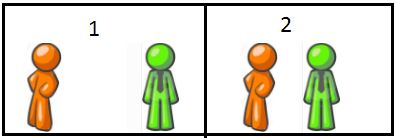
Which System has the greater gravitational pull between the two objects?
a)
System 1
b)
System 2
c)
Same: there is no gravitational attraction between the two objects
34.
If mass = 78.9 kg, weight on Earth = 
a)
774 N
b)
77.4 N
c)
8 N
d)
774 kg
35.
If mass = 1.6 kg, weight on Earth = 
a)
0.16 N
b)
15.7 kg
c)
15.7 N
d)
157 N
36.

True or False: Gravity helps the Earth to stay in orbit around the Sun

a)

True

b)

False

37.

What natural phenomena occurs on Earth due to the gravity of the Moon?

a)

Earthquakes

b)

Hurricanes

c)

Volcanic Eruptions

d)

Ocean Tides

38.

Where would you weight the most?

a)

Mars

b)

Pluto

c)

The Sun

d)

Earth

39.

Kepler's First Law states

a)

objects attract other objects with a force that is directly proportional to the product of their masses

b)

the square of the ratio of the periods of any two planets revolving around the Sun is equal to the cube of the ratio of their average distance from the Sun

c)

An imaginary line joining a planet and the sun sweeps out an equal area of space in equal amounts of time.

d)

Planets move about the Sun in an elliptical orbit with the Sun at one of the foci.

40.

Kepler's Second Law states

a)

objects attract other objects with a force that is directly proportional to the product of their masses

b)

the square of the ratio of the periods of any two planets revolving around the Sun is equal to the cube of the ratio of their average distance from the Sun

c)

An imaginary line joining a planet and the sun sweeps out an equal area of space in equal amounts of time.

d)

Planets move about the Sun in an elliptical orbit with the Sun at one of the foci.

41.

Kepler's Third Law states

a)

objects attract other objects with a force that is directly proportional to the product of their masses

b)

the square of the ratio of the periods of any two planets revolving around the Sun is equal to the cube of the ratio of their average distance from the Sun

c)

An imaginary line joining a planet and the sun sweeps out an equal area of space in equal amounts of time.

d)

Planets move about the Sun in an elliptical orbit with the Sun at one of the foci.

42.

This is a statement of which scientific law?


Object attract other objects with a force that is directly proportional to the product of their masses, and inversely proportional to the square of the distance between them.

a)

Newton's First Law

b)

Newton's Second Law

c)

Newton's Third Law

d)

Newton's Law of Universal Gravitation

43.

According to Einstein's Theory of Relativity, which of the most accurately describes time?

a)

Time is a human construct and is constant

b)

Time is a human construct and varies depending upon where an object is in space

c)

Time is relative and varies depending upon how fast an object are traveling

d)

Time is relative and varies depending upon how fast an object is traveling; the faster an object is traveling the slower time passes

44.

When looking at the Earth's orbit, what can be said about summer and winter in the Northern hemisphere?

a)

Because of its orbit, Earth is the same distance from the Sun in both the Northern hemisphere's summer and winter seasons.

b)

Because of its orbit, Earth is further away from the Sun in the Northern hemisphere's winter season and closer during the summer season.

c)

Because of its orbit, Earth is further away from the Sun in the Northern hemisphere's summer season and closer during the winter season.

d)

None of the above accurately describe the Earth's orbit.

45.

Which of the following most accurately describes the movement of the Earth around the Sun?

a)

The Earth moves at a constant speed around the Sun.

b)

The Earth moves faster when it is closest to the Sun.

c)

The Earth moves slowest when it is closest to the Sun.

d)

The Earth's speed varies dependent upon the phase of the moon.

46.

According to Einstein, what is a fourth dimension with which astronomers should be concerned when studying space?

a)

Time

b)

Space

c)

Spacetime

d)

Infinity

47.

What would happen to the gravitational force if one of the masses is doubled and the radius is doubled?

a)

The gravitational force would be quadruple the original.

b)

The gravitational force would be double the original.

c)

The gravitational force would be one-half the original.

d)

The gravitational force would be one-fourth the original.

48.

When in orbit around the Earth, what is true about the relationship between a satellite's distance from the Earth's surface and its velocity in order for the satellite to stay in its orbit?

a)

A satellite's distance and velocity are inversely proportional; that is, the satellite must travel more quickly to stay in orbit.

b)

A satellite's distance and velocity are directly proportional; that is, the satellite must travel less quickly to stay in orbit.

c)

A satellite's velocity is not affect by its distance from the Earth's surface.

d)

The distance from the Earth's surface is only dependent upon the mass of the satellite.

49.

Which of the following is the most accurate description of "escape velocity"?

a)

Escape velocity is the velocity needed to get away from the Earth's gravitational force.

b)

Escape velocity is the velocity needed to get away from the Earth's gravitational force and is dependent upon the mass of the satellite.

c)

Escape velocity is the velocity needed to get away from the Earth's gravitational force and not dependent upon the mass of the satellite.

d)

Escape velocity is the velocity needed to get away from the Earth's gravitational force and not dependent upon the mass of the satellite but is dependent upon the geometric structure of the launch vehicle.

50.
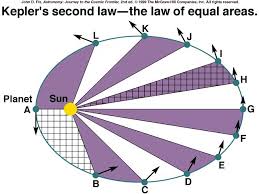
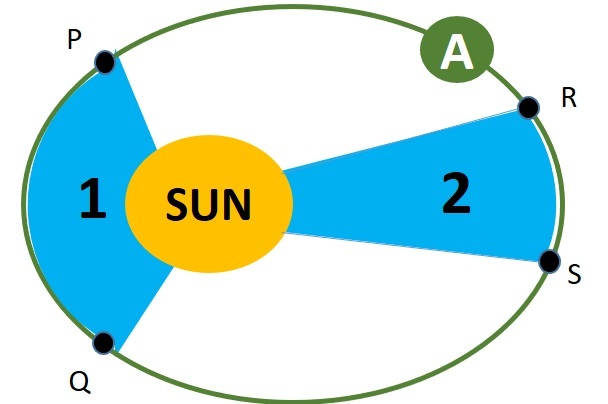
 The planet travels faster when it is closer to the sun and slower when it is farther away when it is closer to the sun and slower when it is farther away describes which of Kepler's Laws (see illustration)
a)
1st
b)
2nd
c)
3rd
d)
None of the above
51.
According to Kepler’s 3rd Law of Planetary Motion the farther a planet is located from the Sun...
a)
the shorter its period of revolution
b)
the longer its period of revolution
52.
The diagram to the left shows four positions of a planet in its orbit around the Sun. At which position would the planet’s speed be the greatest?
a)
A
b)
B
c)
C
d)
D
53.
What is the Universal law of gravitation equation? 
a)
G=F ⋅ m⋅m2/r2
b)
F=G ⋅ m⋅m2/(r)2
c)
F=G ⋅ r2/m⋅m2
d)
G=F ⋅ r2/m⋅m2
54.
What states that "every object in the universe attracts every other object"?
a)
Law of Universal Gravitation
b)
Newton's First Law of Motion
c)
My mother
d)
Inertia & gravity
55.
Where is the planet moving faster
a)
Position A to B
b)
Position B to C
c)
Position H to I
d)
Position I to J
56.
What is true about the area between points A, B and the Sun, and the area between points H, I and the Sun?
a)
The area between A, B and the Sun is the largest.
b)
The area between H, I and the Sun is the largest
c)
Both areas are equal in size
d)
There is not enough information to determine the areas
57.
Two asteroids exert a gravitational force, F, on each other. Some time later, the asteroids are now three times as far from each other as before. Which of the following represents the gravitational force at this distance? 
a)
F/3
b)
F/2
c)
F/6
d)
F/9
58.

If I double the mass of one object, but don't change anything else... What happens to the gravitational force between two objects?

a)

Doubles

b)

Quadruples

c)

Cut in Half

d)

4x Smaller

59.
The velocity is always _____ to the line of a circle. 
a)
outwards
b)
towards the center
c)
tangent
d)
faster
60.
Which statement is true about an object that is traveling in uniform circular motion?
a)
The speed of the object varies.
b)
The net force on the object is directed toward the center of the circular path.
c)
The direction of the object's velocity is constant.
d)
The net force on the object is directed away from the center of the circular path.
61.
Centripetal acceleration always points
a)
in the direction of the object's motion
b)
in the opposite direction of the object's motion
c)
towards the center of the circle
d)
towards the outside of the circle
62.

Centrifugal force is a ______

a)

force that pushes you to the outside of a circle during uniform circular motion.

b)

fictitious force that is really just an object resisting change

c)

The force that keeps the planets in orbit

63.
What is the SI unit for radius?
a)
meter
b)
pi
c)
inches
d)
kilometer
64.
Which of the following terms means "center seeking"?
a)
centrifugal
b)
centrifuge
c)
centripetal
d)
centenarian
65.
Which of the following is the unit for centripetal force?
a)
J
b)
m/s2
c)
kg⋅m/s
d)
N
66.
Which represents the acceleration of the ball?
a)
A
b)
B
c)
C
d)
D
67.
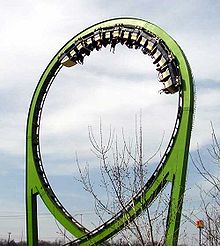
Where is the net force when the rollercoaster is at the top of the loop?
a)
Towards the sky
b)
Towards the Right
c)
Towards the left
d)
Towards the ground
68.
What is required in order for an object to move in a circle?
a)
An outward directed unbalanced force
b)
Any force acting inward toward the center of the circle
c)
An unbalanced force acting inward toward the center of the circle.
d)
Both an inward and an outward force.
69.
At any given moment in time, the force of centripetal acceleration is
_____________ to the instantaneous velocity vector of an object.
a)
Parallel
b)
Perpendicular
c)
Opposite
d)
Varies Based On The Circumstances
70.
Which of the following depict the speed of the blowing ball?
a)
A
b)
B
c)
C
d)
D
71.
Why do objects experience centripetal acceleration?
a)
Because they are speeding up as they move in a circle
b)
Because they are constantly changing direction and the net change is directed inward
c)
Because they are constantly changing both speed and direction
d)
Because when you have 100 people pedaling, you can speed up more easily.
72.
What is the SI unit for circumference?
a)
meter
b)
pi
c)
inches
d)
kilometer
73.

Why does mud fly off a car tire rapidly spinning?

a)

The mud is electrically charged

b)

There is no longer a centripetal force keeping the mud in circular motion

c)

The gravitational attraction of the moon pulls the mud off

74.

If the disk is increasing the rate at which it spins, which lady bug will fly off first?

a)

Lady Bug 1

b)

Lady Bug 2

c)

Same time!

75.

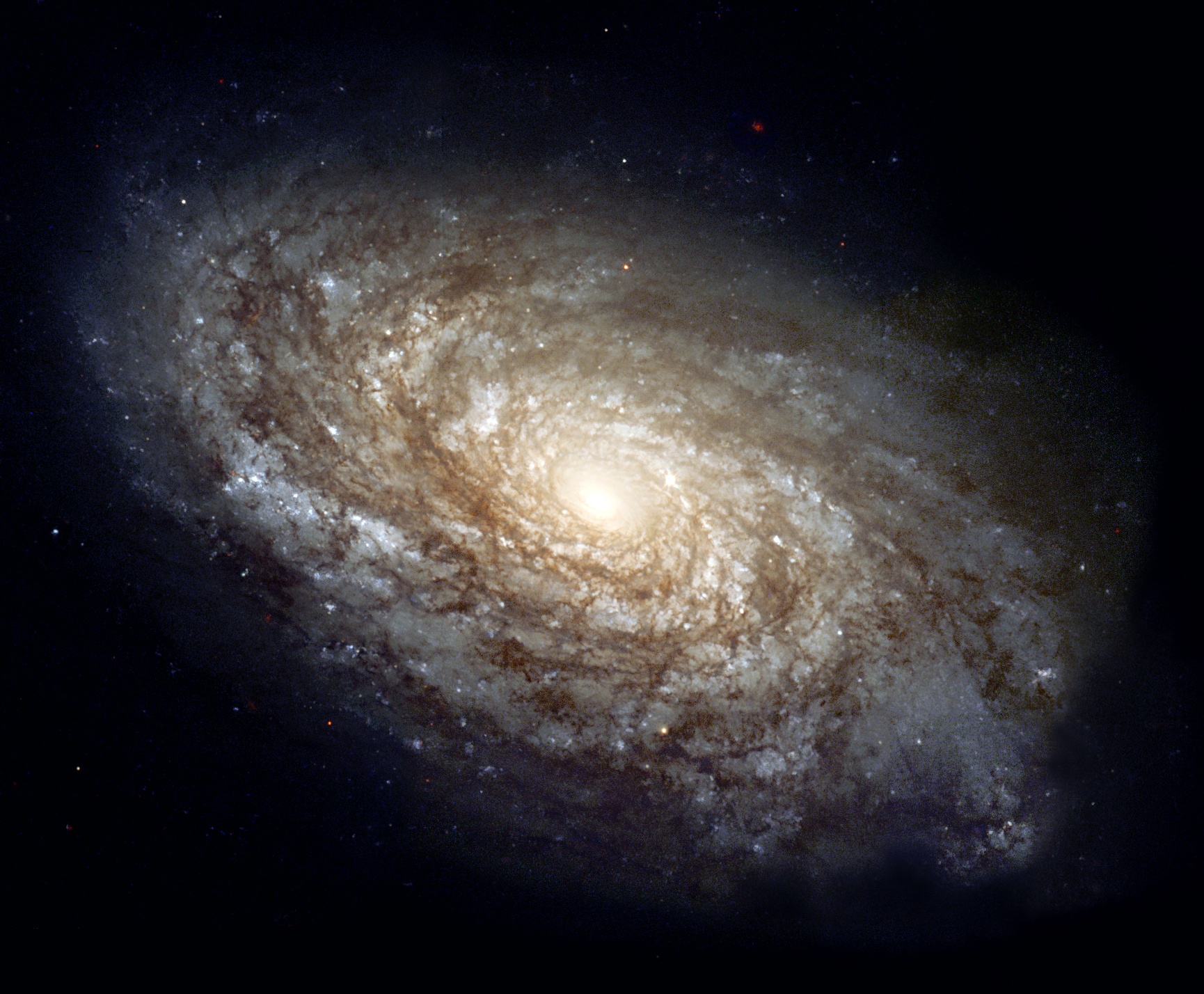
Why do scientists think that there are these extremely large masses at the center of a galaxy aka Black holes?

a)

All celestial objects in the galaxy revolve around a center point and must are captured by a centripetal force which must stem from a gravitational attraction between two masses

b)

Umm well why not?

c)

The unicorns told us!

76.

The expression for orbital  velocity of an object is ….

a)

 GMR\sqrt{\frac{GM}{R}} 

b)

 GM2R\sqrt{\frac{GM}{2R}} 

c)

GMR2\sqrt{\frac{GM}{R^2}}

d)

2GMR2\sqrt{\frac{2GM}{R^2}}

77.

The orbital velocity of an object in an orbit around the earth for a piece of 1 g is 8.2 km/s. What would it be for a piece of 10 g in the same orbit?

a)

82 km/s

b)

8.2 km/s

c)

16.4 km/s

d)

4.1 km/s

78.

An elephant and an ant are to be projected out of the gravitational pull of the earth. What should be the velocities of the elephant and the ant?

a)

elephant has more escape velocity

b)

ant has more escape velocity

c)

different velocity

d)

same velocity

79.
Which planet in our solar system will have the fastest orbital  speed?
a)
Venus 
b)
Earth 
c)
Saturn 
d)
Mercury 
80.
As the moon orbits the earth, what keeps the moon moving in a circular motion?
a)
Gravity
b)
Inertia
c)
Centripetal Force
d)
Friction
81.
You swing a bucket of water attached to a string in a circle above your head. What keeps the water in the bucket?
a)
Friction
b)
Centripetal Force
c)
Gravity
d)
Inertia
82.
The centripetal force of satellites is similar to gravitational force because they are both a net force towards the center of earth.
a)
True
b)
False
83.
Decreasing the radius when making a turn allows you to____?
a)
Increase your friction
b)
Keep a high speed
c)
Change your inertia
d)
Decrease gravitational pull
84.

What is the equation to calculate the centripetal force for an object?

a)

F = mT

b)

F = mv2/r

c)

F = mu mg

d)

F = mg

85.

A ball on a string is spun around in a circle. Which of the following quantities is not constant?

a)

mass

b)

force

c)

velocity

d)

acceleration

86.

The diagram shows an object traveling at a constant speed in a circular path. Which labeled arrow represents the centripetal force acting on the object?

a)

W

b)

Z

c)

X

d)

Y

87.
A ball on a string is travelling in circular motion. Which vector represents the centripetal force?
a)
The green vector because it points towards the center of the circular path
b)
The blue vector because it shows the direction of the object's inertia
c)
The green vector because it shows the path of the ball
d)
The blue vector because this is the way the ball will move when it is released.
88.
Calculate the centripetal force required to make a 5 kg ball move 4 m/s in a circle with a radius of 2 m.
a)
10 N
b)
20 N
c)
30 N
d)
40  N
89.

A 10kg car travels at a constant speed of 20.0 m/s around a horizontal circular track. Which diagram correctly represent the direction of the car's velocity (v) and the direction of the centripetal force (Fc) acting on the car at a particular moment?

a)
b)
c)
d)
90.
What is the difference between centripetal and centrifugal forces?
a)
Centripetal is towards center while centrifugal is away from the center.
b)
Centrifugal is towards center while centripetal is away from the center.
c)
Neither of the above is correct
91.

a celestial body orbiting a planet

a)

centripetal force

b)

orbit

c)

satellites

d)

centripetal acceleration

92.

In what year was Sputnik launched?

a)

1945

b)

1954

c)

1957

d)

1969

e)

1973

93.

Speed of Planet A at RS is faster than PQ

Planet A lebih laju di RS berbanding di PQ.

a)

True

Betul

b)

False

Salah

94.

Which of the following shows the formula to calculate escape velocity of an object from the surface of the Earth?


Antara berikut yang manakah menunjukkan formula untuk mengira halaju lepas sesuatu objek dari permukaan Bumi Bumi?

a)
b)
c)
d)
95.

Which of the following shows the formula to calculate linear speed of satellite orbiting the Earth?


Antara berikut yang manakah menunjukkan formula untuk mengira laju linear satelit mengorbit Bumi?

a)
b)
c)
d)
96.

Which of the following shows the correct way to get the value of r?


Yang manakah antara berikut menunjukkan cara untuk mendapatkan nilai r?

a)

R + h

b)

h

c)

R

d)

R - h

97.

A satellite orbits the Earth with linear speed 3.87 x 10^3 ms-1. Calculate the radius of the orbit.


Sebuah satelit mengelilingi Bumi dengan laju linear 3.87 x 10^3 ms-1. Kira jejari orbit.


(G = 6.67 x 10⁻¹¹ N m2 kg-2, M = 5.97 x 1024 kg, R = 6.37 x 10⁶ m)

a)

5.42 x 10^7 m

b)

3.17 x 10^7 m

c)

2.66 x 10^7 m