Wayground logo

Free Printable Worksheets

Font size

S
M
L
XL
Worksheets

Rocks/Mineral

Total questions: 79

Worksheet time: 1hrs 17mins

Name
Class
Date
1.
Which BEST describes the rock cycle?
a)
New rocks form from older rocks.
b)
Lunar rocks change into terrestrial rocks.
c)
Rocks in the ocean become rocks on land.
d)
Layers of rock are broken by faults.
2.
How are sedimentary rocks, such as shale and sandstone, formed?
a)
Particles are changed into liquids.
b)
Particles are compressed into layers.
c)
Particles are melted together by magma.
d)
Particles are heated by the Sun.
3.
In order for sediments to become rock, the sediments are generally
a)
liquefied.
b)
compacted.
c)
returned to their origins.
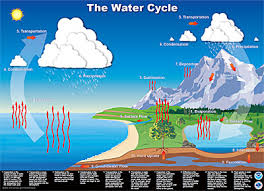
d)
mixed with organic material.
4.
Which of these substances is a mineral?
a)
sandstone
b)
granite
c)
quartz
d)
coal
5.
Which processes must occur in order for an igneous rock to change into a metamorphic rock?
a)
heating and pressure
b)
compaction and cementation
c)
melting and cooling
d)
uplift and erosion
6.
Which process forms both metamorphic and sedimentary rock?
a)
recrystallization
b)
heating
c)
weathering
d)
compacting
7.
When buried sediments are subjected to pressure, the mineral grains are squeezed together. This causes
a)
layers to rise to the surface
b)
new rock to be formed
c)
earthquakes
d)
volcanoes
8.
Which processes change magma into igneous rock?
a)
weathering and erosion
b)
heat and pressure
c)
compaction and cementation
d)
cooling and crystallization
9.
Gneiss is a rock because it
a)
is hard and round.
b)
has crystals.
c)
is made of minerals.
d)
has mass.
10.
Which statement is true about rocks?
a)
Magma is made of solid rock.
b)
Rocks are made of one or more minerals.
c)
Crystals are made of rocks.
d)
Minerals are made of one or more rocks.
11.
One rock was formed from rapidly cooling lava and is smooth and glassy. The other rock was formed from slow-cooling magma, so has large crystals. Which rock property is represented by these characteristics?
a)
color
b)
texture
c)
fracture
d)
hardness
12.
Which sentence BEST describes a process in the rock cycle?
a)
Sedimentary rocks can melt to become metamorphic rocks.
b)
Volcanoes can deposit sedimentary rock to form mountains.
c)
Metamorphic rocks can form by the weathering process.
d)
Igneous rocks can become metamorphic and sedimentary rocks.
13.
Which process causes sand grains to stick together to form sandstone?
a)
cementation
b)
abrasion
c)
combustion
d)
erosion
14.
Which type of rock is formed when particles are compacted and cemented together?
a)
igneous
b)
metamorphic
c)
sedimentary
d)
metallic
15.
Sedimentary rock forms when rock is first
a)
broken down by weathering.
b)
melted into liquid magma.
c)
exposed to great temperature.
d)
crystallized into natural glass.
16.
What process is occurring at point A on the diagram of the rock cycle? 
a)
Heat and Pressure
b)
Cooling 
c)
Weathering and Erosion 
d)
Cementation and Compaction 
17.
Which type of rock results from melting and cooling of magma?
a)
Igneous
b)
Metamorphic
c)
Sedimentary
d)
Extrusive
18.
Which type of igneous rock forms beneath the Earth's surface and cools slowly forming LARGE crystals? 
a)
Intrusive Igneous Rock
b)
Extrusive Igneous Rock
19.
What is the MAIN way rocks are classified?
a)
Their color and shapes
b)
How they form
c)
Mineral bands
d)
Where they form
20.
This rock started as lava that cooled and then was heated and put under pressure over time. What type of rock is this?
a)
Sedimentar
b)
Igneous
c)
Metamorphic
21.
Which rock layer in the diagram seems to be the oldest?
a)
F
b)
E
c)
B
d)
A
22.
According to the law of superposition, the oldest fossils are found 
a)
At the top of the rock layers
b)
Near the bottom of the rock layers
c)
In the middle of the rock layers
d)
Somewhat near the surface
23.
What can be found in a sedimentary rock?
a)
rock fragments and sand
b)
minerals and shell
c)
fossils
d)
all of these choices
24.
Rock types can follow only one pathway of the rock cycle.
a)
True
b)
False
25.
What process is occurring at point B on the diagram of the rock cycle? 
a)
Melting and cooling
b)
Heat and pressure
c)
Compaction and cementation
d)
Weathering and Erosion 
26.

Sometimes the heat just changes the size of the mineral crystals in this type of rock.

a)

Sedimentary

b)

Igneous

c)

Metamorphic

27.

Fossils are often found in this rock.

a)

Sedimentary

b)

Igneous

c)

Metamorphic

28.

This rock is changed by heat and pressure.

a)

Sedimentary

b)

Igneous

c)

Metamorphic

29.

This rock may be formed from magma that hardens.

a)

Sedimentary

b)

Igneous

c)

Metamorphic

30.
This type of soil is made of tiny pieces of rock. 
a)
sand
b)
clay
c)
humus
d)
loam
31.
This type of soil is carried by water and left as sediment. 
a)
bedrock
b)
loam
c)
silt
d)
clay
32.
What physical property of soil determines if it retains water?
a)
color
b)
particle size
c)
texture
d)
weight
33.
Which of the following is NOT one of the three types of soil?
a)
clay
b)
sand
c)
silt
d)
mud
34.
Which of the following is the largest particle in soil?
a)
sand
b)
silt
c)
humus
d)
clay
35.
Many plants cannot grow in sandy soil. Why is this true?
a)
Sandy soil does not hold enough water.
b)
Oxygen cannot pass through sandy soil.
c)
Roots cannot easily push through clay soil.
d)
Sandy soil has too many nutrients.
36.
How would you describe the texture of "sandy" soil?
a)
sticky
b)
gritty
c)
smooth
d)
slimy
37.
What do we call dirt?
a)
air
b)
water
c)
soil
d)
ice
38.
Soil is made of small ______.
a)
icicles
b)
particles
c)
plastics
d)
bricks
39.
Water is made up of these two colorless, odorless gases.
a)
Helium and Oxygen
b)
Oxygen and Carbon Dioxide
c)
Hydrogen and Helium
d)
Hydrogen and Oxygen
40.
When rocks are broken down into smaller pieces
a)
erosion
b)
weathering
c)
sediment
41.
Particles of rock, sand, soil, plant and animal remains
a)
erosion
b)
sediment
c)
weathering
42.

___________________ is the process by which water changes from a liquid to a gas or vapor. __________________ is the primary pathway that water moves from the liquid state back into the water cycle as atmospheric water

a)

Transpiration

b)

Deposition

c)

Percolation

d)

Evaporation

43.

_____________________ is water released from clouds in the form of rain, freezing rain, sleet, snow, or hail. It is the primary connection in the water cycle that provides for the delivery of atmospheric water to the Earth. Most ________________ falls as rain.

a)

Snowmelt runoff

b)

Precipitation

c)

Surface runoff

d)

Evaporation

44.

__________________ is the process by which water vapor in the air is changed into liquid water. ________________ is crucial to the water cycle because it is responsible for the formation of clouds.

a)

Transportation

b)

Percolation

c)

Condensation

d)

Plant Uptake

45.

__________________ is the process by which moisture is carried through plants from roots to small pores on the underside of leaves, where it changes to vapor and is released to the atmosphere. ______________ is essentially evaporation of water from plant leaves.

a)

Transpiration

b)

Percolation

c)

Infiltration

d)

Plant Uptake

46.

Water that flows across the land and enters rivers and streams. It eventually flows into lakes and the ocean.

a)

Snowmelt runoff

b)

Surface Runoff

c)

Deposition

d)

Precipitation

47.
Which stages does liquid water from the ocean turn into water vapor?
a)
condesantion
b)
evaporation
c)
precipitation
d)
run off
48.
Water continually cycles between the atmosphere (troposphere), land, and ocean via the water cycle.  These processes are propelled by sunlight and gravity.
a)
precipitation
b)
condensation
c)
water cycle (hydrologic cycle)
d)
surface run off
49.
What is C?
a)
Evaporation
b)
Condensation
c)
Precipitation
d)
Runoff
50.
The arrows in the diagram below represent the movement of water in the water cycle.

Which arrow represents the process of transpiration?
a)
A
b)
B
c)
C
d)
D
51.
Base your answers to the following questions on the diagram of the water cycle below. Letter A represents a process in the water cycle. Points X and Y represent locations on Earth's surface.
 The process represented by A is
a)
precipitation
b)
transpiration
c)
condensation
d)
saturation
52.
What is      D?
a)
Evaporation
b)
Condensation
c)
Precipitation
d)
Runoff
53.

The process of water collecting in rivers, lakes, streams, oceans and other bodies of water is called

a)

infiltration

b)

percolation

c)

precipitation

d)

accumulation

54.

The highest level where the underground is saturated with water is called

a)

water shed

b)

water table

c)

water cycle

d)

water balance

55.

The downward entry of water to the soil is called

a)

percolation

b)

infiltration

c)

transpiration

d)

surface runoff

56.

The water that is stored below Earth's surface. It usually can be accessed through wells and or pump.

a)

surface water

b)

groundwater

c)

water table

d)

water cycle

57.

An area of land where all of the waters that is under it are collected, or drains off of it collects into the same place.

a)

water table

b)

watershed

c)

water cycle

d)

river beds

58.

An area of land drained by a river and its tributaries to a common outlet.

a)

delta

b)

ecosystem

c)

watershed

d)

lake

59.

Which property describe a characteristic of a sedimentary rock?

a)

large crystals

b)

glassy

c)

small crystals

d)

layers

60.

What type of rock forms from the process shown above

a)

Igneous

b)

metamorphic

c)

sedimentary

d)

chemical

61.

Which property can help identify a mineral?

a)

Mass

b)

weight

c)

hardness

d)

volume

62.

Which type of rocks are classified according to the organization of the grains?

a)

igneous

b)

sedimentary

c)

metamorphic

d)

clastic

63.

Solid inorganic materials that naturally occur in earth's crust and have a definite chemical composition are called

a)

rocks

b)

minerals

c)

sedimentary rocks

d)

humus

64.

Which of the following is not part of the process in forming a mineral?

a)

hot water cooling

b)

compaction

c)

evaporation

d)

heat and pressure

65.

Which best describes the overall process of soil formation?

a)

bedrock weathers and then mixes with humus

b)

compacting sediments

c)

decaying of organic material

d)

sediments are eroded

66.

Which of the following will help conserve Earth's resources?

a)

monitoring uses of rocks and minerals

b)

extracting as many rocks and minerals as possible

c)

using rocks and minerals as much as possible

d)

polluting

67.

Which of the below is a factor that causes soil to be different?

a)

amount of weathering

b)

amount of life in area

c)

type of bedrock

d)

all of the above

68.
What are the three components of soil?
a)
insects, sand, topsoil
b)
clay, sand, humus
c)
topsoil, subsoil, bedrock
d)
earthworms, sand, silt
69.
_______ is the type of soil used most often with plants. It is a mixture of clay, sand, and silt.
a)
loam
b)
humus
c)
mud
d)
dirt
70.
Humus is.....
a)
the dead parts of plants and animals in soil.
b)
A food we eat with pretzels.
c)
The tiny particles inside of soil
d)
The roots that come off of a plant and live in soil.
71.
Ellen grabs a topsoil sample in her hand. She rolls it into a ball. The soil feels gritty and the ball falls apart. What part of the topsoil most likely made the topsoil feel gritty?
a)
clay
b)
sand
c)
silt
d)
humus
72.
Many plants cannot grow in clay soil. Why is this true?
a)
Clay soil does not have many nutrients.
b)
Roots cannot easily push through clay soil.
c)
Water doesn't drain well through clay.
d)
All of these choices.
73.
You dig a small hole in the soil and the next day it rains. The hole fills with water, but does not empty even after several days of dry weather. What is the soil mostly made of?
a)
clay
b)
sand
c)
humus
d)
silt
74.
Layers of soil are also known as:
a)
Soil Profiles
b)
Soil Horizons
c)
Soil sheets
d)
Soil cores
75.
Layers of soil are also known as:
a)
Soil Profiles
b)
Soil Horizons
c)
Soil sheets
d)
Soil cores
76.
Which of the following orders sediment particle size from smallest to largest?
a)
silt, sand, clay
b)
sand, silt, clay
c)
clay, sand, silt
d)
clay, silt, sand
77.
Which of the horizons in the soil profile shown represent the organic material?
a)
Horizon O (Humus)
b)
Horizon A
c)
Horizon B
d)
Horizon C
78.

Which layer is the parent material?

a)

Horizon O

b)

Horizon A

c)

Horizon B

d)

Horizon C

e)

Horizon R

79.

Which layer is the subsoil?

a)

Horizon O

b)

Horizon A

c)

Horizon B

d)

Horizon C

e)

Horizon R