wayground logo

Free Printable Worksheets

NEW

Font size

S
M
L
XL
Worksheets

Taxonomy

Total questions: 59

Worksheet time: 2hrs 38mins

Name
Class
Date
1.

The diagram shows taxonomic groups and a major distinguishing characteristic of all but two of them. Which characteristics will be used to complete the chart?

a)

nonphotosynthetic - photosynthetic

b)

autotrophic - heterotrophic

c)

no nucleus - nucleus

d)

motile - nonmotile

2.

A student want to use the Venn diagram to show the characteristics of two kingdoms of organisms. The characteristics that the two kingdoms share will be listed in the shaded area where the circles intersect. Which of these is a characteristic that the student should list in the shaded part of the diagram?

a)

heterotrophic

b)

mobile

c)

prokaryotic

d)

multicellular

3.

Which list of characteristics describes organisms classified as animals?

a)

autotrophic, multicellular, prokaryotic

b)

multicellular eukaryotic, heterotrophic

c)

unicellular, eukaryotic, heterotrophic

d)

multicellular, eukaryotic, autotrophic

4.

Identify the kingdom based on the organisms characteristics.

a)

Eubacteria

b)

Fungi

c)

Archaea

d)

Animalia

5.

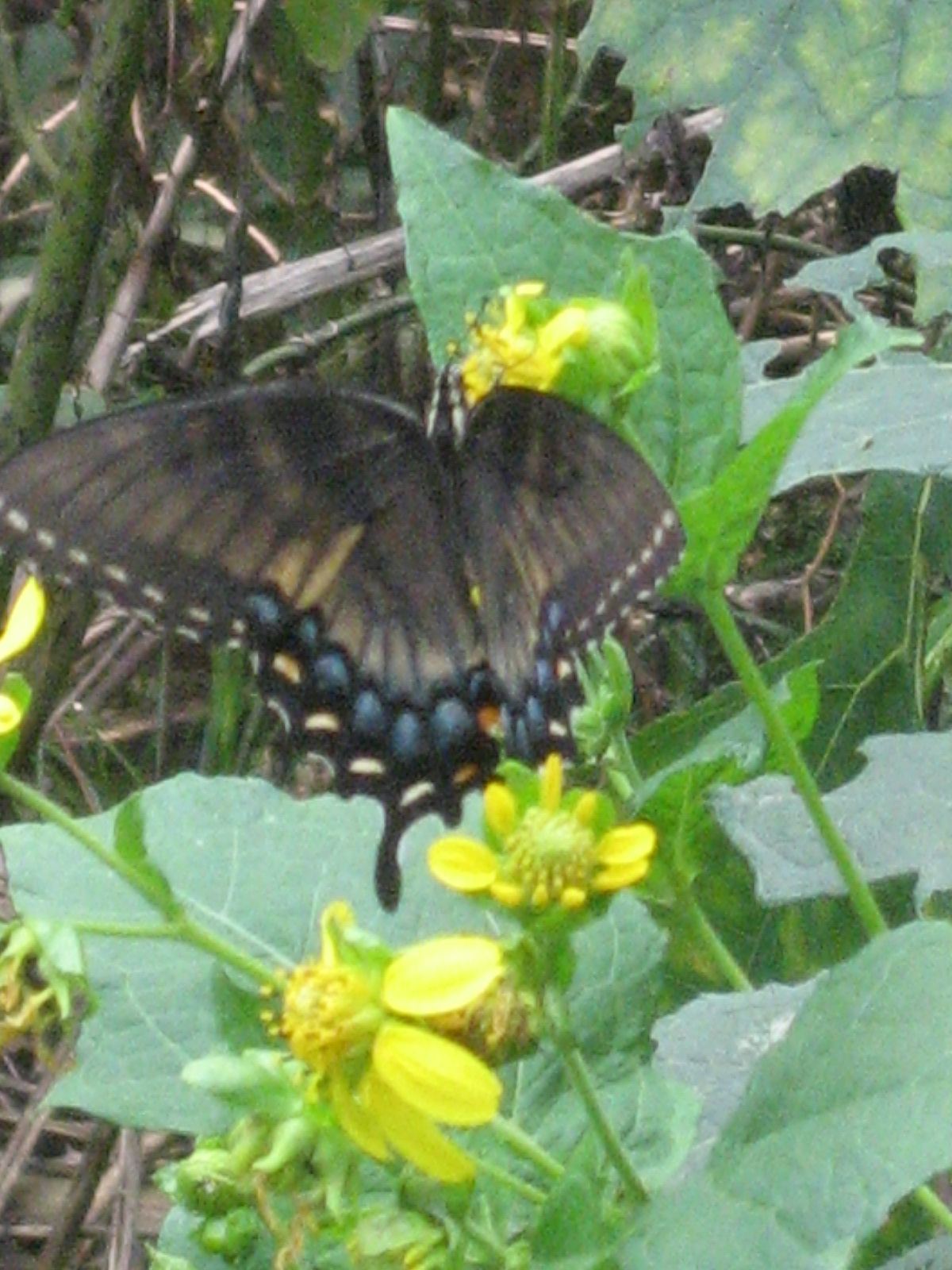
In which kingdom does the organism below belong?

a)

Animalia

b)

Fungi

c)

Plantae

d)

Eubacteria

6.
The 2 kingdoms that make up Prokaryotes are?
a)
Animals and Plants 
b)
Protists and Fungi
c)
Archea and Bacteria
7.
What is an autotroph?
a)
an organism that can make their own food. 
b)
an organism that cannot make their own food
c)
Herbivore
d)
Omnivore
8.
Cell with a nucleus, DNA is found in the nucleus of this cell. 
a)
Prokaryotic 
b)
Eukaryotic
c)
Unicellular
d)
Multicellular 
9.

You find a species that seems to be unicellular and is eating smaller cells around it. It has organelles and a nucleus. Which kingdom is it MOST likely a part of?

a)

Fungi

b)

Bacteria

c)

Protists

d)

Plants

10.
Which of the following organisms are LEAST closely related?
a)
organisms that share a domain
b)
organisms that share a family 
c)
organisms that share a genus 
d)
organisms that share a species 
11.
The scientific name for an organism is made from the:
a)
class and family name
b)
genus and species name
c)
domain and kingdom name
d)
kingdom and phylum name
12.
The 8 levels of classification, most broad to most specific.
a)
Domain, Genus, Family, Order, Class, Phylum, Kingdom, Species
b)
Domain, Species, Kingdom, Genus, Phylum, Family, Class, Order
c)
Domain, Kingdom, Phylum, Class, Order, Family, Genus, Species
d)
Order, Kingdom, Species, Domain, Phylum, Family, Class, Genus
13.
Term given to describe the 2 name naming system is:
a)
dichotmous key
b)
binomial nomenclature
c)
2 scientific names
d)
binomial key
14.
Who first proposed binomial nomenclature as a way of classifying organisms?
a)
Carl Linnaeus
b)
Carl's Jr.
c)
Charles Darwin
d)
Henry Groseclose
15.
Cells that do not have a true nucleus are called....
a)
eukaryote
b)
prokaryote
c)
unicellular
d)
multicellular
16.
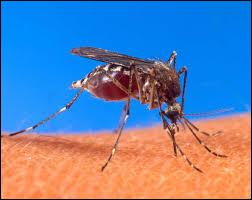
Mosquito  belongs to what kingdom?
a)
Animal Kingdom
b)
Plant Kingdom
c)
Fungi Kingdom
d)
Protista Kingdom
17.
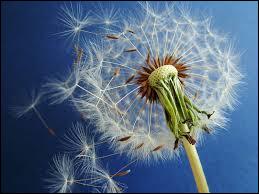
Dandelion, What kingdom does it belongs to?
a)
Plant Kingdom
b)
Animal Kingdom
c)
Fungi Kingdom
d)
Protista Kingdom
18.
Which organisms are most closely related?
a)
Equus caballas (Horse) & Equus burchellii (Zebra)
b)
Cyanea artica (Jellyfish) &
Ctenodiscus crispatus (Mud Starfish)
c)
Naja naja (cobra) & Glycine max (soya bean)
d)
Ophiocomina nigra (black brittle star) & Brassica nigra (black mustard)
19.
The science of describing, classifying, and naming living things is called:
a)
Geology
b)
Biology
c)
Taxonomy
d)
Chemistry
20.
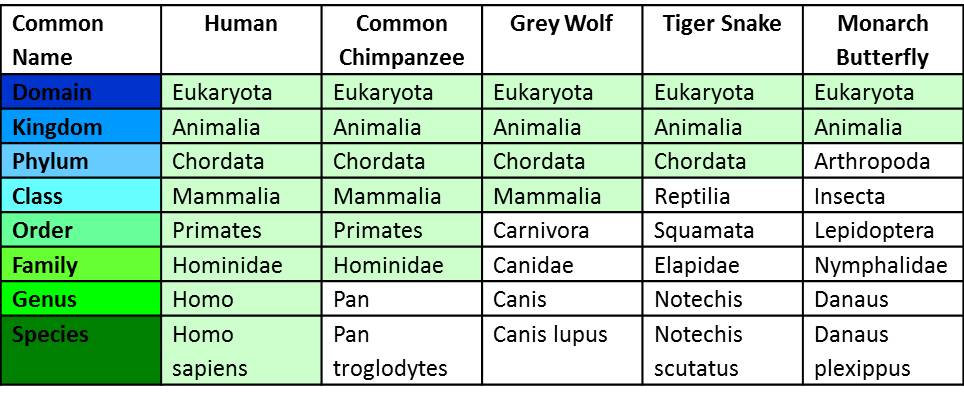
Which organism in the table is least closely related to the chimpanzee?
a)
human
b)
grey wolf
c)
tiger snake
d)
monarch butterfly
21.
An illustration and a dichotomous key are given. What is the correct classification for this organism?
a)
Class Insecta
b)
Order Amblygygi
c)
Order Araneae
d)
Order Scorpiones
22.

Which 2 organisms would be able to reproduce and produce fertile offspring?

a)

2 organisms in the same class

b)

2 organisms in the same family

c)

2 organisms in the same genus

d)

2 organisms in the same species

23.
The most general in the order of classification is?
a)
Kingdom 
b)
Phylum 
c)
Class 
d)
Order
24.
The most specific of the classifications is?
a)
class 
b)
order 
c)
genus 
d)
species
25.
A heterotroph means?
a)
feeds itself
b)
feeds on other organisms
c)
2 word name
d)
8 legged
26.
What kingdom's organisms often live in super harsh environments?
a)
archea
b)
animalia
c)
plantae
d)
protista
27.
Most of the organisms in this kingdom are tiny, but some examples include seaweed that can be 100 ft long. 
a)
Protista 
b)
Plants
c)
Bacteria
d)
Fungi
28.
Mushrooms are an example of this Kingdom?
a)
Animalia
b)
Protista 
c)
Archea 
d)
Fungi
29.
The scientific name of Humans is? 
a)
Homo Sapiens
b)
Homo Habilus 
c)
Canis Latrans
30.
Kingdom, Phylum, Class, _______
a)
Family 
b)
Order
c)
Genus 
d)
Species
31.
A tool used by a taxonomist to identify an unknown organism is known as a __________.
a)
dichotomous key
b)
binomial nomenclature
c)
scientific name
d)
binomial key
32.
Which of the following is not true when comparing scientific and common names?
a)
Scientific names vary from place to place.
b)
Common names can vary from place to place.
c)
Scientific names are written in Latin.
d)
Common names can inaccurately describe the organism and be confusing.
33.
A student discovers an arachnid with a segmented abdomen, long legs, and a tail with no stinger. The student uses the dichotomous key below to identify it. Which arachnid has the student found?
a)
Whip Scorpion
b)
Wind Scorpion
c)
Daddy long legs
d)
Scorpion
34.
Which organism in the table shown is most closely related to the common dolphin?
a)
human
b)
killer whale
c)
giant kelp
d)
bat star
35.
___ shows the relationship between species
a)
Classification
b)
Visible similarity
c)
Family history
d)
Biology
36.
Which taxon is broader (more organisms included)?
a)
Phylum
b)
Family
c)
Order
d)
Class
37.

Animals with fur or hair and feed their young with milk

a)

penguins

b)

mammals

c)

birds

d)

amphibians

38.

Animals with backbones

a)

Invertebrates

b)

Insectivores

c)

Vertebrates

d)

Plants

39.

The only flying mammals

a)

Bats

b)

Birds

c)

Flying Fish

d)

Bald Eagle

40.

Do mammals lay eggs?

a)

no

b)

yes

41.

Are mammals cold-blooded or warm- blooded?

a)

Cold-Blooded

b)

Warm-Blooded

42.
Which of these is NOT a feature that a mammal has?
a)
Hair or fur
b)
Lungs
c)
Backbone
d)
Gils
43.
Does a reptile lay eggs?
a)
Yes
b)
No
c)
Sometimes
d)
Nothing
44.
Is a reptile cold-blooded or warm blooded?
a)
Warmblooded
b)
Cold-blooded
c)
Neither
d)
Both
45.
What does a reptile usually eat?
a)
Birds
b)
Meat
c)
Insects
d)
None of the above
46.
Which 2 reptiles can shed skin?
a)
Turtles and fish
b)
Lizards and frogs
c)
Lizards and snakes
d)
Humans and birds
47.

Where do most amphibians spend the first part of their life cycle?

a)

on land

b)

in water

c)

on a boat

d)

in trees

48.

Where do amphibians live as adults?

a)

In water

b)

In the ocean

c)

On land

d)

Underground

49.

Legs begin to grow and lungs form during __________.

a)

Migration

b)

Hibernation

c)

Metamorphosis

d)

Pollination

50.

What are the most common amphibians?

a)

newts

b)

frogs and toads

c)

salamanders

51.
Why is it important for birds to digest their food quickly?
a)
If they absorb too much fat from their diet, they can impair their livers.
b)
If they take too long, they are susceptible to predators.
c)
They can't afford the extra weight in flight.
d)
They often swallow prey alive. Fast digestion ensures minimal injury to digestive system.
52.

Birds are...

a)

endotherms

b)

ectotherms

53.

What phylum do birds belong to?

a)

chordata

b)

vertebrata

c)

avess

d)

oviparas

54.

All BIRDS lay _________________________.

a)

Hard-shelled eggs

b)

Soft Jelly-Like eggs

c)

Leathery/ Rubbery Eggs

55.
Kangaroos and opossums both incubate their immature in pouches. This means they -
a)
share a common ancestor
b)
possess vestigial organs
c)
have similar skeleltal structures
d)
belong to the same species
56.
What genus does Bird Z belong to?
a)
Certhidea
b)
Geospiza
c)
Camarhynchus
d)
Platyspiza
57.
The system of classification for organisms is called -
a)
taxonomy
b)
classification
c)
terraformy
d)
cladogram
58.
What genus does Bird X belong to?
a)
Certhidea
b)
Geospiza
c)
Camarhynchus
d)
Platyspiza
59.
Which of these is a characteristic shared between Fungi and Plantae?
a)
Heterotrophic
b)
Mobile
c)
Prokaryotic
d)
Multicellular