
 Worksheets
Grade 7 2026 The Plastic Tide Lesson 2:
Total questions: 141
Worksheet time: 2hrs 13mins
If two objects have different temperatures, heat will flow from the warmer object to the cooler one UNTIL ____________
one reaches a temperature of zero
they both have an equal temperature
one runs out of energy
When matter increases in temperature, the molecules move __________.
slower
faster
the same speed as before
Temperature is measured with a ___________.
scale
balance
thermometer
barometer
The total kinetic and potential energy of the molecules is known as:
thermal energy
temperature
potential energy
heat
True or False:
Heat always moves from warmer objects to cooler objects.
True
False
True or False:
Two bodies of water can have the same temperature, but different amounts of thermal energy.
True
False
____________ will continue to move from hot to cold until thermal equilibrium is reached.
Thermal energy
Heat
Potential energy
Temperature

In what phase are the particles tightly packed together.
Solid
Liquid
Gas

In what phase are the particles close together but still moving freely?
Solid
Liquid
Gas

In what phase are the particles moving rapidly in all directions, colliding with each other and the sides of the container?
Solid
Liquid
Gas

When a solid changes directly into a gas, it is called __?
Melting
Sublimation
Freezing
When you add heat to oxygen particles, what happens?
The particles slow down.
The particles freeze
The particles speed up.

To get all particle motion to stop what temperature would have to be achieved?
Zero degrees Kelvin (K)
2 degrees Kelvin (K)
32 degrees Kelvin

When water is heated and changes to a gas we call this ____.
Melting
Evaporation
Freezing

This is an electrically charged gas.
Ice
Sublimation
Plasma

Which one is an example of plasma?
wall
star
ice

When a gas like helium is heated up, the particles move faster and spread out in the balloon.
True
False
What is the main characteristic of particle motion in the solid state?
Particles are arranged in a regular pattern and move in straight lines.
Particles are far apart and move rapidly.
Particles move freely and randomly.
Particles are closely packed together and vibrate in fixed positions.
In which state of matter do particles have the most freedom of movement?
liquid
solid
gas
Avery, Luna, and Elijah are observing a glass of water and a piece of rock. How does the motion of particles in the water (liquid) compare to that in the rock (solid)?
The motion of particles in the water is more random and less organized compared to that in the rock.
The motion of particles in the water is slower and less energetic compared to that in the rock.
The motion of particles in the water is the same as that in the rock.
The motion of particles in the water is more organized and less random compared to that in the rock.
Noah, Mason, and Charlotte are observing a kettle of water boiling on a stove. They are discussing what happens to the motion of water particles as the water changes from a liquid to a gas. What do you think?
The motion of particles decreases
The motion of particles remains the same
The motion of particles becomes random
The motion of particles increases
Ava, Ethan, and Aiden are conducting an experiment to observe the effect of increasing temperature on the motion of particles in a substance. What do they observe as the temperature increases?
The motion of particles in the substance decreases.
The motion of particles in the substance increases.
Increasing temperature causes the particles in the substance to change state.
Increasing temperature has no effect on the motion of particles in the substance.
What is the relationship between temperature and the state of matter?
Temperature only affects the state of solid matter.
The state of matter determines the temperature.
Temperature affects the state of matter.
Temperature has no effect on the state of matter.
Grace, Elijah, and Sophia were observing a kettle of boiling water. They noticed that as the steam from the kettle started to cool down and condense back into water, what happened to the motion of the steam particles?
The motion of particles increased.
The motion of particles remained the same.
The motion of particles became random.
The motion of particles decreased.
Arjun, Maya, and Mia are studying the behavior of particles in different states of matter. They are particularly interested in understanding how the motion of particles in a gas, like the air around us, compares to that in a liquid, like the water in a glass. How would you describe the difference?
The motion of particles in a gas, like the air around us, is more organized and predictable compared to that in a liquid, like the water in a glass.
The motion of particles in a gas, like the air around us, is influenced by gravity, while that in a liquid, like the water in a glass, is not.
The motion of particles in a gas, like the air around us, is more random and chaotic compared to that in a liquid, like the water in a glass.
The motion of particles in a gas, like the air around us, is slower and less energetic compared to that in a liquid, like the water in a glass.
What is the main characteristic of particle motion in the gas state?
Circular motion
Random motion
Periodic motion
Linear motion
How does temperature affect the state of matter?
Temperature affects the state of matter by changing the color of its particles.
Temperature affects the state of matter by altering the chemical composition of its particles.
Temperature affects the state of matter by increasing the volume of its particles.
Temperature affects the state of matter by changing the kinetic energy of its particles.
Emma, Liam, and Noah are observing a glass of water and a glass of juice. How does the motion of particles in the juice (liquid) compare to that in the water (liquid)?
The motion of particles in the juice is slower than that in the water.
The motion of particles in the juice is faster than that in the water.
The motion of particles in the juice is in the opposite direction compared to that in the water.
The motion of particles in the juice is the same as that in the water.
Isabella, James, and Olivia are conducting an experiment to observe the effect of decreasing temperature on the motion of particles in a substance. What do they observe as the temperature decreases?
The motion of particles speeds up.
The motion of particles remains constant.
The motion of particles becomes random.
The motion of particles slows down.


Phase changes are
a physical change
a chemical change
When when kinetic energy is lost, this state condenses into a liquid and the molecules slow down.
Solid
Liquid
Gas
When kinetic energy is lost, this state freezes into a solid and the molecules slow down.
Solid
Liquid
Gas
What is it called when a solid turns directly into a gas?
Sublimation
Condensation
Liquid
All phase changes (changing states) requires energy to be gained or lost.
True
False
Evaporation is . . . .
gas to liquid
liquid to gas
gas to solid
solid to liquid

Examine the image. Which arrow shows the process of condensation?
arrow A
arrow B
arrow C
arrow D
none of the arrow choices


Examine the image. Arrow B shows the process of . . .
melting
deposition
freezing
sublimation
The measurement of average KINETIC ENERGY of molecules in a substance is it's
Deposition
Temperature
Sublimation
Condensation
Thermal expansion occurs when particles of matter move farther apart as temperature increase.
True
False
The instrument used for measuring temperature
barometer
thermometer
calorimeter
Kinetic energy is what type of energy?
chemical
electric
motion
sound
As the kinetic energy of the particles increased, the _____ of the particles ________
speed; decreased
speed: increased
space; decreased
space; increased
The faster the particles move, the less kinetic energy there is.
True
False
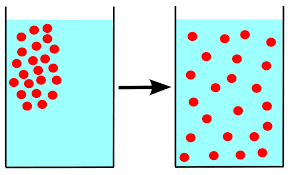
The movement of particles from an area of higher concentration (more particles) to an area of lower concentration. The particles spread out.
Dissolving
Diffusion
Density
Thermal Expansion
The smallest possible unit of matter is?
particle
matter
element
cereal
A phase of matter that has no definite shape or volume
Solid
Liquid
Gas
The energy of motion
Compression
Contraction
Expansion
Kinetic Energy


During the Investigation "Ready, Set, Collide" on p.13, why did the particles diffuse quicker in hot water.
The particles in the hot water diffused quicker because the water molecules were moving faster, colliding, and moving further apart.
The particles in the hot water diffused slower because the water molecules were moving slower and not colliding as much.

Which of the following statements are true about temperature? Choose all the true statements
It is the measure of kinetic energy
Temperature is measuring the speed of the particles
Temperature increases when kinetic energy increases
Temperature decreases when kinetic energy decreases
None of the statements are true

Which statement is true about how gas particles behave?
(p.19) - Choose all the TRUE statements
When the balloon was placed in the freezer, the gas particles moved slower, closer together, and thermal contraction occurred.
When the balloon returned to room temperature, the gas particles moved faster, farther apart, and thermal expansion occurred.
Thermal expansion and contraction only happen in solids and not in gases.
What happens to particles when they are heated?
They speed up and expand
They slow down and contract
They slow down and compress
They slow down and expand
What happens to particles when they are cooled?
They speed up and slow down
They speed up and contract
They speed up and compress
They slow down and contract
In order to increase kinetic energy of a substance, heat would need to be...
Added
Removed

Removing heat would _______ the kinetic energy of a substance.
Increase
Decrease
What is expansion?
Increase of volume
Decrease of volume
Adding heat
Removing heat
What is compression?
Reduction of volume as a result of applied pressure
Reduction of volume as a result of heat being removed
Increase of volume
Increase of kinetic energy
What is contraction?
Reduction of volume as a result of applied pressure
Reduction of volume as a result of heat being removed
Increase in volume
Decrease in volume

Solids would have ______ kinetic energy.
Low
High
No

Looking at these thermometers, is compression, contraction, or expansion being shown (from left to right).
Compression
Contraction
Expansion

What could cause gas particles to expand in the balloon?
The particles being heated
The particles being cooled
The particles being compressed
The particles increasing in size

What TWO factors affect the kinetic energy of a substance?
Mass and speed
What would happen to gas particles if they lost kinetic energy?
They would lose speed and get closer together
They would lose speed and move farther apart
They would speed up and move farther apart
They would speed up and get closer together

When gases are heated, the particles will speed up and expand, which means kinetic energy ______
Increases
Decreases


Particles are always moving.
True
False
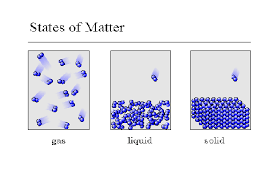
Which image shows particles in a solid?


Which image shows particles in a liquid?
Which image shows particles in a gas?
As the kinetic energy of the particles increased, the _____ of the particles ________
speed; decreased
speed: increased
space; decreased
space; increased

Temperature is a measure of _____________.
average kinetic energy
average potential energy
the sum of kinetic & potential energy
the difference of kinetic & potential energy
Why do particles come closer together when they lose energy?
...the attractive forces between the particles pull them back together.
...they dissolve.
...they become a solid.
...they are more attracted to the solvent than the solute.

This is an example of the everyday application of pressure in:
Solids
Liquids
Gases
Plasma

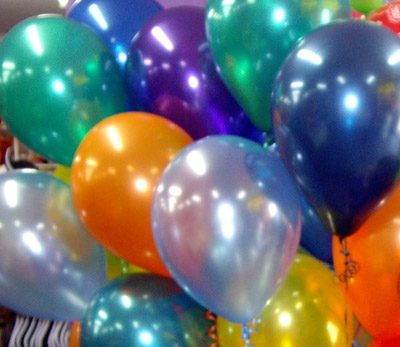
The pressure inside the balloon will:
Decrease
Increase
Remain the same
Not enough information to formulate an answer
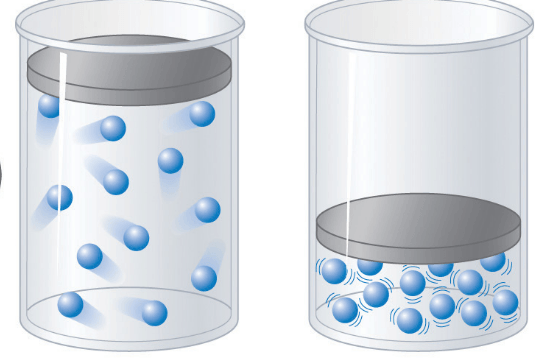

What particles in a fluid produces pressure?
gravity
motions
salt
solids

Bubbles are round because fluids exerts the same pressure in all directions.
true
false

The layer of gases that surrounds Earth is called __
precipitation
condensation
meteorology
atmosphere

Air pressure is greatest at Earth's surface because the entire weight of the atmosphere is pushing down there
true
false

The pressure caused by the weight of the atmosphere is called atmospheric pressure.
true
false

The amount of force that is exerted on a balloon by the gas inside the balloon is _____.
temperature
Pressure
volume
heat

Changes in temperature, pressure, and volume affect the behavior of gases more than they affect solids and liquids. _______________
True
False
Sometimes
Always
What is recycling?
throwing away trash
process of changing waste into new materials
reusing the same thing over and over again
Which of the following uses up natural resources and hurts the environment?
cars
bikes
swimming
going for a walk
Which of the following is something that helps the earth?
recycling
throwing trash on the side of the road
leaking oil
If a river is polluted, what might happen to the plants and animals that live in and near the river?
Nothing.
They move to a new habitat.
They would clean up the pollution on their own.
How can you help the earth and plants and animals?
reading the newspaper every day
throwing paper in the street
recycling used paper products

What does this symbol mean?
Conservation
Nature
Renew
Recycle
The release of smoke and harmful gases into the air is called ___ pollution.
air
land
water
The leaking or spilling of chemicals or garbage into a body of water is called ___ pollution.
air
land
water

What is recycle ?
To transform things into materials for new things
To use something more than once
To use and produce less things

What is it ?
Metal
Plastic
Paper
Glass

We need to_______the light.
turn off
turn on
plug in

We need to_______after shower.
turn off the water
throw away
recycling bin

________harmful waste is released into lakes or rivers.
air pollution
Land pollution
Water pollution
Animals .....
love pollution
create pollution
are harmed by pollution
_________________ is a resource that can be recycled?
Paper
Air
water
Rocks
What do we save when we recycle paper?
Plastic
Oil
Trees
The ___________ will suffer due to an oil spill in the ocean.
bird
shark
cat
Which of the following is NOT pollution?
snack wrappers on the playground
garbage on the street
a leaf
When you recycle, you have to consider 3 things.
reduce
reuse
racoon
recycle
In order to reduce things, you can ___________ instead of getting a plastic bag every time.
bring enough plastic containers
buy as many cardboard bags as you can
use your own canvas bags
An important thing to do is to __________ the amount of plastic used. Plastic is very contaminating.
double
expand
multiply
reduce
One thing we can do at home is _____ the light bulbs that are on when not necessary.
turn off
exploit
Riding a bicycle to work is a great way to ________ contamination.
incite
lower
get
How can you stop water waste?
taking shorter showers
taking longer showers
have the water hose on all day in the summer
waste water
One way to help the world when we go shopping is to ask ourselves this question.
How much is this?
Who needs this?
Do I really need this?
Things that must be recycled are ____.
containers
plastic
glass
paper
organic waste
The world will be a better place if we ____________.
contaminate
eat more fast food
reduce, reuse, and recycle
make it a mess
What is to recycle?
To transform things into materials for new things
to use something more than once
use and produce less things
What is to reduce
To transform things into materials for new things
to use something more than once
to use and produce less things
What is to reuse?
To transform things into materials for new things
to use something more than once
to use and produce less things

If you use a plastic bag for groceries one day and then make a kite out of it the next, the bag has been ___________.
Reduced
Reused
Recycled
Reversed

If you choose to take reusable bags to the grocery store instead of getting the plastic bags provided, you have _______ the waste you generate.
Reduced
Reused
Recycled
Reversed

Which is an example of recycling?
Using old materials to make new items
Buying a case of water bottles
Turning off the water while brushing your teeth
Using your younger brother's old playdoh for your science project

Buying foods in bulk or large packages rather than buying small, individually-wrapped package foods is an example of:
Recycling
Reusing
Dieting
Reducing

What is the best way to reduce the number of bottles you create as waste?
Buy a new bottle every day
Use bottles that can be filled again and again
Use bottles that can be recycled
Use smaller bottles

Everything I throw away disappears after only two years in a landfill.
True
False

Plastic is made from which natural resource?
Trees
Metals
Oil
Sand

What tips could you give someone you know to help them make less garbage?
Write on both sides of your paper
Recycle bottles and cans
Donate used goods instead of throwing them away
Use reusable dishes and utencils
Buy only the food you know will consume and save leftovers to eat later

