wayground logo

Free Printable Worksheets

Font size

S
M
L
XL
Worksheets

G8 PHYSICS EXAM

Total questions: 115

Worksheet time: 1hrs 19mins

Name
Class
Date
1.
How much work is done in holding a 15 N sack of potatoes while waiting in line at the grocery store for 3 minutes?
a)
15 J
b)
45 J
c)
0 J
d)
5 J
2.
What is the difference between calculating power and work?
a)
Power takes into account the time it takes to complete a task
b)
Work takes into account the time it takes to complete a task
c)
Power is force/area
d)
Work is force/area
3.

Bob (80 kg) uses 180 N of force to get him up the slope. The vertical distance is 2 m and the diagonal is 10 m. Calculate the work he does.

a)

1600 J

b)

160 J

c)

3600 J

d)

1800 J

4.
What type of energy is in this picture?
a)
Kinetic
b)
Potential
c)
Chemical
d)
Sound
5.
What kind of energy does this device use?
a)
Chemical
b)
Electrical
c)
Thermal
d)
Chemical
6.
A battery converts what type of energy to another?
a)
sound to kinetic
b)
light to heat
c)
mechanical to electrical
d)
chemical to electrical
7.

What type of energy transformation takes place when you plug in a lamp and turn it on?

a)

electrical to radiant

b)

electrical to mechanical

c)

chemical to radiant

d)

mechanical to thermal

8.

The SI Unit for Energy is

a)

Joule

b)

Newton

c)

Calorie

d)

Watt

9.

A weight-lifter raises a 2000N weight through a vertical height of 2.0m in 0.80s. What useful power does he develop in doing this?

a)

800 W

b)

700W

c)

4000W

d)

5000W

10.
What is being transferred as you do work?
a)
Energy
b)
Heat
c)
Power
d)
Gravitational Potential Energy
11.
The SI unit of work is?
a)
Joules
b)
Watts
c)
Newtons
d)
meters
12.
The energy of movement is...? 
a)
Kinetic
b)
Potential
13.
Energy that is stored is called...
a)
Kinetic
b)
Potential 
14.
The SI unit for power is...?
a)
Watts
b)
Joules
c)
Newtons
d)
Meters
15.
What is the formula for Gravitational Potential Energy?
a)
PE = m*g*h
b)
KE = 1/2m*v2
c)
W = F*d
d)
P = W/t
16.
What is the formula for Kinetic Energy?
a)
PE = m*g*h
b)
KE = 1/2m*v2
c)
W = F*d
d)
P = W/t
17.
What is g on Earth?
a)
9.8 m/s/s
b)
9.8 m/s
c)
42 m*s
d)
42 m/s/s
18.
How do we express the total amount of energy a moving object has?
a)
KE x PE
b)
KE + PE
c)
KE - PE
d)
KE / PE
19.
When a roller coaster cart falls towards the ground, what happens to its potential energy?
a)
Increases
b)
Decreases
c)
Stays the same
d)
Nothing
20.
When a rollercoaster cart moves towards the ground, what happens to the PE that it has?
a)
It transforms into KE
b)
It leaves the system
c)
Nothing
d)
It stays PE
21.
What is the kinetic energy of a ball sitting on top of a hill?
a)
0 J
b)
less than 0 J
c)
more than 0 J
22.
The Law of Conservation of Energy states that total amount of energy in a closed system will always
a)
stay the same
b)
increase
c)
decrease
d)
cannot be determined
23.
Based on the formula for potential energy, what 2 variables influence PE the most?
a)
mass and height
b)
mass and velocity
c)
velocity and height
d)
velocity and mass
24.
In order for work to be done, what must be true?
a)
Force acts in the same direction as the distance traveled.
b)
Force and distance are in opposite directions.
c)
Force is greater than distance.
d)
Distance is greater than force.
25.
When you carry an object, is work done on it?
a)
Yes, force is applied in the same direction as the distance it travels.
b)
No, force is applied in a different direction than distance traveled.
26.
If 150 Joules of work is needed to move a box 10 meters, what force was used? 
a)
1500 N
b)
15 N
c)
1.5 N
d)
150 N
27.
Friction and gravity are both examples of a force.
a)
True
b)
False
28.
You hit a wall with a stick.  The equal but opposite reaction is _____
a)
the wall pushes against you
b)
the stick pushes against you
c)
you push against the stick
d)
the wall pushes against the stick
29.
A person is pushed forward into their seat belt when a car stops quickly.  Which law is this?
a)
1st
b)
 2nd
c)
2 and 3
d)
3rd 
30.
An object at rest will _______ if no outside forces are applied.
a)
stay at rest
b)
increase velocity
c)
decrease mass
d)
fall to the ground
31.
What is Newton's First Law?
a)
Object in motion stays in motion and an object at rest stays at rest unless acted on by a outside force
b)
Force = mass x acceleration
c)
For every action there is an equal and opposite reaction
32.
What is Newton's Third Law?
a)
Object in motion stays in motion and an object at rest stays at rest unless acted on by a outside force
b)
Force = mass x acceleration
c)
For every action there is an equal and opposite reaction
33.
Which has more Inertia? 
a)
truck
b)
ant
c)
cat
d)
skateboard
34.
What pulls a ball back to earth?
a)
Momentum
b)
Gravity
c)
Friction
d)
Molecules
35.
Which type of force(s) will cause a change in an object's motion?
a)
gravity
b)
speed
c)
balanced forces
d)
unbalanced forces
36.
An empty truck and a fully loaded truck are next to each other at a traffic light. When the light turns green, the lighter truck increases speed more quickly. Which law best explains this situation?
a)
Newton's first law
b)
Newton's second law
c)
Newton's third law
d)
Conservation of momentum
37.
45 m/s2 is the... 
a)
Mass
b)
Force 
c)
Acceleration
d)
weight
38.
If a force of 26 N is exerted on two balls, one with a mass of 0.52 kg and the other with a mass of 0.78 kg, which ball will have the greater acceleration?  (F=ma)
a)
The one with a mass of .78 kg will have the greatest acceleration.
b)
The one with a mass of .52 kg will have the greatest acceleration.
c)
They will both accelerate at the same rate.
39.
A 20 kg bike accelerates at 10 m/s2.  what was the force?
a)
25 Newtons
b)
20 Newtons
c)
200 Newtons
d)
10 Newtons
40.
Unit of mass
a)
m/s 2
b)
m/s
c)
newtons
d)
kg
41.
A student pushes a box to right with a force of 10N while a young boy pushes the box to the left with a force of 8N. What is the sum of all forces on the box? 
a)
18N left
b)
18N right
c)
2N right
d)
2N left
42.
This equation goes with which law?
a)
Newton's first law of motion
b)
Newton's second law of motion
c)
Newton's third law of motion
d)
None of these
43.
When a cannon fires a cannonball we observe Newton's third law. Which force is the reaction force?
a)
The cannon moving forward
b)
The cannonball moving forward
c)
The cannon moving backward
d)
The cannonball moving backward
44.
A bike accelerates at 10 m/s2 when a force of 50N is applied.  What is the mass of the bike and its rider?
a)
25 kg
b)
200 kg
c)
20 kg
d)
5 kg
45.
Which of Newton's laws are illustrated with a rocket launch?
a)
1st Law, the Law of Inertia. 
b)
2nd Law, the Law of Acceleration.
c)
3rd Law, the Law of Action Reaction
d)
The Law of Conservation of Mass
46.
A force of 560 N is needed to produce an acceleration of 20 m/s2. What is the mass of the accelerated body?
a)
28 kg
b)
11200 kg
c)
0.04 kg
d)
580 kg
47.

A lift motor has to move a fully laden lift 5m between floors in 2s. The lift has a mass of 1850kg (ignore friction).

A.Calculate the weight of the fully laden lift.

B.What is the work done by the motor?

C. What is the minimum power of the motor to raise the lift at a steady speed?

a)

Weight (w)= 18,230 N

Work (W)= 90, 650 J

Power (P)= 45, 325 W

b)

Weight (w)= 18,130 N

Work (W)= 90, 600 J

Power (P)= 45, 325 W

c)

Weight (w)= 18,130 N

Work (W)= 90, 650 J

Power (P)= 45, 320 W

d)

Weight (w)= 18,130 N

Work (W)= 90, 650 J

Power (P)= 45, 325 W

48.
The pitch of a sound refers to...
a)
How high or low a sound is.
b)
How loud a sound is. 
c)
How far sound can travel. 
d)
How close the sound is to the ear. 
49.
How are light and sound alike?
a)
Both travel as rays.
b)
Both can vary in pitch.
c)
Both depend on vibration in air.
d)
Both are forms of energy that travel as waves.
50.
What does reverberation refer to?
a)
The volume of a sound. 
b)
The pitch of a sound. 
c)
A sound bouncing back (reflecting) off a surface. 
d)
A sound being absorbed. 
51.
Two people hear a dog barking. Person A is 5 metres away. Person B is 20 metres away. Which is most likely true?
a)
The bark sounds louder to person A
b)
The bark sounds louder to person B
c)
The bark's pitch sounds higher to person A
d)
The bark's pitch sounds higher to person B
52.
All materials made of matter can transmit sound through them. 
a)
False. 
b)
True, except for living things. 
c)
False, except for in space. 
d)
True. 
53.
Which of the following sounds would you expect to be the quietest?
a)
A rock concert
b)
Heavy traffic on the freeway
c)
Normal conversation
d)
A plane taking off
54.
Sound travels FASTEST through which of these materials?
a)
Air
b)
Empty space
c)
Metal
d)
Water
55.
Sound travels FASTEST through....
a)
Liquids. 
b)
Solids. 
c)
Gases. 
d)
Space. 
56.
What happens when a violin string is plucked?
a)
Sound wave moves in one direction.
b)
Sound waves move through the string.
c)
The string produces sound waves.
d)
The string absorbs sound waves.
57.
When air particles are bunched together in a sound wave, this is called...
a)
Rarefaction.
b)
Amplitude.
c)
Volume.
d)
Compression. 
58.
White light is made up of...
a)
All of the colours of light. 
b)
Most of the colours of light. 
c)
None of the colours of light. 
d)
White light is not a mixture. 
59.
You drop a rock in a pond and the ripples spread outward. What does this have to do with sound energy?
a)
Sound waves vary in length.
b)
Sound cannot travel through liquids.
c)
Sound goes from one end of an object to the other. 
d)
Sound travels as waves out in all directions from the object that made it. 
60.
When light hits a mirror, it is...
a)
Refracted (bent). 
b)
Transmitted through. 
c)
Reflected (bounced off). 
d)
Absorbed into the mirror. 
61.
An anglerfish can make its own light. This means it is...
a)
luminous. 
b)
non-luminous. 
c)
illuminated. 
d)
Illuminati. 
62.
A trumpet and tube are blown with the same amount of effort. They sound different because:
a)
they produce different pitches.
b)
they have different amplitudes.
c)
they are made up of different materials.
d)
they have different volumes.
63.
The moon is NOT luminous because...
a)
Nothing is space is luminous. 
b)
The moon produces its own light. 
c)
The moon absorbs light during the day. 
d)
The moon reflects the Sun's light but does not make any light of its own. 
64.
Rainbows are made by scattering light. 
a)
False. 
b)
True. 
c)
True, but you don't see all the colours. 
d)
Rainbows are pretty. 
65.

It is the reflection of sound when it bounces back from a hard surface.

a)

Echo

b)

Resonance

c)

Amplitude

d)

Wavelength

66.

_ is the highest part of a wave.

(a)  

67.

_ is the lowest part of a wave.

(a)  

68.

It is a property of sound where it is defined as the length of a wave, the horizontal distance from a crest to the next crest or a trough to the next trough.

(a)  

69.

It is the measure of the amount of energy of a sound wave.

It is numerically equal to the height between the topmost part of the wave and the equilibrium or between the bottom-most part of the wave and the equilibrium.

(a)  

70.

_ are objects that allow light to pass through them.

(a)  

71.

_ are objects that do not allow light to pass through them.

(a)  

72.

We measure the frequency of a wave in (a)   .

73.

You can see your image in a shiny, flat surface because light waves bounce directly back at you and your eyes. This is an example of______.

a)

diffraction

b)

reflection

c)

refraction

d)

transparency

74.

Gamma Rays have the_________wavelength on the electromagnetic spectrum.

a)

craziest

b)

shortest

c)

longest

d)

most purple

75.

Gamma Rays have the ______frequency on the electromagnetic spectrum.

a)

highest

b)

lowest

c)

3rd highest

d)

none of the above

76.

What is the definition of CONVECTION?

a)

When heat transfers through waves.

b)

When heat transfers from objects that are touching.

c)

a hot liquid or air that expands, becomes less dense, and rises or becomes more dense, and sinks.

d)

Heat traveling from the sun

77.
What kind of heat transfer happens when the sun is heating your body?
a)
Conduction
b)
Radiation
c)
Convection
d)
Density
78.
Which of the following is an example of convection?
a)
A hair dryer is drying up your hair.
b)
When the AC or heater changes the temperature.
c)
When a car engine turns hot after being turned on.
d)
When you are making soup and the water is rising and lowering.
79.
This is a lava lamp. When the light bulb heats the wax, the wax rises. When the wax cools, it falls. This cycle of rising/falling is an example of:
a)
Conduction.
b)
Convection.
c)
Radiation.
80.
Warm air rises and the cool air sinks demonstrates this type of heat transfer. 
a)
conduction
b)
convection
c)
radiation
d)
Insolation 
81.
The baby chickens are kept warm from the heat lamps demonstrates this type of heat transfer. 
a)
conduction
b)
convection
c)
radiation
82.
Earths atmosphere is important to us because___.
a)
It protects Earth from exess heat from the  asthenoshphere
b)
It protects Earth from the suns harmful radiation.
c)
Its primarly made from oxygen
d)
Its primarly made from carbon dioxide
83.
The primary source of all energy in Earths atmoshphere comes from___.
a)
Earths inner core
b)
The food chain
c)
Oxygen
d)
The Sun
84.
What is the definition of CONDUCTION?
a)
When heat is transferred from objects like rays of light or electromagnetically.
b)
a  hot liquid or air that  expands, becomes less dense, and rises or becomes more dense, and sinks.
c)
When heat transfers from objects that are touching.
d)
When heat transfers through the heater or AC in your house.
85.

Molecules with MORE heat energy are...

a)

spread further apart

b)

packed tightly together

86.

Molecules in a COLD substance are...

a)

moving quickly all around

b)

vibrating in place

87.

Water VAPOR is a...

a)

solid

b)

liquid

c)

gas

88.
The heat required to raise the temperature of a SUBSTANCE by 1∘C
a)
calorie
b)
joule
c)
specific heat
d)
4.184 J
89.
heat always travels from _____ to ______ objects
a)
hot to cold
b)
cold to hot
c)
cold to cold
d)
hot to hot
90.
What is a device used to measure the heat absorbed or released during a chemical or physical change?
a)
joule
b)
enthalpy
c)
calorimeter
d)
specific heat?
91.
A high specific heat means...
a)
It heats up quickly with energy added
b)
It requires more energy to change temperature
92.

What is the meaning of temperature?

a)

The amount of water in a container.

b)

The size of a shadow.

c)

The measure of how cold or hot something is.

d)

Celsius

93.

What is heat in Science?

a)

Energy that moves from warmer objects to cooler objects.

b)

How warm something is.

c)

Energy that allows us to see.

d)

32 degrees Celsius.

94.

Which of these did NOT use heat energy?

a)

cooking food

b)

warming up a room

c)

bouncing a ball

d)

having a hot shower

95.

What tool can be used to measure how hot or cold something is?

a)

clock

b)

ruler

c)

thermometer

96.

What are 3 temperature scales used to measure temperature?

a)

Grams, Pounds, and Kilograms

b)

Kelvin, Fahrenheit and Celsius

c)

Teaspoon, Meter, and Tablespoon

97.
Current electricity flows through
a)
wires
b)
string
c)
rubber
d)
plastic
98.
Electricity flows from which side of the battery?
a)
negative
b)
positive
c)
I have no idea
99.
How does a switch work?
a)
It opens and closes the circuit
b)
It makes the light bulb brighter
c)
It is a resistor
100.
Two types of circuits are
a)
parallel and magnetic
b)
electromagnetic and series
c)
series and parallel
101.
When socks get stuck to towels in your dryer, this is an example of________________
a)
current electricity
b)
static electricity
102.
What is the major difference between static electricity and current electricity?
a)
Current electricity involves a continuous flow of neutrons; static electricity is a sudden transfer of protons
b)
Current electricity can be deadly; static electricity is almost always safe
c)
In current electricity, there's a single transfer of electrons; in static electricity, there's a steady flow of electrons
d)
Current electricity involves a flow of electrons; static electricity involves a single transfer of electrons
103.
True or False, Lighting is a form of static electricity.
a)
True
b)
False
104.
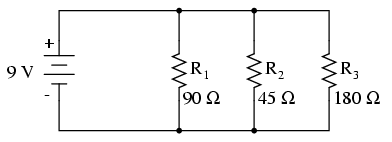
This is an example of a _______ circuit
a)
open
b)
series
c)
parallel
d)
square
105.
This is an example of a ______ circuit
a)
Series
b)
Parallel
c)
Open
d)
Dihexihedral
106.
a cell that has a liquid electrolyte
a)
wet cells
b)
dry cells
c)
electrolytes
d)
electrodes
107.
Identify the insulator below.
a)
aluminum foil
b)
paperclip
c)
rubber eraser
108.

Identify the conductor below.

a)

cloth

b)

plastic

c)

metal

109.

(2 pts)Why do electrical wires have plastic coverings?

4 lines
110.

(4 pts) In the figure above, who is doing more work? Figure A or B? Explain your answer.

4 lines
111.

(4pts) Differentiate sublimation and deposition.

4 lines
112.

It is a type of current where the current flows in one direction only. This type of current usually comes from batteries, solar cells, certain types of generator. When the electrons flow, electric current is produced. This current may be controlled by a switch that will create a gap when it is turned off. The gap will discontinue the flow of electrons.

(a)  

113.

What is thermal equilibrium?

4 lines
114.

What is color blindness?

4 lines
115.

It is a transparent optical element with flat and polished surfaces that disperse light. Usually, it has a triangular base and rectangular sides. It can be made from any transparent material like glass, plastic, or flourite.

(a)