Wayground logo

Free Printable Worksheets

Font size

S
M
L
XL
Worksheets

Genetics Review

Total questions: 54

Worksheet time: 54mins

Name
Class
Date
1.
The longest phase of the cell cycle 
a)
prophase
b)
interphase
c)
metaphase
d)
mitosis
2.
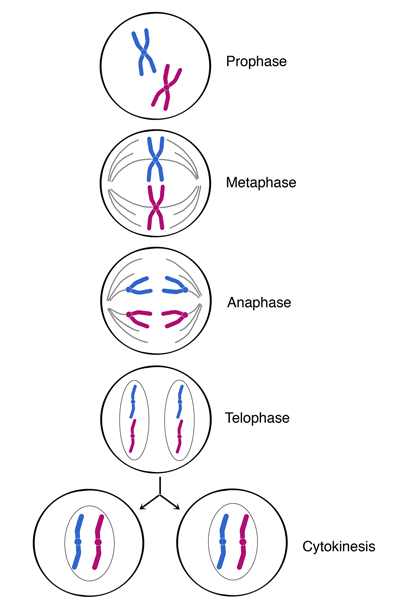
Identify the phase of mitosis
a)
prophase
b)
metaphase
c)
anaphase
d)
telophase
3.
Which phase comes NEXT?
a)
prophase
b)
metaphase
c)
anaphase
d)
telophase
4.
The process by which the nuclear material is divided equally between two new cells
a)
mitosis
b)
cancer
c)
spindle
d)
centromere
5.
the sequence of growth and division of a cell
a)
cell cycle
b)
mitosis
c)
anaphase
d)
cancer
6.
Which is the correct order?
a)
C,D, B, A, F, E
b)
D,A,F,C,E,B
c)
B,E,C,F,A,D
d)
C,B,D,A E,F
7.
Which is Metaphase?
a)
A
b)
E
c)
C
d)
F
8.
This picture shows which process?
a)
mitosis
b)
meiosis
c)
the cell cycle
9.
This picture shows which process? 
a)
mitosis
b)
meiosis
c)
the cell cycle
10.
In what stage do chromosomes align in the center of the cell?
a)
prophase
b)
metaphase
c)
anaphase
d)
telophase
11.
Cytokinesis usually occurs after mitosis.  If a cell completed mitosis but not cytokinesis, what would be the result?
a)
a cell with one nucleus
b)
a cell with one really large nucleus
c)
a cell with two nuclei
d)
none of these are correct
12.
The point on the chromosome where the two chromatids are held together is the
a)
centromere
b)
centriole
c)
chromosome
d)
chromatid
13.
The structure of coiled DNA and proteins that forms in the cells nucleus prior to mitosis is 
a)
centromere
b)
centriole
c)
chromosome
d)
chromatid
14.
The division of the cytoplasm following mitosis resulting into two identical copies of the originelle cell called daughter cells
a)
cytoplasm
b)
cytokenisis
c)
telophase
d)
mitosis
15.

if a body cell normally has 24 chromosomes how many will it have at the end of mitosis.

a)

6

b)

12

c)

24

d)

48

16.
Before cells can divide, what must be copied?
a)
mitochondria
b)
cytoplasm
c)
DNA
d)
Cell Wall
17.

In mitosis, one parent cell -

a)

Forms two identical daughter cells

b)

Forms four identical daughter cells

c)

Forms two genetically diverse daughter cells

d)

Forms four genetically diverse daughter cells

18.
The result of meiosis is:
a)
two diploid cells
b)
two haploid cells
c)
four diploid cells
d)
four haploid cells
19.
products of meiosis are genetically
a)
different
b)
identical
20.
How many chromosomes do humans have?
a)
46-- 23 from mom, 23 from dad
b)
22--11 from mom, 11 from dad
c)
10-- 5 from mom, 5 from dad
d)
23
21.
Where in the cell can the genetic material (DNA) be found?
a)
nucleus
b)
nucleolus
c)
cytoskeleton
d)
golgi
22.
The process of crossing over occurs in what phase of meiosis?
a)
anaphase 1
b)
prophase 1
c)
prophase 2
d)
telophase 1
23.
Which sequence of DNA bases would pair with this partial strand
ATG TGA CAG
a)
ATG TGA CAG
b)
TAC ACT GTC
c)
GTA AGT GAC
d)
CAT TCA CTG
24.
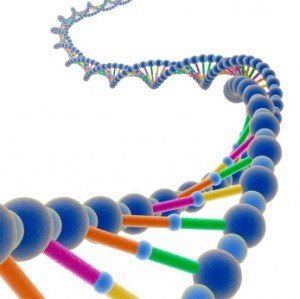
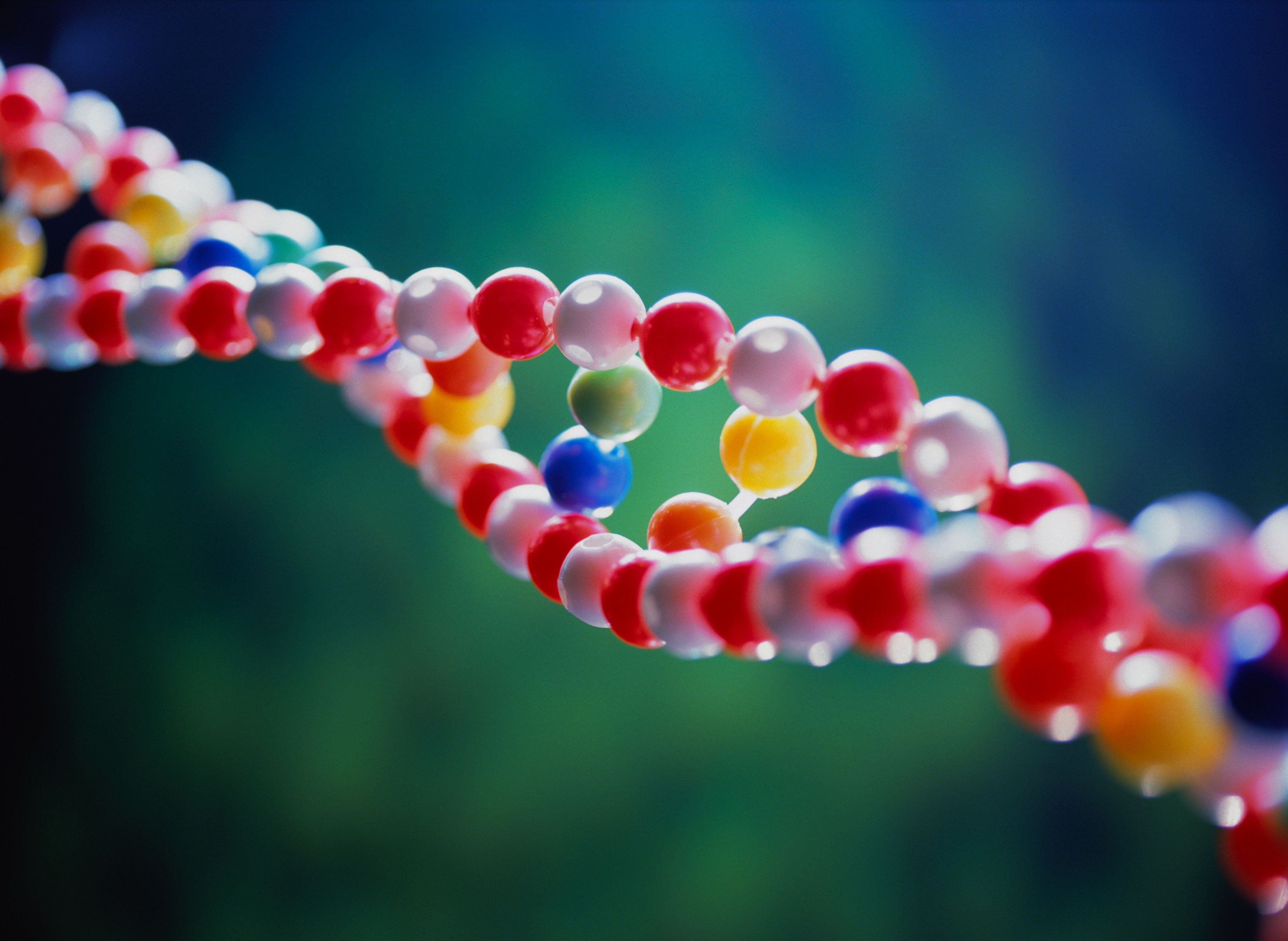
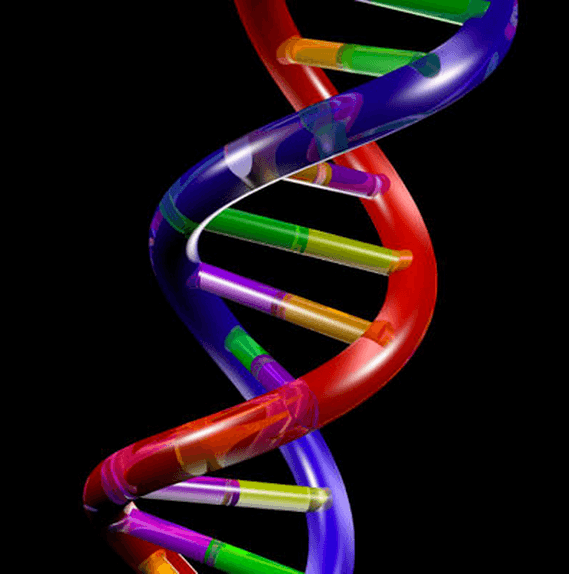
Which of the following best describes a DNA molecule?
a)
double helix
b)
contains ribose
c)
made of amino acids
d)
contains Uracil
25.
Which of the following units are repeatedly joined together to form a strand of DNA?
a)
amino acids
b)
nucleotides
c)
fatty acids
d)
polysaccharides
26.
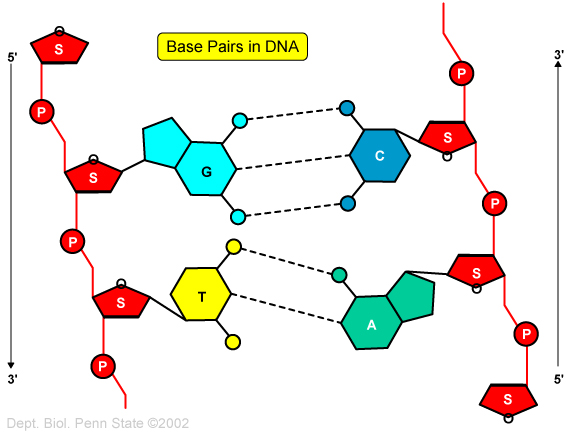
Adenine bonds with ______________.
a)
Guanine
b)
Thymine
c)
Cytosine
d)
Adenine
27.
Guanine bonds with ______________.
a)
Adenine
b)
Guanine
c)
Cytosine
d)
Thymine
28.
Why is DNA important?
a)
it is very small and very complicated
b)
it's in everything
c)
it serves as the blueprint for traits of all living things
d)
because we eat it every day for energy
29.
What determines the code, or information, of a DNA molecule?
a)
the shape (structure) of the nitrogen bases
b)
the order (sequence) of the nitrogen bases
c)
the color of the nitrogen bases
d)
the frequency (number) of nitrogen bases
30.
Which 2 molecules form the sides (backbone) of the DNA ladder?
a)
deoxyribose sugar and adenine
b)
deoxyribose sugar and a hydrogen bond
c)
deoxyribose sugar and the nucleus
d)
deoxyribose sugar and phosphate
31.
Nitrogenous bases are joined by which type of bond?
a)
polar bonds
b)
ionic bonds
c)
covalent bonds
d)
hydrogen bonds
32.
The enzyme that unzips the DNA to prepare for replication
a)
helicase
b)
replicase
c)
polymerase
d)
synthase
33.
DNA replication results in two DNA molecules,
a)
each one with two original strands
b)
each one with two new strands
c)
each one with one new strand and one original strand
d)
one with two new strands and the other with two original strands
34.
order of replication
a)
3, 2, 1, 4
b)
2, 1, 4, 3
c)
2, 3, 1, 4
d)
3, 4, 1, 2
35.
A process in which DNA has the unique ability to make an exact copy of itself.
a)
Replication
b)
Translation
c)
Transcription
36.
In what phase of the cell cycle does DNA replication take place?
a)
G1
b)
S
c)
G2
d)
M
37.

Which of the following are differences in the structure between RNA and DNA

a)

DNA uses deoxyribose sugar, RNA uses sugar ribose

b)

DNA pairs Adenine with Uracil, RNA pairs Adenine with Thymine

c)

DNA is a double helix, RNA is a single helix

d)

DNA pairs Adenine with Thymine, RNA pairs Adenine with Uracil

38.

Which organelle is the location where protein is made?

a)

Ribosome

b)

Nucleus

c)

Cytoplasm

d)

Nucleotide

39.

Insertion, deletion, and substitution are all examples of a change in a genetic sequence which is also referred to as (a)

a)

Gene

b)

Amino Acid

c)

Ribose

d)

Mutation

40.

When these bond together, they form a protein

a)

Amino Acids

b)

Peptide Bonds

c)

Ribose

d)

Nucleotides

41.

A string of nucleotides that contain the information to make a specific protein

a)

Ribose

b)

Amino Acids

c)

tRNA

d)

Gene

42.

Which of the following is the complementary mRNA sequence to this DNA strand: AACTGAA

a)

UUGACUU

b)

TTGACTT

c)

AACTGAA

d)

AACUGAA

43.

Two identical alleles for a trait is known as

a)

homozygous

b)

heterozygous

c)

mutation

d)

codominance

44.

A physical appearance is

a)

genotype

b)

heterozygous

c)

phenotype

d)

codominance

45.

A mutation is harmful to an organism if it

a)

changes the phenotype of an organism

b)

changes the DNA segment

c)

reduces the organism's chance of survival

d)

makes the organism better able to avoid predators

46.

What does Pp mean?

a)

two dominant alleles

b)

heterozygous alleles

c)

one dominant allele

d)

two dominant and recessive alleles

47.

Who studied different characteristics of pea plants by cross-pollinating plants?

a)

Gregor Mendel

b)

Albert Punnett

c)

Sir Isaac Newton

d)

David Kuster

48.

A purebred horse with white hair is crossed with a purebred horse with brown hair. Each of their offspring has both white and brown hair. Why does this occur?

a)

several alleles work together to determine a trait

b)

two alleles for hair are dominant

c)

two alleles for hair are recessive

d)

the alleles for fur color are neither dominant or recessive

49.

What does a Punnett Square determine?

a)

all of Mendel's discoveries about genetic crosses

b)

all the outcomes of a genetic cross

c)

only the recessive allele combinations

d)

only the dominant allele combinations

50.

Genotype is

a)

stem height

b)

feather color

c)

physical appearance

d)

genetic makeup

51.

Factors that control traits are

a)

purebreds

b)

genes

c)

recessives

d)

parents

52.

A mutation is

a)

any change that is harmful

b)

any change in a gene or chromosome

c)

any change that is helpful

d)

any change in the phenotype

53.

If a homozygous black cat (BB) is crossed with a homozygous white cat (bb), what is the probability of having a cat with white fur?

a)

100%

b)

0%

c)

75%

d)

25%

54.

What does RR mean

a)

two dominant alleles

b)

heterozygous alleles

c)

at least one dominant allele

d)

one dominant and one recessive allele