

Wayground logo

Free Printable Worksheets

Font size

S
M
L
XL
Worksheets

Atoms, Elements, & Ionic/Covalent Bonding

Total questions: 76

Worksheet time: 1hrs 11mins

Name
Class
Date
1.
What type of bond forms when 2 or more electrons are SHARED?
a)
Covalent bond
b)
Incomplete bond
c)
Ionic bond
d)
Metallic bond
2.
What type of bond forms between two or more atoms that are charged (+/-)?
a)
Covalent bond
b)
Incomplete bond
c)
Ionic bond
d)
Metallic bond
3.
Which of the following is an example of an IONIC COMPOUND?
a)
NaCl
b)
H2O
c)
CO2
d)
NO
4.
How does a positively charged ion form?
a)
An atom loses an electron
b)
An atom gains an electron
c)
An atom gains a proton
d)
An ionic compound dissolves
5.
In covalent bonding, electrons are
a)
shared
b)
transferred
c)
wiped out
6.
Outer shell electrons are called
a)
outer electrons
b)
valence electrons
c)
negatives
7.
Atoms want
a)
A full outer shell of electrons
b)
One electron short of a full shell
c)
kit kats
8.
Covalent compounds
a)
Share electrons
b)
transfer electrons
c)
contain a sea of electrons
d)
conduct electricity
9.
Atoms form ions in order to become
a)
isotopes
b)
stable
c)
metals
d)
nonmetals
10.
Small positively charged particles that are found in the nucleus of an atom
a)
neutron
b)
ion
c)
proton
d)
electron
11.
A small particle in the nucleus of the atom with no electrical charge
a)
ion
b)
proton
c)
neutron
d)
electron
12.
A tiny, negatively charged particle that moves around the outside of the nucleus of an atom
a)
ion
b)
proton
c)
electron
d)
neutron
13.
The particles that are found in the nucleus of an atom are
a)
neutrons and electrons
b)
electrons only
c)
protons and neutrons
d)
protons and electrons
14.
All matter is made of what?
a)
energy 
b)
atoms 
c)
electrons 
d)
compounds 
15.
Which of the following is a negatively charged subatomic particle?
a)
Electron
b)
Proton
c)
Neutron
d)
Quark
16.
Which statement best describes an electron?
a)
Smaller mass than a proton and a negative charge
b)
Smaller mass than a proton and a positive charge
c)
Greater mass than a proton and a negative charge
d)
Greater mass than a proton and a positive charge
17.
Most of the mass in an atom is concentrated in the...
a)
electrons
b)
nucleus
c)
protons
d)
empty space
18.
What does the nucleus consist of?
a)
Protons + Electrons
b)
Neutrons + Electrons
c)
Atoms
d)
Protons + Neutrons
19.
Ionic Bonding involves...
a)
The transfer of protons
b)
The transfer of nuetrons 
c)
The transfer of electrons
d)
None Of the above
20.
What is the name of a single type of atom?
a)
cell
b)
proton
c)
element
d)
atom
21.
What is the term for combining 2 or more DIFFERENT atoms together?
a)
atoms
b)
elements
c)
molecules
d)
compounds
22.
What is the term for combining 2 or more atoms together?
a)
atoms
b)
elements
c)
molecules
d)
compounds
23.

The smallest unit of matter is a(n)

a)

molecule

b)

atom

c)

covalent bond

d)

electron

24.

The three main subatomic particles that make up an atom are ________.

a)

neutrons, protons, and molecules

b)

neutrons, protons, and ions

c)

ions, electrons, and newtons

d)

electrons, neutrons, and protons

25.

The number of protons in an atom is known as its atomic ________.

a)

number

b)

mass

c)

phase

d)

bond

26.

An atom that has lost or gained an electron no longer has a neutral charge. We call this negatively or positively charged atom a(n) ________.

a)

molecule

b)

positron

c)

inert gas

d)

ion

27.
How many valence electrons in this structure?
a)
6
b)
5
c)
4
d)
7
28.

Why is the overall charge of an atom neutral (0)?

a)

They have the same number of protons and neutrons.

b)

They have the same number of protons and electrons.

c)

They have the same number of electrons and neutrons.

29.

The number of which subatomic particle determines the element of an atom (if it's carbon, oxygen, nitrogen, etc.)?

a)

proton

b)

neutron

c)

electron

d)

Subatomic particles do no determine the element of an atom.

30.

How many protons does fluorine have?

a)

19

b)

1

c)

9

d)

10

31.

How many neutrons does nitrogen have?

a)

7

b)

14

c)

0

d)

6

32.

How many electrons does silicon have?

a)

28

b)

14

c)

0

d)

10

33.

Where is the element's atomic NUMBER located?

a)

the top

b)

the bottom

c)

the top + the bottom

d)

the number of protons + the number of neutrons

34.

Where is the element's atomic MASS located?

a)

at the top

b)

at the bottom

c)

the top number + the bottom number

d)

the number of protons + the number of neutrons
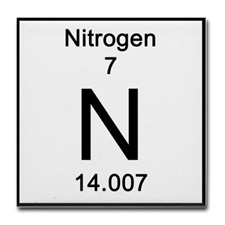
35.
What is the number of protons that the element in this image contain?
a)
14
b)
7
c)
15
d)
18
36.
What is the atomic mass of "F"
a)
9
b)
18
c)
17
d)
19
37.
an atom with atomic number 6 would have how many protons 
a)
6
b)
12
c)
3
d)
cannot be determined 
38.

What does the 1.00794 stand for?

a)

mass number

b)

atomic number

c)

average atomic mass

d)

number of protons

39.

If an atom has 12 protons, which of the following must it also have to be considered a neutral atom?

a)

12 neutrons

b)

12 electrons

c)

12 protons

d)

24 protons and neutrons

40.
If an atom has 10 protons, 10 neutrons, and 10 electrons, what is the mass of the atom?
a)
10
b)
20
c)
30
41.

What charge does an atom have when it GAINS electrons?

a)

Positive

b)

Negative

c)

Neutral

42.

What two particles determine the mass number?

a)

Protons and electrons

b)

Electrons and neutrons

c)

Protons and neutrons

43.

When an atom loses an electron, it becomes a(n) _____________ ion.

a)

positive

b)

negative

c)

neutral

d)

polyatomic

44.

If the mass number of this chlorine atom is 36, how many neutrons does it have?

a)

17

b)

18

c)

19

d)

can't be determined

45.

What is the atomic number of this atom shown in the Bohr model?

a)

11

b)

12

c)

13

d)

can't be determined

46.

What is the mass number of the atom shown in the Bohr model?

a)

11

b)

12

c)

23

d)

Can't be determined

47.

Is this atom an ion? If so what would it's charge be?

a)

Yes, 1-

b)

No it is neutral

c)

Yes, 1+

d)

Can't be determined

48.

Most of the mass of an atom is found in the ______.

a)

nucleus

b)

proton

c)

electron cloud

d)

isotope

49.
An atom with an unequal number of protons and electrons is said to have (a) ___.
a)
no charge
b)
balance
c)
charge
d)
unbalance
50.
What is the overall charge of this atom?
a)
+3
b)
-3
c)
0
d)
+1
51.
Which of the following statements regarding subatomic particles is incorrect?
a)
Protons are positively charged particles and neutrons have no charge.
b)
The relative mass of the proton, electron and neutron the same.
c)
In a neutral atom the number of protons equals the number of electrons.
d)
Isotopes of an element have the same number of protons but a different number of neutrons.
52.
An atom is electrically neutral when
a)
protons and neutrons are the same
b)
protons and electrons are the same
c)
neutrons and electrons are the same
d)
neutrons balance the protons and electrons
53.
Iron-60 (atomic number 26) is an isotope that is often used to study meteorites.  How many neutrons does iron-60 have?
a)
26
b)
60
c)
34
d)
86
54.
Which of the following particle pairs has approximately the same mass?
a)
protons and neutrons
b)
protons and electrons
c)
neutrons and electrons
d)
protons, neutrons and electrons
55.
A carbon isotope consists of 6 protons, 6 electrons and 8 neutrons.  What is the mass number for this isotope?
a)
12
b)
14
c)
6
d)
8
56.

What is a molecule?

a)

two elements bonded together (sharing electrons)

b)

a mixture of different substances

c)

smallest individual particles

d)

salt mixed in water

57.

What is a compound?

a)

Two different elements bonded together.

b)

Two of the same elements bonded together.

c)

A mixture of different substances.

d)

Two substances stuck together with glue.

58.

What is the chemical symbol of the element Hydrogen?

a)

Hy

b)

H

c)

Hydro

d)

Hg

59.

What is the chemical symbol for the element Carbon?

a)

C

b)

Ca

c)

Carb

d)

CO

60.

An atom has 4 protons.

How many electrons does it have if the atom has a -1 charge?

a)

6

b)

5

c)

4

d)

3

61.
Beryllium has how many protons?
a)
4
b)
9.0122
c)
2
d)
13.0122
62.
How do you find out the number of protons in an atom?
a)
atomic number
b)
atomic mass
c)
charge
d)
atomic mass - atomic number
63.
How do you find out the number of neutrons in an atom?
a)
atomic number
b)
atomic mass
c)
charge
d)
atomic mass - atomic number
64.
The part of the atom that determines the identity of the atom is the ____________.
a)
proton
b)
nucleus
c)
electron
d)
neutron
65.
A substance that is made up for one type of atom is called an:
a)
atom
b)
element
c)
compound
d)
mixture
66.
How are elements ordered on the Periodic Table?
a)
Alphabetical Order
b)
By their color.
c)
By their atomic mass.
d)
By their atomic number.
67.
Which item on this element square is the chemical symbol?
a)
Copper
b)
29
c)
Cu
d)
63.546
68.
Which item on this element square represents the atomic number?
a)
13
b)
Al
c)
Aluminum
d)
26.981538
69.
How many neutrons are in the atom "K"?
a)
7
b)
19
c)
39
d)
20
70.
What are the number of electrons in Carbon?
a)
12
b)
10
c)
6
d)
14
71.
Which is an electron?
a)
A
b)
B
c)
C
72.
Which is a neutron?
a)
A
b)
B
c)
C
73.
Which is a proton?
a)
A
b)
B
c)
C
74.
What is the atomic mass of Neon?
a)
10
b)
20.18
c)
10.18
d)
20.18
75.
How many neutrons are in a Gold atom?
a)
79
b)
196
c)
118
d)
275
76.
How many electrons does potassium K contain? (click to see image)
a)
19
b)
39
c)
20
d)
40
