wayground logo

Free Printable Worksheets

Font size

S
M
L
XL
Worksheets

Structure of Atom

Total questions: 70

Worksheet time: 2hrs 5mins

Name
Class
Date
1.
Which particle has a positive charge?
a)
electron
b)
orbital
c)
proton
d)
neutron
2.
Choose the particle that has no charge.
a)
nucleus
b)
neutron
c)
proton
d)
electron
3.
An electron has a _____ charge.
a)
negative
b)
positive
c)
neutral
4.
What are the maximum number of electrons that go on the first 3 energy levels?
a)
2,4,16
b)
2,8,18
c)
4,8,12
d)
3,4,6
5.
Which particles make up the nucleus of an atom?
a)
protons and neutrons
b)
electrons and protons
c)
electrons, protons, and neutrons
d)
electrons and neutrons
6.
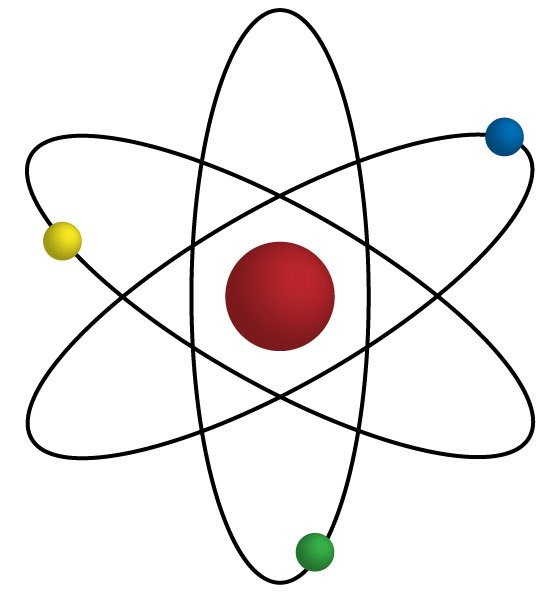
What is the atomic number of the atom pictured? 
a)
11
b)
12
c)
22
d)
23
7.
What does the nucleus of an atom contain?
a)
Electrons and neutrons
b)
Protons and neutrons
c)
Neutrinos and positrons
d)
Electrons and megatrons
8.
How many protons, electrons and neutrons does an neutral atom of Calcium have?  Its atomic number is 20 and the mass number is 40.
a)
20 protons, 18 electrons and 40 neutrons
b)
20 protons, 20 electrons and 20 neutrons
c)
40 protons, 40 electrons and 20 neutrons
d)
20 protons, 18 electrons and 20 neutrons
9.
Which of the following people said the atom was a solid sphere?
a)
Dalton
b)
Thompson
c)
Rutherford
d)
Bohr
10.
Which of the following is a substance that can not be broken down into a simpler substance?
a)
Isotope
b)
Element
c)
Compound
d)
Atomic Number
11.
Ag--110 and Ag--112 are two forms of silver with different mass # so they are
a)
compounds
b)
isotopes
c)
orbitals
d)
neutrons
12.

Atomic number equals ______________ and _______________

a)

Neutrons

b)

Protons

c)

Electrons

d)

Elements

13.

What is the symbol of sodium?

a)

S

b)

NA

c)

Na

d)

So

14.

What is the atomic number of chlorine?

a)

35

b)

18

c)

7

d)

17

15.

How many protons are there in an atom of aluminium?

a)

27

b)

13

c)

14

d)

17

16.

How many neutrons are found in atom of sulphur?

a)

16

b)

32

c)

6

d)

8

17.

How many electrons are there in an atom of potassium with mass number 39 and atomic number 19?

a)

19

b)

20

c)

39

d)

9

18.

What is the electronic configuration of nitrogen?

a)

(2, 5)

b)

(2, 2, 3)

c)

(3, 4)

d)

(2, 2, 2, 1)

19.
An atom with atomic number 6 would have how many protons?
a)
6
b)
12
c)
3
d)
cannot be determined 
20.
True or False? Neutrons have a negative charge
a)
True
b)
False
21.
What are the 3 particles that make-up the atom?
a)
protons, neutrons, and isotopes
b)
neutrons, isotopes, and electrons
c)
positives, negatives, and electrons
d)
protons, neutrons, and electrons
22.
What is the atomic number?
a)
the number of protons
b)
the number of protons and neutrons
c)
the number of neutrons
d)
the number of protons and electrons
23.
What is the mass number?
a)
the number of protons
b)
the number of protons and neutrons
c)
the number of neutrons
d)
the number of protons and electrons
24.

Model of the atom where electrons orbit the nucleus in energy levels

a)

Thomson

b)

Rutherford

c)

Bohr

d)

Dalton

25.

Discovered the electron

a)

Dalton

b)

Thomson

c)

Rutherford

d)

Bohr

26.

Said elements are composed of atoms and different elements have different types of atoms. Elements can combine together to form new things.

a)

Dalton

b)

Thomson

c)

Rutherford

d)

Bohr

27.

Discovered the nucleus of the atom

a)

Dalton

b)

Thomson

c)

Rutherford

d)

Bohr

28.
Which of the following best describes the Bohr model atom?
a)
It shows that electrons are evenly scattered in the atom
b)
Electrons are in the nucleus of an atom
c)
Electrons are in orbits around the nucleus
d)
It showed that electrons can be found anywhere in the atom
29.
Which subatomic particle was discovered by Thomson?
a)
Electrons
b)
Protons
c)
Neutrons
d)
Quarks
30.
The following diagram shows which model of the atom?
a)
Dalton's Model
b)
The Plum Pudding Model
c)
Bohr's Model
d)
Schrodinger's Model
31.
What contribution did John Dalton make to atomic theory? 
a)
He discovered that every atom was positively charged. 
b)
He discovered that every element consisted of one type of atom that couldn't be divided. 
c)
He discovered that atoms had nuclei. 
d)
He discovered that atoms could be divided into smaller parts. 
32.
Who discovered the proton?
a)
Thomson
b)
Dalton
c)
Bohr
d)
Rutherford
33.

Who proposed this model of atoms?

a)

Dalton

b)

Bohr

c)

Rutherford

d)

Thomson

34.
Who stated that electrons move in layers or shells?
a)
Bohr
b)
Chadwick
c)
Rutherford
d)
Dalton
35.
Who discovered the neutron?
a)
Dalton
b)
Chadwick
c)
Thomson
d)
Bohr
36.
J.J. Thomson used a cathode ray tube to find what particle in the atom?
a)
Proton
b)
Neutron
c)
Electron
37.

Who developed the law of conservation of mass?

a)

Antoine Lavoisier

b)

Francis Aston

c)

Michael Faraday

d)

Joseph Proust

38.

Isotopes of an element contain an equal number of protons but a different number of ____________________.

a)

neutrons

b)

electrons

c)

atomic numbers

39.

Element Q has 56 protons and 18 neutrons.

Element R has 56 protons and 17 neutrons. These elements are:

a)

different elements

b)

isotopes

40.
What is the symbol for CALCIUM?
a)
C
b)
Cl
c)
Ca
d)
Cm
41.
H is the symbol for ...
a)
helium
b)
hydrogen
c)
holmium
d)
mercury
42.
S is the symbol for the element ...
a)
silver
b)
sodium
c)
sulfur
d)
silicon
43.
Ne is the symbol for the element ...
a)
nickel
b)
nitrogen
c)
neon
d)
sodium
44.
The symbol for CHLORINE is ...
a)
Ch
b)
Cl
c)
C
d)
Cn
45.
What is the symbol for BORON?
a)
Bn
b)
Br
c)
Bo
d)
B
46.
The symbol for MAGNESIUM is ...
a)
Mg
b)
Ma
c)
Mm
d)
M
47.
The symbol for LITHIUM is ...
a)
Lu
b)
Lm
c)
Li
d)
L
48.
Be is the symbol for the element ...
a)
barium
b)
bromine
c)
boron
d)
beryllium
49.
The symbol for the element POTASSIUM is ...
a)
K
b)
P
c)
Po
d)
Pt
50.
C is the chemical symbol for the element ...
a)
cobalt
b)
chlorine
c)
carbon
d)
calcium
51.
N is the symbol for the element ...
a)
nickel
b)
sodium
c)
neon
d)
nitrogen
52.
The symbol for PHOSPHORUS is ...
a)
Ph
b)
Po
c)
P
d)
Ps
53.
The symbol for the element HELIUM is ...
a)
Hm
b)
Hl
c)
H
d)
He
54.
The symbol for ALUMINUM is ...
a)
Al
b)
A
c)
Am
d)
An
55.
The symbol for SILICON is ...
a)
Sc
b)
Sl
c)
S
d)
Si
56.
Ar is the symbol for the element ...
a)
archaeopteryx
b)
argentium
c)
argon
d)
arsenic
57.
The chemical symbol for Argon is
a)
Ar
b)
A
c)
Ag
d)
Au
58.
The 20th Element on the periodic table
a)
Copper
b)
Sodium
c)
Lithium
d)
Calcium
59.
Adding or subtracting neutrons (charge = 0, mass = 1) makes the element change into an...
a)
ion
b)
mixture
c)
isotope
d)
neutral atom
60.
How many neutrons does B (Boron) contain?
a)
5
b)
11
c)
6
d)
10.811
61.
Which of the subatomic particles is the lightest
a)
all have the same mass
b)
protons 
c)
neutrons 
d)
electrons
62.
If a hydrogen atom has 1 proton, 1 electron, and 1 neutron, its atomic number is:
a)
1
b)
2
c)
3
d)
4
63.
A tiny but very dense, positively charged portion of the atom that holds most of the atomic mass
a)
Electron Shells
b)
Orbitals
c)
Electron Cloud
d)
Nucleus
64.
Calculation used to find the number of neutrons in an atom
a)
Atomic Mass - Atomic Number
b)
Atomic Number - Atomic Mass
c)
Atomic Mass - Electrons
d)
none of these
65.
The only element with no neutrons in its nucleus.
a)
Oxygen
b)
Helium 
c)
Hydrogen
d)
Lithium
66.
What do carbon-12 and carbon-14 have in common?
a)
they have same number of protons
b)
they have the same number of neutrons
c)
they have the same atomic mass
d)
they have the same atomic weight
67.

In isotopic notation what would be located in the "A" position?

a)

number of neutrons

b)

atomic number

c)

number of electrons

d)

mass number

68.

Isotopes are atoms of the same element with different #’s of __________ & therefore different __________.

a)

neutrons ; atomic numbers

b)

protons ; atomic numbers

c)

electrons ; mass numbers

d)

neutrons ; mass number

69.
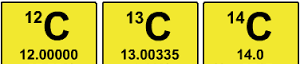
What do these isotopes of carbon all have in common?
a)
neutrons & mass number
b)
atomic number and neutrons
c)
atomic number and electrons
d)
protons, atomic number, and mass number
70.

What does the 1.00794 stand for?

a)

Hydrogen

b)

atomic number

c)

atomic mass

d)

atomic explosion