wayground logo

Free Printable Worksheets

Font size

S
M
L
XL
Worksheets

Reactivity in chemistry

Total questions: 88

Worksheet time: 2hrs 46mins

Name
Class
Date
1.

Which of the following is the correct order of the reactivity series

a)

Li, Na, K, Ca, Al, Mg,C, Z, Fe, H, C, Ag, Au

b)

Al, Mg,C, Z, Fe, H, C, Ag, Au, Li, Na, K, Ca,

c)

K, Na, Li, Ca, Al, Mg,C, Z, Fe, H, C, Ag, Au

2.

Which of the following the most reactive in dilute acid

a)

magnesium

b)

calcium

c)

aluminum

d)

zinc

3.
The least reactive in oxygen in the list is 
a)
iron
b)
zinc
c)
copper
d)
lead
4.
Which one of the following metals reacts most vigorously with cold water?
a)
Sodium
b)
Magnesium
c)
Copper
d)
Zinc
5.
Which metal is more reactive than calcium?
a)
magnesium
b)
potassium
c)
silver
d)
aluminum
6.
Which of the following is NOT a clue that a chemical change has occurred?
a)
change in color
b)
production of gas
c)
change in termperature
d)
change in shape
7.

Aluminium is more reactive than ....

a)

Calcium and Zinc

b)

Sodium and Gold

c)

Magnesium and Copper

d)

Lead and Iron

8.

Complete the word equation below.


Magnesium + oxygen --> .....

a)

Magnesium

b)

Magnesium oxide

c)

Oxides

d)

Magnesium oxide + water

9.

Hydrogen is more reactive than the following metals except .....

a)

Lead

b)

Copper

c)

Aluminium

d)

Mercury

10.

Which metal reacts fastest with water

a)

Gold

b)

Sodium

c)

Zinc

d)

Iron

11.

Which metal reacts the slowest with water?

a)

Gold

b)

Sodium

c)

Zinc

d)

Iron

12.

Which metal reacts fastest with acid?

a)

Copper

b)

Iron

c)

Zinc

d)

Magnesium

13.

Which metal reacts slowest with acid?

a)

Copper

b)

Iron

c)

Zinc

d)

Magnesium

14.

What is the symbol for copper?

a)

C

b)

Co

c)

Cu

d)

K

15.

What is the symbol for iron?

a)

I

b)

Ir

c)

F

d)

Fe

16.

What is the symbol for zinc

a)

Z

b)

Zc

c)

Zn

d)

Zi

17.

What is the symbol for magnesium?

a)

M

b)

Mg

c)

Mn

d)

Ma

18.
Which of the following does not react with water?
a)
lithium
b)
magnesium
c)
lead
d)
calcium
19.
Which of the following the most reactive in dilute acid
a)
magnesium
b)
calcium
c)
aluminum
d)
zinc
20.

Silver

a)

S

b)

Ag

c)

Au

d)

Sn

21.

Carbon

a)

C

b)

Ca

c)

Cu

d)

Cr

22.

Neon

a)

No

b)

Na

c)

Ne

d)

Ni

23.

Sodium

a)

Ne

b)

S

c)

Na

d)

Mg

24.

Plutonium

a)

Pu

b)

Pt

c)

P

d)

Po

25.

Sulfur

a)

S

b)

Sn

c)

Na

d)

Sr

26.

Fluorine

a)

Fl

b)

Ra

c)

Fr

d)

F

27.

Copper

a)

Cu

b)

C

c)

Cr

d)

Co

28.

W

a)

Tungsten

b)

Mercury

c)

Gold

d)

Copper

29.

Pb

a)

Plutonium

b)

Lead

c)

Platinum

d)

Radon

30.

Mo

a)

Mercury

b)

Molybdemum

c)

Magnesium

d)

Manganese

31.

Zn

a)

Magnesium

b)

Silver

c)

Zerconium

d)

Zinc

32.

Ar

a)

Aluminum

b)

Argon

c)

Radon

d)

Oxygen

33.

O

a)

Oxygen

b)

Carbon

c)

Boron

d)

Silicon

34.

K

a)

Tungsten

b)

Fluoride

c)

Krypton

d)

Potassium

35.
H is the chemical symbol for which element?
a)
Helium
b)
Hydrogen
c)
Mercury
36.
Na is the chemical symbol for which element? 
a)
Sodium
b)
Nitrogen
c)
Neon
37.
K is the chemical symbol for which element? 
a)
Krypton
b)
Potassium
c)
Knox
38.
Evidence of a chemical reactions is anything that shows - 
a)
a new substance has formed
b)
a solid dissolved in a liquid
c)
interaction between 2 gases
d)
a change in the state of matter
39.
One of the signs of a chemical reaction taking place is:
a)
Bubbles are produced 
b)
Reactants are not combining
c)
Products are not forming
d)
Color is not changing
40.
You know you a chemical reaction has occurred if 
a)
there is a precipitate.
b)
there is a color change.
c)
there is a temperature change.
d)
All of these answers are evidence.
41.
A clear liquid from a flask is poured into another clear liquid in a beaker. Which of the following results of this procedure would indicate a new substance was formed?
a)
The level of the substance in the beaker is higher after the other liquid is added.
b)
A yellow solid forms and then settles to the bottom of the beaker.
c)
Small white crystals are left behind in the flask that held the first liquid.
d)
The mass of the combined liquids is greater than either original liquid.
42.
Which of the following is an example that includes evidence of a chemical reaction?
a)
A sample of zinc is placed in water and it settles to the bottom
b)
A solid block of ice is heated and it completely melts into a liquid. 
c)
Sugar that is burned gives off an odor and turns brown and then black.
d)
A tomato is placed into a blender and chopped up into smaller pieces.
43.
Four students performed four different investigations by combining different substances. Which of the observations is most indicative of a chemical reaction?
a)
investigation 1
b)
investigation 2
c)
investigation 3
d)
investigation 4
44.
A student places a piece of a potato into a container of hydrogen peroxide. One observation the student makes is that bubbles form around the potato. The presence of bubbles might indicate the formation of a new substance because bubbles - 
a)
could show that a gas is forming.
b)
always rise to the top of a liquid. 
c)
are almost always perfectly spherical.
d)
usually burst after a few minutes.
45.

Dissolving salt is a

a)

Chemical change

b)

Physical change

46.

The glow stick reaction is a

a)

Chemical change

b)

Physical change

47.

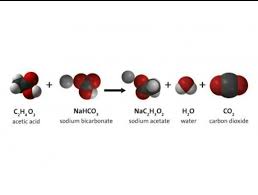
The production of carbon dioxide gas when baking soda and vinegar reacted indicated a _____________.

a)

Chemical change

b)

Physical change

48.

In a chemical reaction, no new atoms are created, and no atoms are _________________.

a)

Destroyed

b)

Created

49.

Increasing the amount of reactants may increase the amount of _________________.

a)

Products

b)

Reactants

50.

Sodium bicarbonate is a __________________.

a)

Reactant

b)

Product

51.

In the reaction above water is a ________________.

a)

Reactant

b)

Product

52.

The arrow in a chemical equation means _______________.

a)

Equals

b)

Yields

53.

A catalyst

a)

Speeds up a reaction.

b)

Slows down a reaction

c)

Has no effect on a reaction

54.

Carbon dioxide bubbles produced in our lab reactions are a _______________.

a)

Solid

b)

Liquid

c)

Gas

55.

Which statement does not describe a chemical change?

a)

burning a log in a campfire

b)

baking cookies

c)

breaking glass

d)

digesting food

56.

How many electrons do you see in this image?

a)

4

b)

2

c)

3

d)

6

57.

A substance that cannot be broken down into any other substance is known as

a)

a solution

b)

a mixture

c)

an element

d)

a compound

58.

Select the TWO examples of elements?

a)

A substance made up of only one type of atom

b)

O2

c)

Baking Soda

d)

NaCl (table salt)

59.
Air is a compound.
a)
True
b)
False
60.
Composition of compounds can be separated.
a)
True
b)
False
61.
Compounds are made up of two or more atoms physically combined.
a)
True
b)
False
62.
The properties of the elements that make up a compound are usually very similar to the compound itself.
a)
True
b)
False
63.
How many elements are represented in the compound?
Na2CO3
a)
1
b)
2
c)
3
d)
4
64.
Which of the following is not a compound?
a)
HCl
b)
Cl
c)
NaCl
d)
CO2
65.
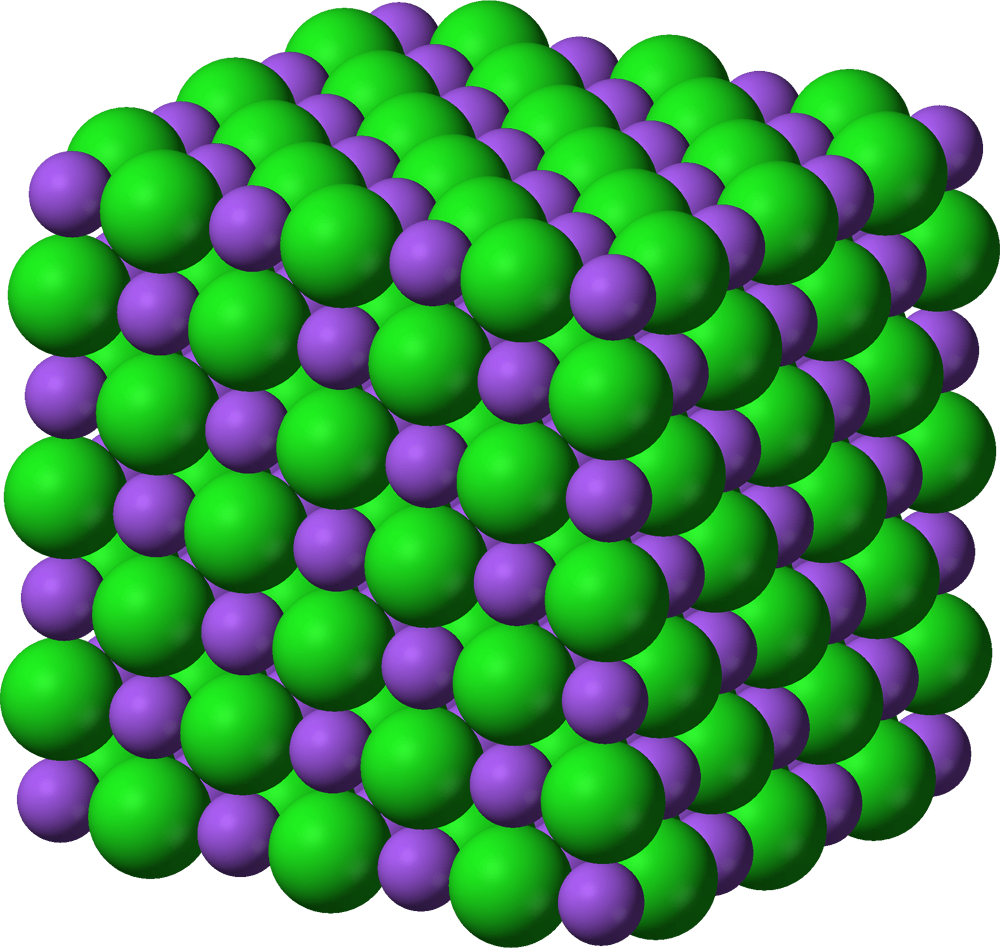
Does this picture show a compound?
a)
No
b)
Yes
66.
Which of the substances below is a compound?
a)
ink
b)
air
c)
oxygen
d)
salt
67.
Can compounds be found in the periodic table?
a)
Yes
b)
No
68.
A mixtures is a combination of two or more____________ in which no new kinds of matter are formed.
a)
 subtances
b)
parts
c)
leaves
d)
pebbles
69.
Making a mixture results in ___________________ only.
a)
chemical reactions
b)
separate parts
c)
physical changes
d)
two subtances
70.
Sand and clay is an example of a mixture of solids.
a)
True
b)
False
71.
The air around was is  a mixture of gases.
a)
True
b)
False
72.
Is  blood a mixture?
a)
No
b)
Yes
73.
In some mixtures, the physical properties of the ingredients ___________ when they are mixed together.
a)
stay the same
b)
change
c)
glow
d)
evaporate
74.
Lemonade is a special mixture called a 
a)
substance
b)
solution
c)
plasma
d)
ingredient
75.
A solution is a mixture of one or more substances _________ evenly into another substance.
a)
dissolved
b)
evaporated
c)
carried
d)
split
76.
Coffee is a 
a)
solution
b)
mixture
77.
A fruit salad is a 
a)
solution
b)
mixture
78.
What are the states of matter?
a)
Solid, Liquid, Water
b)
Solid, Liquid, Gas
c)
Melting, Freezing, Condensing, Evaporating
d)
Water and Liquid
79.
What is a molecule?
a)
Two or more atoms bonded together
b)
One element
c)
One atom
d)
Solid, Liquid, Gas
80.
What does this image represent?
a)
Atom
b)
Element
c)
Molecule
d)
Marshmallows
81.
When the molecules are moving very fast, the substance is...
a)
Hot
b)
Cold
c)
Room Temperature
d)
Wet
82.
What is the smallest particle?
a)
Element
b)
Molecule
c)
Atom
d)
Plasma
83.
What are the basic building blocks for all matter?
a)
atoms
b)
elements
c)
compounds
d)
chemicals
84.
What do we call a substance consisting of a single atom?
a)
coefficient
b)
element
c)
compound
d)
molecule
85.
What do we call a chemical substance made up of 2 or more different types atoms bonded together?
a)
formula
b)
atom
c)
subscript
d)
compound
86.
All ____________ are made up of two or more atoms bonded together.
a)
atoms
b)
molecules
c)
electrons
d)
elements
87.
When __________ form, the elements lose there individual chemical properties and take on new properties.
a)
compounds
b)
atoms
c)
subscript
d)
formula
88.
The smallest unbreakable unit of a compound is called
a)
subscript
b)
proton
c)
formula
d)
molecule