
 Worksheets
rates of reaction
Total questions: 50
Worksheet time: 2hrs 40mins
List four factors that affects the rate of a reaction
temperature
concentration
surface area
volume
catalysts
A temperature increase causes the particles ......
to slow down
move faster
collide higher
in the right order
Which of the following increase the reaction rate?
less surface area
lower temperature
increased concentration
What is the rate of reaction?
How fast a reaction is
How big a reaction is
How loud a reaction is

Icing sugar has a greater ______ _____ than a solid cube of
sugar.
Surface Area
Catalyst
Temperature
The word for a substance that you react at the start of a chemical reaction...
Reaction
Reactant
Product
The result
The word for a substance created in a chemical reaction...
Reaction
Reactant
Product
Mass
Objects hitting each other
Collision
Catalyst
Explosion
Reaction
The speed at which a chemical reaction occurs
Fast
Slow
Rate
Ratio

The amount of something; how many particles in a volume of a mixture
Rate
Collision
Catalyst
Concentration
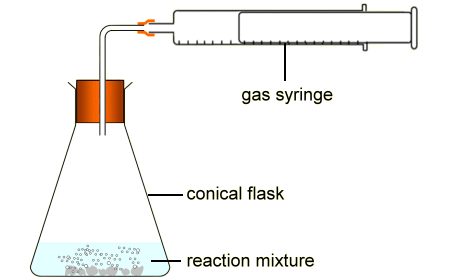
How is this equipment being used to measure the rate of reaction?
The gas syringe measures how much gas is produced in a certain time
The reaction mixture will increase in volume in a certain time
Why does a higher concentration increase the rate of reaction?
it increases the amount of reactants
it lowers the activation energy
it increases the energy of particle collisions
it increases the frequency of particle collisions
Why does a higher temperature increase the rate of a reaction?
it increases both the frequency and energy of particle collisions
it only increases the frequency of particle collisions
it only increases the energy of particle collisions
it reduces the activation energy of the reaction
Increasing the temperature gives particles more __________.
Time
Energy
Space
Frequency
As the frequency of ______________ increases, the rate of reaction increases.
Time
Reactions
Collisions
Reactants
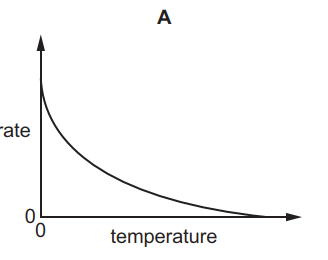
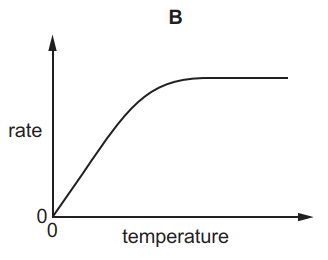
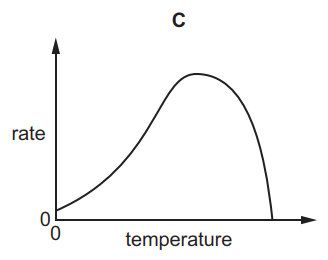
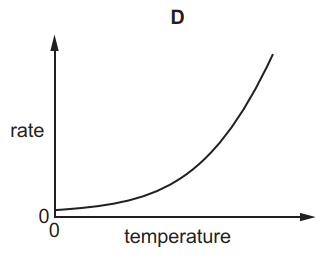
Which graph shows the effect of increasing temperature on the rate of reaction of calcium carbonate with dilute hydrochloric acid?
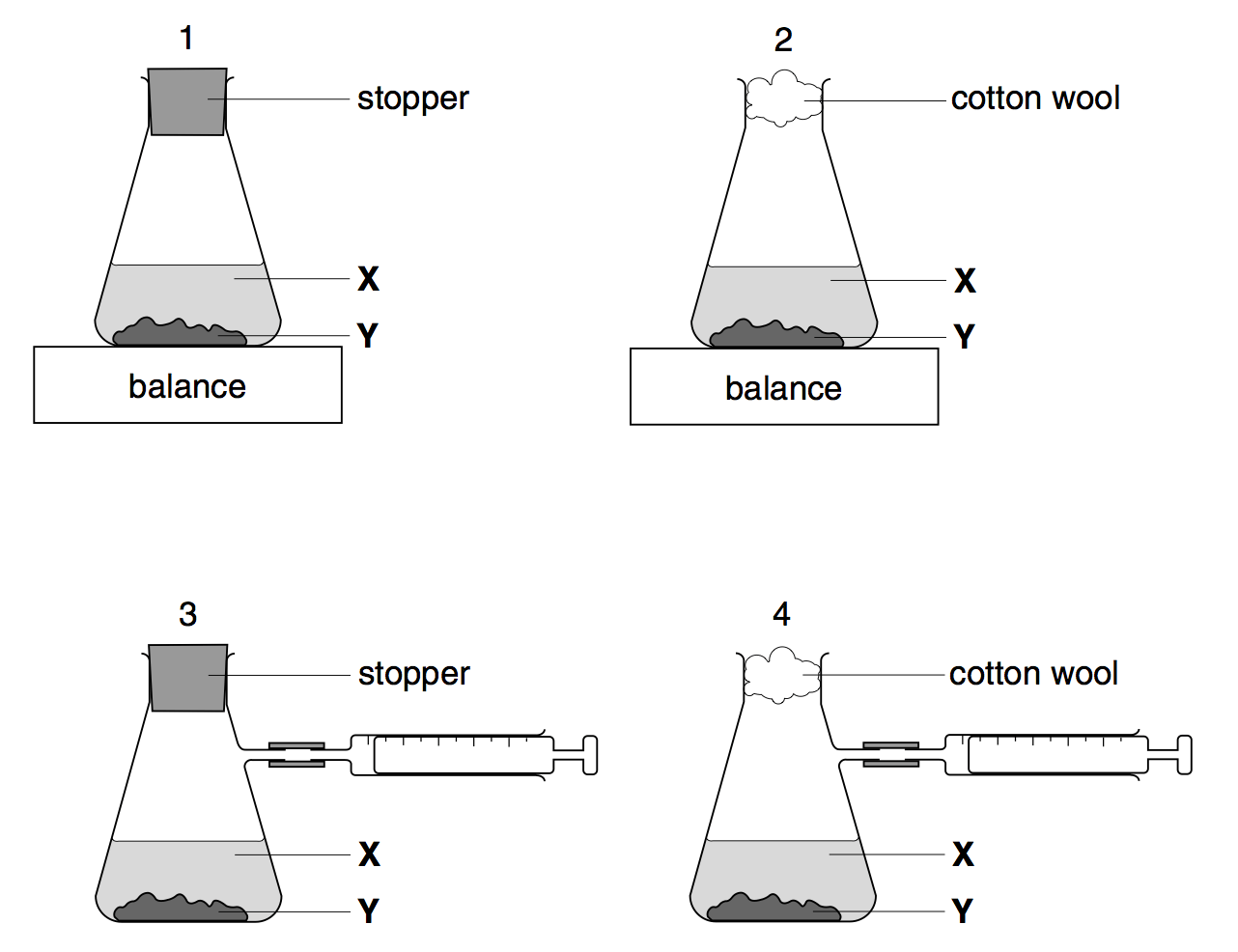
Which two diagrams show suitable methods for investigating the speed of the reaction?

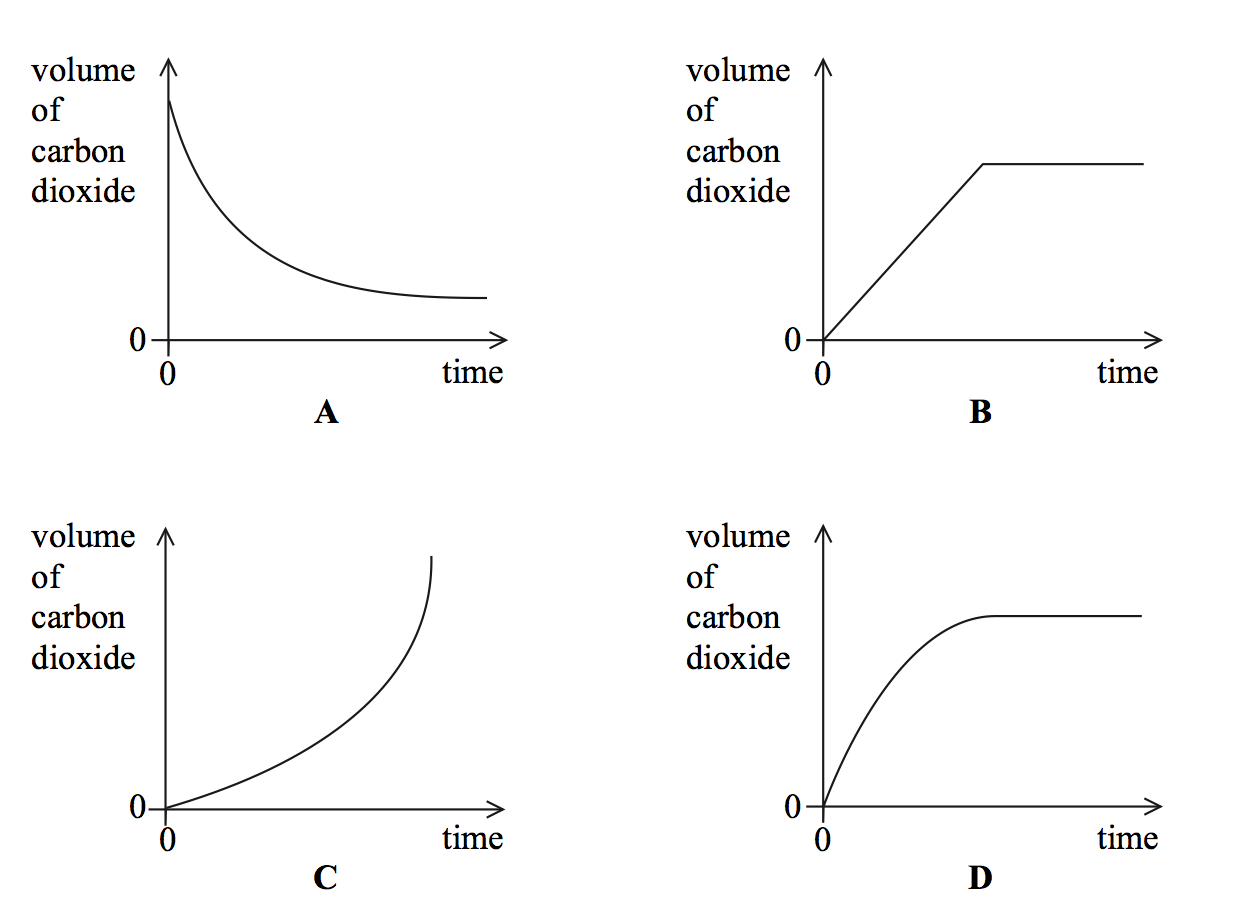
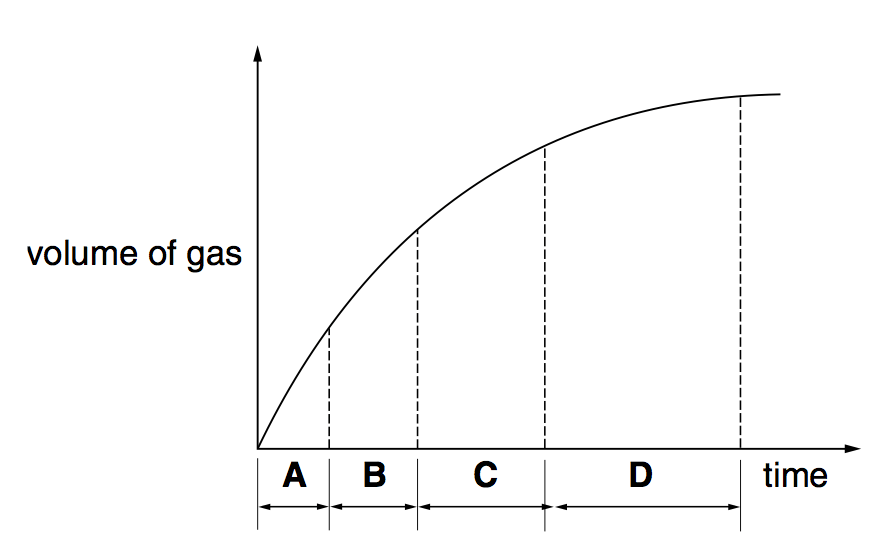
Which graph shows the correct results?

How does a catalyst work in speeding up a reaction?
By lowering the activation energy or reaction
by giving them more energy
by making them more available

The ______________is required to break the bonds of the reactants.
Carbonic energy
Activation energy
Plutonic energy
Energi Gaib
A temperature increase causes the particles ......
to slow down
move faster
collide higher
in the right order
What is the rate of a reaction?
How fast something happens
How slow something happens
When two chemicals mix together and make something new
change in concentration per unit time of any one reactant or product
2 factors affecting the rate of a reaction are
Particle size
Time
Temperature
Solubility
What is a catalyst according to chemistry
A substance that speeds up the rate of a reaction without being used up in the reaction
A substance that slows down the rate of a reaction without being used up in the reaction
A substance that alters the rate of a reaction without being used up in the reaction
A substance that slows down the rate of a reaction and is used up in the reaction
Increasing the temperature gives particles more __________.
time
energy
space
frequency
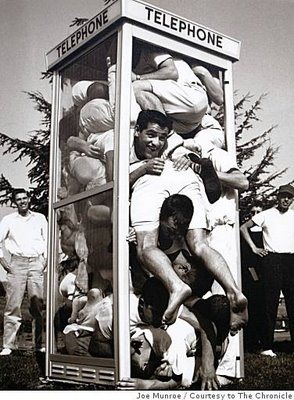
You make a space much smaller by increasing the ________________ hoping to increase the reaction rates.
temperature
concentration
catalyst
pressure

which curve applies for the same gas at a lower temperature?


Which solid-line curve most accurately represents the distribution of molecular energies in a gas at 500K if the dotted-line represents the corresponding distribution for the same gas at 300K ?


Which pair of statements is correct when a catalyst is used
Ea1, catalysed reaction and fewer effective collisions
Ea2, uncatalysed reaction and more effective collisions
Ea1, uncatalysed reaction and fewer effective collisions
Ea2, catalysed reaction and more effective collisions
Ea1, catalysed reaction and more effective collisions
Ea2, uncatalysed reaction and fewer effective collisions
Ea1, uncatalysed reaction and more effective collisions
Ea2, catalysed reaction and fewer effective collisions

Which of the following is FALSE for Maxwell Boltzmann distribution curve?
Area under curve represent number of particles
Increase in temperature will shift the curve to right
High temp, fraction of molecules with energy > Ea increases
At higher temp, area under curve is greater than at low temp

Which of the curves indicates the fastest reaction?
A
B
C

Which of the curves indicates the slowest reaction?
A
B
C

A liquid X reacts with a solid Y to form a gas. Which two diagrams show suitable methods for investigating the rate (speed) of the reaction.
1 and 3
1 and 4
2 and 3
2 and 4

The rates of some chemical reactions can be measured by using the apparatus shown. For which reaction is this apparatus suitable?
MgCO3 + 2HCl -> MgCl2 + CO2 + H2O
Mg + ZnCl2 -> MgCl2 + Zn
MgCl2 + 2NaOH -> Mg(OH)2 + 2NaCl
MgO + 2HCl -> MgCl2 + H2O

Powdered marble reacts with hydrochloric acid using the apparatus shown. The gas syringe fills in 36 seconds. The experiment is repeated using marble chips in place of powdered marble. How long does it take to fill the gas syringe in this experiment.
9 seconds
18 seconds
36 seconds
72 seconds

Which of the following changes decreases the rate of the reaction between magnesium and dilute hydrochloric acid?
1, 2 and 3
1 and 2 only
1 and 3 only
2 and 3 only

A student investigates the rate of reaction between marble chips and hydrochloric acid. The mass of the reaction flask is measured. The graph shows the results of two experiments, P and Q.
Which change explains the difference between P and Q?
A catalyst is added in P.
A higher temperature is used in P.
Bigger marble chips are used in Q.
Hydrochloric acid is more concentrated in Q.

Which graph shows the effect of increasing temperature on the rate of reaction of calcium carbonate with dilute hydrochloric acid?
A
B
C
D

Which of these represent the activation enthalpy of a reaction?
A
B
C
D

