
NEW
Font size
 Worksheets
Anatomy & Physiology Unit 1
Total questions: 68
Worksheet time: 36mins

Which side is facing you?
Ventral
Dorsal
Lateral
Medial
Which side is facing you?
Anterior
Posterior
Lateral
Medial

Which side is facing you?
Ventral
Dorsal
Lateral
Medial
Which side is facing you?
Anterior
Posterior
Lateral
Medial
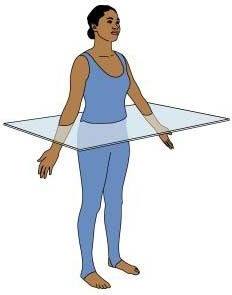

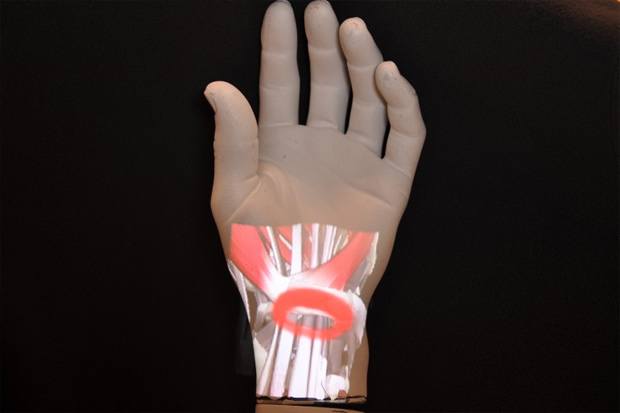

Your elbows are proximal to your
shoulder
wrist
humerus
ears
The study of the functions of the body
physiology
psychology
physics
anatomy
The study of the structures of the body
biology
physiology
anatomy
geology
The knee is _________ to the ankle
lateral
medial
proximal
distal
The navel is ___________ to the spine.
posterior
lateral
anterior
medial
Your toes are ____________ to your ankle
proximal
distal
lateral
medial
Your sternum (breastplate) is __________ to your shoulder.
medial
lateral
proximal
distal

How many anatomical planes are there?
three
four
six
two
A body part said to be furthest from point of attachment to trunk is said to be
proximal
distal
lateral
medial
Closest point to the attachment of the trunk is called
proximal
distal
cranial
caudal
On the inside; underneath another structure is known as
dorsal
ventral
anterior
deep
Your skin is ___________ to your bones
deep
lateral
superficial
dorsal
The location on our body that is directly down the middle of your body splitting your body into left and right is called
cranial
superior
inferior
midline

Above.
Proximal
Distal
Superior
Inferior

Below.
Proximal
Distal
Superior
Inferior

Which plane would make a slice right between your eyes dividing you into equal left and right halves?
transverse
sagittal
midsagittal
frontal
Which structure is most medial?
nose
ears
heart
femur
The Thoracic Cavity is ____ to the Abdominal cavity
Superior
Medial
Lateral
Inferior
My heart is ______________ to my spinal cord.
posterior
anterior
inferior
superior
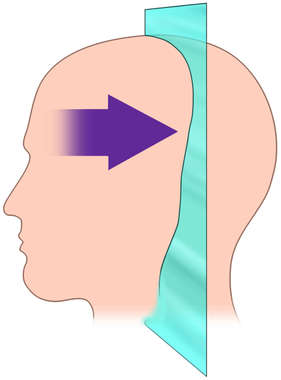
Identify the section or cut.
cross section
transverse plane
midsagittal section
coronal section

Name the green cavity?
Thoracic
Abdominal
Pelvic
Cranial
Name the purple cavity?
Thoracic
Abdominal
Pelvic
Cranial
Name the red cavity?
Thoracic
Abdominal
Pelvic
Cranial
This term refers to the arm
Brachial
Carpal
Clavicular
Bilateral
This term refers to the stomach region
acromial
abdominal
ocular
thoracic
This term refers to the eyes
cranial
cervical
clavicular
ocular
This term refers to the neck region
geniculate
carpal
cervical
unilateral
This term refers to the wrist
palmar
carpal
brachial
cubital
This term refers to the thigh region
pelvic
pubic
plantar
femoral
Spinal column
Acrominal
Vertebral
Thoracic
Deltoid
Naval area
Coxal
Abdominal
Umbilical
Pelvic
Dynamic state in which the body's internal environment is maintained within normal range.
Hemoglobin
Hemostasis
Homeostasis
Lamella
What are the levels of organization from simplest to most complex?
atom, molecule, organelle, cell, tissue, organ, organ system, organism
organelle, atom, cell, tissue, organ, organ system, organism
atom, cell, organelle, tissue, organ, organ system, organism
atom, cells, tissue, organ, organ system, organelle, organism
What does the integumentary system do?
Protects tissues
Regulate body temperature
Support sensory receptors
All of the above
What are the major functions of muscles?
Cause movement
Maintain posture
Produce body heat
Cause movement, maintain posture, produce body heat
What makes up the nervous system?
Brain, spinal cord, nerves
Brain, spinal cord, nerves, sense organs
Brain and spinal cord
Brain, spinal cord, sense organs
What does the endocrine system do?
Alleviate pain
Remove waste
Protect tissues
Control metabolic activities of body structures.
Receives, break down and absorb food, eliminates unabsorbed material
Cardiovascular system
Urinary system
Digestive system
Respiratory system
Intake and output of air, exchange of gases between air and blood
Nervous system
Respiratory system
Digestive system
No system
Removes wastes, from blood, maintains water and electrolyte balance, stores and eliminates urine
Urinary system
Digestive System
Circulatory system
Bladder
Process of producing offspring.
Endocrine system
Integumentary system
Urinary system
Reproduction
List the cavities of the dorsal side of the human body.
Cranial, vertebral canal
Cranial, vertebral canal, thoracic, abdominopelvic
Cranial, vertebral canal, thoracic, diaphragm, abdominal, pelvic
None of these
The study of how the body functions?
Physiology
Anatomy
Pathology
Disease
In a negative feedback loop, the receptor sends a signal to the
control center
effector
efferent input
set point
This is the scientific study of the body's structures
anatomy
biology
entomology
ornithology
This a mechanism that reverses a deviation from the set point
normal range
negative feedback
sensor
effector
this intensifies a change in the body's physiological condition rather than reversing
negative feedback
positive feedback
effector
set point
What is the point of a feedback loop?
To provide the body with more energy
To provide the body with more food
To make sure the conditions in the body are always changing
To make sure the conditions in the body remain stable

