wayground logo

Free Printable Worksheets

Font size

S
M
L
XL
Worksheets

Yr 9 - Ecosystems Revision

Total questions: 55

Worksheet time: 55mins

Name
Class
Date
1.

Abiotic can be defined as?

a)

An organism that is alive

b)

Non-living parts of the environment

c)

Living Parts of the environment

d)

A new kind of Pokemon that lives with Pikachu

2.

Biotic can be defined as

a)

the living parts of an environment

b)

non-living parts of an environment

c)

rocks and water

d)

snakes and water

3.

A squirrel's habitat in a dead log is considered a _____factor

a)

Biotic

b)

Abiotic

c)

cool

d)

secret

4.

Temperature is a _________factor

a)

Biotic

b)

Abiotic

c)

living

d)

cool

5.

Select ALL the biotic factors

a)

Rotten log

b)

water

c)

dragon fly

d)

bacteria

e)

lily pad

6.

Select all the Abiotic factors in the image:

a)

rotten log

b)

plants

c)

Sun

d)

water

e)

temperature of water

7.

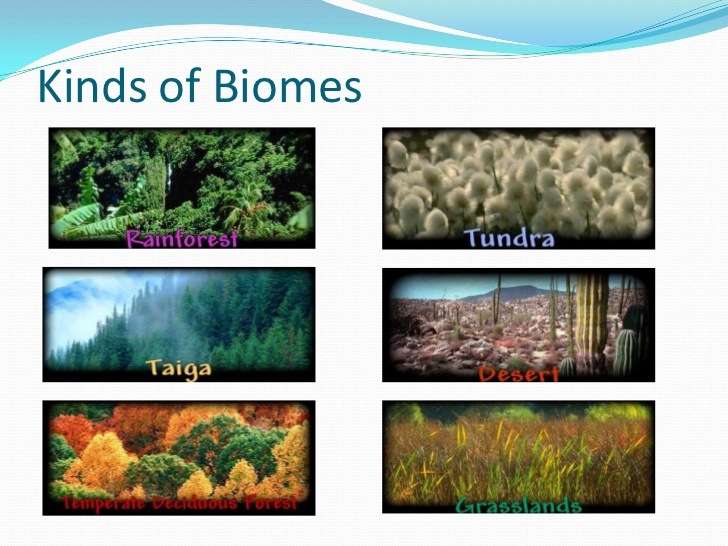
What is the difference between biomes and ecosystems?

a)

A biome is an ecosystem containing different plants, animals, and minerals indigenous to a specific geographic area.

b)

An Ecosystem has a specific climate, where a Biomes climate can vary.
8.
Which of these types of information do scientists use to organize the Earth into biomes?
a)
Forest and endangered species
b)
Biomass, energy, and human populations
c)
Precipitation, temperature, and vegetation
d)
Renewable and non-renewable resources
9.
Which biome, because of its climate, has the largest number of species of plants and animals?
a)
Tundra
b)
Rainforest
c)
Desert
d)
Pineforest
10.
The kangaroo rat is able to get all of the water it needs through it's food and therefore, never needs to drink liquid. This animal has adapted to survive in which biome?
a)
Forest
b)
Tundra
c)
Desert
d)
Grassland
11.
What is the main factor that separates the biomes?
a)
Land
b)
Water
c)
Climate
d)
Longitude
12.

The following animals are common to which land biome?

(polar bear, walrus, arctic fox, seal, penguin, snowy owl, caribou, arctic hare, musk oxen)

a)

Tundra

b)

Taiga

c)

Temperate Forest

d)

Coniferous Forest

13.

The following animals are common to which land biome? (zebra, ostrich, lion, giraffe, bison, elephant, cheetah, hyena, hippo, rhino, prairie dog, and ostrich)

a)

Desert

b)

Grassland

c)

Tundra

d)

Tropical Rain Forest

14.

All energy transformations in a land based ecosystem begin with

a)

a scavenger

b)

the sun

c)

a decomposer

d)

a herbivore

15.
Which event is the best example of competition between species in a pond?
a)
dragonflies landing on lily pads
b)
lizards and snakes lying in the sun
c)
hawks eating mice
d)
frogs and toads eating flies
16.
a deer population has significantly increased, the best hypothesis is 
a)
the deer's main predator has been eliminated
b)
competition increased
c)
decreased water levels of local ponds
d)
organisms that rely on similar food sources migrated to the area
17.

Birds eat insects off the skin of cows. If the relationship is a type of mutualism, then the organisms that will benefit are

a)

only the cattle

b)

neither the birds or the cattle

c)

both the birds and the cattle

d)

only the birds

18.
A diagram that shows the amount of energy that moves from one feeding level to another is termed..
a)
energy pyramid
b)
adaptation
c)
autotroph
d)
food web
19.
a system of food chains that shows the transfer of energy  is termed
a)
food web
b)
food chain
c)
prey
d)
predator
20.
Commensalism is
a)
one species benefits, the other is not affected
b)
both species benefit
c)
both species are harmed
d)
one species benefit, the other is harmed
21.
Biodiversity is 
a)
the variety of species within an ecosystem
b)
a large number of the same species in an ecosystem
c)
an abundant amount of the same primary consumers 
d)
the ability to have an abundant source from the same species
22.
an example of producer consumer relationship would be
a)
lion eating a deer
b)
grasshopper getting energy from grass
c)
hawk getting energy from snakes
d)
earthworm breaking down dead material
23.
What is a producer?
a)
an organism that gets energy from eating other organisms
b)
an organisms that uses sunlight to make its own food
c)
an organism that gets energy from eating dead organisms, non-living material or waste
d)
an organism that uses chemical energy to make its own food
24.
Use the diagram to answer the question.
The Mayfly is a food source for which 3 organisms?
a)
Frog, Dragon Fly and snake
b)
Frog, trout and dragon fly
c)
Frog, salamander and trout
d)
Frog and phytoplankton
25.
Use the diagram to answer the question.
The trout is a source of food for the human and the eagle. When there are more than one organism vying for the same source we call this____?
a)
Population
b)
Resources
c)
Community
d)
Competition
26.
True or False. In this Food Web Pyramid the consumers on each level only get about 10 percent of energy that the plants have stored.
a)
True
b)
False
27.
In this Food Web Pyramid what is the proper name for the organisms above the producer level at the bottom.
a)
herbivores
b)
consumers
c)
carnivores 
d)
omnivores
28.
In Australia the farmers had a problem with beetles eating the sugar cane. So they introduced the cane toad to control that population. Instead of eating the beetles, they ate the source of food and other organisms. What would be a possible consequence of this?
a)
The other organisms attacks the toad population
b)
The ecosystem would be destroyed
c)
The cane toads would get too much food and die
d)
The food web was changed by this one organism
29.
About how much percent of energy is passed on from one organism to to the next on a food web pyramid. 
a)
100 percent of all energy gets passed
b)
45 percent of all energy gets passed
c)
10 percent of all energy gets passed
d)
0 percent of all energy gets passed
30.

In the diagram, which organism provides nutrients for the

largest number of other organisms?

a)

Seal

b)

Herring

c)

Snapper

d)

Bluefish

31.

Using the food web which of the following is a primary consumer?

a)

butterfy

b)

snake

c)

fox

d)

frog

32.

Using food web which of the following is a secondary consumer?

a)

snake

b)

worm

c)

butterfy

d)

squirrel

33.

Using the food web which of the following is a tertiary consumer?

a)

frog

b)

bird

c)

eagle

d)

worm

34.

What would happen if the primary consumers died out?

a)

the producers would grow and the secondary and tertiary consumers would die

b)

producers would die out

c)

consumers would grow

35.

What would happen if their were no producers?

a)

Every population would grow larger

b)

Everything would die out

c)

The animals would make their own food

36.
In the energy pyramid below, which organism has the least amount of energy available?
a)
Producers
b)
Herbivores
c)
Carnivores
d)
Top Predator
37.
If there is 1000 Kcal available in the producers in trophic level 1, how much energy is available in the herbivores in trophic level 2?
a)
10 Kcal
b)
1 Kcal
c)
100 Kcal
d)
1000 Kcal
38.
The diagram represents a pyramid of energy in an ecosystem.  Which level would most likely contain members of the plant kingdom?
a)
A
b)
B
c)
C
d)
D
39.
A food pyramid represent the relative amount of energy in trophic levels. Which of the following correctly shows a food pyramid?
a)
A
b)
B
c)
C
d)
D
40.
Cattle egrets forage (feed) in fields among cattle. The egret gets easy access to flying insects stirred up by the cattle, and the cattle don't care if they are there or not.
a)
mutualism
b)
commensalism
c)
competition
d)
parasitism
41.
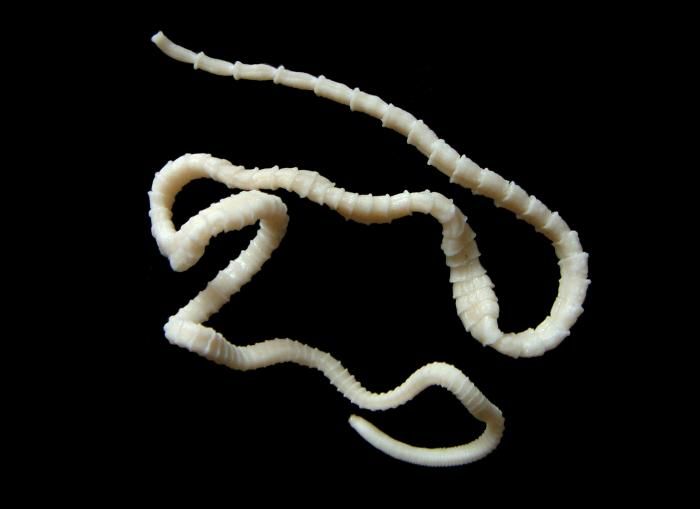
A tapeworm and a cat have this type of relationship.
a)
mutualism
b)
parasitism
c)
commensalism
d)
competition
42.
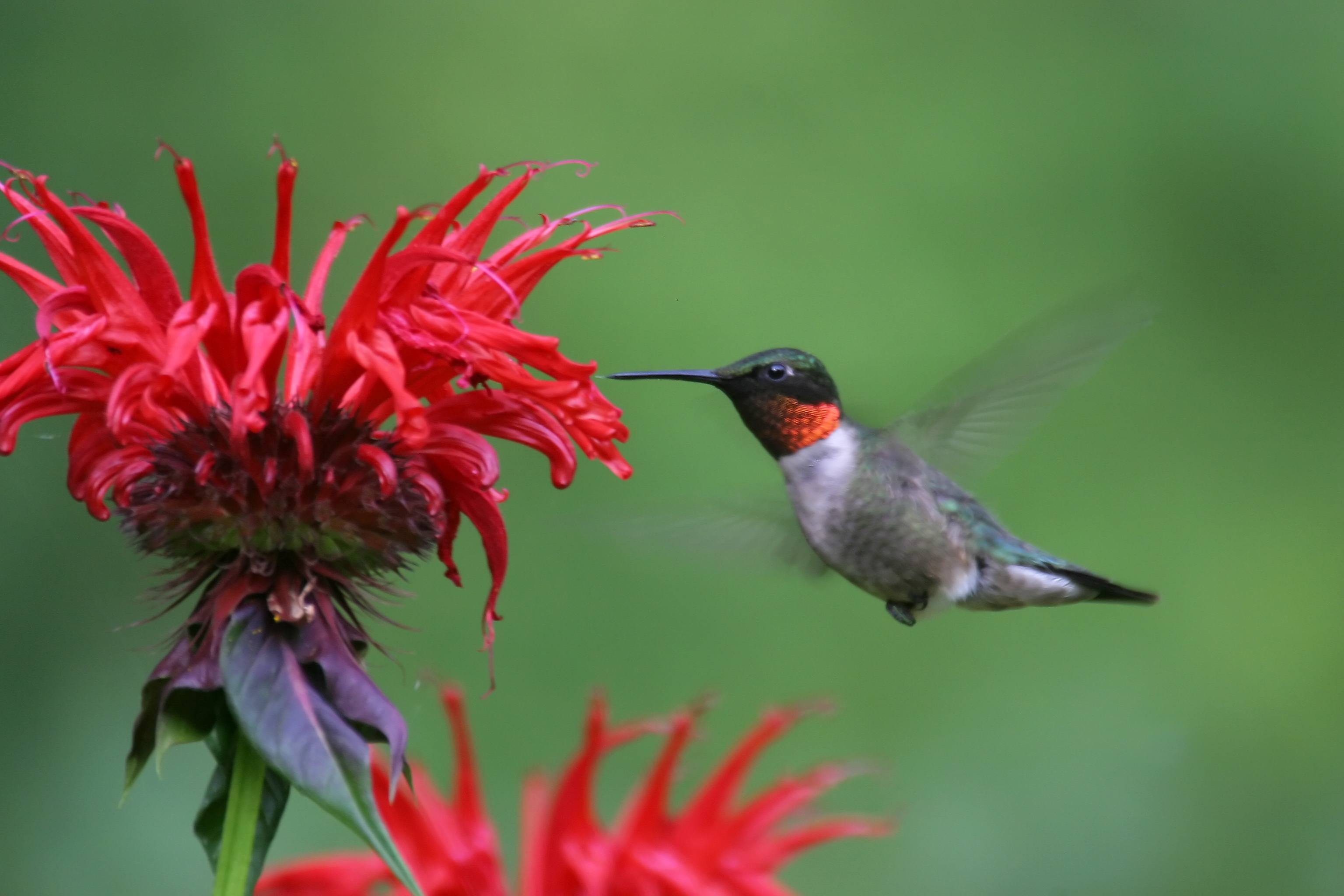
What type of symbiosis?  Hummingbirds feed on nectar from flowers.  The flowers are pollinated by hummingbirds as they move from flower to flower.
a)
commensalism
b)
mutualism
c)
parasitism
d)
predation
43.
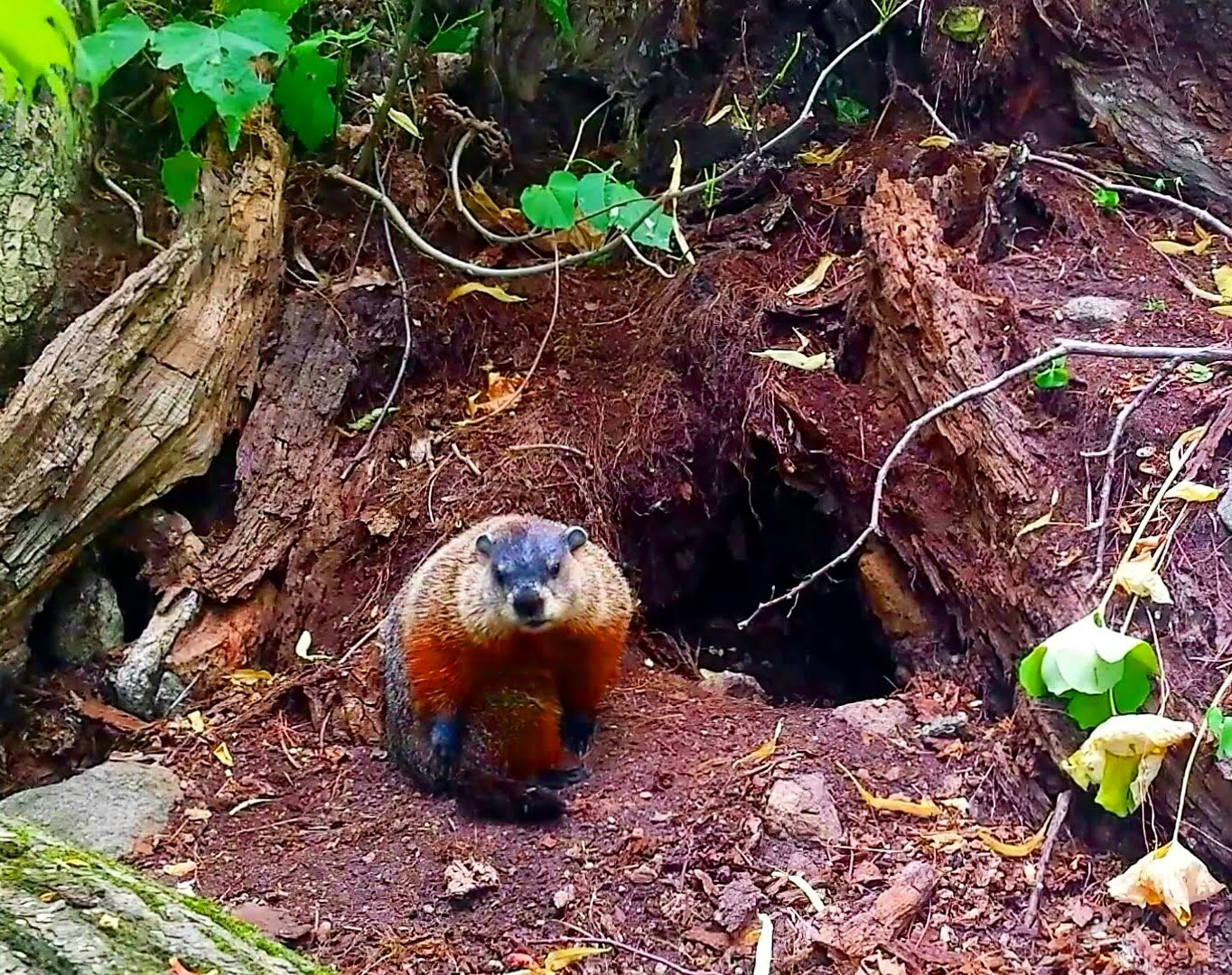
What type of symbiosis?  Skunks often live in burrows that have been dug and abandoned by woodchucks.  
a)
commensalism
b)
mutualism
c)
parasitism
d)
predation
44.
Which symbols best describe parasitism?
a)
+,+
b)
+,-
c)
+,0
d)
-,0
45.
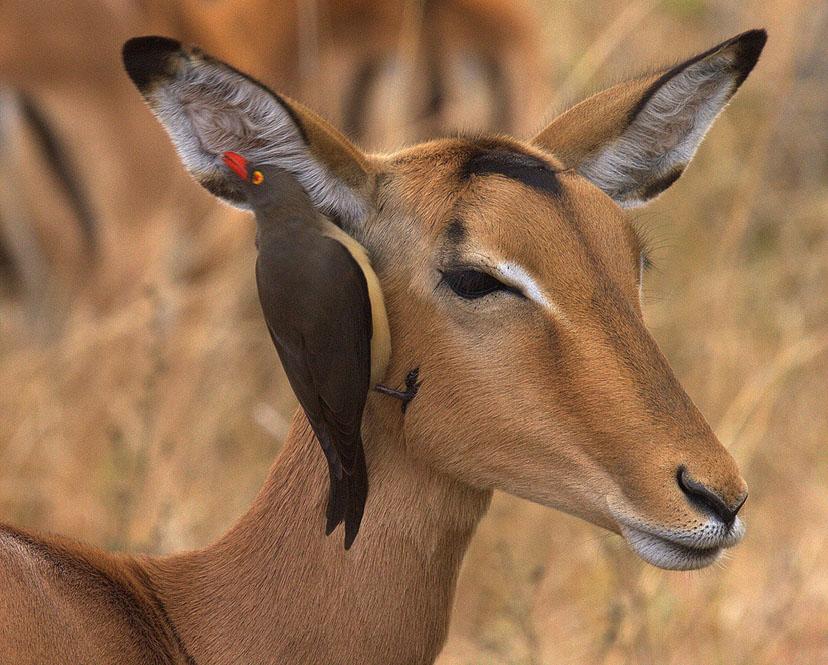
Red-billed oxpeckers are birds that often feed on parasites that infest impala.  This is an example of _______.
a)
commensalism
b)
mutualism
c)
neutralism
d)
competition
46.
Mistletoe extracts water and nutrients from a spruce tree. The spruce tree is harmed. 
a)
parasitism
b)
commensalism
c)
mutualism
47.
 The stork uses it saw-like bill to cut up the dead animals it eats. As a result, the dead animal carcass is accessible to some bees for food and egg laying. The relationship neither harms nor benefits the stork.
a)
parasitism
b)
commensalism
c)
mutualism
48.
An organism that is killed and eaten by another organism
a)
Predator
b)
Prey
c)
Competition
d)
Adaptation
49.

The snake is the _______.

a)

Predator

b)

Prey

50.

The snake is the _______.

a)

Predator

b)

Prey

51.

A herbivore can be a predator

a)

False

b)

True

c)

Not sure

52.

Which factor promotes competition between organisms in an ecosystem?

a)

cycling of minerals

b)

limited resources

c)

decomposition of organic matter

d)

presence of saprophytes

53.
When a pine tree grows real tall and blocks sunlight to another pine tree it is _______ competition.
a)
Interference
b)
Intraspecific
c)
Interspecific
d)
Exploitative
54.
As the population of prey decreases, the population of the predator which eats it will...
a)
Increase
b)
Decrease
c)
Remain Constant
55.
What statement is TRUE about the graph?
a)
The prey is the green line because there needs to be more prey than predators.
b)
The prey is the red line because there needs to be more predators than prey.
c)
The green line is the producers
d)
The red line is the producers