
 Worksheets
APES unit 1
Total questions: 100
Worksheet time: 1hrs 22mins
The study of environmental science primarily considers
interactions among human systems and those found in Earth
the effect of human systems
abiotic factors that influence the state of our environment
factors that affect global climate change
An ecosystem is a location on Earth that includes
only biotic components
only abiotic components
interacting biotic and abiotic components
positive and negative feedback loops
Which best describes the difference between an environmentalist and an environmental scientist?
the difference is unimportant because both care about Earth
an environmentalist follows a belief system; an environmental scientist is concerned with the methods of science
an environmentalist studies the humanities; an environmental scientist has a background in biology and chemistry
an environmentalist is concerned with abiotic factors; an environmental scientist studies biotic factors
Living in a sustainable way refers to
recycling all paper, plastic, and metals
using resources in a way that does not deprive future generations
using Earth's resources efficiently
eating locally whenever possible
Which of the following is a qualitative observation?
15 inches
a liquid
a green solution
6 feet 1 inches
Which is NOT a common issue with experimental design?
having only uncontrolled variables
no repeated trials
having control groups
having more than one independent variable
Place the ecology levels of organization in proper order (smallest to largest)
organism > population > community > ecosystem > biosphere
community > organism > ecosystem > biosphere > population
organism > community > biosphere > population > ecosystem
population > biosphere > ecosystem > community > organism
A tapeworm lives in the small intestines where it feeds and grows, robbing the human of essential nutrients. This is a _____ type of relationship.
Commensalism
Parasitism
Symbiotic
Mutualism
The cattle egret follows herds of cattle and eat the insects that the cattle stir up as they move through the grassland. The cattle appear to be unaffected by the egrets. This is a _____ type of relationship.
Commensalism
Parasitism
Symbiotic
Mutualism
A positive feedback loop occurs
when a system responds to a change by returning to its original state
when feedback into a system decreases a rate of response
when a system is in a steady state
when feedback into a system increases a rate of response
Which is a biotic factor?
producers
pH
energy
humidity
Which best describes the concept of net primary production?
total amount of energy available from the Sun
total amount of cellular respiration conducted within an ecosystem
energy captured minus energy lost
total amount of energy available from the producer

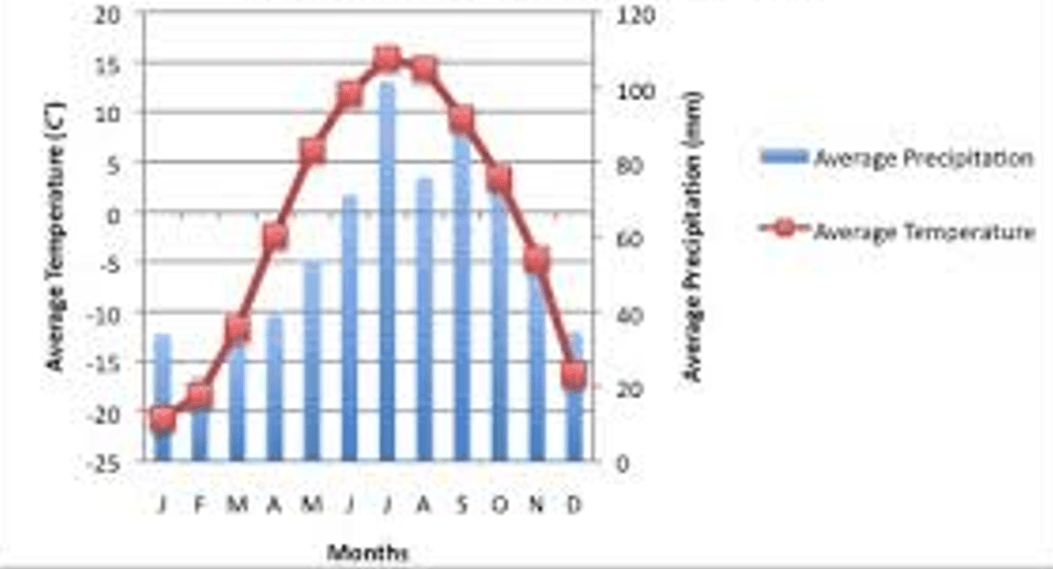
In which biome would you expect to find an area with an average temperature of 10oC and 200 cm of precipitation annually?
Temperate seasonal forest
Temperate rainforest
Woodland/shrubland
Tropical seasonal forest
In which biome would you expect to find an area with an average temperature of 4oC and 50 cm of precipitation annually?
Tundra
Boreal forest
Temperate grassland/cold desert
Woodland/shrubland
What factors are used to classify a biome?
average temperature
average precipitation
distinctive plants adapted to area
all of these are correct
Which biome is characterized by the presence of permafrost?
temperate seasonal forest
woodland/shrubland
tundra
boreal forest
Terrestrial biomes are defined by ____ and ____ variables.
temperature; precipitation
temperature; animals
precipitation; plants
animals; plants
What is a herbivore?
receives energy from the sun
only eats meat
only eats plants
eats both plants and meat
A keystone species is best defined as
an organism that eats all others
an organism that runs the fastest
an organism that keeps the food web stable
an organism that has the most advantages
Which of the following are examples of wetlands?
swamps
marshes
bogs
all of these are correct
Which biome has warm temperatures, high precipitation, and little seasonal variation due to its location near the equator?
Boreal forest
Tropical rainforest
Woodland/shrubland
Subtropical desert
The direction of an arrow in a food chain represents
the flow of energy from organism B to A
the movement of organisms
the directionality of the sun
the flow of energy from organism A to B
All of the following is true about a niche generalist EXCEPT
thrives in multiple environments
feeds on specific food only
lives in various habitats
feeds on various food

Predator population lags behind prey population because:
Increase in predators leads to decrease in prey
Increase in predators leads to increase in prey
Increase in predators leads to decrease in producers
A relationship in which two different organisms live in close association with each other
interspecific competition
Mutualism
Symbiosis
Commensalism
A relationship between two species in which both species benefit
Amensalism
Commensalism
Parasitism
Mutualism
Human activities such as the ____ release large amounts of Carbon into our atmosphere.
Burning of fossil fuels
burning of wood
use of synthetic fertilizers
use of detergents
Which of the following biogeochemical cycles does not have an atmospheric phase?
Hydrolic Cycle
Nitrogen Cycle
Sulfur Cycle
Carbon Cycle
Phosphorous Cycle
Productivity in an ecosystem has to do with
Efficiency of its primary producers
The number of different species living in the ecosystem
Its longevity
Its rate of producing biomass
The length and complexity of a food web in the Arctic would be ____ when compared to one in the tropical rainforest.
Short and less complex
short and more complex
long and less complex
long and more complex
Producers rely on _____ to release chemical energy and consumers rely on ____ to release chemical energy.
Cellular Respiration; photosynthesis
Cellular Respiration; cellular respiration
photosynthesis; cellular respiration
photosynthesis; photosynthesis
Ecologists study....
Living things and their genetic makeup
Genetic Patterns and the chemistry in them
The physical world and its processes
Relationships between organisms and their environment
In the Nitrogen cycle, what is one Natural way that Nitrogen gets into our soil?
Fertilizers
Human Waste through septic tanks
Decomposing animals
Industrial waste
In the _____, there is no wet/dry season. But we do see more lower plants with a thicker epidermis..
Tundra
Boreal
Savanna
Desert
Taiga
Intraspecific Competition is between the same species. true or false?
True
False
Diurnal and Nocturnal creatures share their resources through the use of which of the following processes?
Competition
Resource Partitioning
Different trophic levels
Coevolution

Which is the most abundant gas in the atmosphere?
hydrogen
oxygen
helium
nitrogen
Which cycle DOESN'T have an atmosphere component (part)?
carbon
nitrogen
phosphorus
water

Which one of these does not add CO2 to the atmosphere?
cooking with gas
planting trees
burning wood
riding in a bus


The process where rocks are broken down over time by wind and water, releasing phosphorus.
combustion
corrosion
deposition
erosion
What is the correct formula for nitrogen gas found in the atmosphere?
N2
NO3-
NH4+
NO2-
Organisms that need nitrogen to survive.
only plants
only animals
only bacteria
all living things
How is nitrogen "fixed" into a usable form for plants?
Through action of bacteria only
Through lightning only
Through action of bacteria and lightning
Through photosynthesis
How do animals get the nitrogen they need?
From the air they breathe
From the water they drink
From the food they eat
From the sun
What process occurs when dead plant and animal matter decomposes and nitrogen is released back into the atmosphere?
Assimilation
Fixation
Ammonification
Denitrification
Plants and animals cannot use nitrogen directly from the air.
True
False
Bacteria fix nitrogen from the atmosphere into a form plants can use.
True
False
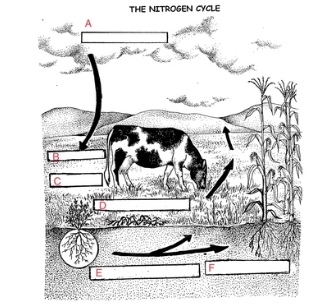
In the nitrogen cycle, what does label A in the diagram represent?
Gas
Clouds
Carbon dioxide in the atmosphere
Nitrogen in the atmosphere
Too much phosphorus in waterways (rivers, lakes) can lead to___________.
eutrophication
Nothing
Death
diseases
An algal bloom is the rapid growth of a population of
fungi
protozoans
algae

In general, algal blooms occur when
toxins accumulate in shellfish.
nutrients decrease in the water.
nutrients increase in the water.


Grass > Grasshopper > Bird > Snake


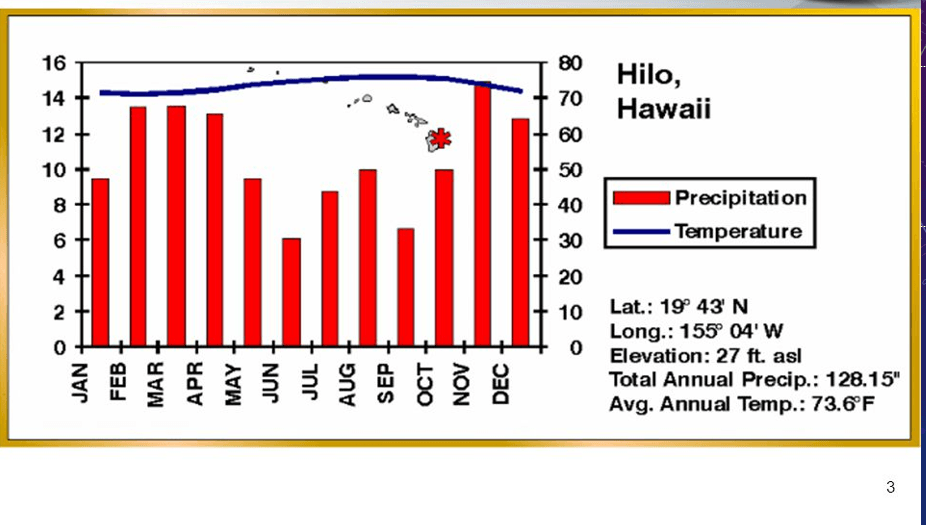
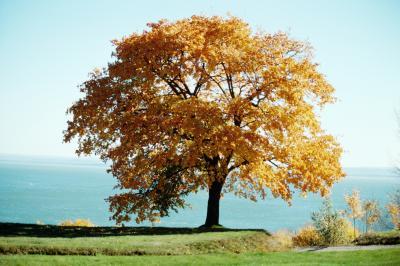
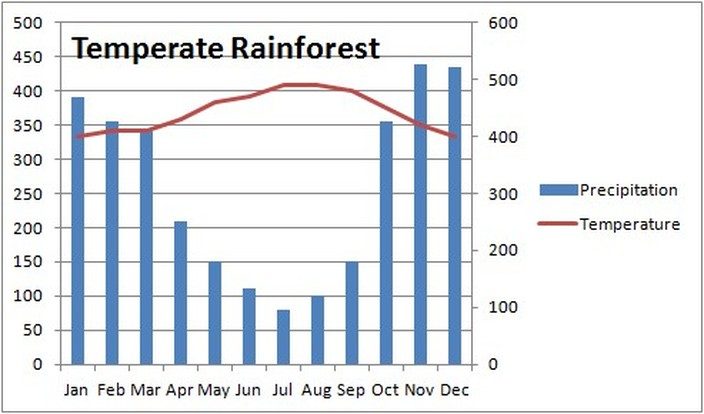
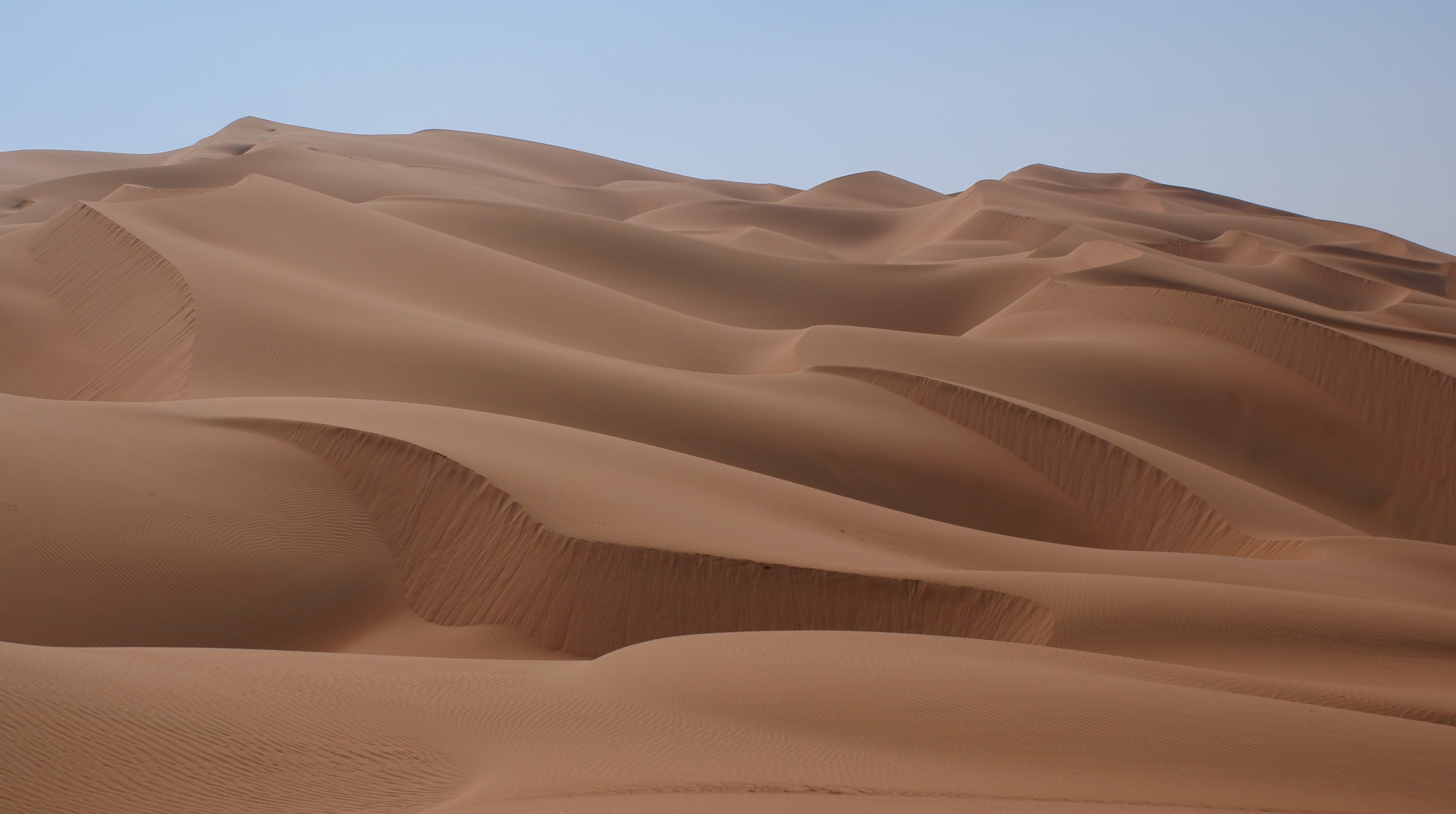
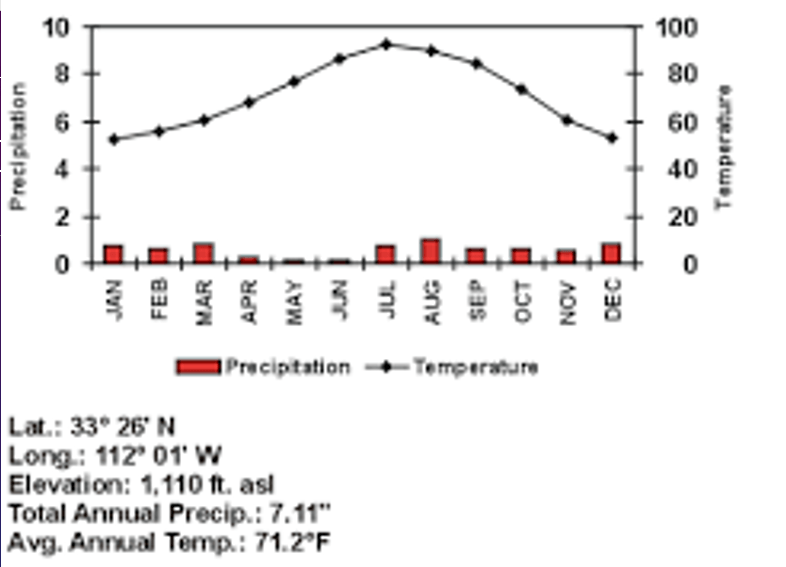
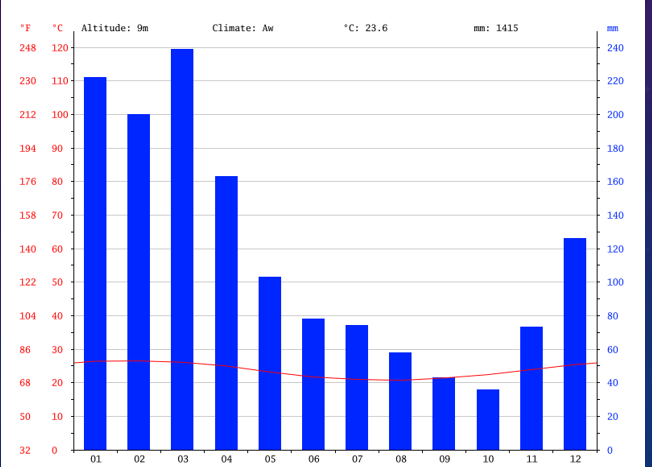

Which biome covers most of the land mass near Earth's equator?
Desert
Grassland
Tropical rainforest
Temperate forest

__________ primary productivity is the total amount of energy that producers convert to chemical energy in organic molecules per unit of time.
Net
Total
Gross
Secondary

__________ primary productivity = the organic materials that remain after photosynthetic organisms in the ecosystem have used some of these compounds for their cellular energy needs (cellular respiration).
Gross
Total
Net
Secondary

Ecological efficiency from one trophic level to the next is generally:
1%
10%
75%
90%

The total quantity of all living matter in an area is called:
Troposphere
Net Primary Productivity
Biomass
Ecosystem

