
Font size
 Worksheets
QUIZ 1 (GEE-IT)
Total questions: 100
Worksheet time: 1hrs 15mins
What ethical theory states that cooperation is possible only when people mutually agree to follow certain guidelines.
Cultural relativism
Act Utilitarianism
Rule Utilitarianism
Social Contract
It is a particular system of values and principles of conduct, especially one held by a specified person or society.
Ethics
Belief
Rights
Morality
What protects the intellectual property created by artist?
Copyright
Patents
Registered designs
Trademarks
What protects the intellectual property created by inventors?
Copyright
Patents
Registered designs
Trademarks
Which of these is a geographical indication?
BMW
Champagne
PlayStation
World Wide Web
What does a trademark protect?
An invention
A work of art
Logos, names, and brands
The look, shape and feel of a product
In most countries, how long does copyright last for?
10 years after the creation of the work
50 years after the creation of the work
10 years after the death of the person who created that work
50 years after the death of the person who created that work
How long do patents usually last for?
10 years
20 years
40 years
60 years
If you write an original story, what type of intellectual property gives you the right to decide who can make and sell copies of your work?
Copyright
Geographical indications
Patents
Registered designs
Imagine a sports team sets up a company to sell its own range of clothes. What type of intellectual property can the team use to show that the clothes are made by them?
Copyright
Trademark
Patents
Registered designs
If a company develops a new technology that improves its main product, what type of intellectual property can they use to stop others from copying their invention?
Copyright
Trademark
Patents
Registered designs
What protects the intellectual property created by designers?
Copyright
Patents
Registered designs
Trademarks
What is intellectual property?
Intellectual property is only protected by trademarks
Intellectual property is creations of the mind, such as inventions, literary and artistic works, designs, symbols, names, and images used in commerce, protected by patents, copyrights, trademarks, and trade secrets.
Intellectual property is related to weather patterns
Intellectual property is physical possessions
Name the four main types of intellectual property.
formulas
inventions
patents, trademarks, copyrights, and trade secrets
designs
Explain the concept of copyright.
Copyright is only applicable to physical objects.
Copyright lasts indefinitely.
Copyright only protects works created by famous artists.
Copyright protects original works of authorship.
What does a patent protect?
Limited access to information
Exclusive rights to an invention
Trademark protection
Public domain sharing
Define trademark and provide an example.
A trademark is a form of currency used in international trade.
A trademark is a type of legal document used for property ownership.
A trademark is a type of patent used for software development.
A trademark is a recognizable sign, design, or expression which identifies products or services of a particular source from those of others. For example, the Nike swoosh logo is a trademark.
How long does a copyright last?
Life of the author plus 100 years
Life of the author plus 50 years
Life of the author only
Life of the author plus 70 years
What is the purpose of intellectual property rights?
To limit access to knowledge and information
To encourage plagiarism and copying of original works
To hinder innovation and creativity
To protect creations of the human mind and provide creators with exclusive rights to their work.
What is the difference between a trademark and a copyright?
A trademark protects personal information, while a copyright protects business data.
A trademark covers physical products, while a copyright covers digital content.
A trademark is only valid in one country, while a copyright is international.
A trademark protects symbols, names, and slogans used to identify goods and services, while a copyright protects original works of authorship.
Explain the term 'fair use' in relation to intellectual property.
Fair use is a legal doctrine that allows limited use of copyrighted material without permission from the rights holder.
Fair use grants exclusive rights to the rights holder without limitations.
Fair use only applies to physical property, not intellectual property.
Fair use allows unlimited use of copyrighted material without permission.
What is a trade secret?
A trade secret is a type of patent
A trade secret is publicly available information
A trade secret is information that must be disclosed to competitors
A trade secret is any confidential business information that provides a company with a competitive edge.
Discuss the importance of protecting intellectual property.
Intellectual property should be freely available to everyone without any restrictions.
Protecting intellectual property encourages innovation, benefits creators, and drives economic growth.
Protecting intellectual property hinders progress and restricts access to information.
There are no benefits to protecting intellectual property, and it only serves to limit creativity.
What is the role of intellectual property in innovation?
Intellectual property provides legal protection for new ideas, inventions, and creations, encouraging innovation by giving creators exclusive rights to their work.
Intellectual property only benefits large corporations, not individual creators
Intellectual property has no impact on innovation
Intellectual property stifles creativity by limiting access to new ideas
How can intellectual property be enforced?
Through physical force
Through legal means such as patents, trademarks, copyrights, and trade secrets.
By ignoring it
Through emotional persuasion
What are the potential consequences of intellectual property infringement?
Legal action, financial penalties, damage to reputation, loss of competitive advantage, hindrance to innovation
Improved customer loyalty
Enhanced brand recognition
Increased market share
Explain the concept of public domain.
Public domain is the status of intellectual property that is not owned or controlled by anyone and is available for anyone to use freely.
Public domain is a legal term for private property accessible to the public
Public domain is a term used to describe classified government information
Public domain refers to a type of internet domain available for purchase by the public
What is the purpose of Creative Commons licenses?
To restrict the use of creative work
To grant permission for the public to use creative work
To limit the distribution of creative work
To enforce copyright laws

Which Creative Commons element does this symbol represent?

Which Creative Commons element does this symbol represent?

Which Creative Commons element does this symbol represent?

What are the terms of the NonCommercial element in Creative Commons?

What are the terms of the ShareAlike element in Creative Commons?

What are the terms of the Attribution element in Creative Commons?
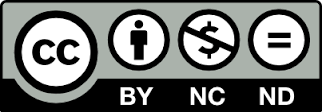


You want sell graphic t-shirts on Etsy and use photos from other creators. Can you use this image?
Yes
No

You're creating an event poster and you want to combine some images together to fit your theme. Can you use this image?
Yes
No
According to Richard Epstein (2007), which combination best represents the three key elements of computer security?
Privacy, authentication, authorization
Confidentiality, integrity, accessibility
Reliability, safety, availability
Integrity, privacy, decentralization
Which scenario best illustrates a violation of integrity rather than confidentiality?
An attacker reads confidential medical records
An employee deletes files they are not authorized to access
A hacker alters grades stored in a university database
A server crash prevents users from logging in
Why are security and privacy described as “two sides of the same coin”?
They are enforced using identical technical controls
Privacy depends entirely on anonymity
Secure systems help individuals control access to personal information
Privacy applies only to governments, security to organizations
Which of the following is NOT one of the three categories of cybersecurity vulnerabilities discussed?
Unauthorized access to data
Attacks on system resources
Attacks on computer networks
Intellectual property infringement
Data security concerns extend beyond preventing data alteration because:
Data must also be encrypted at all times
Unauthorized reading of data is itself a security violation
Only proprietary data needs protection
Cloud storage eliminates most data risks
Which cloud-computing concern presents a new dimension of data security risk?
Increased storage capacity
Elimination of physical devices
Reliance on third-party infrastructure
Faster processing speeds
System security differs from data security primarily because it focuses on:
Legal compliance requirements
Protection of information accuracy
Vulnerabilities affecting hardware and software resources
Preventing unauthorized data access
Which statement best distinguishes a worm from a virus?
Worms require a host program; viruses do not
Viruses act independently; worms need user action
Worms self-replicate without a host
Viruses are not considered malware
A Trojan horse is best described as software that:
Activates only when specific system conditions are met
Appears harmless but performs malicious actions secretly
Replicates automatically across networks
Focuses only on stealing passwords
Logic bombs differ from Trojans because logic bombs:
Are always spread via email
Execute only when predefined conditions are met
Cannot damage systems
Require user installation
Network security is primarily concerned with:
Protecting data accuracy
Preventing malware creation
Securing communication infrastructure and connectivity
Regulating ethical hacking practices
Which principle is NOT part of Steven Levy’s Hacker Ethic?
All information should be free
Hackers should be judged by credentials
Computers can improve human life
Authority should be mistrusted
Cyberterrorism differs from hacktivism primarily in its:
Use of malware
Level of technical sophistication
Intent to cause grave harm or terror
Reliance on social engineering
Which target would most likely qualify an attack as cyberterrorism?
A corporate website defacement
Unauthorized access to employee emails
Disruption of a national power grid causing panic
Online protest campaigns
16. Hacktivism is best defined as unauthorized system access intended to:
Generate financial profit
Cause loss of life
Promote social or political change
Steal proprietary trade secrets
Which activity best exemplifies cyberespionage?
Website defacement for political messaging
Phishing employees to obtain classified government data
Launching ransomware for profit
Disabling public transportation systems
Which social engineering attack is characterized by highly targeted research on victims?
Phishing
Vishing
Baiting
Spear phishing
The Principle of Least Privilege (PoLP) primarily aims to:
Improve system performance
Reduce insider and external attack impact
Increase employee autonomy
Eliminate authentication requirements
Information Warfare (IW) differs from cyberterrorism because IW:
Is never disruptive
Always involves terrorist organizations
Can involve misinformation without loss of life
Is conducted only by private individuals
Which technological change has had the greatest impact on privacy concerns in cyberspace according to our lesson?
The reduction in computing costs
The ability to collect, transmit, and retain personal information rapidly
The rise of open-source software
The expansion of broadband access
Which privacy view is best described as “being let alone”?
Informational privacy
Decisional privacy
Accessibility privacy
Normative privacy
A government banning certain medical procedures would most directly violate which type of privacy?
Accessibility privacy
Informational privacy
Decisional privacy
Descriptive privacy
Which situation best illustrates informational privacy?
Preventing police from entering your home without a warrant
Choosing whom to marry
Controlling who can access your online purchase history
Closing your office door
James Moor’s theory of privacy is distinctive because it:
Rejects informational privacy
Focuses only on physical intrusion
Integrates intrusion, interference, and information access
Applies only to online environments
The key difference between descriptive privacy and normative privacy is that:
Descriptive privacy concerns moral rights, normative privacy concerns facts
Descriptive privacy describes current conditions, normative privacy expresses expectations
Normative privacy applies only to law
Descriptive privacy is always respected
Which example best represents normative privacy?
A website tracks your activity using cookies
Your browsing history is stored by your ISP
You believe a company should not sell your personal data
Your social media posts are publicly visible
Dataveillance primarily refers to:
Tracking physical movement using cameras
Monitoring and recording personal data using cybertechnology
Mining only financial records
Government spying exclusively
Internet cookies pose privacy risks mainly because they:
Damage computer hardware
Encrypt browsing data
Enable tracking of user behavior over time
Prevent access to websites
RFID technology creates privacy concerns because it:
Requires manual scanning
Stores no personal data
Can broadcast data wirelessly without user awareness
Operates only offline
Computer merging differs from computer matching in that merging:
Involves cross-checking unrelated databases for hits
Creates a composite file from multiple databases
Is limited to government use
Uses only public data
Data mining threatens privacy primarily because it:
Collects inaccurate information
Requires user consent
Creates new, nonobvious classifications of individuals
Eliminates data security controls
Consumer profiling is an example of:
Data gathering
Data mining
Data matching
Accessibility privacy
Web mining differs from traditional data mining because web mining:
Uses only government databases
Cannot identify individuals
Analyzes online user behavior for commercial purposes
Is illegal in most countries
Non-public personal information (NPI) is best described as:
Information freely available online
Non-confidential demographic data
Highly confidential personal records
Anonymous statistical data
Which tool is classified as a privacy-enhancing technology (PET)?
Social media platforms
TOR browser
Search engine optimization tools
Data warehouses
HIPAA primarily protects:
Financial transaction data
Government surveillance records
Individually identifiable medical information
Educational records
Under the Philippine Data Privacy Act, personal data refers to:
Only sensitive personal information
Only publicly available information
Personal, sensitive, and privileged information collectively
Only digital records
Which of the following is classified as privileged information?
A shopping receipt
A public court verdict
Attorney-client communications
Employment history
The lesson concludes that privacy in the digital age is best understood as:
Total anonymity
Complete secrecy
Managed privacy through informed choices and habits
Government-controlled protection
Definition: Social engineering is the art of manipulating people so they give up confidential information.
True
False
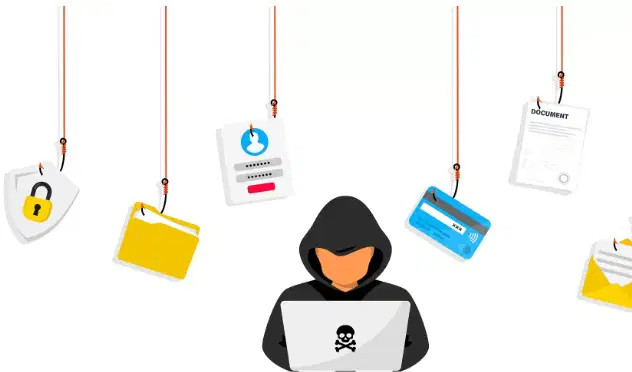
How does tailgating work?
By sending deceptive emails.
By mimicking legitimate workers.
By closely following an authorized user to gain access to a building.
By intercepting phone calls.

Phishing takes place using.... (Select 2 answers)
Instant messaging
Website
Piggybacking
What is a watering hole attack?
A type of attack where attackers directly target an organization's network
A type of attack where attackers infect a third-party website to target users of a specific organization
A type of attack where attackers send malicious emails to users
A type of attack where attackers physically break into an organization's premises
Prevents you from accessing computers, usually requiring a fee to have access restored.
Ransomware
Brute Force Attack
Dumpster Diving
Dictionary Attack
Software or firmware intended to perform an unauthorised process that will have an adverse impact on the confidentiality, integrity, or availability of a system.
Threats against data
Malware
Web Application attacks
DDoS
Stealing someone's personal information to commit fraud such as applying for credit, get medical services or commit other crimes.
Data breach
Identity theft
Spam
Information leakage
Which of these makes a promise of a service in exchange for information?
Quid pro quo
Baiting
Pretexting
Which social engineering technique tries to disable anti-virus software so that malware can be installed?
Quid pro quo
Baiting
Pretexting
Phishing
"Personal data" refers to any information that somebody can use to identify you. (i.e. cellphone number, home address, employer details, etc.)
True
False
What year was the Data Privacy Act of 2012 passed in the Philippines?
2008
2012
2015
2018
Temporary memory on your computer that is sometimes used to store local copies of files opened when you browse the Internet.
backup
firewall
cache memory
encryption
A small file on a computer that is created when a user visits a Web site. A Web site uses cookies to identify users who visit the site, and also track the preferences of the users.
cache memory
active content
firewall
cookie
Any information available on the Internet is an intellectual property, which is legally owned by the person who created it. The owner of an intellectual property has the exclusive rights to control the use of this information.
hacker
firewall
administrator
intellectual property
The act of copying someone’s work and using it as if it is your own work, without mentioning the source.
plagiarism
computer safety
phishing
hacking

Copyright
Trademark
Copyleft
Patent

These symbols tells you the trademark is protected by a federal registration
Copyright
Creative Commons
Trademark
Patent

The LG logo would most likely be protected by:
Patent
Copyright
Trademark

Spongebob Squarepants is a character that is most likely protected by:
Patent
Trademark
Copyright
If Ms. Rexrode invented a belly button lint picker (The Pick-o-matic 3000), she would most likely apply for a:
Patent
Trademark
Copyright

McDonald's makes their own hamburger, called a Big Mac. The name Big Mac would be protected by a:
Patent
Trademark
Copyright
Choose the image below that represents something most likely protected by trademark:


Stealing copyrighted work by downloading or copying it in order to keep, sell, or give it away without permission and without paying.
Plagiarize
Public Domain
Piracy
Fair Use

