
Font size
 Worksheets
Astronomy Test
Total questions: 60
Worksheet time: 1hrs 4mins

A star that is very dim and red in color is _____.
(click on picture to make larger)
Belelgeuse
VanMaanen's star
Barnard's star
Tau Ceti

According to the HR diagram, what is the approximate absolute magnitude of Rigel?
(click on picture to make larger)
0
+1
-2
-5

According to the Big Bang Theory, which graph best represents the relationship between time and the size of the universe from the beginning of the universe to the present?
(click on picture to make larger)
A
B
C
D
365 1/4 days =________
(Check all that apply)
3 years
revolution of Earth around the sun
1 year
rotation of Earth around the sun
As Earth_________ on its __________, only one side of the planet faces the Sun at a time.
revolves; side
rotates, axis
The longest day of the year, with regard to the amount of daylight (in the Northern Hemisphere) is during the _________________.
Winter Solstice
Summer Solstice
Vernal Equinox
Autumnal Equinox

What is represented by the diagram at the right?
(click on picture to make larger and ignore the blue line)
Changing phases of the Sun
Changing phases of the Moon
stages in an eclipse of the Sun
stages in an eclipse of the Moon

The diagram below represents a simple geocentric model. Which object is represented by the letter X?
(click on picture to make larger)
Earth
Sun
Moon
Polaris

At which two positions of the Moon is an eclipse of the Sun or Moon possible?
(click on picture to make larger)
1 and 5
2 and 6
3 and 7
4 and 8
The Milky Way Galaxy is best described as _________.
Elliptical
Spiral
Oval
Circular

At the time indicated in this diagram, what season is it in the northern hemisphere?
(click on picture to make larger)
summer
spring
winter
fall
The lifetime of a star depends on its beginning
mass
temperature
brightness
magnitude
Which planet will take the longest time to orbit the Sun?
Jupiter
Mars
Mercury
Uranus
According to the Big Bang Theory, the universe is
depleting
constant
exploding
expanding
Which of the following lists the correct order of the four outer planets from the sun?
Which motion causes Earth to experience a year?
the Earth's revolution around the Sun
the Sun's revolution around Earth
the rotation of Earth on its axis
the rotation of the Sun on its axis
If a full moon occurs on March 1, which date during the same month would you see another full moon?
March 8
March 16
March 23
March 31

What does the Big Bang theory suggest?
(click on picture to make larger)
The universe was just there
The Milky Way is the only solar system
The universe is continually expanding
An explosion occurred and the planets are moving towards each other

Which star is the coldest?
(click on picture to make larger)
Yellow Star
Red Star
Orange Star
Blue Star

What type of galaxy is this?
(click on picture to make larger)
Spiral
Elliptical
Irregular
Irrational

Which category is our Sun located in?
(click on picture to make larger)
White Dwarfs
Supergiants
Main Sequence
Giants

Which star is considered a Main Sequence Star? A, B, C, or D?
(click on picture to make larger)
A
B
C
D
Which star is a yellow super giant with a similar luminosity to the sun?
(click on picture to make larger)
Alpha Centauri B
Alpha Centauri A
Akor
North Star

The graph below shows the diameters of the planets. The diameter of a planet is the distance from one side to the other through the middle at the widest part. Which two planets are closest in size?
(click on picture to make larger)
Uranus and Neptune
Venus and Mars
Jupiter and Saturn
Mercury and Earth

Pluto is called a dwarf planet. It is smaller than the planets in the solar system. The size of each solar system planet is listed in the table below. Which planet is MOST likely closest to Pluto in size?
(click on picture to make larger)
Mars
Mercury
Jupiter
Neptune
As a star uses up its Hydrogen supply, it changes from a Main Sequence star to a-
Black Hole
Supernova
Red Giant
Dwarf

The universe is approximately how old?
130 million years old
14 billion years old
60 billion years old
3.49 million years old

Our solar system formed from a giant rotating cloud of dust and gas called a
Nebula
Solar flare
Solar storm
Big Bang

Seasons are caused by Earth's revolution and
(click on picture to make larger)
Earth's distance from the sun
Precession
Earth's tilted axis
Earth's rotation

What process produces the Sun’s energy
solar flares
electromagnetic waves
nuclear fusion in the Sun’s core
nuclear fission on the Sun’s surface
Which planet is fifth from the sun?
Saturn
Jupiter
Mars
Earth

What type of galaxy is this?
(click on picture to make larger)
Spiral
Elliptical
Irregular
Irrational

Which letter indicates the position of the moon during full moon?
(click on picture to make larger)
"Y"
"X"
"W"
"Z"

Which star type has a luminosity of 10-3 and a temp. of 18,000 on the H-R scale?
(click on picture to make larger)
Super giant
Main-sequence
Red dwarf
White dwarf

What are dark, cooler areas on the sun's surface called?
Sunspots
Coronas
Solar Wind
Prominences
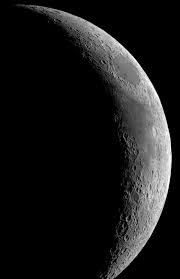
Name the moon phase . . .
(click on picture to make larger)
waning crescent
waxing crescent
waning gibbous
waxing gibbous
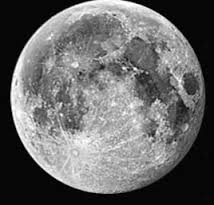
Name the moon phase . . .
(click on picture to make larger)
First Quarter
Last Quarter
New Moon
Full Moon
A student makes a model to depict the motion of a planet and a moon around the Sun. Which model accurately shows the motion of the planet and moon?
(click on the pictures to make larger)


How would the gravitational force between the Earth and the Moon change if the Moon was twice as far away?
The force would increase.
The force would be the same.
The force would decrease.
The force would disappear.
Halley’s Comet is a well-known space object named after Edmond Halley, who studied comets. Halley’s Comet is visible from Earth and last appeared in the inner solar system in 1986; it is scheduled to return in 2061.What is primarily responsible for giving Halley’s Comet a predictable return date?
energy absorbed by the Sun on the surface of the comet
comet’s long tail moving aside objects in its path
gravitational attraction between the comet and the Sun
solar wind pushing the comet through the solar system
Which planet obits the Sun in the shortest amount of time?
Earth
Jupiter
Saturn
Venus

Which type of eclipse is shown in the diagram?
(click on the picture to make larger)
Lunar
Solar
When the light of the moon is increasing, we say it is ________________________.
waxing
waning
The two most common elements in stars is ...
carbon and sodium
Hydrogen and Oxygen
Hydrogen and Helium
Oxygen and Nitrogen

As the earth rotates on its axis, the constellations and stars in them appear to _________.
(click on the picture to make larger)
move across the sky
stand still in the sky
move around each other
rotate

Which star is considered a Main Sequence Star?
(click on the picture to make larger)
A
B
C
D

According to the table, which planet spins the fastest?
(click on the picture to make larger)
Mercury
Mars
Jupiter
Saturn

The symbols below represent the Milky Way galaxy, the solar system, the Sun, and the universe. Using the symbols below, which arrangement of symbols is most accurate?
(click on the pictures to make larger)


A telescope that uses a set of lenses to gather and focus light from distant objects is a _____.
(click on the picture to make larger)
reflecting telescope
refracting telescope
radio telescope
Hubble telescope
Leap year was established because
February is shorter than the other months
each complete revolution of Earth takes 365 1/4 days
the number of fill moons in a year is not a whole number
July and August are longer months

How much time did you spend studying?

What did you think of the test? How do you think you did on the test?

