wayground logo

Free Printable Worksheets

NEW

Font size

S
M
L
XL
Worksheets

Science, Matter, and Systems

Total questions: 77

Worksheet time: 2hrs 41mins

Name
Class
Date
1.
A series of steps used by scientists to solve a problem or answer a question. 
a)
scientific method
b)
recipe
c)
data collection
d)
metric system
2.
A testable explanation to a problem that has not yet been tested. 
a)
data
b)
theory
c)
hypothesis
d)
fact
3.
Testing a hypothesis often involves a(n):
a)
answer
b)
experiment
c)
problem
d)
safety check
4.
This variable in an experiment is the one being changed by the scientist. 
a)
dependent variable
b)
independent variable
c)
data
d)
control group
5.
The summary at the end of an experiment that explains the results. 
a)
conclusion
b)
procedures
c)
materials
d)
responding variable
6.
The name of the information that you get from your experiment (you organize it into charts and graphs).
a)
observations
conclusion
b)
data
c)
variables
d)
hypothesis
7.
An experiment is performed on plants to see how different liquids affect plant growth. Each plant in the experiment is given a different liquid; water, apple juice, or milk. Each plant has the same amount of soil, sunlight, and listens to the same music. In this investigation, the independent variable is ...
a)
The type of plant
b)
The amount of sunlight
c)
The type of music
d)
The type of liquid
8.
Dependent variable means
a)
the scientist controls what to test
b)
educated guess
c)
ask a question
d)
what is being measured
9.
If you increase the amount of spinach you eat, then you will increase the iron in your blood. 
What's the dependent variable?
a)
increase the amount of iron in your blood
b)
spinach you eat
10.
If I ride my bike to school instead of walking, then I will get to school faster. What is the dependent variable?
a)
True
b)
How fast you get to school
c)
Riding a bike or walking
d)
False
11.
If I study for my scientific method test, then I will have a better test score. What is the dependent variable?
a)
Scientific Method
b)
Studying
c)
Independent variable
d)
Test score
12.
If I read this question carefully, then I will answer it correctly. What is the independent variable?
a)
I hope so
b)
Yes
c)
Reading or not reading carefully
d)
Likelihood of a correct answer
13.
This is the group that we will compare our experimental group to. This group stays "normal."
a)
Control Group
b)
Experimental Group
c)
 Normal Group
d)
Weird Group
14.
This is the group that is affected by the independent variable or the group that is changed.
a)
Control Group
b)
Experimental Group
c)
Changed Group
d)
Cool Group
15.
Research question: does the distance a person kicks a soccer ball effect how well they will do on their math test.  What is the dependent variable?
a)
How far they kick the soccer ball
b)
who the person is
c)
how well they do on the math test
d)
Type of soccer ball.
16.
When experimenting with the growth of a plant, a scientist uses three (of the same type of) plants, two different fertilizers, equal light, and equal water. What type of variable is the fertilizer?
a)
Dependent
b)
Independent
c)
Control
d)
Compound
17.
Which variable depends on what is done at the beginning of an experiment?
a)
Dependent
b)
Independent
c)
Control
d)
Following
18.
What would the INDEPENDENT variable be in an experiment testing which types of paper airplane goes furthest?
a)
the paper used
b)
the type of paper airplane
c)
the distance of each plane's flight
d)
how hard the plane is thrown
19.
Research Question: Does the type of gasoline put in a car effect how fast the car can drive. What is the independent variable?
a)
Type of gasoline
b)
which car the gas is put into
c)
how fast the car can drive
d)
how much gas is put into the car
20.
An experiment is performed on plants to see how different liquids affect plant growth. Each plant in the experiment is given a different liquid; water, apple juice, or milk. Each plant has the same amount of soil, sunlight, and listens to the same music. In this investigation, the independent variable is ...
a)
The type of plant
b)
The amount of sunlight
c)
The type of music
d)
The type of liquid
21.
An experiment is performed on plants to see how different liquids affect plant growth. Each plant in the experiment is given a different liquid; water, apple juice, or milk. Each plant has the same amount of soil, sunlight, and listens to the same music. In this investigation, what is the dependent variable?
a)
Type of plant
b)
Water, apple juice, milk
c)
Plant growth
d)
Color of the plant's leaves
22.
Ms. S set up an experiment to see how the mass of a ball affects the distance it rolls off a ramp. Identify the independent variable.
a)
Distance traveled by the ball
b)
Height of the ramp
c)
Mass of the ball
d)
Who set up the experiment (Ms. S, etc)
23.
Ms. S set up an experiment to see how the mass of a ball affects the distance it rolls off a ramp. What is the dependent variable?
a)
Distance traveled by the ball
b)
Height of the ramp
c)
Mass of the ball
d)
Where the experiment took place.
24.
Maria wants to know if birds prefer to eat in one place over another. She makes three feeders out of 2-liter bottles and paints all of them red. She fills each of the feeders with the same amount of mixed birdseed, and plans to keep the feeders out for 10 days before measuring how much seed is eaten from each feeder. She puts each of the feeders in her back yard: one feeder in a large dead tree, another feeder she sits on the dog house, and the last she sits in a small bushy tree.
What is the dependent variable?
a)
Length of the birdfeeders
b)
Amount of time feeders are outside
c)
Amount of seed eaten
d)
Location the feeders are put in.
25.

You are managing a large feed lot. A pharmaceutical company wants you to try a new antibiotic to treat shipping fever in newly arrived cattle. The company claims that it is more effective at a lower cost than your current antibiotic you are using. You will measure the temperature of the cattle to see whether or not it works. WHAT IS THE INDEPENDENT VARIABLE (IV)?

a)

Type of cow

b)

Antibiotic

c)

No Antibiotic

d)

Temperature of Cattle

26.

You are managing a large feed lot. A pharmaceutical company wants you to try a new antibiotic to treat shipping fever in newly arrived cattle. The company claims that it is more effective at a lower cost than your current antibiotic you are using. You will measure the temperature of the cattle to see whether or not it works. WHAT IS THE DEPENDENT VARIABLE (DV)?

a)

Type of cow

b)

Antibiotic

c)

No Antibiotic

d)

Temperature of Cattle

27.

You are managing a large feed lot. A pharmaceutical company wants you to try a new antibiotic to treat shipping fever in newly arrived cattle. The company claims that it is more effective at a lower cost than your current antibiotic you are using. You will measure the temperature of the cattle to see whether or not it works. WHAT IS A CONTROLLED VARIABLE (CONSTANT)?

a)

Type of cow

b)

Antibiotic

c)

No Antibiotic

d)

Temperature of Cattle

28.

You are managing a large feed lot. A pharmaceutical company wants you to try a new antibiotic to treat shipping fever in newly arrived cattle. The company claims that it is more effective at a lower cost than your current antibiotic you are using. You will measure the temperature of the cattle to see whether or not it works. WHAT IS THE CONTROLGROUP?

a)

Type of cow

b)

Antibiotic

c)

No Antibiotic

d)

Temperature of Cattle

29.
This part of the experiment serves as a basis of comparison; the one variable being tested has been omitted. 
a)
experimental group
b)
control group
c)
data
d)
variables
30.

A custodian notices some dirty tables and wants to know which cleaner is the best to use. He tests three different cleaners and looks at how well they clean compared to tap water. What is the control group?

a)

type of cleaner

b)

tap water

31.

An experiment is being done to determine how light affects the growth of small zinnia plants. One plant is placed in full sunlight, the second in a shaded area, the third in an unlit closet. What is the control group in this experiment?

a)

the amount of light

b)

the plant in the closet

32.

Steve wanted to see if different types of fertilizer influence sunflower growth. What is the control group?

a)

type of fertilizer

b)

sunflower grown without fertilizer

33.

Hypothesis: If plants are watered more than normal, then growth height will increase. What is the control group?

a)

the amount of water

b)

a plant receiving the normal amount of water

34.
The type of reasoning where a person makes  conclusions based on observations and patterns is called...
a)
Inductive reasoning
b)
Deductive reasoning
c)
Conjecture
d)
Experiments
35.
Using the statements:
If it is Friday, then I will get paid.
It is Friday.
What is the conclusion?
a)
It is not Friday
b)
It is Friday
c)
I will not get paid
d)
I will get paid
36.
Using deductive reasoning, which of the following completes the statement to form a valid conclusion?
If it is snowing heavily, then school will be canceled.
If school is canceled, the big test will not be given today.
It is snowing heavily, then...
a)
Look out for the snowplows while driving to school.
b)
The big test will not be given today.
c)
The roads will be hard to drive on.
d)
You should call the school to see if school is canceled.
37.
Inductive Reasoning means...
a)
Guessing
b)
Testing and observing patterns to make conjectures
c)
Explaining why
d)
Ura nok seblu!
38.
Deductive reasoning means...
a)
Guessing
b)
Ura nok seblu!
c)
Testing and observing patterns to make conjectures
d)
Making general observations of situations and applying them to specific situations.
39.
Since all humans are mortal, and I am human, then I am mortal. 
a)
Deductive
b)
Inductive
40.
All bears are mammals, all mammals have kidneys; therefore all bears have kidneys. 
a)
Deductive
b)
Inductive
41.
All chickens that we have seen have been brown; so, all chickens are brown. 
a)
Deductive
b)
Inductive
42.
It is dangerous to drive on icy streets.  The streets are icy now so it is dangerous to drive now. 
a)
Deductive
b)
Inductive
43.
Snakes are reptiles and reptiles are cold blooded; therefore, snakes are cold blooded. 
a)
Deductive
b)
Inductive 
44.
Obtuse angles are greater than 90 degrees.  This angle is 110 degrees, so it is obtuse. 
a)
Deductive
b)
Inductive
45.
All observed houses on South Street have roofs that are falling apart.  Sherry lives on South Street.  Her roof is falling apart. 
a)
Deductive
b)
Inductive
46.
IF Jimmy named his first child Thing1
AND his second child Thing2
THEN He will name his 3rd child Thing3
a)
Inductive
b)
Deductive
47.
IF an apple a day keeps the doctor away.
AND Joe ate an apple every day.
THEN Dr. Dre stayed away.
a)
Inductive
b)
Deductive
48.

I saw the light on and the tea kettle is hot on the stove. Someone must be home.

a)

Deductive

b)

Inductive

49.

All matter is made of what...

a)

energy

b)

atoms

c)

electrons

d)

compounds

50.

The positive particles of an atom are

a)

electrons

b)

positrons

c)

neutrons

d)

protons

51.

The central region of an atom where its neutrons and protons are is its

a)

nucleus

b)

electron cloud

c)

core

d)

center

52.

Particles in an atom that are neutral and have no charge are

a)

negatrons

b)

electrons

c)

neutrons

d)

protons

53.
A particle that moves around the nucleus is a(n)...
a)
Proton
b)
Neutron
c)
Electron
d)
Quark
54.

What does the 1.00794 stand for?

a)

Hydrogen

b)

atomic number

c)

atomic mass

d)

atomic explosion

55.

In the modern periodic table, elements are arranged by:

a)

atomic mass

b)

atomic number

c)

valence electrons

d)

number of isotopes

56.

An atom with atomic number 6 would have how many protons

a)

6

b)

12

c)

3

d)

cannot be determined

57.

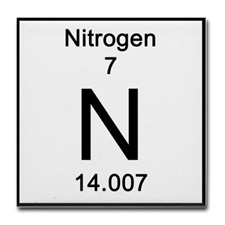
What is the number of protons that the element in this image contain?

a)

14

b)

7

c)

15

d)

18

58.
What is the atomic mass of "F"
a)
9
b)
18
c)
17
d)
19
59.

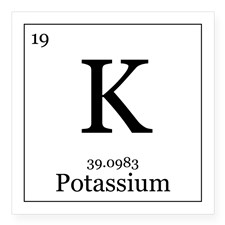
How many neutrons are in the atom "K"?

a)

7

b)

2

c)

39

d)

20

60.
What are the 3 particles that make-up the atom?
a)
protons, neutrons, and isotopes
b)
neutrons, isotopes, and electrons
c)
positives, negatives, and electrons
d)
protons, neutrons, and electrons
61.
Beryllium has how many protons?
a)
4
b)
9.0122
c)
2
d)
13.0122
62.

What type of charge does an electron have?

a)

positive

b)

no charge/neutral

c)

negative

63.

What type of charge does a proton have?

a)

negative

b)

postive

c)

no charge/neutral

64.

What two sub-atomic particles belong in the nucleus of an atom?

a)

electrons and protons

b)

protons and neutrons

c)

electrons and neutrons

65.

What type of charge does a neutron have?

a)

negative

b)

positive

c)

no charge/neutral

66.

The number of electrons in an atom is found by the

a)

protons

b)

atomic number

c)

protons and atomic number

d)

none

67.

The number 18 represents the

a)

Atomic number

b)

Neutrons

c)

Element Name

d)

Element symbol

68.

The mass number of an atom =

a)

protons + neutrons

b)

protons - neutrons

c)

electrons - neutrons

d)

neutrons + electrons

69.
The pH scale is a range from:
a)
1-7
b)
0-14
c)
1-14
d)
1-20
70.
A(n) ______ is a substance with a pH less than 7
a)
Acid
b)
Alkaline
c)
Base
d)
Buffer
71.
A(n) _______ is a substance with a pH greater than 7.
a)
Base
b)
Acid
c)
Buffer
d)
Water
72.
Which solution releases H+ in solution?
a)
Base
b)
Acid
c)
Buffer
d)
Water
73.
This substance releases OH- into solution
a)
Acid
b)
Base
c)
Neutral
74.
A solution with a pH of 3.6 would be...
a)
Acid
b)
Base
c)
Neutral
d)
Acid and Base
75.
A solution with a pH of 8.6 would be...
a)
Acid
b)
Base
c)
Neutral
d)
Acid and Base
76.
According to the pH range which substance is more acidic than lemon juice
a)
Hydrochloric acid
b)
cabbage
c)
milk
77.
Bleach is a strong base, what is the pH level of bleach?
a)
13
b)
14
c)
1
d)
2