Wayground logo

Free Printable Worksheets

Font size

S
M
L
XL
Worksheets

Biology - Molecules of life

Total questions: 86

Worksheet time: 2hrs 43mins

Name
Class
Date
1.

Scientific name for fats and oils (made up of fatty acids)

a)

carbohydrates

b)

lipids

c)

proteins

d)

nucleic acids

2.
Sugar or starch that living things use for energy. 
a)
protein
b)
carbohydrate
c)
lipids
d)
nucleic acids
3.

A large molecule made up of amino acids that is often plentiful in meat.

a)

carbohydrates

b)

lipids

c)

proteins

d)

nucleic acids

4.
Information molecules that provide directions to make proteins. Most important DNA & RNA 
a)
carbohydrates
b)
lipids
c)
nucleic acids
d)
proteins
5.
A ______________ is a smaller part of a polymer. 
a)
micromer
b)
macromer
c)
minimer
d)
monomer
6.
Many monomers make up a _______________. 
a)
multimer
b)
polymer
c)
pillowmer
d)
micromolecule
7.
______________ is the monomer that makes up lipids. 
a)
fatty acids
b)
sugar
c)
nucleotides
d)
amino acids
8.
____________ is the monomer that makes up carbohydrates.
a)
sugar
b)
fatty acids 
c)
nucleotides
d)
amino acids 
9.
__________ is the monomer that makes up proteins. 
a)
amino acids 
b)
sugar
c)
nucleotides
d)
fatty acids 
10.

What elements are present in this fatty acid chain?

a)

H, O, C

b)

H, C

c)

Ag, C, He

d)

Ti, Aq, O

11.

What elements are present in glucose?

a)

P, Ag, Si

b)

C, H, O

c)

H, N, S, C

d)

OH, CH2

12.

Polar molecules are

a)

cold molecules

b)

shared equally

c)

not shared equally

d)

have the same degree of attraction

13.

Which of the following statements about water is false?

a)

Oxygen has a stronger attraction to electrons then hydrogen.

b)

Hydrogen has a slightly positive charge

c)

Oxygen has a slightly positive charge

d)

Water is an example of a polar covalent bond

14.
Which macromolecule is made of simple and complex sugars?
a)
lipids
b)
proteins
c)
carbohydrates
d)
nucleic acids
15.
DNA and RNA are examples of...
a)
proteins
b)
nucleic acids
c)
carbohydrates
d)
lipids
16.
What is the function of nucleic acids?
a)
Stores energy
b)
Stores genetic information
c)
Movement
d)
Physical structure
17.
Another name for fats and oils
a)
proteins
b)
sugar
c)
lipids
d)
nucleic acids
18.
Lipids are made up of which of the following?
a)
glycerol and fatty acids
b)
glycerol and monolipids
c)
fatty acids and phosolipids
d)
amino acids and nucleotides
19.
What is the monomer of proteins?
a)
amino acids
b)
polypeptides
c)
nucleotides
d)
monosaccharides
20.
A monomer is
a)
a large molecule
b)
a macromolecule
c)
a building block
d)
a polymer
21.
What are the four types of Macromolecules
a)
carbohydrates, proteins, lipids, amino acids
b)
carbohydrates, lipids, nucleic acids, proteins
c)
carbohydrates, monosaccharides, proteins, lipids
d)
carbohydrates, amino acids, lipids, proteins
22.
How many bonds can carbon form?
a)
two
b)
four
c)
three
d)
one
23.
Carbohydrates are made of which elements
a)
carbon, calcium, hydrogen
b)
carbon, hydrogen, oxygen
c)
carbon, oxygen, calcium
d)
carbon, oxygen, nitrogen
24.
"Mono" means
a)
two
b)
three
c)
one
d)
four
25.
A covalent bond is formed as a result of
a)
transferring electrons
b)
sharing electrons
c)
transferring protons
d)
sharing protons
26.
Term for any large organic molecule made of many subunits.
a)
polymer
b)
monomer
c)
oligosaccharide
d)
dimer
27.
Which of the following is NOT found in a nucleotide
a)
Amino Acid
b)
Pentose Sugar
c)
Nitrogen Base
d)
Phosphate Group
28.
What are the monomers for carbohydrates
a)
Amino Acids
b)
Fatty Acids
c)
Monosaccharides
d)
Nucleotides
29.
A reaction that breaks apart molecules by adding water is called
a)

dehydration

b)
hydrolysis
c)
anabolism
d)
condensations
30.
What type of bond can be found between amino acids?
a)
covalent
b)
hydrogen
c)
ionic
d)
peptide
31.
Which DOES NOT explain the difference between asexual and sexual reproduction?
a)
Asexual is with only one parent, while sexual needs two.
b)
Asexual creates offspring identical to the parent, while sexual is a mix of both.
c)
Sexual and asexual both create identical offspring to the parent.
d)
Sexual involves fertilization of eggs by sperm.
32.
Which biomolecule is also known as enzymes?
a)
Carbohydrate
b)
Lipid
c)
Nucleic Acid
d)
Protein
33.
Which biomolecule is your main source of quick energy?
a)
Nucleic Acid
b)
Protein
c)
Lipid
d)
Carbohydrate
34.
Which biomolecule is responsible for insulation and energy storage?
a)
Protein
b)
Nucleic Acid
c)
Lipid
d)
Carbohydrate
35.
The conditions for an enzyme to work need to be ____________
a)
specific
b)
normal
c)
variable
d)
don't matter
36.
Enzymes produce a specific reaction.
a)
True
b)
False
37.
If you want a reaction to speed up you need an _________.
a)
nucleic acid
b)
enzyme
c)
nerve cell
d)
carbohydrate
38.

Which biomolecule makes up cell membranes?

a)

Protein

b)

Carbohydrate

c)

Lipid

d)

Nucleic acid

39.
All polymers are made up of...
a)
monosaccharides
b)
monomers
c)
proteins
d)
None of these
40.
What is the function of nucleic acids?
a)
Stores energy
b)
Stores genetic information
c)
Movement
d)
Physical structure
41.
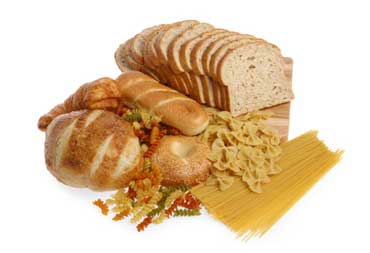
Which biomolecule is found in pasta and bread?
a)
Lipid
b)
Protein
c)
Nucleic Acid
d)
Carbohydrate
42.

The repeating units of protein are

a)

Amino acids

b)

Glucose

c)

Fatty acid

d)

Peptides

43.
What is a type of protein that speeds up chemical reactions?
a)
sucrose
b)
insulin
c)
enzyme
d)
antibodies
44.
Linking several amino acids together produces what polymer?
a)
polysaccharide
b)
polypeptide
c)
polynucleotide
d)
triglyceride
45.

Proteins that provide support...

a)

defense proteins

b)

structural proteins

c)

enzymatic proteins

d)

storage proteins

e)

motor proteins

46.

Surface tension is the property of water in which...

a)

water molecules at the surface tend to stick together.

b)

water spills easily.

c)

water tends to be see-through.

47.

Describe COHESION.

a)

Water molecules attracted to other substances.

b)

Water molecules climbing upwards against the force of gravity.

c)

Water molecules dissolving many substances because of its polarity.

d)

Water molecules attracted to other water molecules.

48.

Water's ability to stick to glass is

a)

adhesion

b)

cohesion

c)

surface tention

d)

capillary action

49.
What is adhesion?
a)
Water's ability to stick to itself
b)
Water's ability to stick to other substances
c)
The strength of the cohesion of all the water molecules combined
d)
Tape, glue and other adhesives
50.
What is Specific Heat?
a)
The  amount of thermal energy required to increase the temperature of 1kg of a material by 1°C.
b)
The  amount of radiant energy required to increase the temperature of 1kgof a material by 1°C
c)
The  amount of energy required to increase the temperature of 1kgof a material by 1°C.
d)
The  amount of friction  required to increase the temperature of 1kgof a material by 1°C.
51.
A high specific heat means...
a)
It heats up quickly with energy added
b)
It requires more energy to change temperature
52.

Water is known as a _______ molecule

a)

non-polar

b)

cold

c)

polar

d)

warm

53.

Water is known as the universal __________

a)

solute

b)

solution

c)

solvent

d)

bonder

54.

The substance that does the dissolving is called the

a)

solvent

b)

solute

c)

solution

55.

The substance that is being dissolved is called the

a)

solvent

b)

solute

c)

solution

56.

Which is the solvent in this solution? Ramen noodles, packet of flavoring, and hot water

a)

Ramen noodles

b)

Hot water

c)

packet of flavoring

57.
Which of the following best describes a DNA molecule?
a)
double helix
b)
contains ribose
c)
made of amino acids
d)
contains Uracil
58.
Adenine bonds with ______________.
a)
Guanine
b)
Thymine
c)
Cytosine
d)
Adenine
59.
Guanine bonds with ______________.
a)
Adenine
b)
Guanine
c)
Cytosine
d)
Thymine
60.
Which shows the correct complementary base pairing for DNA?
a)
C-A, T-G
b)
A-G, C-T
c)
C-G, U-A
d)
T-A, G-C
61.
DNA codes for...
a)
cholesterol
b)
proteins
c)
fatty acids
d)
a sandwich
62.
A change in the genetic code = ____
a)
trait
b)
genotype
c)
phenotype
d)
mutation
63.
What is the name of the subunit that builds a DNA polymer?
a)
Nucleotide
b)
Nucleic acid
c)
Nitrogenous base
d)
Nucelosome
64.
What does DNA stand for?
a)
Deoxyribonucleic acid
b)
Denitrogenous acid
c)
Deribonucleic acid
d)
Diribonucleic acid
65.
This nucleic acid is single stranded
a)
DNA
b)
RNA
c)
Both
66.
DNA and RNA are macromolecules in the category of
a)
Proteins
b)
Lipids
c)
Nucleic Acids
d)
Carbohydrates
67.
Where do substrates bind on an enzyme?
a)
voltage-gated channels
b)
surface receptor
c)
calcium channels
d)
active site
68.
What are all of the chemical reactions that occur within an
organism referred to?
a)
Enzymes
b)
Macromolecules
c)
Metabolism
d)
Activation Energy
69.
Every three letters (example: ATC) in DNA codes for what??
a)
Amino Acid
b)
Nucleotide
c)
Lipid
d)
Carbohydrate
70.
The process of making RNA (i.e. mRNA) from DNA is called
a)
Replication
b)
Transcription
c)
Translation
d)
Protein synthesis
71.
What is the correct sequence?
a)
RNA --> DNA --> Protein
b)
Protein --> RNA --> DNA
c)
DNA --> RNA --> Protein
d)
DNA --> Protein --> RNA
72.
What does mRNA do?
a)
provides information from DNA to ribosomes
b)
transfers amino acids to the ribosomes
c)
makes up ribosomes
d)
builds proteins
73.
What are the functions of genes?
a)
instructions for producing proteins
b)
instructions for producing DNA
c)
instructions for producing lipids
d)
they have no function
74.
What is the process that copies information from DNA into RNA?
a)
protein synthesis
b)
transcription
c)
translation
d)
DNA Polymerase
75.
This cellular structure helps organisms maintain homeostasis by controlling what substances may enter or leave cells.
a)
vacuole
b)
nucleus
c)
cell membrane
d)
cell wall
76.
When something is 'water fearing' it is....
a)
Hydrophobic
b)
Hydrophilic 
c)
Hydroelectric 
d)
Hydrochloric
77.
When something is 'water loving' it is.....
a)
Hydrophobic
b)
Hydrophilic 
c)
Hydroelectric 
d)
Hydroloric
78.
The cell membrane is selectively permeable, which means...
a)
All materials can enter and leave the cell
b)
Certain things can enter while others cannot
c)
The cell manually sorts through all materials
d)
Only certain cells can interact with the cell.
79.
Which part of this phospholipid is hydrophobic?
a)
fatty lipid tails
b)
head
c)
all of it is hydrophobic
d)
none of it is hydrophobic
80.
Intermolecular forces are the forces
a)
within molecules
b)
between molecules
81.

Intramolecular forces are the forces

a)

within molecules

b)

between molecules

82.

What kind of force is the arrow pointing to?

a)

Intramolecular force

b)

Intermolecular force

83.

What kind of force is the arrow pointing to?

a)

Intramolecular Force

b)

Intermolecular Force

84.
Water expands as it freezes
a)
True
b)
False
85.
Why does ice float?
a)
As water freezes, it expands and its density decreases.
b)
As water freezes, it takes up more hydrogen from the atmosphere, causing it to have a greater buoyancy.
c)
As water freezes, air becomes trapped between the hydrogen bonds of water molecules.
d)
As water freezes, it takes up more oxygen from the atmosphere, causing it to have a greater buoyancy.
86.

What is the fatty secretion that helps trap gases and moisten the lung surfaces to help them inflate and deflate?

a)

pleura

b)

surfactant

c)

bronchus

d)

glottis