wayground logo

Free Printable Worksheets

NEW

Font size

S
M
L
XL
Worksheets

Element Subatomic Particles & NRGY/Families

Total questions: 40

Worksheet time: 31mins

Name
Class
Date
1.

The nucleus of an atom contains which subatomic particles?

a)

protons and electrons

b)

protons and neutrons

c)

electrons and neutrons

d)

protons, electrons, and neutrons

2.

Typically in a neutral atom, which two subatomic particles are equal in number?

a)

protons and neutrons

b)

all subatomic particles are equal in number

c)

neutrons and electrons

d)

protons and electrons

3.

Which subatomic particle is counted to determine the type of element the atom represents?

a)

proton

b)

neutron

c)

electron

d)

boron

4.
Particles in an atom that are neutral and have no charge are 
a)
negatrons 
b)
electrons 
c)
neutrons 
d)
protons 
5.

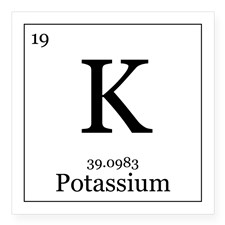
How many neutrons are in the atom "K"?

a)

29

b)

19

c)

58

d)

20

6.

The atomic number of a neutral atom is equal to _.

a)

the number of protons and electrons

b)

the number of neutrons only

c)

the total number of protons and neutrons

d)

the number of protons neutrons and electrons

7.
Adding or subtracting neutrons (charge = 0, mass = 1) makes the element change into an...
a)
ion
b)
mixture
c)
isotope
d)
neutral atom
8.
The atomic mass is equal to _.
a)
the number of protons only
b)
the number of neutrons only
c)

the number of protons plus neutrons

d)

the number of protons, neutrons plus electrons

9.
An atom becomes _________ when it gains electrons.
a)
Positive
b)
Negative
c)
Neutral
d)
Invinsible
10.
An atom that has gained or lost electrons is called ...
a)
a winner
b)
an isotope
c)
an ion
d)
a loser
11.

When an atom loses an electron, it becomes a

a)

positive ion

b)

negative ion

c)

neutral ion

d)

neutral atom

12.

Which subatomic particle does the RED(+) circle represent?

a)

proton

b)

neutron

c)

electron

d)

nucleus

13.

Which subatomic particle does the YELLOW(-) circle represent?

a)

proton

b)

neutron

c)

electron

d)

nucleus

14.

Which subatomic particle does the GREEN( ) circle represent?

a)

proton

b)

neutron

c)

electron

d)

nucleus

15.

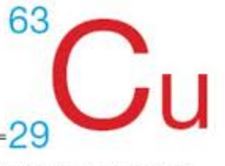
How many electrons does this copper atom have?
a)
63
b)
29
c)
92
d)
34
16.
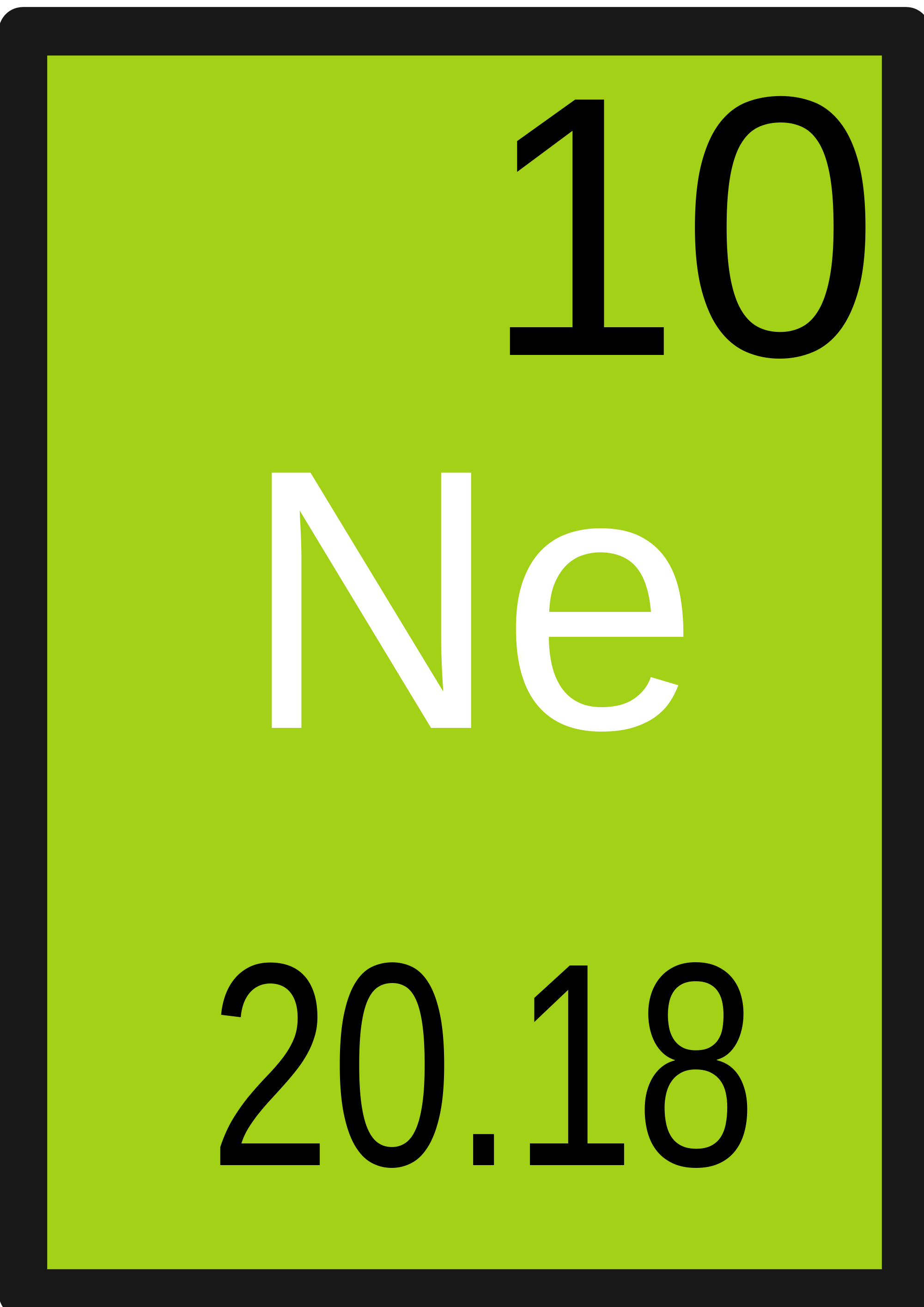
What is the atomic mass of Neon?
a)
10
b)
20.18
c)
10.18
d)
30.18
17.
How many neutrons does a Hydrogen atom have?
a)
1
b)
2
c)
3
d)
0
18.
How many electrons does an atom of Krypton have?
a)
36
b)
83.80
c)
47.80
d)
119.80
19.
What is the atomic number for an element with 41 neutrons and a mass number of 80?
a)
39
b)
41
c)
80
d)
121
20.

How many protons are present in phosphorus if it has an atomic mass of 31?

a)

15

b)

16

c)

31

d)

46

21.
How many neutrons does this isotope of lithium have?
a)
8
b)
3
c)
4
d)
5
22.
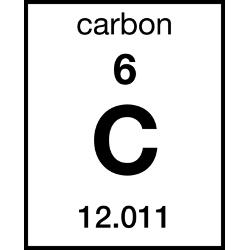
What does the 6 represent above the C
a)
Symbol 
b)
Name 
c)
Mass Number 
d)
Atomic Number 
23.
An element is defined by its number of 
a)
protons
b)
electrons
c)
neutrons
d)
protons + electrons
24.
Which of the subatomic particles is the lightest
a)
all have the same mass
b)
protons 
c)
neutrons 
d)
electrons
25.
Which of the subatomic particles is the heaviest?
a)
electrons 
b)
protons 
c)
neutrons 
d)
protons and neutrons have equal mass
26.
The relative mass of an electron is...
a)
1
b)
2
c)
0
d)
3
27.
The relative mass of a proton/neutron is.....
a)
0
b)
1
c)
2
d)
3
28.
Where are electrons of an atom found?
a)
Nucleus
b)
Electron Cloud
c)
Some are in the nucleus and some in the electron cloud.
d)
They are moving everywhere.
29.
An atom with atomic number 6 would have how many protons?
a)
6
b)
12
c)
3
d)
cannot be determined 
30.
What is the atomic number for an element with three protons?
a)
2
b)
1
c)
3
d)
6
31.
Most of an atom's mass is found in the
a)
electrons.
b)
nucleus.
32.
A neutral atom of the element sodium has 11 protons and ____ electrons.
a)
22
b)
23
c)
8
d)
11
33.

What is the charge of 1 proton particle

a)

positive 1

b)

negative 1

c)

neutral

34.

what is the charge of one electron?

a)

positive one

b)

negative one

c)

neutral

35.

what is the charge of one neutron?

a)

positive one

b)

negative one

c)

neutral

36.

What element is a Post-transition metal in the 3rd energy level?

a)

B

b)

Ga

c)

Al

d)

Si

37.

What element is a metalliod in the 2nd energy level?

a)

B

b)

Ga

c)

Al

d)

Si

38.

Which element is an alkaline earth metal in the 4th energy level?

a)

Be

b)

K

c)

Ca

d)

Na

39.

Which of these elements are the MOST conductive to heat and electricity?

a)

Na

b)

Co

c)

Ge

d)

Br

40.

Which of these are the MOST reactive in their natural state?

a)

K

b)

Ni

c)

Al

d)

P