wayground logo

Free Printable Worksheets

Font size

S
M
L
XL
Worksheets

Common Assessment Review

Total questions: 102

Worksheet time: 1hrs 23mins

Name
Class
Date
1.

True or False? Radiant Energy from the Sun is the light that comes from the Sun.

a)

True

b)

False

2.

The _____________ is an organelle inside a plant cell and is the actual site that photosynthesis takes place.

a)

Chlorophyll

b)

Chloroplast

c)

Xylem

d)

Phloem

3.

Which is not a REACTANT needed for producing food in a green plant?

a)

Carbon dioxide

b)

Oxygen

c)

Water

4.

This substance in the leaf is responsible for absorbing the sun's energy and also reflects green light waves.

a)

Cell wall

b)

Chloroplast

c)

Chlorophyll

d)

Nucleus

5.

What structure of the leaf transports water and nutrients from the roots to the leaves?

a)

Cell wall

b)

Chloroplast

c)

Phloem

d)

Xylem

6.

The stoma on the underside of the leaf allows_______to move in and out of the leaf.

a)

Gases

b)

Water

c)

Nutrients

d)

Soil

7.

Which of the following is not a PRODUCT of photosynthesis?

a)

Carbon dioxide

b)

Glucose

c)

Oxygen

8.

Glucose is a type of________.

a)

Dairy product

b)

Protein

c)

Salt

d)

Sugar

9.

The arrow in a chemical equation means_________.

a)

Sum

b)

Yields

c)

Difference

d)

Together

10.
Which is the correct formula for photosynthesis?
a)
CO2 + H2O --> (in sunlight) C6H12O6 + O2
b)
sunlight + CO2 + H2O --> C6H12O6 + O2
c)
C6H12O6 + O2 --> (in sunlight) CO2 + H2O
d)
CO2 + H2O --> C6H12O6 + O2 + sunlight
11.

During Photosynthesis, radiant(light) energy from the Sun is transformed into ____________ energy which is stored or used by the plant.

a)

Natural

b)

Chemical

c)

Nuclear

d)

Thermal

12.
What gas  do plants give off after conducting photosynthesis that humans/animals need in order to live?
a)
Oxygen
b)
Carbon
c)
Nitrogen
d)
Hydrogen
13.
Plants take in ________from the air as one key ingredient for photosynthesis
a)
oxygen
b)
soil
c)
carbon dioxide
d)
sugar
14.
__________ energy from the sun is changed intto __________ energy during photosynthesis
a)
Chemical energy to light energy
b)
Light energy to chemical energy
c)
Thermal energy to light energy
d)
Electrical energy to chemical enerfy
15.
What are the 3 key ingredients needed for photosynthesis
a)
glucose, oxygen, carbon dioxide
b)
carbon dioxide, water, glucose
c)
water, soil, sunlight
d)
sunlight, water, carbon dioxide
16.
What is a producer?
a)
Organism that makes its own energy
b)
Organism that breaks down dead organisms
c)
Organism that eats other organisms for food & energy
17.
What is a decomposer?
a)
Organism that makes its own energy
b)
Organism that breaks down dead organisms
c)
Organism that eats other organisms for food & energy
18.
What is a consumer?
a)
Organism that makes its own energy
b)
Organism that breaks down dead organisms
c)
Organism that eats other organisms for food & energy
19.
Which one are you?
a)
Producer
b)
Consumer
c)
Decomposer
20.
What is an herbivore?
a)
An organism that only eats plants for energy
b)
An organism that eats animals for energy
c)
An organism that eats both plants and animals for energy.
21.
What is a carnivore?
a)
An organism that only eats plants for energy
b)
An organism that eats animals for energy
c)
An organism that eats both plants and animals for energy.
22.
What is an omnivore?
a)
An organism that only eats plants for energy
b)
An organism that eats animals for energy
c)
An organism that eats both plants and animals for energy.
23.
The ___% rule states that only ____% of energy is transferred to the next trophic level.
a)
10%
b)
25%
c)
50%
d)
100%
24.
What are "trophic levels"?
a)
Levels in a food web/food chain
b)
Levels of land in a mountain
c)
Animal diets
25.
Grass: Producer, consumer or decomposer?
a)
Producer
b)
Consumer
c)
Decomposer
26.
Fungi: Producer, consumer or decomposer?
a)
Producer
b)
Consumer
c)
Decomposer
27.
Panda: Producer, consumer or decomposer?
a)
Producer
b)
Consumer
c)
Decomposer
28.
Horses eat grass, so they are a ______.
a)
Herbivore
b)
Carnivore
c)
Omnivore
29.
Cats ONLY eat meat. They are ____.
a)
Carnivores
b)
Herbivores
c)
Omnivores
30.
Raccoons eat meat AND plants. They are ____.
a)
Carnivores
b)
Herbivores
c)
Omnivores
31.
Which of the following is a "primary energy source"?
a)
Grass
b)
Sun
c)
Bacteria
d)
Soil
32.

Which of the following organisms is a producer?

a)

grass

b)

rabbit

c)

fox

d)

snake

33.

Which of the following organisms is a primary consumer?

a)

grass

b)

rabbit

c)

fox

d)

snake

34.

Which of the following organisms uses photosynthesis to get the energy it needs to survive?

a)

grass

b)

rabbit

c)

fox

d)

snake

35.

Which of the following organisms in competition with the weasel for their food source?

a)

grass

b)

rabbit

c)

fox

d)

snake

36.

Which of the following organisms is a herbivore?

a)

grass

b)

rabbit

c)

fox

d)

snake

37.

What would happen to the rabbit population if the fox population moved out of the area represented by the food web?

a)

The rabbit population would increase

b)

The rabbit population would decrease

c)

The rabbit population would neither increase nor decrease

38.
What might happen if you remove a primary consumer from the ecosystem?
a)
There would be more food for secondary consumers.
b)
The number of primary consumers would increase.
c)
The number of plants would increase.
d)
The number of secondary consumers would increase.
39.
A consumer that hunts is called:
a)
a producer.
b)
an omnivore.
c)
a predator.
d)
a herbivore.
40.
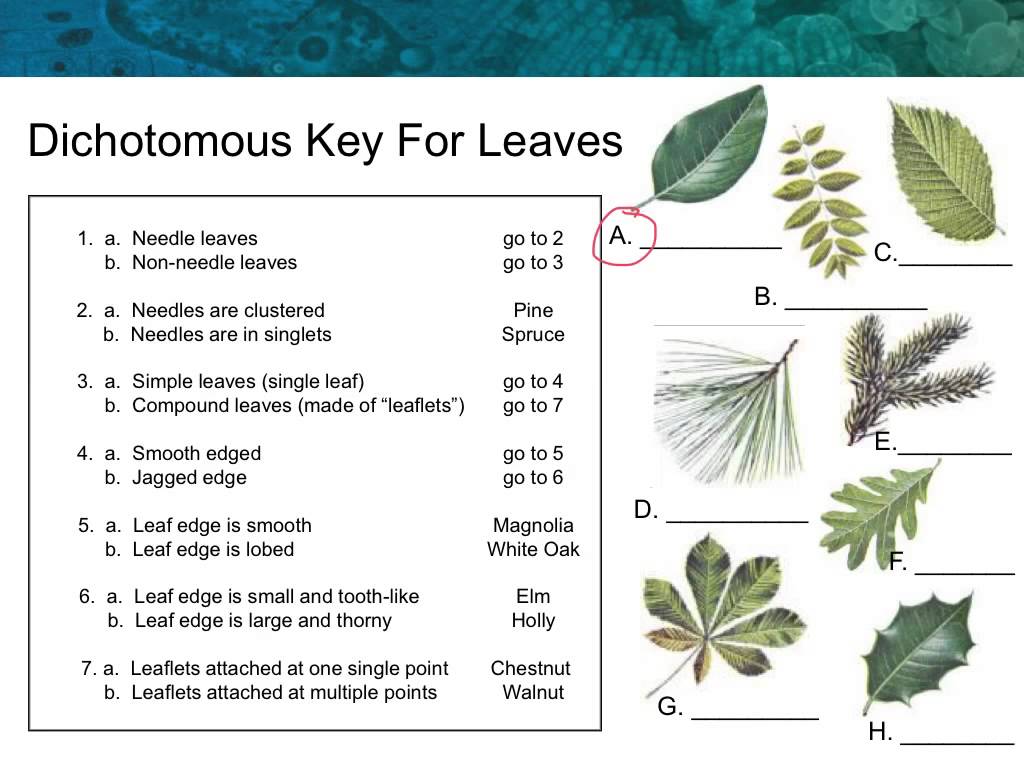
A dichotomous key for trees is provided. Hikers found a tree that has large brown cones and single sharp needles. What species of tree have the hikers found?
a)
Juniper
b)
Pine
c)
Spruce
d)
Fir
41.
Which of the following characteristics will most likely be helpful in identifying a butterfly using a dichotomous key?
a)
Migrates north every spring
b)
hangs on branches
c)
flutters wings fast on hot days
d)
Wings have long extensions
42.
A dichotomous key for insects is given. To what order does an insect with two pairs of scaly wings belong?
a)
Coleoptera
b)
Heteroptera
c)
Diptera
d)
Lepidoptera
43.
A dichotomous key for insects is given. To what order does an insect with two pairs of scaly wings belong?
a)
Coleoptera
b)
Heteroptera
c)
Diptera
d)
Lepidoptera
44.
A student discovers an arachnid with a segmented abdomen, long legs, and a tail with no stinger. The student uses the dichotomous key below to identify it. Which arachnid has the student found?
a)
Whip Scorpion
b)
Wind Scorpion
c)
Daddy long legs
d)
Scorpion
45.
An illustration and a dichotomous key are given. What is the correct classification for this organism?
a)
Class Insecta
b)
Order Amblygygi
c)
Order Araneae
d)
Order Scorpiones
46.
A labeled diagram of a fiddler crab is provided. Which of the following is an accurate observation of the structures of a fiddler crab? Fiddler crabs have -
a)
five pairs of walking legs on each side.
b)
an enlarged propodus on both front legs.
c)
a pair of eyes on stalks at the top of the body.
d)
two pairs or chelipeds for a total of four.
47.
A table of arachnid and insect characteristics is shown. Which characteristic could be used to distinguish between
arachnids and insects?
a)
Jointed legs
b)
Body segments
c)
Presence of eyes
d)
Presence of antennae
48.
What step do we always start with when using dichotomous keys?
a)
1
b)
2
c)
3
d)
4
49.
When using a dichotomous key to identify organisms, what do we look at?
a)
physical features
b)
weather patterns
c)
environment
d)
diet
50.
What is a dichotomous key used for in science?
a)
To organize biomes
b)
Classify organisms
c)
Identify bacteria only
d)
None of these
51.
Using this dichotomous key, identify the name of the circled Fish, J.
a)
peacock flounder
b)
band-tail puffer
c)
trumpet fish
d)
spotted goat fish
52.
A student discovers an arachnid with a segmented abdomen, long legs, and a tail with no stinger. The student uses the dichotomous key below to identify it. Which arachnid has the student found?
a)
Whip Scorpion
b)
Wind Scorpion
c)
Daddy long legs
d)
Scorpion
53.
Tool used by a taxonomist to identify an unknown organism is a:
a)
dichotomous key
b)
binomial nmenclature
c)
scientific name
d)
binomial key
54.
Coloring or another physical characteristic that help an organism blend in with its environment
a)
mimicry
b)
camouflage
c)
hibernation
d)
migration
55.
When an organism copies a characteristic of something else in order to better its chances for survival and reproduction
a)
hibernation
b)
camouflage
c)
mimicry
d)
migration
56.
The seasonal movement of an organism from one place to another
a)
camouflage
b)
migration
c)
hibernation
d)
function
57.
When an organism slows its life functions for a period of time to better its chances for survival during harsh conditions
a)
camouflage
b)
migration
c)
mimicry
d)
hibernation
58.
The place or environment where an organism naturally lives
a)
function
b)
habitat
c)
community
d)
ecosystem
59.
features that help identify something
a)
appearance
b)
characteristics
c)
behaviors
d)
structures
60.
Function is ________________________.
a)
the way something looks
b)
how something sounds
c)
what something does
d)
the role of an organism
61.

What does external mean?

a)

It means something on the inside.

b)

It is a part of the environment that you see.

c)

It means on the outside, or something you can see.

d)

It means it is something you place on the outside.

62.

What is meant by adaptation?

a)

An animal can swim in warm water and cold water.

b)

It is any characteristic that helps a plant or animal survive in its environment.

c)

It is a habitat that animals can change.

d)

They develop over long periods of time.

63.

What kind of beak does a pelican have?

a)

It has a sharp, curved beak to tear its food.

b)

It has a long, thin beak that allows it to suck nectar.

c)

It has a long beak with a pouch to scoop up food in the water.

d)

It has a short, stubby beak to peck things with.

64.

Plants must adapt to their environment, too. Plants that live in dry climates usually have

a)

big, round stems

b)

wide leaves to absorb sunlight

c)

small leaves coated in thick wax

d)

short, small leaves

65.

Reflect an organisms consistent characteristic patterns of thoughts, feelings, and behaviors

a)

Physical Trait

b)

Homeostasis

c)

Behavioral Trait

d)

Dormancy

66.

Defining traits or features that are inherited.

a)

Physical Trait

b)

Behavioral Trait

c)

Adaptation

d)

Dormancy

67.

The action of an organism changing to better suit its new or old environment.

a)

Natural Selection

b)

Physical Trait

c)

Camouflage

d)

Adaptation

68.

What adaptation is represented by the image?

a)

Camouflage

b)

Beak Design

c)

Hibernation

d)

Seed Dispersal

69.
Anything that helps an animal survive in its environment.
a)
counter-shading
b)
mimicry
c)
adaptation
d)
camouflage
70.
The armadillo's hard outer shell is an example of which adaptation?
a)
digging
b)
getting food
c)
protection
d)
shelter
71.
Which of these adaptations help an animals to survive?
a)
warning coloration
b)
protective resemblance
c)
mimicry
d)
all of these
72.
Which foot has adaptations for surviving in a water environment?
a)
A
b)
B
c)
C
d)
D
73.
In the Arctic there is often snow on the ground. Many Arctic animals are able to change their coloration. Which adaptation best helps an Arctic hare survive in its environment?
a)
thick, white fur
b)
ability to run fast
c)
ability to burrow
d)
a short, fluffy tail
74.
Some students are outside on a nature walk around the school. They notice a lot of dandelions in different areas all over the school yard. Which adaptation helps dandelions spread to many locations in the school yard?
a)
green stems on each plant
b)
bright, yellow flowers
c)
light, fluffy seeds
d)
strong, thick roots
75.
When the Virginia opossum feels threatened it will exhibit behaviors like running or growling. Sometimes it will roll over, become stiff, drool, and change its breathing to a slow and shallow pace. Possums can maintain this behavior for up to four hours. Some predators will think the opossum is dead and go away. The adaptation the opossum is using is an example of ___.
a)
an environmental adaptation
b)
a behavioral adaptation
c)
a physiological adaptation
d)
a structural adaptation
76.
All are an example of Natural Selection Except...
a)
the dark colored frogs out last the light colored frogs
b)
selecting two chickens to make more big chickens
c)
the brown moths were able to create more offspring because they were able to hide
d)
The colorful fish are able to pass off their variation to their offspring to survive
77.
Which is an example of an internal adaptation?
a)
migration
b)
hibernation
c)
behavioral
d)
gills
78.
What are adaptations?
a)
traits that help an organism to survive and reproduce
b)
traits that help an organism hide
c)
traits that help an organism to seek protection
d)
traits that help an organism to see.
79.
How do organisms survive in an environment?
a)
with a trait that is passed on to them from their parent
b)
with a hobby that they learn to do
c)
by getting a job and paying bills
d)
by hiding in the environment
80.
Why do some organisms hibernate?
a)
To get some rest
b)
To escape harsh winters and maintain homeostasis
c)
To be the bearer of bad news
d)
To strive for greatness with rest
81.
What is a reason why people want to engage in selective breeding?
a)
To generate desired traits in the organism's offspring
b)
To generate wealth and freedom
c)
To generate freedom only
d)
To generate more offspring for themselves
82.
What is the purpose of xylem in plants?
a)
to transport water through out the plant
b)
to remove water through out the plant
c)
to generate water through out the plant
d)
to give off more water through out the plant
83.
Why do birds need the adaptation of hollow bones?
a)
to fly
b)
to live
c)
to reproduce
d)
to run
84.
The polar bear's white fur allows it to hide in the cold arctic. This adaptation is called________________.
a)
White on white
b)
Camouflage
c)
Color matching
d)
behavioral adaptation 
85.
What adaptation does this squirrel have that allows it to glide through the air?
a)
Extra skin under the arms and legs to capture air as it falls.
b)
Big ears to capture are as it falls
c)
Small eyes to see where it will land
d)
A short thin tail
86.
Most desert plants have spines. How does this adaptation help them survive in a harsh environment?
a)
The spines capture water
b)
The spines make it colder
c)
The spines will make it rain
d)
The spines will protect the plant from animals that want to eat it
87.
Cactus have a thick, hard surface (cuticle) that prevent ______________ from evaporating.
a)
Water
b)
Air
c)
Sugar
d)
light
88.
What is the function (job) of fish gills?
a)
To absorb water from the water
b)
To make the fish faster
c)
To make the fish lighter
d)
To absorb oxygen from the water
89.
Xylem is a plant adaptation that allows plants to transport ______________ up the stem.
a)
Salt 
b)
Sugar
c)
Water
d)
Coffee
90.
Birds migrate during the winter to less cold areas. What type of adaptation is this?
a)
Behavioral 
b)
Physiological 
91.
Define Adaptation.
a)
How an organism has NOT changed and continues to live in an environment 
b)
All animals can live in any environment 
c)
How an organism grows over time
d)
Special features or behaviors that allow an animal to survive in an environment.
92.
Hibernation is a ____________________ adaptation that allows animals to survive at times where food is not available.
a)
physical 
b)
behavioral 
93.

In multicellular organisms, cells are organized into groups that work together to perform a specific function. What are those groups of cells called?

a)

systems

b)

bones

c)

tissues

d)

joints

94.

The root and shoot systems together in plants form which level of organization?

a)

cells

b)

tissue

c)

organ system

d)

organism

95.

Look at the diagram and determine which answer choice would best fit in the X -

a)

cells

b)

tissue

c)

organ

d)

organ system

96.

This a level of organization diagram. Which term does Row Y represent?

a)

organ systems

b)

tissues

c)

cells

d)

an organism

97.

All parts of a plant together make up the -

a)

cells.

b)

tissues.

c)

organs.

d)

organism.

98.

Which of the following statements describes an organ?

a)

The basic unit of structure and function in living things.

b)

A group of cells that work together to perform a specific function.

c)

A structure in the body that is composed of different kinds of tissue.

d)

A group of organs that work together to perform a major function in the body.

99.

The liver is composed of cells called Hepatocytes. Many Hepatocytes together in the liver form -

a)

cells.

b)

tissue.

c)

organ system.

d)

organisms.

100.

The stomach is a collection of tissue that contracts to help digest food? The stomach is considered to be a(n) -

a)

cells

b)

tissue

c)

organ

d)

organ system

101.

The picture shows a plant stem, and focuses on the plant's xylem. Plant xylem is composed of many cells that transport water. Xylem is classified as -

a)

cells.

b)

tissue.

c)

organ.

d)

organ system.

102.

The basic unit of structure and function in life -

a)

cells.

b)

tissues.

c)

organs.

d)

organism.