
 Worksheets
Module 3 Review
Total questions: 85
Worksheet time: 2hrs 34mins
Name the compound: N2O5.
dinitrogen pentaoxide
binitrogen pentaoxide
nitrogen oxide
pentanitrogen dioxide
Name the compound: (NH4)2S
ammonium sulfide
nitrogen tetrahydrogen sulfide
diammounium sulfate
ammonium sulfate
Name the compound: MgCl2
magnesium chloride
magnesium dichloride
monomagnesium chloride
manganese chloride
Name the compound: Cu(NO3)2
copper nitrate
copper(II) nitrate
copper(II) dinitrate
copper dinitrogen hepaoxide
Name the compound: SO3
sulfur trioxide
sulfite ion
sulfur oxide
sodium trioxide
Name the compound: CF4
carbon tetrafluoride
monocarbon tetrafluoride
carbon fluoride
chlorine tetrafluoride
Name the compound: P4O8
tetraphosphorus octoxide
phosphorus oxide
tetrapotassium octoxide
potassium oxide
Name the compound: SF6
sulfur heptafluoride
sulfur hexafluoride
monosulfur hexafluoride
monosulfur heptafluoride
Name the compound: AgNO3
silver mononitrogen trioxide
silver nitrate
silver nitride
monosilver mononitrogen trioxide
Name the compound: Zn3P2
zinc phosphide
trizinc diphosphide
zinc phosphate
zinc phosphite
Write the formula: potassium hydroxide
KOH
POH
KH
KO
Write the formula: tetraarsenic decoxide
As4O10
As10O4
As6O9
AsO
Write the formula: iodine heptafluoride
IF7
I2F14
IHF7
IF6
Write the formula: nitrogen trichloride
NCl3
N1Cl3
N1Cl5
Cl3N
Write the formula: carbon monoxide
CO
CO2
OC
C2O4
Write the formula: tin(II) phosphite
Sn3(PO3)2
Sn3PO8
Sn2PO4
Sn3(PO4)2
Lithium nitride
Li3N
LiN
Li3(NO3)2
LiNO3
Write the formula: lead(IV) sulfite
Pb2(SO3)4
Pb(SO3)2
Pb2(SO4)4
Pb(SO4)2
Write the formula: silver chlorate
AgClO3
AgCl
AgCLO3
AgCl3
Write the formula: beryllium oxide
BO
BeO
BeO2
BO2
Have a high melting point (1000°C-3000°C)
ionic compounds
covalent compounds
Have a low melting point (< 200°C)
ionic compounds
covalent compounds
Which of the following describes covalent bonds?
Bonds form because of opposite charges
electrons are shared to fill outer electron shells
Electrons are transferred between atoms
Covalent bonds are magical
Which of the following is TRUE about ionic compounds?
They have low melting and boiling points.
They can conduct electricity in the solid state.
They are stronger than covalent bonds.
They are usually formed from 2 metals.
What two types of atoms make a covalent bond?
2 Nonmetals
1 Nonmetal and 1 Metal
2 Metals
2 Noble Gases
Compounds composed of a ______________ and _____________ like the compound CaCl2 , are ionic compounds.
metal ... metal
nonmetal ... nonmetal
metal ... nonmetal
Always dissolves in water
ionic compound
covalent compound
The electrons in a polar covalent molecule are shared...
Evenly
Unevenly
Electrons are not shared
None of the Above
The electrons in a nonpolar covalent molecule are shared...
Evenly
Unevenly
Electrons are not shared
None of the Above
The electrons in an ionic molecule are shared...
Evenly
Unevenly
Electrons are not shared
None of the Above
In a polar covalent bond, the electrons gather around...
The atom with the Greatest Electronegativity
The atom with the Lowest Electronegativity
Each atom Equally
None of the Above
In a nonpolar covalent bond, the electrons gather around...
The atom with the Greatest Electronegativity
The atom with the Lowest Electronegativity
Each atom Equally
None of the Above
In an ionic bond, the electrons gather around...
The atom with the Greatest Electronegativity Only
The atom with the Lowest Electronegativity Only
The atom with the Greatest Electronegativity Mostly
The atom with the Lowest Electronegativity Mostly
The polarity of a bond is determined by...
The sum of the electronegativities of the two atoms
The difference in the electronegativities of the two atoms
The charges of the atoms
None of the Above
Partial charges are present in which type of bond?
Ionic
Nonpolar Covalent
Polar Covalent
Both Polar Covalent and Ionic
Molecules that contain whole number charges on atoms (+1,-3, etc.) must be...
Polar Covalent
Nonpolar Covalent
Ionic
Polar Covalent or Ionic
In a polar covalent bond, which atom will have a partial positive charge? (choose 2 correct answers)
The atom that attracts fewer electrons
The atom with the greater electronegitivity
The atom that attracts more electrons
The atom with the lower electronegativity
What must the difference in electronegativity between two atoms be in order for the bond between them to be polar covalent?
less than 0.5
greater than 1.7
between 0.5 and 1.7
exactly 0
What must the difference in electronegativity between two atoms be in order for the bond between them to be nonpolar covalent?
less than 0.5
greater than 1.7
between 0.5 and 1.7
exactly 0
A diatomic molecule like O2 is always _____ because electrons are shared _____
nonpolar; unequally
polar; equally
nonpolar; equally
polar; unequally
Order the types of bonds based on the charge of their molecules. (lowest amount of charge to greatest)
Polar Covalent --> Ionic --> Nonpolar Covalent
Ionic --> Nonpolar Covalent --> Polar Covalent
Ionic --> Polar Covalent --> Nonpolar Covalent
Nonpolar Covalent --> Polar Covalent --> Ionic
How many valence electrons does an element with this electron configuration have?
1s22s22p63s1
(Only enter whole-number answers)
(a)
How many valence electrons does an element with this electron configuration have?
1s22s22p63s2
(Only enter whole-number answers)
(a)
How many valence electrons does an element with this electron configuration have?
1s22s22p63s23p1
(Only enter whole-number answers)
(a)
How many valence electrons does an element with this electron configuration have?
1s22s22p63s23p2
(Only enter whole-number answers)
(a)
How many valence electrons does an element with this electron configuration have?
1s22s22p63s23p3
(Only enter whole-number answers)
(a)
How many valence electrons does an element with this electron configuration have?
1s22s22p63s23p4
(Only enter whole-number answers)
(a)
How many valence electrons does an element with this electron configuration have?
1s22s22p63s23p5
(Only enter whole-number answers)
(a)
How many valence electrons does an element with this electron configuration have?
1s22s22p63s23p6
(Only enter whole-number answers)
(a)
What are valence electrons?
The total number of electrons in an atom
The number of electrons in the outermost shell
The number of electrons in the second shell
The number of protons in the outermost shell


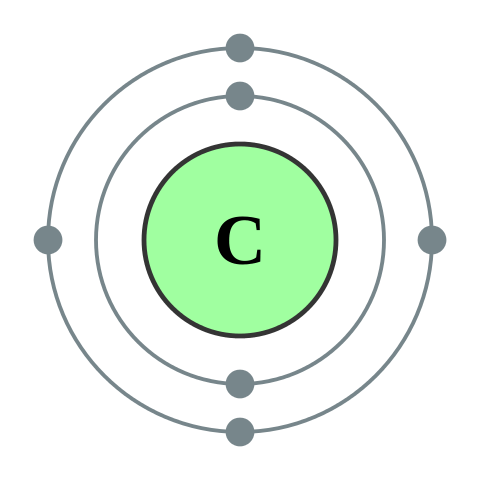
How many valence electrons does carbon have?
4
5
6
7


Which of the following is NOT covalently bonded?
K2S
H2O
I2
CO2
Which pair of atoms is most likely to form a covalent molecule?
Hydrogen and lithium
Phosphorus and sulfur
Helium and neon
Zinc and Boron
What are the seven diatomic elements?
H2, Cl2, Br2, O2, N2, I2, F2
H2, Cl2, I2, F2, Hg2, Br2, Fe2
H2, Cu2, Ni2, B2, O2, I2, Fe2


This could be the dot diagram of
Mg
Cl
C
O
What is the goal of the Lewis Dot Structure?
To determine the electron position.
To show the element's valence electrons & bonding capabilities.
To find the atomic mass of an element.
To search for the number of electrons in an individual atom.

This is a correct dot diagram for neon (Ne)
true
false


This is a correct dot diagram for nitrogen (N)
true
false

This is a correct dot diagram for carbon (C)
true
false


How would you draw a Lewis dot diagram for Magnesium?


Which of the following shows a correct Lewis dot structure?



