
 Worksheets
Review Activity 5 - Covalent Bonding
Total questions: 50
Worksheet time: 38mins
How many electrons are represented by a single dash line in a Lewis structure?
1
2
4
6

A diatomic molecule like O2 is always_______ because electrons are shared ________.
polar; unequally
polar; equally
nonpolar; equally
nonpolar; unequally
If Boron bonds with Hydrogen, a ____________ bond forms.
polar covalent
diatomic
nonpolar ionic
nonpolar covalent
The electronegativity difference in the bonds of CCl4 (carbon tetrachloride) is:
1.0
0.5
9.5
5.5
Electronegativity is a measurement of what?
an atom's attraction for VSEPR
an atom's ability to attract other nuclei
an atom's ability to attract electrons in the non-valence energy levels
an atom's attraction for another atom's electrons

When you have Br-Br, what is the polarity?
Polar
nonpolar
Ionic
opposite

When you have Si-O, what is the polarity?
nonpolar
polar
opposite
ionic

H, N, O or F?

Which of the following elements has the weakest attraction for electrons in a chemical bond?
S
Cl
O
F
Determine the type of bond in a hydrogen molecule (H2).
Double covalent
Single covalent
polar
Triple covalent
A covalent bond is
a bond that shares electrons with metals
a bond that shares electrons with non metals
a bond that shares ions
metals and nonmetals bonding
Multiple bonds are possible if _______, ______, and ________ are present in a molecule.
C,H,O
H,O,N
N,O,F
C,N,O
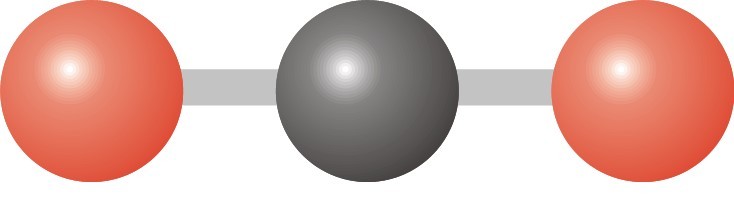
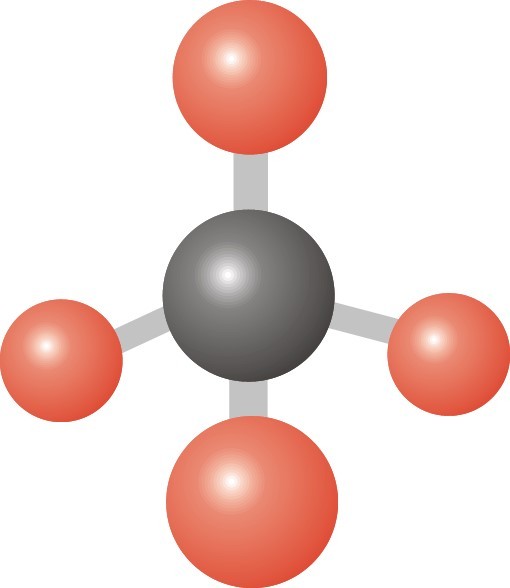
What molecular geometry would PH3 have?
Trigonal Pyramidal
Trigonal Bipyramidal
Bent
Linear
Which molecular geometry would CH2I2 have?
bent
trigonal planar
tetrahedral
trigonal pyramidal
Which of the following is a polar molecule?
CH4
I2
H2O
CO2

What is the molecular geometry and polarity of PCl3?
bent polar
tetrahedral non-polar
tetrahedral polar
trigonal pyramidal polar

What is the molecular geometry and polarity of H2O?
bent polar
tetrahedral non-polar
tetrahedral polar
bent nonpolar

What geometry and polarity will this molecular structure have?: H2S
bent nonpolar
tetrahedral nonpolar
linear polar
bent polar

What geometry and polarity will this molecular structure have?: CCl4
bent polar
tetrahedral nonpolar
linear nonpolar
trigonal pyramidal polar

Choose the correct geometry and polarity for this molecule:
Bent nonpolar
Linear nonpolar
bent polar
linear polar
The chemical formula of sulfur hexabromide is
SBr6
S6Br
S(VI)Br
S6Br6
The chemical formula of dinitrogen textroxide is
Ni2O4
NO4
N2O4
Ni2O2
The name of P4S10 is
phosphorous sulfide
phosphorus sulfide
tetraphosphorus decasulfide
phosphorus (X) sulfide
The chemical formula of tetraphosphorus heptaoxide is
F4O10
P4O7
PO
P10O4
The chemical formula of tetraarsenic decoxide is
As10O4
As4O10
As4O2
AsO10
The name of SO3 compound is
sulfate
sulfur oxide
sulfur trioxide
monosulfur trioxide
What is the name for P3S9?
phosphorous trisulifdenon
diphosphorous ninsulfide
triphosphorous nonasulfide
triphosphide nonasulfur

Which formula represents a polar molecule?
HBr
H2
CBr4
Cl2
What is the name for N3Cl4?
trinitride dichloride
nitrogen chloride
nitride trichlorinetetra
trinitrogen tetrachloride

