wayground logo

Free Printable Worksheets

Font size

S
M
L
XL
Worksheets

Thermal Physics Study Guide

Total questions: 82

Worksheet time: 2hrs 43mins

Name
Class
Date
1.

what is heat?

a)

form of energy transfer

b)

work

c)

force

d)

temperature

2.

what is energy

a)

capacity to do work

b)

temperature

c)

power

d)

force

3.

heat is a form of ------------------

(a)  
4.
True or false: Heat moves from the cooler object to a warmer object
a)
True
b)
False
5.
Heat always transfers from hot to cold. 
a)
True
b)
False
6.

What is happening at the boiling point?

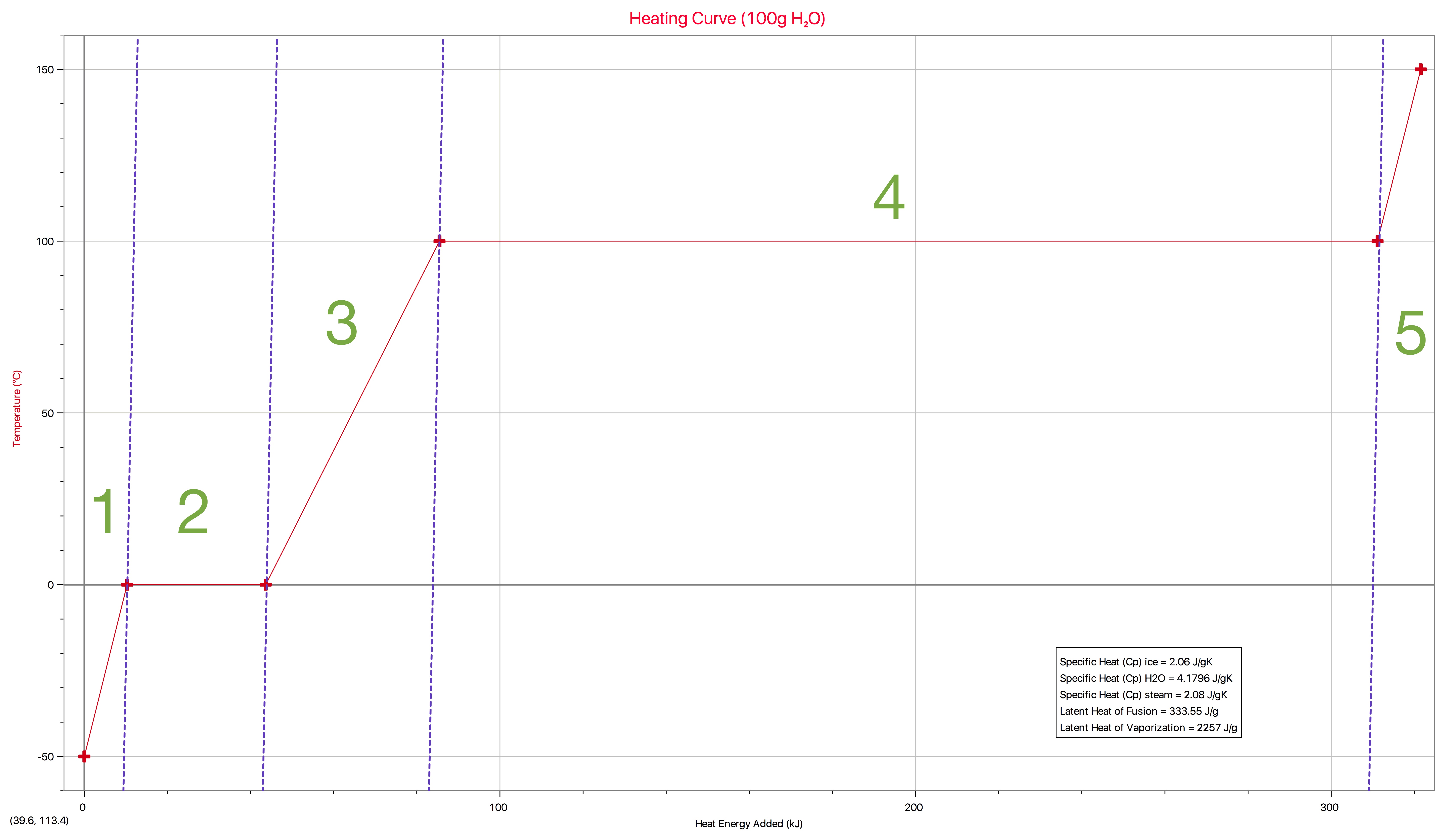
a)

liquid to gas

b)

solid to liquid

c)

gas to liquid

d)

liquid to solid

7.
If two objects have different temperatures, heat will flow from the warmer object to the cooler one UNTIL ____________
a)
one reaches a temperature of zero
b)
they both have an equal temperature
c)
one runs out of energy
8.
The transfer of thermal energy between objects of different temperatures is called...
a)
temperature
b)
heat
c)
internal energy
d)
none of these
9.
True/False: when two substances reach the same temperature they are in thermal equilibrium.
a)
True
b)
False
10.
Temperature is a measure of the...
a)
total energy in a substance
b)
total kinetic energy in a substance
c)
average potential energy in a substance
d)
average kinetic energy of molecules in a substance
11.
Freezing occurs when matter changes from a...
a)
gas to a solid
b)
solid to a gas
c)
liquid to a gas
d)
liquid to a solid
12.
What letter represents heat?
a)
S
b)
C
c)
T
d)
Q
13.
What is the boiling point of water
a)
0 C
b)
100 F
c)
50 C
d)
100 C
14.

At what temperature in degrees Celsius does water freeze?

a)

150

b)

0

c)

200

d)

32

15.

Physical change in matter from a gas to a liquid

a)

Condensation

b)

Freezing point

c)

Melting point

d)

Evaporation

16.
High temperature is connected to:
a)
Low kinetic energy.
b)
High kinetic energy.
c)
Zero net energy.
d)
Equal kinetic energies.
17.
Polystyrene is a good heat...
a)
emitter
b)
absorber
c)
conductor
d)
insulator
18.

The liquid in thermometer ---------- as the temperature increases.

a)

Expands

b)

Decreases

c)

Freezes

19.

The expanding of matter when it is heated is known as -------

a)

Condensation

b)

Evaporation

c)

Thermal expansion

20.

Iron is good --------

a)

Conductor

b)

Insulator

c)

Semi conductor

21.

What is thermal Contraction ?

a)

The movement of particles.

b)

The movement of fluids in a cycle

c)

A decrease in materials volume when its temperature decreases

22.

What happens to air when it is heated ?

a)

Particles moves faster and expands

b)

Particles move slow and contracts

c)

Particles freezes

23.

A house burns down and the house next door has vinyl siding that warps and twists due to the heat. The heat was transferred by

a)

Conduction

b)

Convection

c)

Radiation

24.

In a swimming pool, the water near the surface is slightly warmer because of ________.

a)

conduction

b)

Convection

c)

radiation

25.

You lay on a huge rock to stay warm at night when you are out camping. The rock keeps you warm by _____.

a)

conduction

b)

convection

c)

radiation

26.

You are in the top bunk of the bed and want the air conditioner on. Your friend in the bottom bunk is comfortable. This is caused by _______.

a)

conduction

b)

convection

c)

radiation

27.

A fireman feels a door and it's hot from the fire on the other side. This is an example of ______.

a)

conduction

b)

convection

c)

radiation

28.

The metal skewer you are using to toast your marshmallow gets very hot in the campfire because of _____.

a)

conduction

b)

convection

c)

radiation

29.

The cause of weather systems on earth is ______.

a)

conduction

b)

convection

c)

radiation

30.

A huge rock gets so hot during the day that you can't sit on it from ______.

a)

conduction

b)

convection

c)

radiation

31.

Warmer air over the beach rises while cooler dense air from the ocean rushes in due to _________.

a)

conduction

b)

convection

c)

radiation

32.

A piece of stainless steel cookware has a layer of copper applied to the bottom to help it heat evenly. The copper transfers heat to the pan by ______.

a)

conduction

b)

convection

c)

radiation

33.

Near the ceiling of a room the air is warmer. The warm air rises because of _____.

a)

conduction

b)

convection

c)

radiation

34.

A certain type of decorative lamp contains colored liquids that form globs that break off and rise to the top of the liquid. The globs rise due to _____.

a)

conduction

b)

convection

c)

radiation

35.

Hot coffee is stirred with a spoon. The spoon gets hot due to _____.

a)

conduction

b)

convection

c)

radiation

36.

How many strokes are there in most common vehicle engines?

a)

Two

b)

Three

c)

Four

d)

Five

37.

What are the four strokes called in a four stroke engine?

a)

Intake, compression, exhaust, cleaning

b)

Exhaust, diesel, complication, cleaning

c)

Intake, compression, combustion, exhaust

d)

Petrol, spark, explosion, exhaust

38.

Which part of an engine turns as a result of the combustion of the fuel, and hence powers the other parts of the vehicle?

a)

Camshaft

b)

Crankshaft

c)

Piston

d)

Valve

39.

There are usually two valves in a four stroke engine, an intake valve and an exhaust valve

a)

True

b)

False

40.

During the intake stroke, the (a)   moves down, sucking fuel into the cylinder

41.

Which part of the engine moves up and down in the cylinder and hence powers the crankshaft?

a)

The valves

b)

The camshaft

c)

The timing belt

d)

The pistons (and piston rods)

42.

Which stroke provides the power that actually turns the crankshaft?

a)

Combustion

b)

Compression

c)

Exhaust

d)

Intake

43.
The transfer of energy that does NOT require matter is ____.
a)
convection
b)
radiation
c)
conduction
d)
combustion
44.
A device that converts thermal energy into mechanical energy is a ____. 
a)
heat mover
b)
refrigerator
c)
heat engine
d)
conductor
45.
Through which of the following will convection most likely occur? 
a)
liquids and gases
b)
solids and liquids 
c)
solids
d)
 solids and gases
46.
Which of the following would be the best insulator? 
a)
 air
b)
copper 
c)
silver
d)
aluminum
47.
Energy from the Sun travels to Earth as ____. 
a)
mechanical energy
b)
combustion
c)
radiant energy 
d)
chemical energy
48.
Liquids and gases are different from solids because they _____.
a)
conduct
b)
insulate
c)
flow
d)
have thermal energy
49.
_______ is the total energy of the molecules in a material.
a)
energy
b)
Thermal energy
c)
conduction 
d)
convection
50.
Specific heat is the amount of _____required to raise the temperature of 1 kg of a material 1 K
a)
thermal energy
b)
mechanical energy
c)
electrical energy
d)
energy
51.
What line segment represents only the solid state?
a)
A-B
b)
B-C
c)
C-D
d)
D-E
52.
A substance's heating curve is shown in the graph.  What is its boiling point?
a)
100 C
b)
60 C
c)
80 C
d)
20 C
53.
At higher temperatures
a)
particles in an object have less energy
b)
particles in an object move faster
c)
a gas contracts
54.
In which region(s) does temperature remain constant?
a)
Region 1, 3, & 5
b)
Region 2 & 4
c)
Region 1 only
d)
Region 1 & 2
55.
In which region(s) of the graph would the substance be a solid and a liquid?
a)
Region 1
b)
Region 2
c)
Region 3
d)
Region 4
56.
Which of the following terms identifies the change from a liquid to gas?
a)
Vaporization
b)
Condensation
c)
Deposition
d)
Sublimation
57.
When the temperature of matter increases the particles...
a)
speed up and move closer
b)
speed up and move farther apart
c)
slow down and move closer together
d)
slow down and move farther apart
58.
Are there molecules moving in a solid brick?
a)
yes
b)
no
c)
maybe
d)
not sure
59.

Critical Thinking! If gas particles in a tire are moving slowly, your tire pressure will drop because the gas particles are not pressing against the walls of the tire. What temperature change do you think would cause this pressure drop?

a)

The temperature will have become colder

b)

The temperature will have become hotter

c)

Temperature and pressure have no relation

60.
In which region(s) of the graph would the substance only be in one phase?
a)
Region 1, 3, & 5
b)
Region 2 & 4
c)
Region 1 only
d)
Region 1 & 2
61.
The freezing and melting points of water are the same.
a)
True
b)
False
62.
True or false: melting and freezing occur at the same temperature!
a)
True
b)
False
c)
I don't know
63.
If you place some Gatorade in a cooler with ice...
a)
It's particles will speed up.
b)
It's particles will slow down.
64.
To turn a liquid into a gas, you _____ energy.
a)
Add
b)
Remove
65.
What would be the effect on the particles if more heat is supplied to the system?
a)
They would slow down
b)
They would stop moving
c)
They would speed up
d)
There would be no effect
66.
There are four cups of hot cocoa. The cup sizes are shown. The temperature of the cocoa in each cup is 25 degrees celsius. Which cup has the MOST thermal energy?
a)
Large cup (Trenta)
b)
Small cup (Tall)
c)
Venti
d)
All three are the same temperature so they have same thermal energy
67.
Water has a specific heat of 4184 J/KgºC.  Wood has a specific heat of 1760 J/KgºC.  What material needs more energy to raise the temperature 1ºC
a)
Wood
b)
Water
c)
Both are the same
68.
A high specific heat means...
a)
It heats up quickly with energy added
b)
It requires more energy to change temperature
69.
The amount of energy required to raise the temperature 1ºC for every kilogram is called____?
a)
Thermal Energy
b)
Specific Heat
c)
Temperature
d)
Kinetic Energy
70.
What is the symbol for Specific Heat
a)
Q
b)
t
c)
m
d)
C
71.
What is the symbol for Thermal Energy?
a)
Q
b)
t
c)
m
d)
C
72.
What is the equation to measure change in Thermal Energy?
a)
Q=mc∆t
b)
Q=mc
c)
Q= ∆mct
d)
m=QC
73.
Copper, Stainless Steel, Carbon Steel, and Zinc were all heated using the same thermal energy.  What material would be the coolest after being heated?
a)
Copper
b)
Carbon Steel
c)
Zinc
d)
Stainless Steel
74.
A material was cooled from 100ºC to 40ºC.  What is the temperature change?
a)
60ºC
b)
40ºC
c)
-60ºC
d)
-40ºC
75.
How does heat flow?
a)
Always from cold to warm
b)
Always from warm to cold
c)
Both warm to cold & cold to warm
d)
It depends on the temperature
76.
Specific heat is....
a)
The measure of kinetic energy of an objects particles
b)
A measure of the energy needed to increase the average kinetic energy of the particles
c)
The heating caused by the motion of flluid due to temperature difference
d)
The transfer of energy by electromagnetic radiation
77.
The specific heat of aluminum is 0.21 cal/g°C.  How much heat(Q) is released when a 10 g piece of aluminum foil is taken out of the oven and cools from 100° to 50°?
a)
105 J
b)
10.5 J
c)
1.05 J
d)
50 J
78.
If 200 grams of water is to be heated from 24.0° C to  100.0° C to make a cup of tea, what is the mass and what is the change in temperature?
a)
m=100g,  ∆t= 224 C
b)
m=200g,  ∆t=124 C
c)
m=100g,  ∆t=24 C
d)
m=200g,  ∆t=76 C
79.
There are 2 pans of water, one has 100 mL in it and one has 1000mL. You add 4000 joules of energy,  which one has the bigger change in temperature?
a)
100 mL
b)
1000 mL
c)
They the same material so they both heat to the same temperature
d)
They both will cool down.
80.
20 g of water. specific heat of water is 4.18 J/g°C.  temperature changes from 25° C to 20° Chow much heat energy (Q) moves from the water to the surroundings?
a)
418 Joules
b)
209 J
c)
83 J
d)
4.18 J
81.
The specific heat(c) of copper is 0.39 J/g °C. What is the temperature change(∆t) when 100 Joules of heat(Q) is added to 20 grams of copper?
a)
12.82 °C
b)
24.12°C
c)
351 °C
82.
lowest possible temperature on the Kelvin scale
a)
boiling point
b)
insulation
c)
absolute zero
d)
heat