
 Worksheets
CIA 2 Review
Total questions: 84
Worksheet time: 3hrs 14mins
The equation for momentum is?
momentum = force - mass
momentum = acceleration / mass
momentum = mass x acceleration
momentum = mass x velocity
Like velocity, acceleration, and force, momentum is described by its direction as well as its quantity. This Means it is a _______
scalar quantity
vector quantity
What is true about the relationship between mass and momentum.
The less mass an object has, the more momentum it will have.
The more mass an object has, the less momentum it will have.
The more mass an object has, the more momentum it will have.
Mass has nothing to do with momentum.
Even if an object has a smaller mass, it can have a larger momentum if it has a high _______.
velocity
displacement
weight

Which has more momentum: a 3.0 kg sledgehammer swung at 1.5m/s, or a 4.0 kg sledgehammer swung at 0.9 m/s?
the 3.0 kg sledgehammer
the 4.0 kg sledgehammer
A golf ball travels at 16 m/s while a baseball moves at 7 m/s. The mass of the golf ball is 0.045 kg and the mass of the baseball is 0.14 kg. Which has a greater momentum?
golf ball
baseball
What is the momentum of a bird with a mass of 0.018 kg flying at 15 m/s?
(a) kgm/s
Calculate the impulse on the ball.

Which has more momentum?
A parked semi truck
A moving car
they have the same amount of momentum
Which has more momentum?
A hummingbird zipping down the street (v = 1 m/s)
A bus stopped at a stop sign
A bus barreling down the road (v = 10 m/s)
A hummingbird hovering at a feeder

A bicycle has a momentum of 24 kg•m/s. What momentum would the bicycle have if it had twice the mass and was moving at the same speed?
twice the momentum; 48 kg*m/s
1/2 the momentum; 12 kg*m/s
4x the momentum; 96 kg*m/s
1/4 the momentum; 6 kg*m/s

A bicycle has a momentum of 24 kg•m/s. What momentum would the bicycle have if it had the same mass and was moving with one-half the speed?
twice the momentum; 48 kg*m/s
1/2 the momentum; 12 kg*m/s
4x the momentum; 96 kg*m/s
1/4 the momentum; 6 kg*m/s

A bicycle has a momentum of 24 kg•m/s. What momentum would the bicycle have if it had the twice the mass and was moving with twice the speed?
twice the momentum; 48 kg*m/s
1/2 the momentum; 12 kg*m/s
4x the momentum; 96 kg*m/s
1/4 the momentum; 6 kg*m/s
The momentum of an object depends upon the object's ___________&_____________.
size and shape
mass and speed
mass and veloctiy
mass and energy

A 2 kg cart has a momentum of 16 kg m/s. What is its velocity?
8 m/s
32 m/s
0.125 m/s
18 m/s

What is the momentum if the mass is of an object is 50 kg and it has a velocity of 25 m/s?
2 kg*m/s
125 kg*m/s
10 kg*m/s
1250 kg*m/s

A 3 kg cart has a momentum of 18 kg m/s. What is its velocity?
6 m/s
54 m/s
0.17 m/s
15 m/s

What is the momentum if the mass is of an object is 35 kg and it has a velocity of 10 m/s?
3.5 kg*m/s
35 kg*m/s
0.3 kg*m/s
350 kg*m/s

Cart A is pulled with a 2 Newton force for 2 seconds, and Cart B is pulled with a 1 Newton force for 3 seconds. Which cart experiences the greatest impulse?
Cart B
Cart A
they are the same

A 5 N force is applied to a 3 kg ball to change its velocity from +9 m/s to +3 m/s. The impulse on the ball is ______.
2.5 N s
10 N s
-18 N s
-45 N s
An egg is thrown at a wall and at a bed sheet. The egg's impulse will be
Greater for the wall collision
Greater for the sheet collision
impulse is equal

What does centripetal mean?
away from the center
towards the circle
outside the circle
towards the center
A 5.0kg bucket of water is swung in a circle with radius of 0.7m at a constant speed of 2.0m/s. The magnitude of the centripetal force on the bucket of water is approximately
5.7N
14N
29N
200N
If mass increases, centripetal acceleration _____.
stays the same
increases
decreases
cannot be determined

If an object is moving in a circular path at a constant speed, how do the directions of its velocity and acceleration compare?
They point in opposite directions.
The answer will vary depending on the conditions
Both point in the same direction
They are perpendicular.

When an object experiences uniform circular motion, the direction of the net force acting on it is
is directed toward the center of the circular path
is directed away from the center of the circular path.
in the same direction as the motion of the object.
in the opposite direction of the motion of the object

You ride your bike around a curve of radius r at a constant speed v. Then you go around the same curve at four times of the original speed 4v. What is the centripetal force F as you go around the curve for the second time, compared to the first time?
F = mv2/r
4 times as big
one-fourth as big
half as big
16 times as big

A car goes around a curve of radius r at a constant speed v. Then it goes around a curve of radius 2r at speed 2v. What is the centripetal force F on the car as it goes around the second curve, compared to the first?
F = mv2/r
four times as big
half as big
two times as big
the same

Which of the following FBD is correct for the car at point A?


The derived equation for the minimum velocity at the top of the loop at point C is...


In what direction is the car accelerating?


In what direction is the car accelerating?

The string breaks while the ball is at point 1. What path does the ball take?


At what point would the string most likely break?
at the top
on the way down
at the bottom
on the way up

The orbital velocity equation can be derived from which of the following equalities?


Is it possible for an object moving with a constant speed to accelerate? Explain
No, if the speed is constant then the acceleration is equal to zero.
No, an object can accelerate only if there is a net force acting on it.
Yes, although the speed is constant, the direction of the velocity can be changing.
Yes, if an object is moving it can experience acceleration.
Objects at constant speed can have unbalanced forces.
False, constant speed means no acceleration.
True, if the object is changing direction.
When driving around a curve, why do you lean the opposite direction of a turn?
Gravity
Weight
Inertia
Friction
If the centripetal force on a particle in uniform circular motion is decreased,
The tangential speed remains constant
The tangential speed will increase
The radius of the circular path will decrease
The tangential speed will decrease and/or the radius will increase

What is the measure of force?
Newtons
Light years
Inches
Gallons
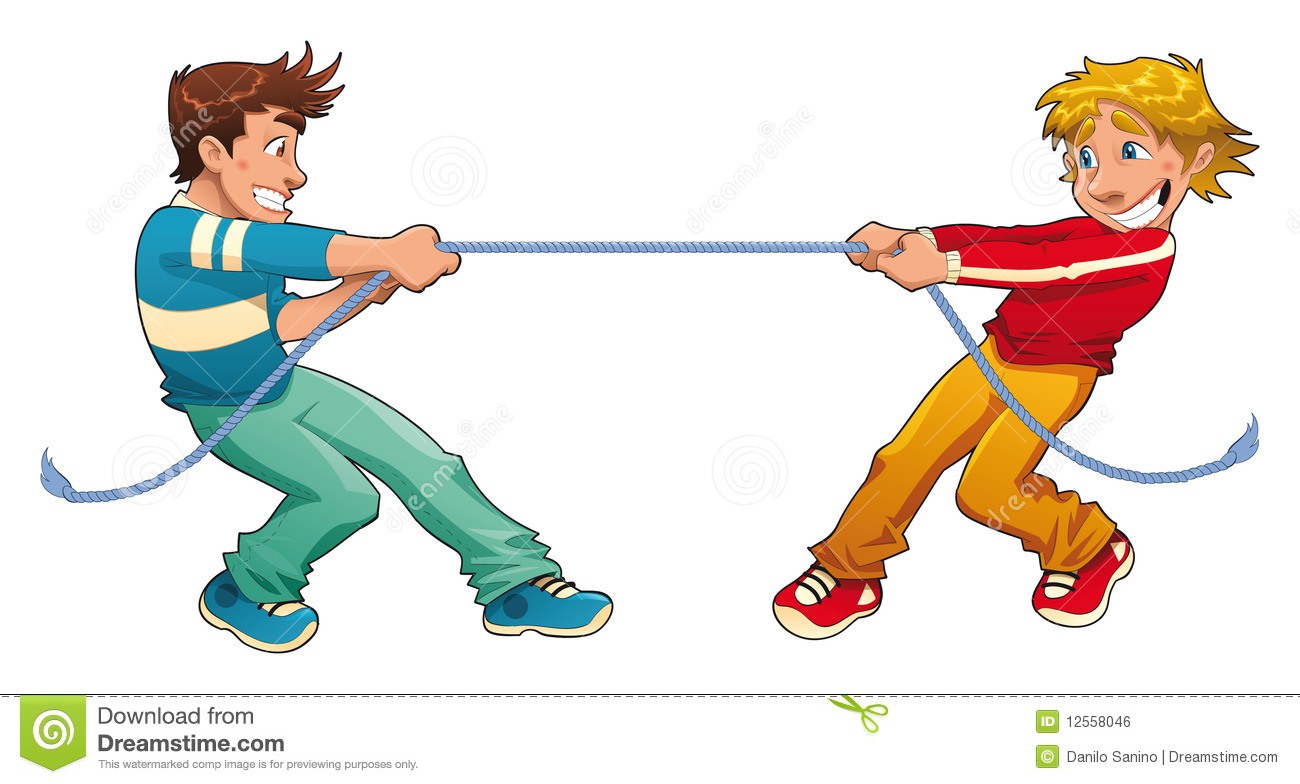
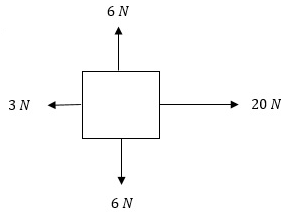
What is the NET FORCE of this diagram?
17 N, right
17 N, left
23 N, right
12 N, up

A rightward force is applied to a dresser to accelerate it to the right across the bedroom floor.


A hockey puck glides to the right across the ice at a constant speed.


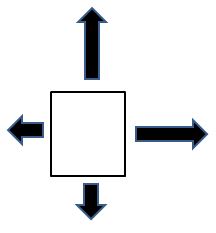
The down-arrow in this diagram is most-likely:
gravity
normal
a push or pull
friction
If this object were moving right, the left-arrow in this diagram is most-likely:
gravity
normal
a push or pull
friction
Which of the following are units that are associated with Newtons (N) Select all that apply
Kg
g
m
in
s
what is newtons first law
an object at rest will stay at rest
force = mass x acceleration
for every action (force) there is an equal and opposite reaction (force)
what is newtons second law
force = mass x acceleration
an object at rest will stay at rest
for every action (force) there is an equal and opposite reaction (force)
what is newtons third law
for every action (force) there is an equal and opposite reaction (force)
an object at rest will stay at rest
force = mass x acceleration

