Wayground logo

Free Printable Worksheets

Font size

S
M
L
XL
Worksheets

Chemistry Part 3 Review

Total questions: 51

Worksheet time: 45mins

Name
Class
Date
1.

Solubility, the ability to dissolve, is a --- property.

a)

Chemical

b)

Physical

2.

Reactivity (bubbling, fizzing) is a --- property.

a)

Chemical

b)

Physical

3.

Ductility, the ability to be stretched into thin wires, is a --- property.

a)

Chemical

b)

Physical

4.

Malleability, the ability to be flattened into thin sheets, is a ---property.

a)

Physical

b)

Chemical

5.
Which is NOT a physical property?
a)
odor
b)
reacts with acid
c)
ability to conduct electric current
d)
hardness
6.

Physical properties....

a)

change the matter when studied

b)

can be observed and measured without changing the matter being studied

c)

include the ability to burn and rust

d)

are useless unless studied in a lab

7.

______________________ can only be recognized when substances react or do not react chemically with one another.

a)

Physical properties

b)

Chemical properties

c)

Flammable properties

d)

Colorful properties

8.

Flammability means the ability to _______ and is a _________ property.

a)

melt; chemical

b)

rust; physical

c)

change; physical

d)

burn; chemical

9.
Which of the following is not a chemical property? 
a)
rusting 
b)
boiling 
c)
rotting 
d)
burning 
10.
Which one of these is a chemical property?
a)
melting point
b)
boiling point
c)
color
d)
flammability
11.
Which is an example of a physical property?
a)
ability to react with acid
b)
 state of matter
c)
flammability
d)
ability to react with oxygen
12.

Which of the following is a chemical property of water?

a)

Reacts with pure sodium

b)

Boils at 100 oC

c)

Is liquid at room temperature

d)

Has a density of 1 gm/mL

13.

Choose the one that is a chemical property

a)

Magnetism

b)

Size

c)

Color

d)

Reactivity with water

14.

What is the outcome of observing a chemical property?

a)

Nothing

b)

A new substance is formed with different properties

c)

NaCl

d)

A rise in thermal conductivity

15.

Which of the following examples represents a physical change?

a)
b)
c)
d)
16.

When sugar dissolves in water a ______________ change occurs.

a)

Physical change

b)

Chemical Change

17.

Which of the following is evidence of a physical change?

a)

New substance

b)

Shape Change

c)

Light produced

d)

Gas released.

18.

A teacher is demonstrating physical and chemical changes to her class. Which action should they use to demonstrate a chemical change?

a)

Cutting a piece of paper with scissors.

b)

Folding a piece of paper into an airplane.

c)

Ripping a piece of paper with their hands.

d)

Burning a piece of paper with a match.

19.

Properties that describe how a substance looks, feels, or its state of matter, etc. are __________________.

a)

Chemical properties

b)

Physical properties

20.
Properties that describe how a substance reacts with other substances are called?
a)
Chemical properties
b)
Physical properties
21.

Why does the image best represent an example of a physical change?

a)

The pencil can no longer be used.

b)

The pencil is a different size.

c)

The materials making up the pencil did not change.

d)

The materials making up the pencil are different.

22.
Is Gatorade powder dissolving in water physical or chemical change?
a)
Physical 
b)
Chemical
23.
What two types of measurements make up DENSITY? 
a)
Mass and Volume
b)
Temperature and Mass
c)
Grams and Centimeters
d)
Volume and Weight
24.
Jack has a rock. The rock has a mass of 14g and a volume of 2cm3. What is the density of the rock?
a)
7 mL
b)
7 g/cm3
c)
28 g/cm3
d)
1/7 g/cm3
25.
If an object has a density of .6 g/mL and you put it into water, will it sink or float?  
a)
sink
b)
float
26.
Frank has an eraser. It has a mass of 4g, and a volume of 2cm3. What is its density?
a)
8 g/cm3
b)
2 g/cm3
c)
1/2 g/cm3
d)
24 g/cm3
27.
What units are used to measure mass?
a)
g
b)
cm3
c)
g/cm3
d)
cm3/g
28.
What is the formula for density?
a)
density = mass x volume
b)
density = mass / volume
c)
density = mass + volume
d)
density = mass - volume
29.
Helium balloons rise on earth because
a)
helium is less dense than air
b)
helium is more dense than air
c)
helium is cooler than air
d)
helium is warmer than air
30.
Calculate the density of the cube.
a)
2 g/cm3
b)
4 g/cm3
c)
6 g/cm3
d)
8 g/cm3
31.

A bar of copper has a mass of 216g and a volume of 24 cm3. What is the density of copper?

a)

9g/cm3

b)

5184g/cm3

c)

.11g/cm3

d)

322mL

32.

Frank has a paperclip. It has a volume of 3 cm3 and a mass of 9 grams. What is its density?

a)

3 g/cm3

b)

9 g/cm3

c)

.33 g/cm3

d)

27 g/cm3

33.

Calculate the density of the object below if it has a mass of 3g. (Hint: you need to find the volume.)

a)

60 g/cm3

b)

3 g/cm3

c)

20 g/cm3

d)

0.05 g/cm3

34.
Which observation(s) might be used as evidence that a chemical reaction occurred?
a)
Color change
b)
Odor change
c)
Properties change
d)
All of the above
35.
_K + _Cl2 →_KCl
a)
2 K + 16 Cl2 → 8 KCl
b)
2 K + 1 Cl2 → 2 KCl
c)
3 K + 4 Cl2 → 3 KCl
d)
1 K + 1 Cl2 →1 KCl
36.
Balance this equation,            Al2O3 ---> Al + O2 
a)
Cannot be balanced
b)
2Al2O3 ---> 2Al + 3O2 
c)
2Al2O3 ---> 4Al + 3O2 
d)
3Al2O3 ---> 2Al + O2 
37.
Balance this equation:  H2 + N2 → NH3
a)
 H2 + 4N2 → NH3
b)
 H2 + 3N2 → 2NH3
c)
 3H2 + N2 → 2NH3
d)
 2H2 + 2N2 → 2NH3
38.
Substances that enter into a chemical reaction (found to the left side of the arrow) 
a)
product
b)
reactant
c)
chemical
d)
balanced equation
39.
The large number in front of a chemical formula or compound is the ___________. 
a)
coefficient
b)
product
c)
physical
d)
chemical
40.
In every balanced chemical equation, each side of the equation has the same number of ____.  
a)
coefficients
b)
moles
c)
molecules
d)
atoms of each element
41.
Is the following equation balanced or unbalanced?
Fe + S --> FeS
a)
balanced
b)
unbalanced
42.
When balancing equations what does
 -->
mean?
a)
subscript
b)
equals
c)
it is just an arrow
d)
yield
43.
What is the part of the chemical equation in green called? 
Fe + S --> FeS
a)
products
b)
reactants
c)
yield
d)
chemical formula
44.
___________________ are the elements or compounds that are formed in a chemical
reaction.
a)
Polymers
b)
Bonds
c)
Reactants
d)
Products
45.
The Law of Conservation of matter states that the total amount of matter ______________ after it undergoes change.
a)
disappears
b)
stays the same
c)
weighs less
d)
explodes
46.
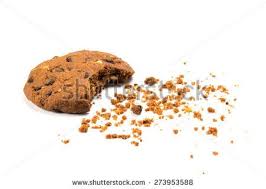
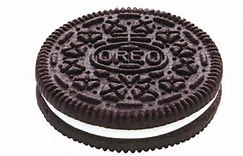
An oreo cookie weighs 20 grams.  It gets crushed into crumbs for a recipe.  How much do its crumbs weigh?
a)
15 grams
b)
25 grams
c)
20 grams
47.
The coefficient in  3H2O is
a)
6
b)
2
c)
3
d)
5
48.

Which of the following are Subscripts in this Chemical Formula: 3Fe2O4

a)

3,4

b)

3,2

c)

2,4

d)

6

49.
How many nitrogen atoms does NH3 have?
a)
1
b)
2
c)
3
d)
4
50.

How many oxygen atoms are in this chemical formula?

a)

6 oxygen atoms

b)

2 oxygen atoms

c)

3 oxygen atoms

d)

4 oxygen atoms

51.
How many Sodium (Na) are in 6NaCl?
a)
1
b)
12
c)
6