
NEW
Font size
 Worksheets
8th Q1 Review
Total questions: 60
Worksheet time: 38mins
the basic structural unit of matter
atom
matter
element
nucleus
a collection of atoms of one type that cannot be broken down into simpler substances by ordinary chemical or physical means
element
subatomic particle
electron
matter
the positively charged subatomic particle contained in the nucleus of an atom
proton
neutron
electron
matter
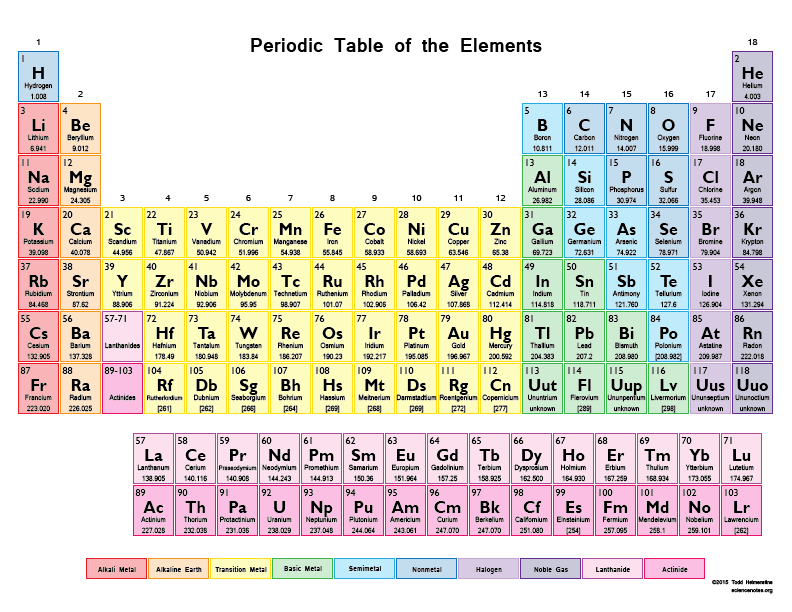
What is the atomic number of Barium, Ba? (enlarge the periodic table)
20
38
56
88
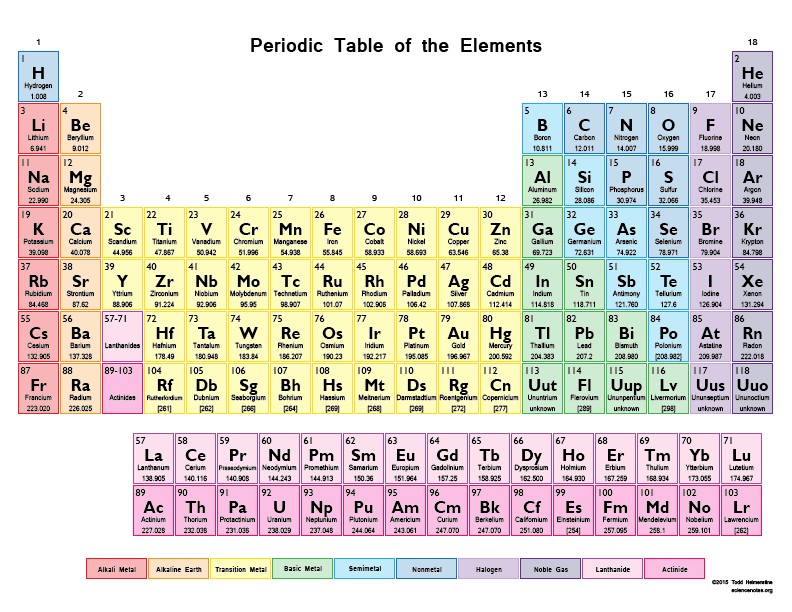
How many protons are in a sodium atom, Na? (tap to enlarge the periodic table)
Sodium has 1 proton.
Sodium has 3 protons.
Sodium has 11 protons
An element has the mass number 12 and atomic number 6. The number of neutrons in it is:
6
10
4
8
If an atom has 10 electrons, how many protons does it have?
0
1
10
5
Negatively charged particle
proton
neutron
electron
Positively charge particle
proton
neutron
electron
In a famous experiment conducted by Ernest Rutherford, positively charged alpha particles were scattered by a thin gold foil. Which of the following is a conclusion that resulted from this experiment?
The nucleus is negatively charged
The atom is a dense solid and is indivisible
The mass is conserved when atoms react chemically
The nucleus is very small and the atom is mostly empty space


What is the atomic mass of Neon?
10
20.18
10.18
9.82

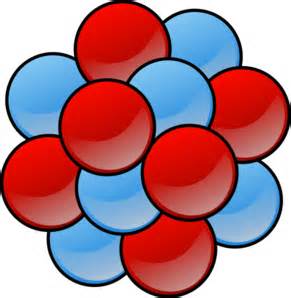
The subatomic particle with a neutral charge is:
protons
electrons
neutrons
cloud


Particles in motion have ___________ energy.
thermal
kinetic
potential
sound
which state of matter has the most kinetic energy?
colloid
gas
liquid
solid

Which one has the highest melting point?
lead
aluminum
iron
water
A physical property that describes the ability to transfer heat or electrical energy
conductivity
hardness
physical change
physical properties
The measurement of the ability of a solid to dissolve in a liquid
conductivity
hardness
physical change
solubility
A change to a substance without forming a new substance, such as changing size or state of matter
conductivity
hardness
physical change
physical properties
Characteristics that can be observed or measured; for example, color, melting point, and conductivity
conductivity
hardness
physical change
physical properties
Molecules in a ________ have definite shape and definite volume.
solid
liquid
gas
neither
Molecules in a _____ have definite volume and no shape.
solid
liquid
gas
neither
Molecules in a ______ have no shape and no volume.
solid
liquid
gas
neither
Objects that are more dense than water will ______.
sink
float
neither
Objects less dense than water will _____.
float
sink
neither
Atoms combine to make a ________. Ex: H20
atom
molecule
electron
reflection

Salt is
not soluble in water.
less dense in water.
soluble in water.
magnetic.

An iron nail is
magnetic.
more dense in water.
not soluble in water.
All of the above
flammability
physical property
chemical property
reaction with an acid
physical property
chemical property
color
physical property
chemical property
combustibility
physical property
chemical property
temperature
physical property
chemical property

What does this illustrate
Elements
Compunds
Mixture of Elements and Compunds
Mixture of Compounds

What does this pic illustrate?
Element
Mixture of Compunds
Mixture of elemets
Compounds
How are Mixtures made?
Chemically
Physically
Physically and Chemically
Found in Nature
What is considered the simplest form of matter?
Compounds
Colloids
Solutions
Elements

Another name for a homogenous mixture is?
colloid
suspension
solution
compound
Examples are diamonds (C) and Uranium (U)
elements
mixtures
compounds


What is pond water?
Element
Compound
Mixture

