
Font size
 Worksheets
Diversity of living things
Total questions: 105
Worksheet time: 2hrs 40mins

Which group of invertebrate does the above organism belong to?
Echinoderms
Cnidarias
Arthropods
Molluscs
Which of the following organism(s) is/are classified as an Echinoderm?


Which of the following invertebrate is classified as an arachnids?


What are the consequences of deforestation?
Loss of habitat
Creation of new species
Increase formation of water bodies
Global warming
Which of the following is classified under Cnidarias?


Which of the following are vertebrates?


Which of the following characteristics is unique to mammals?
They are warm-blooded.
They are cool-blooded.
The are able to walk and swim.
They are usually able to produce milk.

Nautilus are classified under Molluscs with other organisms such as
Whales
Octopus
Jellyfish
Oysters
Where can fungi be found?
Only in Africa
In western regions.
Everywhere
Only in the U.S.A
What makes fungi different from plants?
Their chloroplasts are located on the cap rather than the leaves.
Their cell walls are made of chitin rather than cellulose.
Fungi can only live in moist places while plants can live anywhere.
What can fungi be used for?
Food
Medicine
Decomposition
All of the Above
True or False: There are only 2 catagories of fungi.
True
False
Is the fungi kingdom closer related to the animal kingdom or plant kingdom?
Animal kingdom
Plant kingdom
Fungi are like insects because they both -
have cell walls
contain chitin
are autotrophic
have filamentous bodies
What is an example of a producer?
Oak tree
A fox
A mushroom
A squirrel

If you wanted to find a colony of protists, where might you look?
Forest
Desert
Mountain
Pond
Which type of pathogen is single-celled and cannot be classified as an animal, plant, or fungi?
Bacteria
Viruses
Fungi
Protists
What is the name for microorganisms that cause infectious disease?
Molecules
Pathogens
Bacteria
Bad stuff


All of the protists we have discussed in class are Eukaryotic. Eukaryotic cells have a _____.
chloroplast
nucleus
cell wall
What is cilia?
tiny hairs
tail-like whip
false foot
In which domain of life are protists found?
Eukarya
Bacteria
Archaea
The methane-producing bacteria belong to
archaea
prokaryotes
eukaryotes
urkaryotes
Listed below are descriptions of bacterial shape. Select the exception.
coccus
bacillus
pili
spiral
Which of the following is one of the 3 domains?
Animals
Bacteria
Prokaryote
Fungi
Which domain has organisms that live in harsh environments?
Bacteria
Archaea
Both
Are archaea multicellular or unicellular?
Multicellular
Unicellular
Where can you find DNA (genetic material) inside a prokaryote?
Nucleus
Free Floating
Mitochondria
Endoplasmic Reticulum
Are archaea prokaryotes or eukaryotes?
Prokaryotes
Eukaryotes
True or False: ALL bacteria are bad and will make you sick.
True
False
Bacteria divides into two identical cells through the process of....
sexual reproduction
asexual reproduction
spore production
When a bacteria cell multiplies what percent of those cells are the same?
50% half
100% all of them
none of them
Bacteria are found in many different shapes. What are the 3 most common shapes of bacteria.
rod, sphere, spiral
square sphere, spiral
spiral, rectangle, sphere
What's the difference between archaea and bacteria?
There is no difference.
Archaea is single celled and bacteria is multi-celled.
Archaea is less common and bacteria is found everywhere
The chemicals to fight off bacteria that a doctor may give you are called....
steroids
vaccines
antibiotics


Name this bacteria shape
bacillus
coccus
spirillum

Name this bacteria shape
coccus
bacillus
spirillum

Name this bacteria shape
coccus
spirillum
bacillus

True or False: Some types of bacteria eat and clean up oil spills
True
False
Humans are part of the ___________ domain.
animalia
bacteria
eukarya
protists
The Gram-positive bacteria stain purple because
they form thin outer membrane
they have thick outer membrane
they have thin peptidoglycan layer
they have thick peptidoglycan layer
Which of following Kingdom classify under Domain Eukarya?
Kingdom Fungi
Kingdom Plantae
Kingdom Monera
Kingdom Protista
Kingdom Archaea
What kind of Archaea would you find in places such as volcanoes and hot vents on the ocean floor?
Thermophiles
Halophiles
Cyanobacteria
Plasmophiles
Volcanophiles
The Dead Sea is a large salt lake bording Jordan and Israel. It has a salt concentration of 34.2%, which is too hypertonic for most life. What life might still survive and thrive there?
Halophiles
Thermophiles
Heterotrophs
Cyanobacteria
Peptidoglycan is the main structural compound found in the cell walls of what kinds of creatures?
Slime molds
Bacteria
Algae
Archaea
All plants are classified based on ...
Whether they have vascular tissue or not
Whether they have flowers or not
Whether they have cuticle or not
Whether they do photosynthesis or not
Select ALL plants that reproduce by using spores.
Gymnosperms
Angiosperms
Seedless vascular plants
Nonvascular plants
Select ALL plants that reproduce by using seeds.
Gymnosperms
Angiosperms
Seedless vascular plants
Nonvascular plants
Select ALL that are correct about nonvascular plants.
Transport materials through a system of tubes
Live in shady and moist environments
Low growing
Have a slow method of transporting materials
Supported by rigid cell walls

This is a ...
Nonvascular plant
Vascular plant

This is a(n) ...
Angiosperm
Gymnosperm

This is a(n) ...
Angiosperm
Gymnosperm
Seedless vascular plant
Nonvascular plant

This is a(n) ...
Angiosperm
Gymnosperm
How do we call plants that have seeds, but no flowers or fruit?
Nonvascular plants
Seedless vascular plants
Gymnosperms
Angiosperms
"Evergreen plants" is a common name for ...
Nonvascular plants
Seedless vascular plants
Gymnosperms
Angiosperms
"Flowering plants" is a common name for ...
Nonvascular plants
Seedless vascular plants
Gymnosperms
Angiosperms


Which plant below would scientist group with watermelon plants?
fern
rose
pine tree
apple tree
What does it mean to "classify" something?
To sort / categorized into groups
To dislocate objects
To move around
To watch something grow
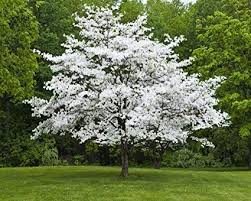
Dogwood Tree
Flowering
Non Flowering

Is a fern classified as a seed or non-seed plant?
seed plant
non-seed plant
An animal's qualities are listed below:
ANIMAL'S QUALITIES
● Moist skin
● Has four legs
● Lays eggs
● Breathes with lungs and gills
● Cold blooded
What type of animal is described in the box?
amphibian
fish
mammal
reptile
bird
Which of the following organisms is a vertebrate?
insect
sponge
monkey
earthworm
Which term describes an animal without a
backbone?
chordate
invertebrate
protozoan
vertebrate
Insects, arachnids, worms, and mollusks all belong to which group?
vertebrate
invertebrate
classification
vascular
Organisms with a body covering of feathers are
classified as a__________.
bird
mammal
fish
reptile
Most fish have _________________ to protect their bodies.
hair
scales
feathers
skin
What type of animal is a whale?
amphibian
fish
mammal
reptile


Which two organisms are most closely related?


-ectothermic
-live in "2 worlds"
-metamorphosis
-lay eggs in water
-born with gills, develop lungs
reptiles

