
Font size
 Worksheets
flowering plants life cycle
Total questions: 56
Worksheet time: 2hrs 52mins

What stage of the plant life cycle is shown in the picture?
Germinating
seedling
mature plant
flowering plant

What stage of the plant life cycle is shown?
seedling
flowering plant
a seed
seedling
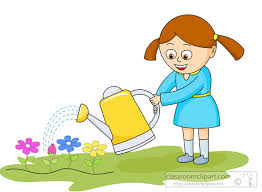
In order to grow plants need?
water,sunlight and air
water, ice cream, and a ball
sun, water, and book
air, sun, and pencil
What does it mean to germinate?
to begin to grow or sprout
to cough on people
A flower that is not opened up or fully grown
None of the above

We have all seen bees fly around flowers. When a bee drinks nectar from one flower they sometimes brush up against the stamen. When they go to another flower, they can drop some pollen on the pistil. What process are the bees helping with?
pollination
germination
fertilization
seed dispersal

In which part of the flower does fertilization take place? Be specific.
the stamen
the pistil
the ovary
the petals

We studied the life cycle of an orange tree. What is most likely the way fruit seeds like the ones found in oranges are dispersed?
blow in the wind
float in the water
stick to animal fur
eaten by animals and then released
The purpose of seed dispersal is for the seeds to __________.
germinate at the same time
move to the same place and grow
move further away from the parent plant
compete with one another for minerals in the soil
The purpose of seed dispersal is for the seeds to __________.
germinate at the same time
move to the same place and grow
move further away from the parent plant
compete with one another for minerals in the soil

Jeff grew his plant in a small pot. He placed the pot outside and watered the plants every day.
However, after a few weeks, the plants died. What is the likely reason for this to happen?
Unfertilised soil
Not enough water
Not placed under sunligt
Overcrowding
State the characters ideal for dispersion by wind.
Small, light and hair-like
Small, light and sharp hooks
Big, light and fibrous husk
Big, light and explode
What are the characteristic of the seeds dispersed by man and animals?
A: Can float on water
B: Sweet and juicy
C: Have hooks or stiff hairs
D: Have wing-like structures and are light
A and B only
B and C only
C and D only
A, B and C only
This is stage 2: It marks the start of plant growth is called
germination
sprout
observation
evidence
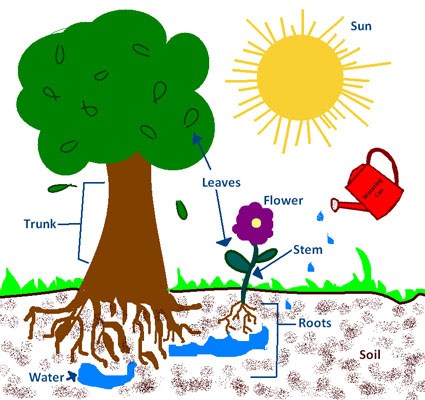
Plants need
air, water, sunlight
air, milk, moon

Why are seeds important?
because they can grow into new plants
because they are all the same size
because they always stay in one place
because they hold up the plant
A seed needs soil and water to grow. What else does it need?
money
the right temperature
snow
exercise

How is a seedling different from an adult plant?
A seedling does not have flowers or fruit.
A seedling does not have roots.
A seedling does not have a stem.
A seedling does not need sunlight to grow.

Which growth habit does this plant have?
Climbing
Spreading
Mat-forming
Clumping

Which growth habit does this plant have?
Spreading
Climbing
Clumping
Mat-forming

Which growth habit does this plant have?
Climbing
Spreading
Clumping
Mat-forming
Which do seeds need to germinate?
Soil
Water
Minerals
Sunlight
Why do plants need water to germinate?
It keeps the seed cool and dark
It releases energy stored in the seed
It causes the seed to swell and break open
It allows the seed to make food for the young plant
The adaptation of seeds that prevents them from germinating during unsuitable ecological conditions that would typically lead to a low probability of seedling survival is called
dormancy
germination
reproduction
primary growth
In seed many nutrients such like carbohydrates, lipids and proteins are stored. After germination hydrolytic enzymes are activated which break down these stored food resources into metabolically useful chemicals. What is causing this?
water
oxygen
heat
light
Which of the following is a TRUE statement about plant growth?
Plants cannot grow without warmth.
Plants can grow without Sun's energy.
Plants can grow without water.
Plants can grow without air.
In general, seeds need the things below, EXCEPT....
water
warmth
air
light
A student places three identical plants in the same type of containers, uses the same type of soil and the same amount of water for each plant. This student places the three plants in three different locations. Plant A is placed in a sunny area, Plant B is placed in a shaded location, and Plant C is placed in the dark room. Each day this student records the growth of each plant. What is the different variable in this investigation?
the soil
the amount of water
the amount of light
the growth of each plant

Which pair of set-ups should be used to find out whether seeds need light to germinate?
A & B
B & C
C & D
B & D

Which pair of set-ups should be used to find out whether seeds need warmth to germinate?
A & B
A & C
C & D
B & C
How do seeds get energy to germinate?
It gets energy from the sunlight.
It gets energy from another plant,
It gets energy from the food stored in the soil.
It gets energy from the food stored in the seed.
What does a seedling need energy for?
Photosynthesis
Growth
Movement
Reproduction
Seeds come in many shapes and sizes
False
True
All seeds are safe to eat.
True
False
Plant B is placed in a room where a lot of sunlight comes in.
Both plants get the same amount of water daily.
What is most likely the outcome of Plant A and Plant B?
All plants that produce seeds have flowers.
In a dry environment, a plant may adapt by growing both deep roots to collect ground water and shallow horizontal roots to collect rain water.
Mature Plant Seed Seedling Germinate Pollination
2. Seed
3. Seedling
4. Germinate
5. Pollinate
2. Seed
3. Seedling
4. Mature Plant
5. Pollinate
2. Seedling
3. Germinate
4. Mature Plant
5. Pollinate
2. Germinate
3. Seedling
4. Mature Plant
5. Pollinate
Germination is the ..................... of a seed into a/an ....................
development .... building
development .... seedling
changes .... adult plant
changes .... mature plant
Germination of seeds only occurs when the conditions are right.
What are these conditions?
air, water and soil
air, water and light
water, oxygen and warmth
warmth, water and carbon dioxide

Based on the diagram above, which seeds will not germinate?
A
B and C
B, C and D
All of the above

An experiment has been conducted by Ahmed. He wants to find out the factors of germination.
After 5 days, he observed that seeds in B does not germinate.
Explain why is this so?
this is because water is present
this is because water is absent
this is because the temperature is too cold
this is because the temperature is too hot
Sheila wants to investigate whether water is needed for germination. She set-ups an experiment as shown above. She used 5 seeds for each tube and placed both at the room temperature. After 5 days, she noticed that only seeds in tube A germinate.
Based on that, indicate the constant variables in her experiment.
the presence of water
the number of seeds
the temperature
the number of seeds and the temperature

From the experiment above, it is found that only seeds in A germinated.
Explain, why this is so?
seeds A have water and warmth.
seeds A have water, warmth and carbon dioxide.
seeds A have moist cotton and warm temperature.
seeds A have water, warmth and oxygen.
From the experiment above, it is found that seeds in B did not germinate.
Explain, why this is so?
seeds B do not have oxygen
seeds B do not have water
seeds B do not have suitable heat
seeds B do not have oxygen, water and it is cold
From the experiment above, it is found that only seeds in A germinated.
Explain, why seeds in D did not germinate?
seeds D do not have oxygen
seeds D do not have water
seeds D do not have suitable heat
seeds D have oil

Diagram above is the parts of a seed.
Identify the parts of W, X and Z
w- seed coat, x- seed leaves, z- embryo
w- seed leaves, x- seed coat, z- embryo
w- embryo, x- seed leaves, z- seed coat
A student places three identical plants in the same type of containers, uses the same type of soil and the same amount of water for each plant. This student places the three plants in three different locations. Plant A is placed in a sunny area, Plant B is placed in a shaded location, and Plant C is placed in the dark room. Each day this student records the growth of each plant. What is the different variable in this investigation?
the soil
the amount of water
the amount of light
the growth of each plant

