
 Worksheets
research
Total questions: 65
Worksheet time: 49mins
_________________ research operates with variables that can be manipulated.
Correlational
Quantitative
Qualitative
Artifacts
____________ research is an in-depth study of a particular phenomenon.
Causation
Correlational
Qualitative
Quantitative
A ___________ is the group of individuals taking part in the research study.
Census
Sample
Variable
Control
_____________ ____________ are variables that can potentially distort the relationship between the other variables.
Target population
Confounding variables
Matching variables
Target variables
___________ __________ is the group of people to which the findings of the study are expected to be generalized.
Sample
Random sampling
Target population
Matching variables
In __________ __________ every member of the target population has an equal chance of becoming part of the sample.
Stratified sampling
Random sampling
Opportunity sampling
Self-selected sampling
___________ ___________ __________ involves random allocation of participants into groups and a comparison b/w these groups.
Repeated measures design
Matched pair design
Independent measures design
Correlational measures design
___________ __________ _________ is used when the same group of participants is exposed to 2 or more conditions and the conditions are compared.
Matched pair design
Independent measures design
Repeated measures design
Correlational measures design
___________ _________ is high when confounding variables have been controlled and we are quite certain that it was the change in the IV that caused the change in the DV.
External validity
Population validity
Internal validity
Ecological validity
_______________ _________________ are conducted in a real life setting. The researcher manipulates the IV, but the participants are in their natural setting.
Natural exp.
Field exp.
Lab exp.
Case study
Which of the following is a research method?
Correlation
Matched-pairs
Randomization
Brain Imaging
Which of the following is not a research design?
Natural
Repeated Measures
Independent Samples/Measures
Matched Pairs
What is a hypothesis?
an educated guess
an absolute solution
a random guess
an experiment
Which is NOT a step of the scientific method?
Hypothesis
Problem
Count items
Draw Conclusions
What does it mean to draw conclusions?
make a guess
test a theory to see if it is true
try something new
use data to make an assumption/theory
What is a theory?
a guess on how something works
a tested conclusion accepted as true
a story explaining how the world works
an assumption
What is replication?
cloning the scientist who first did an experiment
doing an experiment for the first time
doing an experiment again and getting different results
Doing an experiment again and getting the same results
What are two methods of surveying?
tests and interviews
experiments and questionnaires
interviews and questionnaires
case studies and experiments
What is a target population?
the whole group you want to study or describe
the population that is practicing for the Hunger Games
population inside the classroom
part of the group you want to study or describe
What is bias?
a predisposition to a certain point of view despite what the facts suggest
believing the facts, despite one's opinion
listening to opinions of politicians
believing in childhood myths
The Naturalistic-Observation Method takes place...
with a mouse
in a house
in the field
in a lab


What is primary research?
Collecting data from primary schools.
The first research you have ever done in your life.
Using data that has already been collated and published by another researcher.
Creating a method for a specific purpose to collect original data.

Which ONE is not applicable as an interview method?
Focus group discussion.
Reviewing an interview article in an academic journal.
Email conversation.
Face-to-face conversation.
Research provides solutions to problems we encounter. Since problems are endless, research is a continuing process.
True
False

It is the science of collecting, organising, analysing and interpreting data in order to make decisions.
Data
Statistics
Variable
Population

What is data?
Information coming from observations, counts, measurements or responses.
The science of collecting, organising, analysing, and interpreting data in order to make decisions.
A numerical description of a population characteristic.
A numerical description of a sample characteristic.
Complete the definition:
A _________ consists of all subjects (human or otherwise) that are being studied
Statistics
Number
People
Population
Pueblo
Qualitative research is an easy
substitute for statistical or quantitative research.
True
False
What is the mean?
4, 5, 6, 7, 3, 4, 10, 1
7
4.5
5
8

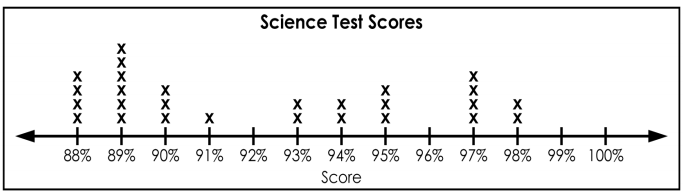
Is this sample biased or unbiased?
A sample of 50 randomly selected students.
Biased
Unbiased
Which of the following best describes a Type I error?
The null is true, but we mistakenly reject it.
The null is false and we reject it.
The null is false, but we fail to reject it.
The null is true but we fail to reject it.
The null is true, and we fail to reject it.
The null hypothesis is represented by:
Ha
Ho
t*
HP
μ
The null hypothesis always contains a(an):
< or >
=
>
= or >
≠
Which of the following best describes a type II error?
The null is true, but we mistakenly reject it.
The null is false and we reject it.
The null is false, but we fail to reject it.
The null is true but we fail to reject it.
Te null is false, and we reject it.
Your favorite food
Nominal
Ordinal
Discrete
It is a set that groups a series of data with similar characteristics
Variable
Qualitative Statistics
Quantitative Variable

