wayground logo

Free Printable Worksheets

Font size

S
M
L
XL
Worksheets

Tri One Final Review

Total questions: 70

Worksheet time: 3575secs
Name
Class
Date
1.

What biomolecule do enzymes belong to?

a)

Carbohydrate

b)

Lipid

c)

Nucleic Acid

d)

Protein

2.
Which biomolecule is found in pasta and bread?
a)
Lipid
b)
Protein
c)
Nucleic Acid
d)
Carbohydrate
3.
Which biomolecule is a main source of quick energy?
a)
Nucleic Acid
b)
Protein
c)
Lipid
d)
Carbohydrate
4.
Which biomolecule is found in fats, oils, and waxes and is a source of long-term energy
a)
Proteins
b)
Nucleic Acid
c)
Lipids
d)
Carbohydrate
5.
Carbon, Hydrogen, Oxygen and Nitrogen are elements in what biomolecule?
a)
Carbohydrate
b)
Lipid
c)
Protein
d)
Nucleic acid
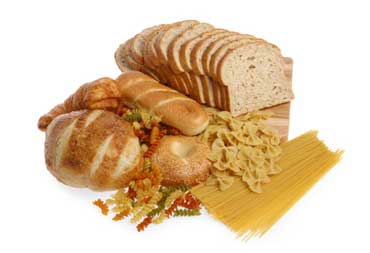
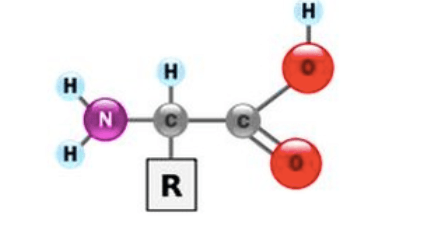
6.
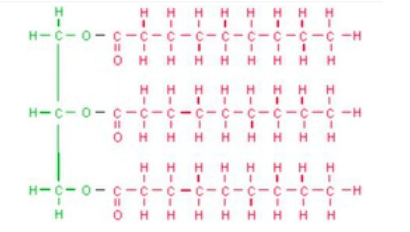
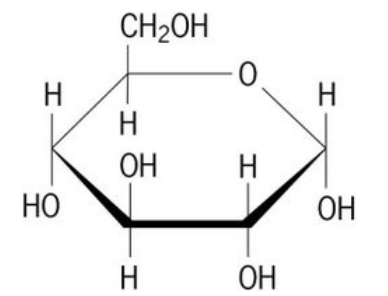
Which biomolecule is this a picture of?
a)
Protein
b)
Nucleic Acid
c)
Lipid
d)
Carbohydrate
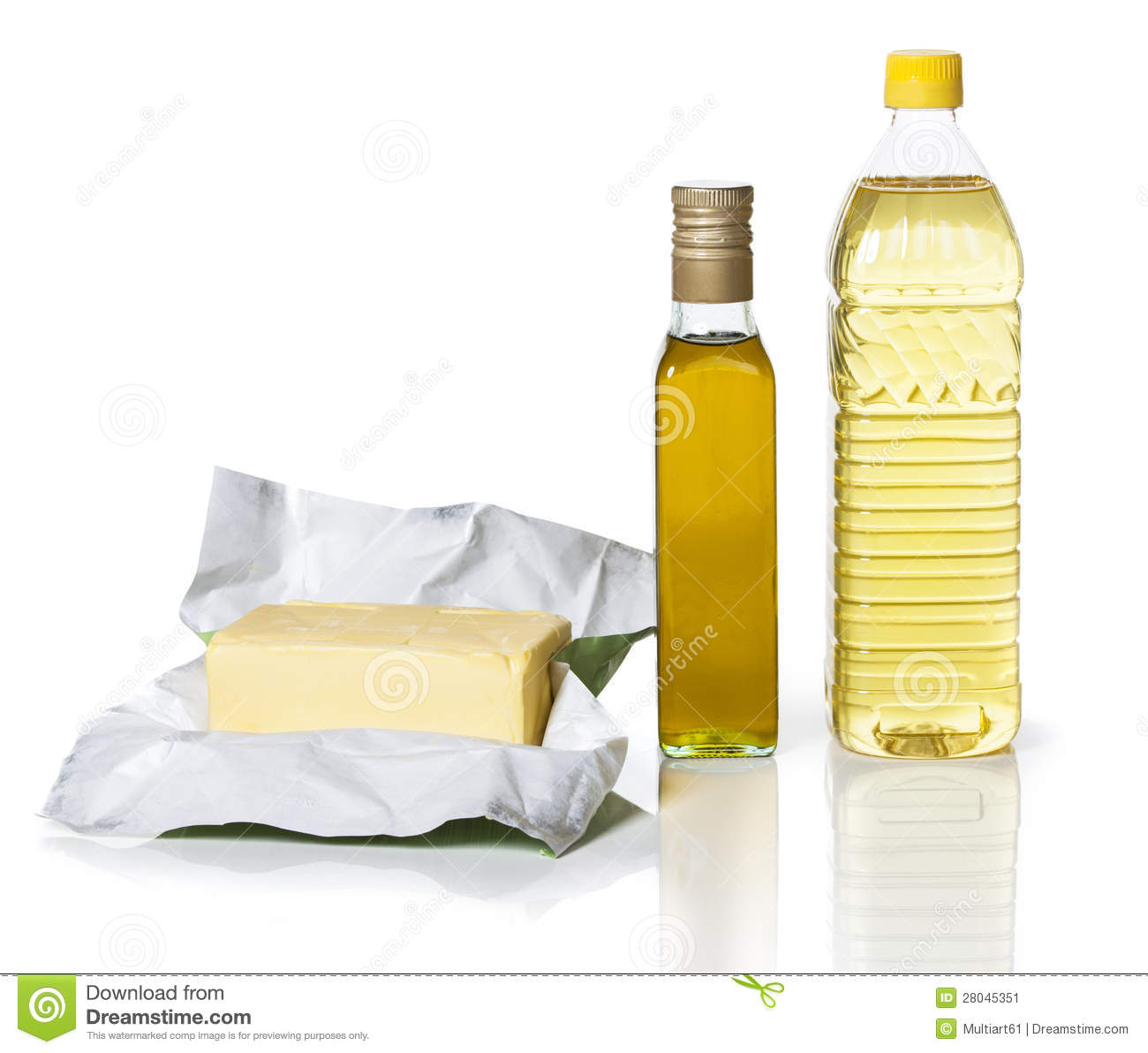
7.
Which biomolecule is this a picture of?
a)
Protein
b)
Nucleic Acid
c)
Lipid
d)
Carbohydrate
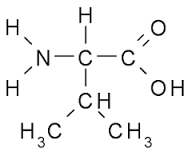
8.
Which biomolecule is this a picture of?
a)
Protein
b)
Nucleic Acid
c)
Lipid
d)
Carbohydrate
9.
Which biomolecule has sugars and starches?
a)
Lipids
b)
Proteins
c)
Carbohydrates
d)
Nucleic Acid
10.
A monomer is ...
a)
a single atom
b)
a building block for polymers
c)
a single element
d)
is an inorganic molecule
11.
Enzymes are considered to be 
a)
Lipids
b)
Carbohydrate
c)
Protein
d)
Nucleic Acid
12.
What is the purpose  of an enzyme?
a)
give permission for the reaction
b)
raise activation energy
c)
speed up reactions
d)
control how many reactions occur
13.
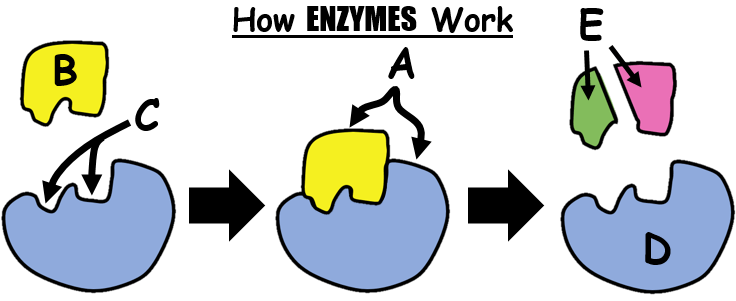
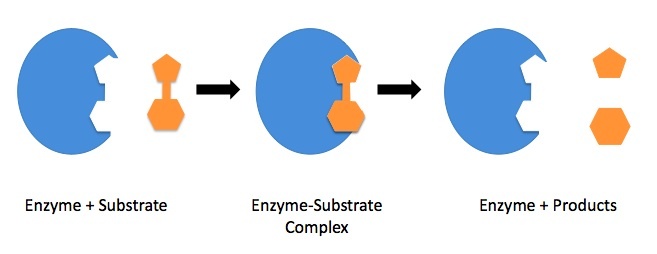
What is being represented by the letter A in the image?
a)
Substrate
b)
Enzyme
c)
Product
d)
Complex
14.

What happens to an enzyme when it denatures?

a)

The activation energy of the reaction is doubled.

b)

The activation energy of the reaction is lowered.

c)

It's optimal conditions for temperature of the enzyme are doubled.

d)

The shape of the enzyme molecule is changed.

15.

One function of lipids is to store energy. What is another function of lipids in the human body?

a)

To form cell membranes

b)

To make energy from the sun.

c)

To control chemical reactions.

d)

To provide energy for the cell.

16.
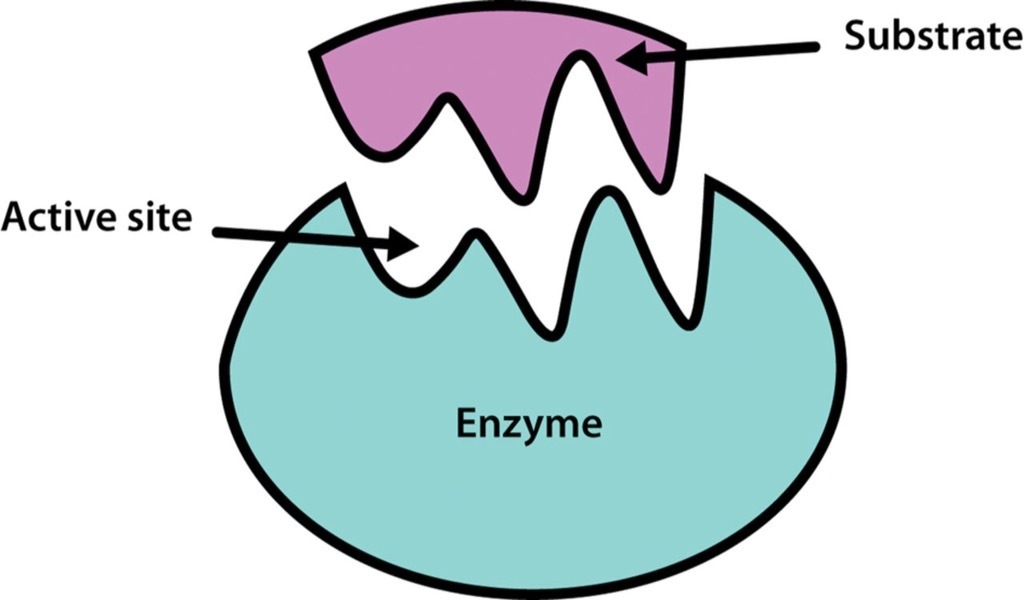
Where do substrates bind on an enzyme?
a)
voltage-gated channels
b)
surface receptor
c)
calcium channels
d)
active site
17.
With what 3 letters do enzymes typically end?
a)
-ose
b)
-ase
c)
-ese
d)
-tic
18.
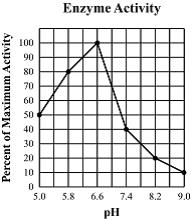
Which of the following conclusions can be drawn from this graph?
a)
The optimum pH of the enzyme is 6.6.
b)
The optimum pH of the enzyme is 5.8
c)
The enzyme’s activity increases as pH increases 5.0 to 9.0
d)
The enzyme’s activity is greater around pH of 8.0 .
19.
Which of these is most likely an enzyme?  
a)
Sucrose
b)
Galactose
c)
Fructose
d)
Amylase
20.
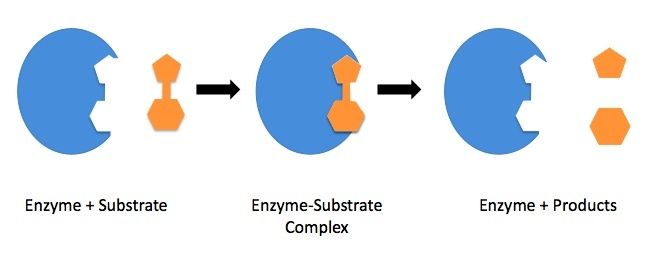
Letter C...
a)
active site
b)
enzymes
c)
substrate
d)
products
21.

Which 2 factors can affect the rate of enzyme activity?

a)

Light intensity

b)

Temperature

c)

pH

d)

Oxygen concentration

22.
What is the difference between an alkane, alkene, alkyne?
a)
number of carbons
b)
number of hydrogens
c)
number of bonds
d)
number of functional groups
23.
What type of bond will you find in propane?
a)
alkane / single
b)
alkene / double
c)
alkyne / triple
d)
alkane / double
24.
What type of bond will you find in butene?
a)
alkane / single
b)
alkene / double
c)
alkyne / triple
d)
alkene / triple
25.
What type of bond will you find in ethyne?
a)
alkane / single
b)
alkene / double
c)
alkyne / triple
d)
alkyne / single
26.
Which functional group has an -OH?
a)
aldehyde
b)
alcohol
c)
carboxylic acid
27.
Which functional group is present?
a)
aldehyde
b)
alcohol
c)
carboxylic acid
28.
What is a polymer?
a)
repeating chain of carbons
b)
a structure with many hydrogen
c)
it has many bonds
d)
a building block of matter
29.
How can you identify an organic molecule?
a)
It has carbon
b)
it has carbon and hydrogen
c)
it has carbon and oxygen
d)
it has a USDA label
30.
Fermentation involves
a)
aerobic respiration
b)
anaerobic respiration 
31.

The term "anaerobic" means :

a)

with oxygen.

b)

without oxygen.

c)

alive.

d)

nonliving.

32.
Why is yeast used to bake bread? 
a)
The waste gas, CO2, makes bread rise
b)
The alcohol produced makes bread dangerous
c)
The yeast consumes O2, causing bread to rise
33.
What does metabolism mean?
a)
Converting energy into food
b)
Making light reactions happen
c)
Converting food into energy
34.
Which type of respiration is most efficient?
a)
Aerobic
b)
Anaerobic
35.

Where does the pyruvic acid produced by glycolysis go next?

a)

the Calvin Cycle

b)

the electron transport chain

c)

the Krebs Cycle

d)

back through the glycolysis process

36.

Finish the phrase: “As the bonds in glucose are _______ and rearranged, energy is __________.”

a)

broken, released

b)

built, trapped

c)

broken, trapped

d)

built, released

37.
Glycolysis occurs during aerobic or anaerobic conditions.
a)
True
b)
False
38.
Krebs Cycle is part of_______________ respiration.
a)
Aerobic
b)
Anaerobic
39.

In the absence of oxygen, ____ follows glycolysis.

a)

the link reaction

b)

the citric acid cycle

c)

fermentation

d)

the calvin cycle

40.
Main cellular energy molecule
a)
ATP
b)
ADP
c)
cAMP
41.

Cyanide is a toxin that stops the mitochondria from producing ATP. If cyanide were introduced into your cells, it is probably acting as a(n)

a)

activator

b)

coenzyme

c)

inhibitor

d)

substrate

42.

Where is energy stored in ATP?

a)

in the bonds between phosphate

b)

in oxygen

c)

in sugar

d)

in nitrogenous base

43.
The mechanism by which the end product of a metabolic pathway inhibits an earlier step in the pathway is called ___________
a)
metabolic inhibition
b)
feedback inhibition
c)
irreversible inhibition
d)
allosteric regulation
44.
When a molecule can occupy the same active site as the substrate, a situation called __________________ can result
a)
Competitive lnhibition
b)
Allosteric Regulation
c)
Non-Competitive Inhibition
d)
Feedback Inhibition
45.
A receptor site that a molecule can bind to that changes the shape of the active site is called a(n):
a)
Allosteric Site
b)
Active Site
c)
DiSulphide Bridge
d)
MHC Receptor
46.

The type of reaction that occurs when a molecule is broken down by an enzyme.

a)

Denatured

b)

Catabolic reaction

c)

Anabolic Reaction

d)

Decomposition

47.

The special bond links amino acids together

a)

Glycosidic bond

b)

Activation energy

c)

Peptide bond

d)

Active site

48.

These reactions occur when smaller molecules are bound together to create larger ones

a)

activation energy

b)

peptide bond

c)

anabolic reaction

d)

catabolic reaction

49.
Sugars, starches and chitin are examples of
a)
Carbohydrates
b)
Lipids
c)
Proteins
d)
Nucleic Acids
50.
Glycerol and fatty acids are the building blocks (monomers) of _____.
a)
Carbohydrates
b)
Lipids
c)
Proteins
d)
Nucleic Acids
51.
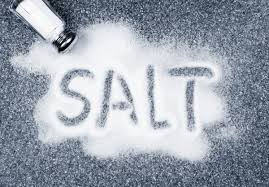
Is NaCl (table salt) a Organic or Inorganic Compound?
a)
Inorganic
b)
Organic
52.
The compound CHO is...
a)
inorganic
b)
organic
53.
Which compound is inorganic?
a)
Glucose (C₆H₁₂O₆)
b)
Ethane (C₂H₆)
c)
Carbon Dioxide (CO₂)
d)
Stearic Acid (C₁₈H₃₆O₂)
54.
What is the general formula for saturated hydrocarbons?
a)
CnH2n
b)
CnHn+1
c)
CnH2n+1
d)
CnH2n+2
55.
What is a hydrocarbon that contains only single bonds called? 
a)
organic  
b)
saturated
c)
unsaturated
d)
fully bonded
56.
If an alkane has 20 carbon atoms, how many hydrogen atoms will it have?
a)
20
b)
22
c)
40
d)
42
57.
Unsaturated hydrocarbons contain at least one double or triple bond.
a)
True
b)
False
58.

What is an example of a saturated fat?

a)
b)
59.
Triglycerides are composed of glycerol and ___ fatty acid chains.
a)
two
b)
three
c)
four
d)
no
60.
What is the monomer of a lipid?
a)
monosaccharide
b)
nucleic acid
c)
fatty acid
d)
amino acid
61.
Steroids have what kind of structure?
a)
long chain of hydrogen/carbons with a glycerol group
b)
CHO in a hexagonal shape
c)
4 fused rings
d)
polar head and two fatty acid tails
62.
What type of fat is this?
a)
saturated fatty acid
b)
unsaturated fatty acid
c)
steroid
d)
wax
63.
In the phospholipid, the polar head is considered what type of structure?
a)
hydrophobic
b)
insoluble
c)
hydrophilic
64.
Which type of bond is found in lipids?
a)
Glycosydic
b)
Ester
c)
Peptide
65.
The bonds linking monosaccharides into polysaccharides are called
a)
Peptide bonds
b)
Glycosidic bonds
c)
Ester bonds
66.
Which branch of the amino acid determines its overall function?
a)
Amino group
b)
Hydrogen atom
c)
Carboxyl Group
d)
R group
67.
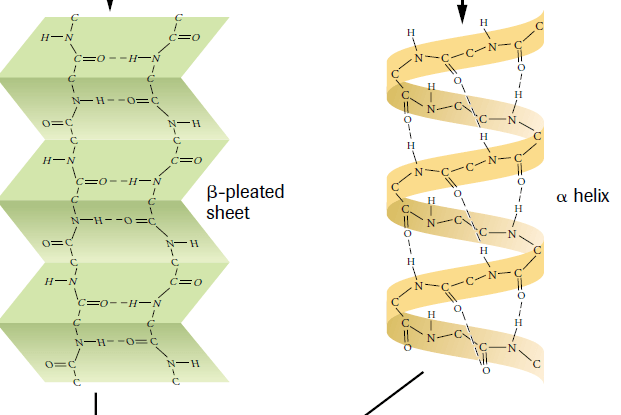
What level of protein structure is this?
a)
Primary
b)
Secondary
c)
Tertiary
d)
Quaternary
68.
The diagram shows a bond forming between two amino acids. What is the name of this reaction?
a)
Dehydration Synthesis
b)
Hydrolysis
c)
Pepysis
d)
Oxidation
69.
The diagram shows a bond forming between two amino acids. What is the name of the resulting bond?
a)
Peptide Bond
b)
Glycosidic Linkage
c)
Ester Bond
d)
Hydrogen Bond
70.
The reaction used to digest and break the bond in red is:
a)
Hydrolysis
b)
Dehydration Synthesis
c)
Oxidation
d)
Single Displacement