wayground logo

Free Printable Worksheets

Font size

S
M
L
XL
Worksheets

Cells review for the final.

Total questions: 47

Worksheet time: 1hrs 14mins

Name
Class
Date
1.
This part of a cell generates the energy the cell uses to survive.
a)
Nucleus
b)
Mitochondria
c)
Cell Membrane
d)
Vacuole
2.
To enter or leave a cell, a substance must pass through the...
a)
nucleus
b)
cell membrane
c)
mitochondria
d)
chloroplast
3.

This organelle is not found in animals and uses energy from the sun to make food through a process called photosynthesis.

a)

cell wall

b)

mitochondria

c)

chloroplast

d)

nucleus

4.
Rocks are not living because
a)
they never move
b)
they aren't needed for humans
c)
they are not made of cells
d)
they don't break down
5.
What is the basic structural and functional unit of all living things? 
a)
atom
b)
cell
c)
molecule
d)
human
6.
All cells are produced ____________.
a)
From pre-existing and deceased cells
b)
from other pre-existing cells
c)
Cells can come from anywhere, as long as there is the sun.
7.
An organism made of one cell is called
a)
unicellular organism
b)
multicellular organism
8.
How are unicellular organisms different from multicellular organisms? 
a)
There are no differences.
b)
They are made of many cells. 
c)
They are only classified as prokaryotes.
d)
They are made of only one cell. 
9.

An amoeba is a one-celled organism. The cell theory states that which of the following characteristics must be true?

a)

All amoebas have a spherical shape.

b)

All amoebas move rapidly using cilia.

c)

All amoebas have organelles called chloroplasts.

d)

All amoebas come from other amoebas.

10.

Which two organelles are found in plant cells and not animal cells?

a)

chloroplast and mitochondria

b)

cytoplasm and cell wall

c)

cell wall and cell membrane

d)

chloroplast and cell wall

11.
What structures distinguish a plant cell from an animal cell?
a)
Plant cells have cell walls and ribosomes.
b)
Plant cells have cell walls and chloroplasts.
c)
Plant cells have chloroplasts and ribosomes.
d)
Plant cells have chloroplasts and mitochondria.
12.

What is the function of the labeled organelle?

a)

produces ribosomes

b)

contains genetic information

c)

stores food, water, wastes and other materials

13.

What is the function of the labeled organelle?

a)

produces energy a cell needs

b)

where ribosomes are made

c)

packages amino acids and moves them out of the cell

14.

Which organelle is the "brain" of the cell? It holds the chromosomes and DNA.

a)

Mitochondria

b)

Chloroplast

c)

Cell Membrane

d)

Nucleus

15.
This organelle controls what goes in and out of plant and animal cells.
a)
Cell Wall
b)
Cell Membrane
c)
Cytoplasm
d)
Cytoplasm
16.
This organelle is a rigid outer layer that protects plant cells.
a)
Cell Membrane
b)
Cell Wall
c)
Nucleus
d)
Chloroplast 
17.

The organelle that captures energy from the sunlight through a process called photosynthesis and produces food in plant cells is ______________.

a)

Chromatin

b)

Chloroplast

c)

Cytoplasm

d)

Cell Membrane

18.
________________ create proteins for plant and animal cells.
a)
Ribosomes
b)
Endoplasmic Reticulum
c)
Golgi Bodies
d)
Lysosomes
19.
 Breaks down excess or worn out cell parts and food particles. Often call the “recyclers of the cell  
a)
Vacuole 
b)
Lysosome
c)
Chloroplasts
d)
Nucleus
20.
Known as the “Power Houses” of the cell. These organelles convert energy stored in food to energy that the cell can use to live and function
a)
Mitochondria
b)
Golgi Apparatus
c)
Cell membrane
d)
Endoplasmic Reticulum
21.

A clear, gel like fluid that the cell's organelles are suspended in.

a)

Nucleus

b)

Cell Wall

c)

Ribosomes

d)

Cytoplasm

22.
Receives proteins and other newly formed materials from the ER, packages them and distributes them to other parts of the cell or outside the cell
a)
Endoplasmic Reticulum
b)
Mitochondria
c)
Golgi Apparatus
d)
Cytoplasm
23.
This Organelle Controls which substances pass in and out of the cell. Everything a cell needs (food particles, water, oxygen, enters through this organelle
a)
Cell Wall
b)
Golgi Apparatus
c)
Cell membrane
d)
Cytoplasm
24.
Small grain-shaped organelles that produce proteins.
a)
Lysosomes
b)
Ribosomes
c)
Vacuole
d)
Nucleus
25.

What organelle is called the "powerhouse" of a cell?

a)

Endoplasmic Reticulum

b)

Nucleus

c)

Mitochondria

d)

Nucleolus

26.

What is the function of the mitochondria?

a)

Structure that manufactures ribosomes

b)

Structures that converts nutrients to energy

c)

Stack of membranes that packages chemicals

d)

Structure that contains DNA and directs the cell

27.
What is the function of the vacuole?
a)
Sac that stores water, nutrients, and waste products
b)
Sac filled with digestive chemicals
c)
Jelly-like substance within the plasma membrane
d)
stack of membranes that packages chemicals
28.

Where does photosynthesis occur?

a)

mitochondria

b)

stomata

c)

xylem

d)

chloroplast

29.

I store water, stores salts, minerals, nutrients, and proteins, What am I?

a)

cytoplasm

b)

ribosomes

c)

vacuole

d)

lysosomes

30.

I make proteins for the cell. What am I?

a)

ribosome

b)

mitochondria

c)

chloroplast

d)

lysosome

31.
The two kinds of cells are Prokaryotes and Eukaryotes. How are they different?
a)
Prokaryotes have a nucleus.
b)
Eukaryotes have a nucleus.
c)
Prokaryotes are plant cells.
d)
There is no difference.
32.
What cell part is NOT found in all cells?
a)
Cell Wall
b)
Cell Membrane
c)
Cytoplasm
d)
Genetic Material
33.
Complex cell. Can be plant or animal. Contains membrane bound organelles. 
a)
Eukaryotic Cell
b)
Prokaryotic Cell
c)
Bacteria
d)
Blood cell
34.
Which part of the cell is often called "the brain of the cell"?
a)
nuclear membrane
b)
endoplasmic reticulum
c)
nucleus
d)
mitochondria
35.
A rigid layer that lies outside the cell's  membrane is...
a)
Cytoskeleton
b)
Cilia
c)
Cell Wall
d)
Flagella
36.

I am fluid filled within the cell

a)

Mitochondrion

b)

Vacuole

c)

cytoplasm

d)

Cell membrane

37.

Rigid and surrounds plant cells

a)

Cell Membrane

b)

Cytoplasm

c)

Cell Wall

d)

Chloroplast

38.
Control center
a)
Nucleus Structure
b)
Nucleus Function
c)
Vacuole Structure
d)
Vacuole Function
39.
An organelle that captures energy from the sunlight in order to use it to produce food in plant cells is ______________.
a)
Chromatin
b)
Chloroplast
c)
Cytoplasm
d)
Cell Membrane
40.
What is the difference between rough and smooth ER?
a)
There is no difference.
b)
Plants have rough ER, animals have smooth ER.
c)
What type of injuries the Doctors treat.
d)
Rough has ribosomes, smooth does not.
41.

Which organelle is responsible for the process of photosynthesis?

a)

Ribosome

b)

Chloroplast

c)

Cell membrane

d)

Cell wall

42.

Which of the following types of cells DO NOT have a nucleus?

a)

Prokaryotes

b)

Eukaryotes

c)

Plants

d)

Animals

43.

Prokaryotes are always...

a)

Plants

b)

Animals

c)

Bacteria

d)

Eukaryotes

44.

This organelle converts energy into forms that are usable by the cell.

a)

mitochondria

b)

vacuole

c)

nucleus

d)

cell wall

45.

This organelle absorb sunlight and uses it to produce food for plant cells

a)

Ribosomes

b)

Endoplasmic Reticulum

c)

Mitochondria

d)

Chloroplasts

46.

This organelle functions to package and deliver proteins:

a)

golgi bodies (apparatus)

b)

ribosomes

c)

mitochondria

d)

nucleus

47.

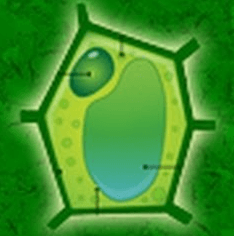
The arrow is showing the fluid inside the cell that surrounds the cell organelles. What is the arrow pointing to in the cell?

a)

cytoplasm

b)

mitochondria

c)

ribosomes

d)

nucleus