
 Worksheets
U2L1E1&2 Chemistry and Water
Total questions: 66
Worksheet time: 49mins


A water molecule is held together by this type of bond
Ionic
Non polar covalent
Hydrogen
Polar covalent
Protons have ___.
Electrons have ___.
Neutrons have ___.
a positive charge, a negative charge, no charge
a negative charge, no charge, a positive charge
no charge, a positive charge, a negative charge
a positive charge, no charge, a negative charge
___ bonds are formed through the sharing of electrons while ___ bonds are formed through the transfer of electrons.
covalent, ionic
ionic, covalent
covalent, hydrogen,
hydrogen, ionic
___ molecules are formed from the uneven sharing of electrons that results in a molecules with an area of slight positive charge and an area of slight negative charge.
Polar
Ionic
Covalent
Nonpolar
Weak ___ bonds form between water molecules because of water's property of polarity.
hydrogen
covalent
ionic
liquid
Ice is __ dense compared to water (liquid), meaning that ice in water will ___.
less, float
more, float
less, sink
more, sink
Water has a high ____, which is where water resists changes temperature.
heat capacity
boiling point
freezing point
adhesion
Water is attracted to other water molecules, this property is known as ___.
cohesion
adhesion
heat capacity
capillary action
Water is attracted to other substances that are not water, like water attracted to glass. This property is known as ___.
adhesion
cohesion
heat capacity
capillary action
___ is the phenomenon where water is drawn up a thin tube.
capillary action
cohesion
adhesion
plant pulling
Solutions with a high pH (above a 7) are ___.
bases
acids
neutrals
Solutions with a LOW pH (below a 7) are ___.
acids
bases
neutrals
To make a solution, a ___ is dissolved into a liquid called a ___.
solute; solvent
solvent; solute
salt; liquid
solution; mixture
When the temperature on Earth drops abruptly, the land cools down faster than the sea.
Which property of water allows water to be resistant to sudden temperature changes?
Density
Adhesion
High specific heat capacity
Surface tension

Water has a boiling point of 100.0∘C, which is unusually high compared to many other liquids.
Which of the following properties allows water to have a high boiling point?
It contains only three atoms.
It is a small, covalent molecule.
It contains oxygen.
It can form hydrogen bonds.

The air temperature ranges of several Southern California cities in August are shown in the table below.
Which of the following best explains why coastal cities like San Diego often have a smaller air temperature range than inland cities?
The cohesive tendency of water molecules causes high surface tension, so heat is unable to penetrate the top layer of the ocean and escape into the air.
The high heat capacity of water allows the ocean to moderate the temperature of nearby air and land.
The adhesive properties of ocean water allow the water molecules to stick to one another, preventing temperature change of the air above it.
Because water is less dense as a solid than as a liquid, it easily vaporizes, causing excess heat to escape into the air near coastal cities.
Which of the following shows the most likely way that two water molecules will bond with each other?


Which of the following observations could be best explained by water’s high surface tension?
A human sweats in order to cool down.
A leaf floats on the surface of a puddle.
A local pond is slow to freeze, despite low air temperature.
A tree takes up water from its roots.


As you add drops of water to the surface of a coin, each drop sticks to the other water droplet because of ________________, and sticks to the penny because of ______________.
adhesion, cohesion
cohesion, adhesion
capillary action, specific heat
specific heat, capillary action
Which of the following types of bonds transfers an electron between atoms?
covalent bond
hydrogen bond
hydrophobic bond
ionic bond

Water and oil are placed in the same vessel and stirred. The reason that oil and water will not mix is because -
water is nonpolar and oil is polar
both water and oil are nonpolar
both water and oil are polar
water is polar and oil is nonpolar
What substance do scientists seek in the universe to determine if there is life elsewhere?
carbon dioxide
water
oxygen
ozone
hydrophobic substances...
do not dissolve in water (ex. oil in water)
do dissolve in water (ex. sugar in water)
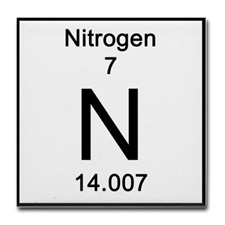

What does the 1.00794 stand for?
Hydrogen
atomic number
atomic mass
atomic explosion

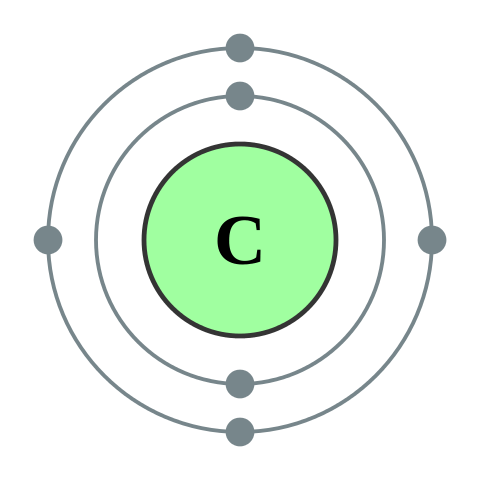
How many valence electrons does carbon have?
4
5
6
7
USE THE PERIODIC TABLE
How many valence electrons does sodium have?
1
2
3
4
USE THE PERIODIC TABLE
How many valence electrons does Phosphorus have?
31
5
15
4
USE THE PERIODIC TABLE
Find the element that has 3 Valence Electrons and 2 energy levels.
Magnesium - Mg
Lithium - Li
Aluminum - Al
Boron - B
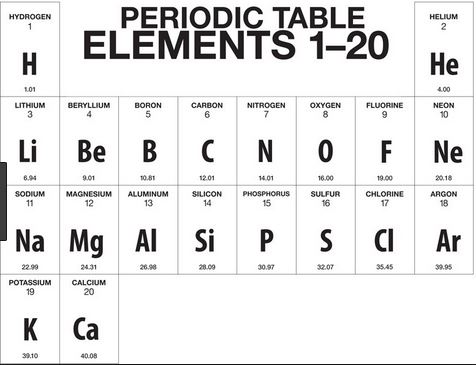
How many valence electrons does Helium Have?
1 Valence electron
2 Valence electron
3 Valence electron
4 Valence electron
5 Valence electron
How many valence electrons does Hydrogen Have?
1 Valence electron
2 Valence electron
3 Valence electron
4 Valence electron
5 Valence electron
How many valence electrons does Nitrogen Have?
1 Valence electron
2 Valence electron
3 Valence electron
4 Valence electron
5 Valence electron
All atoms are most stable with (or would "prefer") how many electrons in their valence shell?
1
2
8
18

