wayground logo

Free Printable Worksheets

NEW

Font size

S
M
L
XL
Worksheets

Big Bang Theory & Star Life Cycle Review

Total questions: 53

Worksheet time: 53mins

Name
Class
Date
1.

As galaxies move away from our galaxy

a shift on the electromagnetic spectrum is noticed. This phenomena is

called _____________.

a)

redshift

b)

blueshift

2.

How does Cosmic Microwave Background Radiation support the Big Bang Theory?

a)

Microwaves are found everywhere in the universe.

b)

Microwaves occurred at the time of the Big Bang

c)

Microwaves are useful in our everyday lives

3.

The Big Bang Theory explains the formation of the...

a)

Earth

b)

Sun

c)

Universe

d)

Solar System

4.
What does the Big Bang theory suggest?
a)
The universe was just there
b)
The Milky Way is the only solar system
c)
The universe is continually expanding
d)
The universe is collapsing in toward a single point
5.

Why is the light from distant galaxies red-shifted?

a)

They produce more red light than nearby galaxies

b)

They are moving away from us

c)

The longer wavelengths are filtered out more by dust

d)

They are moving toward us

6.
What were the original two elements in our universe?
a)
Lithium and Carbon
b)
Hydrogen and Neon
c)
Helium and Chlorine
d)
Hydrogen and Helium
7.

How is the "Big Bang" described?

a)

an explosion

b)

an expansion

c)

a contraction

8.
The three pieces of evidence for our current theory of the universe are:
a)
blueshift, CMB, moon landing.
b)
redshift, IBM, Andromeda galaxy.
c)
redshift, CMB, distribution of elements.
d)
doppler effect, light spectra, fusion.
9.
The CMB is:
a)
the remaining energy from the big bang.
b)
incredibly hot.
c)
visible to the human eye.
d)
only located in certain places in the universe.
10.
CMB stands for:
a)
Colorful Mystic Background Rehearsal.
b)
Cosmic Mini Butterfly Repellent.
c)
Cosmic Microwave Background Radiation.
d)
Cute Microwave Button Reversal.
11.
The Big Bang:
a)
is NOT an explosion in space.
b)
is an expansion OF space.
c)
is our best explanation for the beginning of the universe.
d)
All of the above.
12.

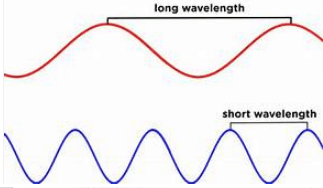
What happens to the wavelengths of energy if they are moving AWAY from a source?

a)

The waves stretch out and get longer.

b)

The waves compress and get shorter.

13.

Which description is considered most accurate regarding what actually happened during the Big Bang?

a)

Two galaxies collided causing an immense explosion as stars crashed into one another

b)

All of what would become the universe was concentrated in a single small point, or singularity, which rapidly expanded into what is now stars, planets, galaxies, matter, and energy.

c)

All matter emerged from a massive black hole at the center of the universe.

d)

Parts of the sun were ripped off by massive internal explosions and were thrown into space where they cooled to become other things, like plants, comets, and other galaxies.

14.

A galaxy showing blue shift is ___.

a)

very cold

b)

moving towards us

c)

dying

d)

about to supernova

15.

What instrument has allowed us to look deep into space to observe things far away that give us hints to the past?

a)

The Hubble telescope

b)

The Eiffel Tower

c)

Binkley's barometer

d)

The Smith Space Balloon

16.
The universe is expanding.  This means that:
a)
Galaxies are getting bigger.
b)
Atoms are getting bigger.
c)
The universe is creating more matter.
d)
The amount of space between galaxies is increasing.
17.

The "afterglow" or "relic" of the energy from the origin of the universe that we see today is called _________.

a)

cosmic background radiation

b)

sunlight

c)

doppler effect

d)

cosmic explosions

18.

The Universe is comprised of 74% _____________________.

a)

Oxygen

b)

Helium

c)

Hydrogen

d)

Nitrogen

19.

The Universe is comprised of 25% _____________________.

a)

Oxygen

b)

Helium

c)

Hydrogen

d)

Nitrogen

20.

The Big Bang Theory is the most widely accepted theory about the origin of the universe.

a)

true

b)

false

21.

Which description is considered most accurate regarding what actually happened during the Big Bang?

a)

Two galaxies collided causing an immense explosion as stars crashed into one another

b)

All of what would become the universe was concentrated in a single small point, or singularity, which rapidly expanded into what is now stars, planets, galaxies, matter, and energy.

c)

All matter emerged from a massive black hole at the center of the universe.

d)

Parts of the sun were ripped off by massive internal explosions and were thrown into space where they cooled to become other things, like plants, comets, and other galaxies.

22.

If something that makes light is moving away from you, it spreads the wavelengths of light out. This application of the Doppler effect is known as ___.

a)

blue shift

b)

green shift

c)

red shift

d)

black shift

23.

A date that is commonly accepted by Big Bang theorists for the Big Bang is ____ years ago.

a)

One hundred thousand

b)

Two hundred and fifty million

c)

Thirteen point seven billion

d)

Ten trillion

24.

Most distant galaxies show a red shift. This is considered evidence that the universe is ___.

a)

getting cooler

b)

expanding

c)

condensing into a small point

d)

swirling around

25.

A galaxy showing blue shift is ___.

a)

very cold

b)

moving towards us

c)

dying

d)

about to supernova

26.

Big Bang theorists believe that most matter should be complex, large atoms, like gold and plutonium.

a)

true

b)

false

27.

Observations of space indicate that most matter in the universe is ___.

a)

hydrogen, helium, and dark matter

b)

gold and plutonium

c)

oxygen and water vapor

d)

carbon

28.
A star forming nebula is...
a)
birthplace of stars
b)
made up of gas and dust
c)
contracts due to gravity to begin forming a star
d)
All are correct
29.
A protostar is the...
a)
end of the star's cycle
b)
beginning of the star's cycle
30.
Main sequence stars are...
a)
the majority of stars in the universe
b)
the stage when the star fuses Hydrogen into Helium
c)
neither is correct
d)
both are correct
31.
A supernova can cause a black hole...
a)
which is so dense that nothing can escape it's gravity, not even light.
b)
which pushes matter away from it.
c)
where only light escapes.
d)
which is actually a bright star.
32.
A supernova can also turn into a neutron star...
a)
when the star's core collapses and forms a dense mass of neutrons.
b)
where not even light can escape.
c)
and then it turns into a planet.
d)
and it does a little dance.
33.
A low mass main sequence star is...
a)
the size of our earth.
b)
150 times bigger than our sun.
c)
like our sun.
d)
so dense not even light can escape it.
34.
A low mass main sequence star expands into a red giant and...
a)
will grow more than 100 times it's original size.
b)
collapses into a black hole.
35.
The core of a red giant collapses and the outer layers of hydrogen, helium and other elements are ejected into a cloud called...
a)
a black hole.
b)
a planetary nebula.
c)
a neutron star.
d)
a super giant.
36.
As the core of the red giant collapses it condenses into a super bright and dense star called...
a)
a brown dwarf.
b)
a red super giant.
c)
a white dwarf.
d)
a black hole.
37.
At 10,000 degrees Celsius, hydrogen begins to change into helium and energy is released in a process called
a)
supernova
b)
pulsar
c)
nuclear fusion
d)
nuclear fission
38.
All stars begin their life in a
a)
Main Sequence
b)
Nebula
c)
Protostar
d)
Black Dwarf
39.
What are the final two stages of a medium mass star?
a)
white dwarf - black dwarf
b)
neutron star - black hole
c)
supernova - neutron star
d)
pulsar - neutron star
40.
The life cycles of stars are determined by their:
a)
mass (size)
b)
color
c)
distance from Earth
d)
luminosity
41.
Our sun is currently in what star stage?
a)
Protostar
b)
Nebula
c)
Main Sequence
d)
Red Giant
42.
______ is a force that causes dust particles to stick together in a nebula.
a)
nuclear fusion
b)
gravity
c)
hydrogen
d)
friction
43.
Most stars are made of which elements?
a)
Hydrogen only
b)
Hydrogen and Lithium
c)
Hydrogen and Sodium
d)
Hydrogen and Helium
44.
A gigantic explosion that causes the death of a large star is called
a)
pulsar
b)
red giant 
c)
supernova
d)
black hole
45.
A ________ is an object so dense with so much gravity that even light cannot escape.
a)
neutron star
b)
white dwarf
c)
blackhole
d)
black dwarf
46.
Which of the following list the correct order of the life cycle of massive stars?
a)
Nebula --> protostar --> main sequence --> red supergiant --> supernova --> blackhole
b)
Nebula --> protostar --> main sequence --> red giant --> planetary nebula --> white dwarf --> black dwarf
c)
Nebula --> protostar --> main sequence --> supernova --> red giant --> blackhole
d)
Nebula --> protostar --> blackhole --> red supergiant --> supernova --> main sequence
47.

star left at the core of a planetary nebula

a)

white dwarf

b)

black dwarf

c)

protostar

d)

supernova

48.

a red super giant explodes

a)

nebula

b)

neutron star

c)

black hole

d)

supernova

49.

what a medium-mass star becomes at the end of its life

a)

white dwarf

b)

black dwarf

c)

protostar

d)

black hole

50.

a large cloud of gas or dust in space

a)

supernova

b)

neutron star

c)

nebula

d)

black hole

51.

exerts such a strong gravitational pull that no light escapes

a)

black hole

b)

neutron star

c)

nebula

d)

black dwarf

52.

the earliest stage of a star's life

a)

protostar

b)

neutron star

c)

main sequence star

d)

super star

53.

the remains of a high mass star

a)

supernova

b)

black dwarf

c)

neutron star

d)

white dwarf