
 Worksheets
Chapter 19 Review
Total questions: 57
Worksheet time: 1hrs 7mins
2H2 + O2 --> 2H2O
2H2 + O2 --> 2H2O
3Cr(MnO4)6
Example: H2
Ex: 2H2 + O2 --> 2H2O
2C2H2 + 5O2 --> 4CO2 + 2H2O
4Fe + 3O2 --> 2Fe2O3
NaHCO3 --> Na2CO3 + H2O + CO2
Balance this equation
_Al +_HCl --> _H2 +_AlCl3
2,6,3,2
it's already balanced
4,12,3,4
2,1,4,5
Balance the following equation:
___ Mg+ ___ O2→___ MgO
1, 1, 3
2, 1, 2
1, 2, 1
2, 2, 2
Balance the following equation:
___ H2+ ___ O2→___ H2O
1, 1, 3
2, 2, 2
1, 2, 1
2,1, 2
Balance the following equation:
___ SeCl6+ ___ O2→___ SeO2+____Cl2
1, 1, 1, 3
2, 1, 2, 1
1, 2, 1, 2
2, 2, 2, 4
List four factors that affects the rate of a reaction
temperature
concentration
surface area
volume
catalysts
A temperature increase causes the particles ......
to slow down
move faster
collide higher
in the right order
How does a catalyst work in speeding up a reaction?
By lowering the activation energy or reaction
by giving them more energy
by making them more available
Why does a higher concentration increase the rate of reaction?
it increases the amount of reactants
it lowers the activation energy
it increases the energy of particle collisions
it increases the frequency of particle collisions
Why does a higher temperature increase the rate of a reaction?
it increases both the frequency and energy of particle collisions
it only increases the frequency of particle collisions
it only increases the energy of particle collisions
it reduces the activation energy of the reaction
The ______________is required to break the bonds of the reactants.
Carbonic energy
Activation energy
Plutonic energy
Energi Gaib
As the frequency of ______________ increases, the rate of reaction increases.
Hint: frequency means how often
Time
Reactions
Collisions
Reactants
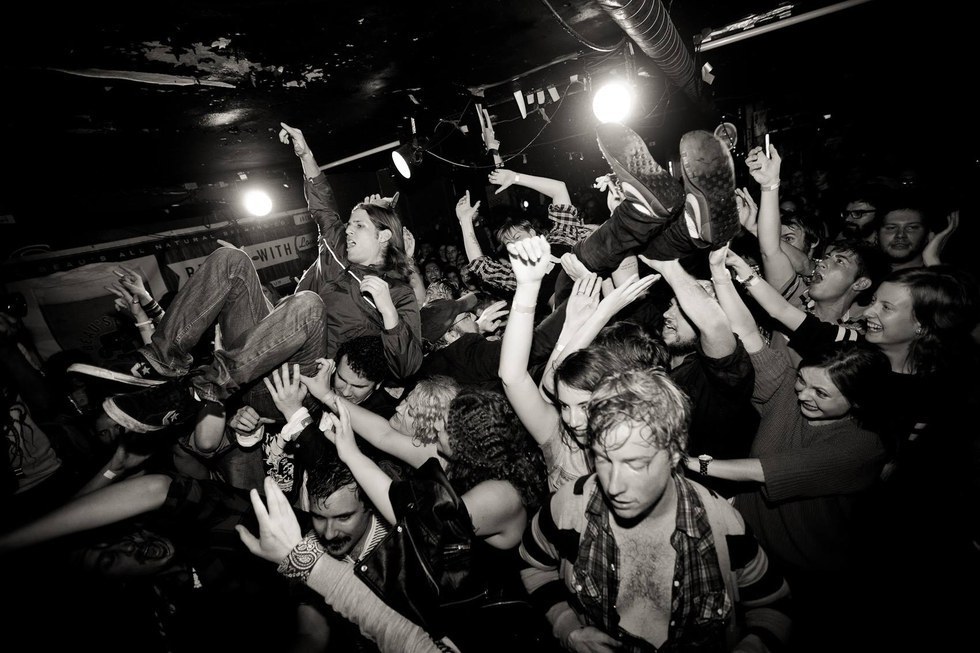
You add more people into an enclosed space in hope for more collisions. You have increased:
temperature
concentration
pressure
catalyst

What is the measure of how fast molecules are moving?
Speedometer
Volume
Temperature
Thermometer

In EXOTHERMIC reactions, energy is _____ from the reaction to the surroundings.
Absorbed
Released
Eliminated
Evaporated

In ENDOTHERMIC reactions, energy is _____ by the reaction system from the surroundings.
Absorbed
Released
Eliminated
Obliterated

What usually happens to TEMPERATURE in an ENDOthermic reaction?
Increases
Decreases
Stays the same

Temperature usually _____ in EXOthermic reactions.
Stays the same
Increases
Decreases

Photosynthesis is an _____ reaction.
EXOthermic
ENDOthermic

Cooking and baking are _____ reactions.
EXOthermic
ENDOthermic

The starting temperature of a reaction was 21 degrees Celsius and the ending temperature was 44 degrees Celsius. What type of reaction occurred?
EXOthermic
ENDOthermic

If a chemical reaction produces light or sound, it is likely a _____ reaction.
EXOthermic
ENDOthermic
_Al +_HCl → _H2 +_AlCl3
_CH4 + _O2 → _CO2 + _H2O
_Mg + _Cl2 → _MgCl2
Zn + H2S → ZnS + H2
FeS + HCl → H2S + FeCl2
Fe + O2 → Fe2O3
In a chemical equation, is it true that -
the reactant side and product side can have different numbers of atoms for each element
there can be different elements on the reactant side and the product side
the reaction must always take place in a closed system in order for it to work
the coefficients indicate the number of molecules of each reactant used and the number of molecules of each product made
Classify:
2KClO3 ---->2KCl + 3Os
synthesis reaction
decomposition reaction
single replacement reaction
double replacement reaction
Classify:
2HCl + 2NaOH -----> NaCl + H2O
synthesis reaction
decomposition reaction
single replacement reaction
double replacement reaction
Reactants combine to produce one product.
single replacement
double replacement
synthesis
combustion
One reactant breaks down to produce simpler substances.
synthesis reaction
decomposition reaction
single replacement reaction
double replacement reaction
One element replaces another in a compound, if it is more reactive.
synthesis reaction
decomposition reaction
single replacement reaction
double replacement reaction
Classify:
2 NaOH + H2CO3 --> Na2CO3 + 2 H2O
combustion reaction
decomposition reaction
single replacement reaction
neutralization reaction
Classify the reaction. Check all that apply.
3Li + FeCl3 → 3LiCl + Fe
Synthesis
Decomposition
Single-Replacement
Double-Replacement
Combustion
Classify the reaction. Check all that apply.
2Al2O3 → 4Al + 3O2
Synthesis
Decomposition
Single-Replacement
Combustion
Double Replacement
Classify the reaction. Check all that apply.
3Ti + 2N2 → Ti3N4
Synthesis
Precipitation
Single-Replacement
Double-Replacement
Decomposition

