
NEW
Font size
 Worksheets
Cell Cycle Review
Total questions: 59
Worksheet time: 59mins

In what phase of the cell cycle does the nucleus disappear?
Prophase
Metaphase
Anaphase
Telophase
In what phase of the cell cycle does the nucleus re-appear?
Prophase
Metaphase
Anaphase
Telophase
In what phase of the cell cycle do the spindle fibers attach to the chromosomes?
Prophase
Metaphase
Anaphase
Telophase
In what phase of the cell cycle do the chromosomes line up in the middle of the cell?
Prophase
Metaphase
Anaphase
Telophase
In what phase of the cell cycle do the chromosomes get pulled apart from each other?
Prophase
Metaphase
Anaphase
Telophase

What phase is pictured?
telophase
anaphase
prophase
s phase

What phase is shown here?
prophase
metaphase
anaphase
telophase

What phase is shown here?
prophase
metaphase
anaphase
telophase

What phase is shown here?
prophase
metaphase
telophase
cytokinesis

What phase is shown here?
G1
S
Prophase
Anaphase


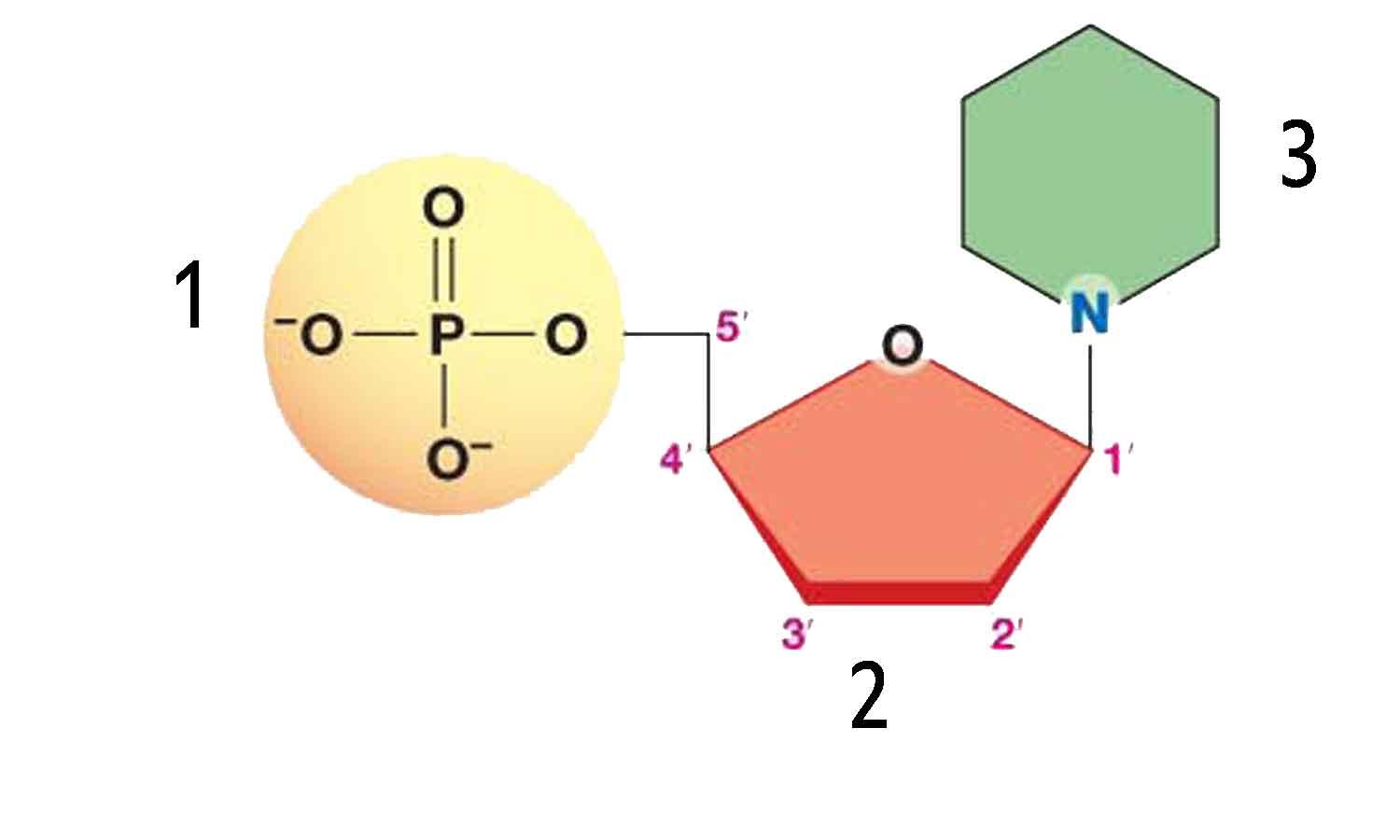
3) Nitrogen Base
2) Phosphate
3) Nitrogen Base
2) Ribose Sugar
3) Nitrogen Base
2) Deoxyribose Sugar
3) Nitrogen Base

When cells lose their ability to regulate the cell cycle, they can divide at an accelerated rate and form a mass of cells. This mass of cells is referred to as —
a tumor
an embryo
a gland
an organ
Which table shows two steps of DNA replication?


The karyotype, or chromosomal profile, for humans is shown. A karyotype can be used to investigate genetic disorders.
The chemical colchicine is used in the production of karyotypes. Colchicine prevents spindle fibers from forming during the cell cycle.
What is a result of preventing spindle fibers from forming?
The cell cycle skips G0 phase and repeats G1 phase.
Mitotic division is skipped, and the cell cycle proceeds to cytokinesis.
Mitotic division stops in metaphase and cannot proceed to anaphase.
The cell cycle skips S phase and proceeds to G2 phase.
Cells pass through a checkpoint before entering mitosis. Ideally, if DNA damage is 2 detected, the cells do not enter mitosis until the damage is repaired. Why is DNA damage repaired before cells enter mitosis?
So that another round of DNA synthesis does not have to take place
So that the chromosomes can align at the metaphase plate during mitosis
So that the cytoplasm can be divided equally between the two daughter cells
So that healthy daughter cells are produced, allowing the organism to continue growing
Scientists can bioengineer skin in a laboratory to treat severe burns and other types of skin injuries. This bioengineered tissue is grown from living cells. The cellular process that enables the cells to grow and develop into tissue is —
conjugation
meiosis
budding
mitosis

A segment of DNA is represented in the illustration.
How is information for a specific protein carried on the DNA molecule?
As a sequence of nucleotides
In the double-helix shape of the condensed chromosome
In the ratio of adenines to thymines
As a pattern of phosphates and sugars

The diagram shows cells in different phases of mitosis. A student is trying to find a cell in a particular phase of mitosis. The student is looking for evidence that spindle fibers are separating the chromosomes to ensure that each new nucleus has one copy of each chromosome.
Which cell is in the phase of mitosis that the student is searching for?
Cell 1
Cell 2
Cell 3
Cell 4
The sequence of nitrogenous bases in DNA varies widely. The sequence of the bases in DNA is most important for which of the following?
Providing the instructions for the traits of an organism
Preventing mutations from occurring during DNA replication
Allowing the DNA to have the shape necessary for replication
Helping form the sugar-phosphate backbone of DNA molecules

The model represents the change in the DNA content of a cell during the cell cycle.
Which part of the model represents the S phase?
I
II
III
IV

The diagram below represents the cell cycle.
When cells leave the cell cycle, they exit during G1 phase and then enter G0 phase, a resting period. Most normal cells can leave G0 phase and reenter the cell cycle at G1 phase before entering S phase. Cancer cells are different because they cannot enter G0 phase and are likely
to do which of the following?
Fail to complete S phase
Mutate during G1 phase
Repeat the cell cycle continuously
Die after completing mitosis
One strand in a molecule of DNA contains the sequence below.
ATTGCGTA
Which sequence is the complementary strand?
ATTGCGTA
UAACGCAU
TAACGCAT
GCCTATCG
Atherosclerosis is a disease that obstructs blood flow and, therefore, oxygen supply to target organs. A major component of atherosclerosis is the excessive reproduction of smooth muscle cells of the blood vessels. Certain drugs may have the potential to reverse or prevent the unregulated reproduction of the diseased blood-vessel cells. Which of these processes is the most likely target of these drugs?
Cell division
Erythroblast differentiation
DNA transcription
Cellular respiration

A photomicrograph of onion root tip cells during mitosis is shown below.
Which phase of mitosis is occurring in the cell indicated by the arrow?
Prophase
Metaphase
Anaphase
Telophase
Cells typically respond to DNA damage in three ways: by ceasing to grow and divide until the damage is repaired, by permanently ceasing to grow and divide, or by dying. In 2010 a group of scientists reported that a certain kind of immune reaction can cause DNA damage that leads to a fourth response. DNA damage can turn off genes involved in cell-signaling pathways. Turning off these genes can cause less-mature cells to divide too rapidly, often leading to the development of-
tumors
allergies
hemophilia
cardiovascular disease

Which part of the cell cycle controls the repair of damaged DNA which, if unsuccessful, could eventually result in the abnormal cell division that typifies some types of cancer?
G1
S
G2
M
Which of these must occur during S phase of the cell cycle so that two daughter cells can be produced during M phase?
The DNA must be replicated.
The chromosomes must be joined.
The cytoplasm must be separated.
The cell membrane must be expanded.

Checkpoints occur between the stages of the cell cycle. If a cell does not meet certain criteria at the end of a stage, it will not move to the next stage.
Which of these occurs just before the cell enters the G2 stage of the cell cycle?
The nuclear membrane disintegrates.
DNA replicates.
Centrioles form.
The nucleolus divides.

This model of the cell cycle includes two arrows that each represent a process in the cycle.
What do the two arrows represent?
Arrow 1 represents prophase, and Arrow 2 represents interphase.
Arrow 1 represents mitosis, and Arrow 2 represents meiosis.
Arrow 1 represents interphase, and Arrow 2 represents mitosis.
Arrow 1 represents meiosis, and Arrow 2 represents prophase.
The activities in the cell cycle occur during specific phases. In which phase of the cell cycle is DNA replicated?
Mitosis
G1 Phase
G2 Phase
S Phase
Telophase is a stage of a cellular process that begins after the chromosomes have moved to opposite poles of the cell. During which cellular process does telophase occur?
Translation
Interphase
Transcription
Mitosis

Part of the cell cycle is shown in this simplified model.
This part of the cell cycle is best described as the process that —
duplicates the DNA
completes cell division
maintains genetic homeostasis
synthesizes new molecules
People who have leukemia, a cancer that affects white blood cells, are often given Cytarabine. This drug inhibits the synthesis of DNA. Which phase of the cell cycle is most affected by Cytarabine?
G1 phase
S phase
G2 phase
M phase
DNA damage is detected during a G2 checkpoint before entering mitosis. The damage is repaired first and then they enter mitosis. Why is DNA damage repaired before cells enter mitosis?
So that the cytoplasm can be divided equally between the two daughter cells
So that healthy daughter cells are produced, allowing the organism to continue to grow
So that another round of DNA synthesis does not have to take place
So that the chromosomes can align at the metaphase plate during mitosis
Oncogenes are mutated forms of genes that can transform a cell into a tumor cell. How do oncogenes lead to tumor formation?
Somatic cell growth is inhibited
Antibody activity is unregulated
Cell division is unregulated
ATP production is inhibited

