
 Worksheets
Ecology Practice- Remote
Total questions: 60
Worksheet time: 37mins
Name
Class
Date
1.
An organism that produces its own food supply from inorganic compounds is called a(an)
a)
heterotroph
b)
consumer
c)
detritivore
d)
autotroph
2.
What is the original source of almost all energy in most ecosystems?
a)
carbohydrates
b)
sunlight
c)
water
d)
carbon
3.
What is the term for each step in the transfer of energy and matter within a biological community?
a)
energy path
b)
food web
c)
trophic level
d)
food pyramid
4.
Autotrophs make up the _______ level in all ecosystems.
a)
First
b)
Second
c)
Third
d)
Fourth
5.

What does a food web represent?
a)
All connections of energy flow throughout all organisms in a habitat.
b)
The specific ways an organism eats.
c)
A single pathway or energy flow between organisms.
d)
How carnivores get their food.
6.

The image provided is an example of a(n):
a)
Producer
b)
Autotroph
c)
Consumer
d)
Insect
7.
The amount of energy that usually transfers from one trophic level to the next...
a)
10%
b)
20%
c)
80%
d)
50%
8.
An illustration that uses arrows to show the directions in which matter and energy can pass through one set of organisms in an ecosystem.
a)
Food chain
b)
Food web
c)
Energy Pyramid
d)
Succession Map
9.
The nonliving aspects of an ecosystem.
a)
Abiotic factors
b)
Biotic factors
c)
Lichen
d)
Climax Community
10.
The living portions of the ecosystem.
a)
Biotic factors
b)
Abiotic factors
c)
Soil
d)
Weather
11.
A place where an organism lives.
a)
Terrain
b)
Habitat
c)
Community
d)
Population
12.
A collection of organisms that make up a community as well as all of the nonliving aspects of the environment.
a)
Population
b)
Community
c)
Habitat
d)
Ecosystem
13.
Organisms that feed on both living producers and other consumers.
a)
Carnivores
b)
Omnivores
c)
Herbivores
d)
Detritivores
14.
The general name for organisms like bacteria and fungi that breakdown organic matter.
a)
Producers
b)
Decomposers
c)
Detritivores
d)
Carnivores
15.

In this food chain, who is the secondary consumer?
a)
grass
b)
mouse
c)
snake
d)
hawk
16.

In this aquatic food chain, what do you call the Mahi Mahi?
a)
primary consumer
b)
secondary consumer
c)
tertiary consumer
d)
quaternary consumer
17.
What do you call an organism that only eats plant matter and things that plants produce?
a)
vegan
b)
vegetarian
c)
detritivore
d)
carnivore
18.
A graphic illustration that shows each trophic level and the amount of useable energy contained within.
a)
Pyramid of Numbers
b)
Pyramid of Food
c)
Pyramid of Energy
d)
Pyramid of Biomass
19.
An organism at the second trophic level on a food pyramid would be ______?
a)
Top carnivore
b)
Producer
c)
Herbivore
d)
Carnivore
20.
Organisms that can capture energy from inorganic, nonliving sources.
a)
Producers
b)
Consumers
c)
Detritivores
d)
Carnivores
21.
A collection of organisms that belong to different populations but all live in the same area and interact with one another.
a)
Population
b)
Organism
c)
Community
d)
Biosphere
22.
Which set contains only abiotic examples?
a)
worms, scavengers
b)
water temperature, amount of rainfall
c)
producers, soil
d)
humidity, consumers
23.
Which of the following would be the definition of a detritivore?
a)
Animals that eat insects.
b)
Organisms that feed on rocks, recycling the nutrients back into the ground.
c)
Organisms that eat only pants
d)
Things that feed on dead organisms, recycling the nutrients back into the ground.
24.

The image provided is an example of a(n):
a)
Carnivore
b)
Herbivore
c)
Producer
d)
Autotroph
25.

This image represents a biome with very little rainfall and a large difference between daytime and nighttime temperatures.
a)
Prairie
b)
Forest
c)
Tundra
d)
Desert
26.
The ozone layer protects us from
a)
UV rays
b)
CFCs
c)
Increased atmospheric heat
d)
Decreased atmospheric heat
27.
4. Air pollution can be moved around by wind from place to place.
a)
True
b)
False
28.
What causes Global Warming?
a)
The Cooling of the Earth
b)
Carbon Dioxide being released
c)
All of the above
d)
People dieing
29.
Loss of sea ice by melting in the Arctic Ocean _____________.
a)
will result in cooler temperatures in the Arctic
b)
will result in sea-levels rising
c)
Will have no effect on ecosystems
d)
None of the above
30.
Habitat destruction
a)
The loss of a natural habitat.
b)
A consumer that obtains energy by eating plants.
c)
An autotroph creating food
d)
Loss of a job
31.
Coastal erosion can be caused by
a)
climate change
b)
human expansion
c)
natural disasters
d)
all of the above
32.
Acid rain is affecting the NC mountains by
a)
changes in the soil pH
b)
decreasing plant life
c)
both of the above
33.
something that slows the growth rate of a population
a)
carrying capacity
b)
biotic potential
c)
limiting factor
d)
community
34.
limiting factor that relies on the number of organisms in a given area
a)
density-dependent
b)
density-independent
c)
biotic potential
d)
carrying capacity
35.
When organisms move out of the population, this is known as
a)
emigration
b)
abandonment
c)
immigration
d)
succession
36.
As resources in a population become less available, population growth
a)
declines rapidly
b)
increases rapidly
c)
undergoes exponential growth
d)
reaches carrying capacity
37.
If a population grows larger than the carrying capacity of the environment, the
a)
death rate may rise
b)
birth rate may rise
c)
death rate must fall
d)
birth rate must fall
38.

What type of graph is this?
a)
exponential growth
b)
logistical growth
39.
The number of organisms in a population which die each year
a)
Death Rate
b)
Birth Rate
c)
Immigration
d)
Emigration
40.
The amount of organisms born into a population
a)
Birth Rate
b)
Death Rate
c)
Immigration
d)
Emigration
41.
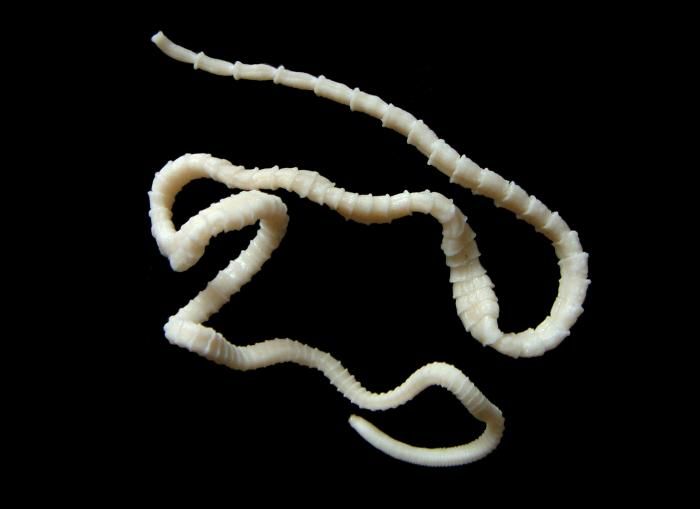
A tapeworm and a cat have this type of relationship.
a)
mutualism
b)
parasitism
c)
commensalism
d)
competition
42.
Which symbols best describe parasitism?
a)
+,+
b)
+,-
c)
+,0
d)
-,0
43.
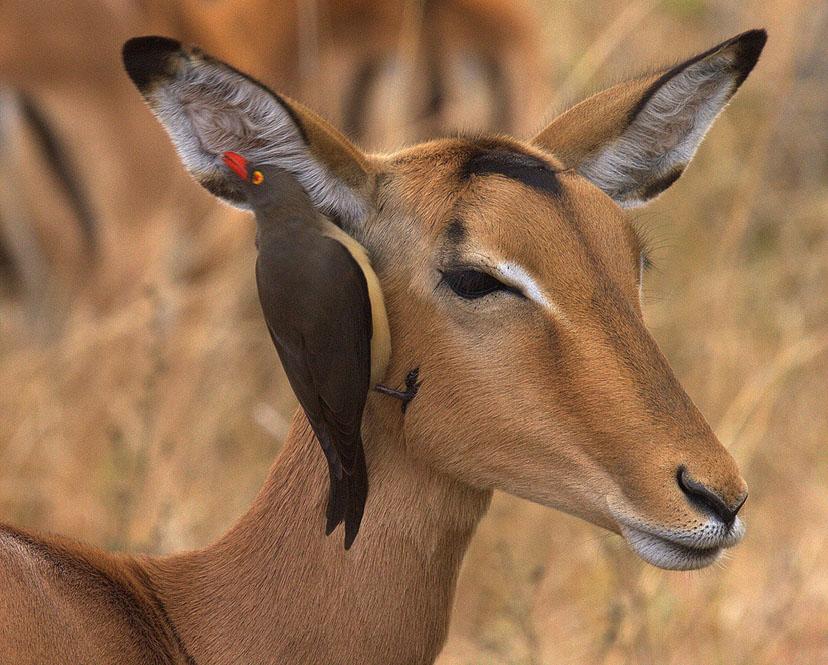
Red-billed oxpeckers are birds that often feed on parasites that infest impala. This is an example of _______.
a)
commensalism
b)
mutualism
c)
neutralism
d)
competition
44.
What factor would cause animals of the same species to begin competing with one another?
a)
increase in precipitation
b)
the presence of decomposers
c)
the introduction of a new food source
d)
limited supply of resources
45.
The movement of water between the oceans, atmosphere, land, and living things
a)
Nitrogen cycle
b)
Carbon cycle
c)
Water cycle
d)
Air cycle
46.

Which cycle is indicated in the diagram?
a)
Carbon cycle
b)
Water cycle
c)
Nitrogen cycle
47.

Which cycle is indicated in the diagram?
a)
Nitrogen Cycle
b)
Water cycle
c)
Carbon cycle
48.
What is the most prevalent gas (most abundant) in the atmosphere?
a)
Nitrogen
b)
Carbon
c)
Oxygen
d)
Hydrogen
49.
The main human activity that releases greenhouse gases is
a)
using bottled water
b)
burning fossil fuels
c)
texting on cellphones
d)
eating meat
50.
Things you can do to help decrease global warming include:
a)
Eat more ice cream.
b)
Keep your freezer door open.
c)
Keep your air conditioner on high.
d)
Turn off your lights when you’re not using them.
51.

If an animal migrates then they
a)
find a hole to sleep in
b)
change the color of their fur
c)
travel to a warmer location
d)
flap their wings
52.
Animals that adapt...
a)
Stay the same
b)
Change certain characteristics to survive
c)
Bake cookies
d)
fight for resources
53.
How do an animal's physical characteristics help them?
a)
to move
b)
to obtain resources
c)
to defend themselves
d)
All of the above
54.
Which is an example of a learned behavior?
a)
A bear cub practices catching salmon the way its mother does
b)
A baby gazelle rises to its feet within a few minutes of its birth
c)
A baby kangaroo climbs into its mother's pouch as soon as it is born
d)
An adult salmon returns to its freshwater stream when it is time to reproduce
55.
In an experiment, Pavlov caused a dog to salivate when it heard the ring of a bell. Which type of learning was demonstrated by the dog?
a)
habituation
b)
imprinting
c)
conditioning
d)
trial and error
56.
What is a behavior in which newborn animals recognize and follow the first moving object they see?
a)
courtship
b)
mimicry
c)
imprinting
d)
conditioning
57.
Which of the following terms is another term for innate?
a)
instinct
b)
learned
c)
trial and error
d)
copying
58.
When the plant responds to water
a)
Phototropism
b)
Gravitropism
c)
Hydrotropism
d)
Thigmotropism
59.

What kind of response is this?
a)
- Gravitropism
b)
+ Gravitropism
c)
- Hydrotropism
d)
+ Hydrotropism
60.

This picture would represent which type of tropism?
a)
+ Phototropism
b)
+ Geotropism
c)
- Hydrotropism
d)
- Thigmotropism
100 %

