
 Worksheets
PRACTICE Bonding / Nomenclature Test
Total questions: 51
Worksheet time: 43mins
What is a valence electron?
The sum of neutrons and protons.
electrons in the outer shell
A type of bond.
A popular compound.
Ionic bonds are between...
Metal and Non-metal
Non-metal and Non-metal
Metal and Metal
not possible
How are ionic bonds formed?
Metals transfer of electrons
Sharing of electrons
never heard of them
Why do elements bond together?
To be friends
To create a new element
To become stable
Why do all bonds form?
so the number of protons equals the number of electrons
so an atom can become unstable
to fill the outermost energy level
so they feel better
How many Aluminum atoms are in Al2O3?
3
5
2
1
Metals transfer electrons to the nonmetal
Nonmetals share electrons
metallic elements share all of the electrons
Write the correct formula for Sodium Chloride.
SC
SCl
NaCl
NaCl2
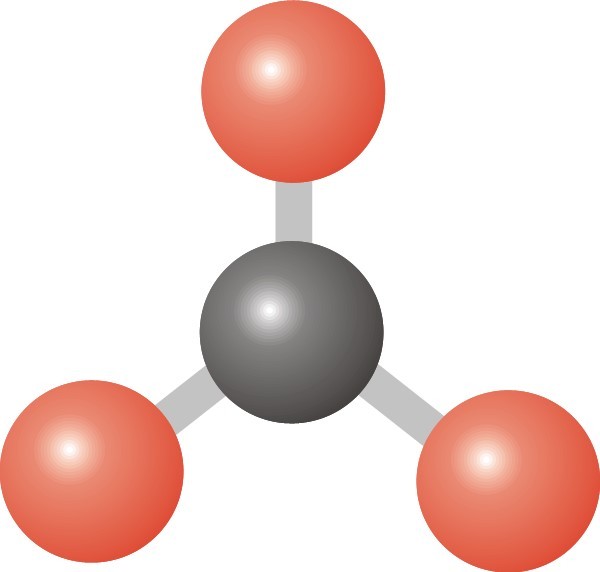
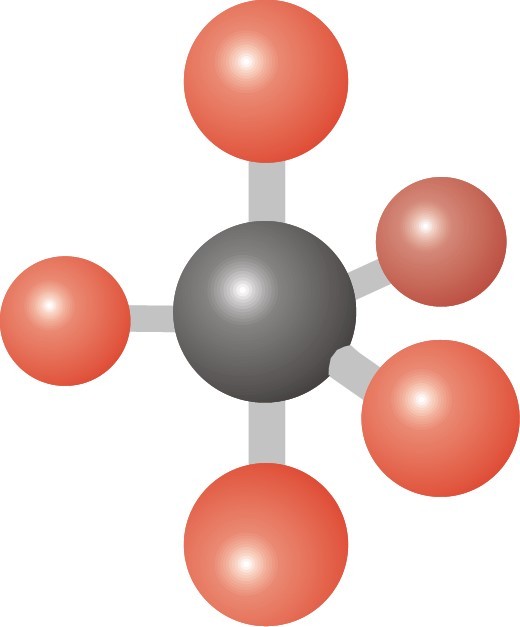
what is the name of CCl4?
carbon tetrachloride
monocarbon tetrachloride
tetracarbon monochloride
carbon chloride
What is the name of the compound P2O5
Pentaphosphorus dioxide
Phoshphide dioxide
Diphosphorus pentoxide
H2O
Dihydrogen Monoxide
Hydrogen Oxide
Hydrogen Monoxide
Pure Water
Zn3P2
Zinc Phosphide
Zinc (III) Phosphide
Trizinc Diphosphide
Zinc Phosphate
What is the formula for lead (II) carbonate?
PbCO3
Pb2CO3
Pb(CO3)2
Pb(CO)4
What is the formula for aluminum sulfite?
Al3S2
AlSO4
Al3(SO4)2
Al2(SO3)3
What is the formula for tin (II) chromate
Sn2(CrO4)4
Sn(CrO4)2
Sn4(CrO4)2
SnCrO4
Name the following ionic compound: CaSO4*6H2O
calcium sulfate hexahydrate
calcium tetrasulfate hexahydrate
calcium sulfate heptahydrate
carbon sulfuroxide hexahydrate
Na2CO3 · 10H2O is known as
sodium carbonate hydroxide
sodium carbonate hydrate
sodium carbonate decahydrate
None of the above
The proper name for this compound, CuSO4 * 5H2O is ....
copper sulfate pentahydrate
copper sulfur tetroxide penthydrate
copper I sulfate pentahydrate
copper II sulfate pentahydrate
What is the correct chemical formula for barium hydroxide octahydrate?
Ba(OH)2 . 8H2O
Ba(OH)2 . H2O
8Ba(OH)2 . H2O
Ba . 8(OH)2
Which of the following is NOT formed by a covalent bond?
K2O
H2O
I2
CO2

Match the following to form true statements:
When solid, ionic compounds
cannot conduct electricity
When melted ionic compounds
can conduct electricity
Ionic compounds have
high melting and high boiling points
There are many strong bonds
between ions in an ionic compound.
Elements in group 1 of the periodic table form ions
with a charge of 1+
In an ionic bond, electrons are (a) from the (b) to the (c) . Ionic bonds are (d) because of the big difference in electronegativity.
If an atom gains an electron, it becomes a(n) (a) which is (b) charged. If an atom loses an electron, it becomes a(n) (c) which is (d) charged.
What property is describing an ionic compound?
shares electrons
high melting point
weak bonds
made up of nonmetals.
If a substance has a low melting point, it most likely has what type of bond?
ionic
covalent
metallic
Generally low melting and boiling points
Ionic compounds
Covalent compounds
Generally high melting & boiling points
Ionic compounds
Covalent compounds
Poor electrical conductivity
Ionic compounds
Covalent compounds

