wayground logo

Free Printable Worksheets

NEW

Font size

S
M
L
XL
Worksheets

First Semester Review

Total questions: 60

Worksheet time: 41mins

Name
Class
Date
1.

In a lab, the hypothesis is?

a)

conclusion

b)

An estimated guess

c)

a theory

d)

none of the above

2.
Independent Variable (IV) deals with 
a)
The Results
b)
The change in the lab
c)
The constants in the lab
3.
The Dependent variable
a)
Is the results
b)
The change
c)
The constant
4.
The dependent variable is on which axis?
a)
X
b)
Y
c)
no axis
5.

Which one is a good hypothesis?

a)

If we add more soap to the mixture, then the mixture will bubble over.

b)

We'll add more soap to the mixture, then it will bubble over.

c)

If we add more soap to the mixture, the mixture will bubble over.

6.
What type of graph is this?
a)
Bar Graph
b)
Line Plot
c)
Pictograph
d)
Tally Chart
7.
The type of variable that you change or manipulate in an experiment.  It is what you are testing.
a)
Independent
b)
Dependent
c)
Control
8.
The type of variable that responds to the experiment and is what you measure to determine if your hypothesis is true.
a)
Independent
b)
Dependent
c)
Control
9.
The parts of the experiment that must be kept the same.
a)
Constants
b)
independent
c)
Dependent
10.
If I water the plant more often, then it will grow taller.  Name the independent variable.
a)
The height of the plant
b)
The size of the pot
c)
The amount of water
d)
The amount of light.
11.
Which of these is not an observation.
a)
There are footprints.
b)
The person was dizzy.
c)
The footprints are black.
d)
There are dots.
12.
If I water the plant more often, then it will grow taller.  Name the dependent variable.
a)
The amount of water.
b)
The amount of soil.
c)
The height of the plant.
d)
The amount of water.
13.
True or False: Long hair MUST be tied back during a laboratory investigation.
a)
True
b)
False
14.
True or False: The wearing of flip flops and other open toed shoes are acceptable during a laboratory investigation during the hot summer months.
a)
True
b)
False
15.
If you spill or break something during an experiment, what is the FIRST thing you should do?
a)
Tell the teacher.
b)
Clean it up. 
c)
Cover it with a paper towel.
d)
Leave it for someone else.
16.

During lab, what do you do first?

a)

read all directions

b)

wash your hands

c)

gather your materials

d)

get the fire extinguisher

17.
When is it OK to eat or drink in the lab?
a)
Always
b)
Never
18.

What should you do if you break glass in the lab?

a)

Tell the teacher.

b)

Sweep up the glass.

c)

Pick up the glass with your hands.

d)

Ignore it; the teacher will clean it up when she sees it later.

19.
Every living organism is made up of one or more cells
a)
True
b)
False
20.

What type of cell lacks a nucleus?

a)

eukaryotic

b)

prokaryotic

c)

human

d)

animal

21.

A cell in which the genetic material is enclosed within a nucleus is a

a)

eukaryotic cell

b)

prokaryotic cell

c)

human cell

d)

animal cell

22.

Many celled organisms are called

a)

unicellular

b)

multicellular

c)

bicellular

d)

tricellular

23.

Single celled organisms are called

a)

unicellular

b)

multicellular

c)

bicellular

d)

tricellular

24.

Which of the following statements is part of the cell theory?

a)

All living things are made up of one or more cells.

b)

Cells are the basic units of living things.

c)

All cells come from pre-existing cells.

d)

All of these

25.

According to the information in the given chart, what type of cell is cell X?

a)

bacteria cell

b)

plant cell

c)

animal cell

d)

prokaryotic cell

26.

Ian is looking at a cell using a microscope. He sees a nucleus and a large vacuole in the center of a cell. What type of cell is he most likely looking at?

a)

animal cell

b)

plant cell

c)

blood cell

d)

human cell

27.

Select the group of organelles that is common to both plant cells and animal cells.

a)

cytoplasm, mitochondria, cell wall, nucleus

b)

ribosomes, cell membrane, mitochondria, cytoplasm

c)

nucleus, cytoplasm, ribosomes, chloroplasts

28.

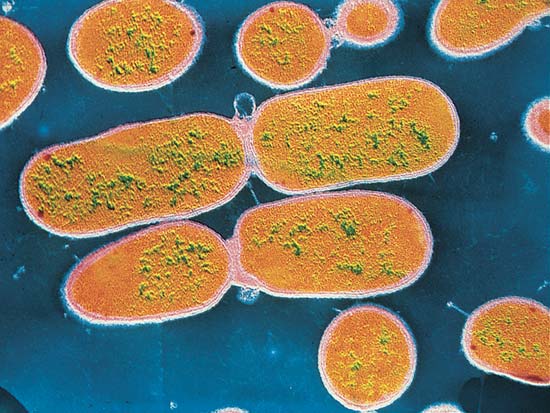
These are

a)

plant cells

b)

animal cells

c)

bacteria cells

29.

These are

a)

plant cells

b)

animal cells

c)

bacteria cells

30.

Which of the following is true about cells?

a)

Cells have specialized components that perform different, specific functions.

b)

A cell’s components are all identical and perform the same function.

c)

Cells have specialized components that all perform the same functions.

31.

Which of the following statements is true?

a)

All multicellular organisms have skeletal systems.

b)

All multicellular organisms have specialized cells.

c)

All multicellular organisms have circulatory systems.

d)

All of these

32.
What is heredity?
a)
A kind of genetic disorder
b)
The way DNA divides
c)
A trait you inherit from your parents
d)
The passing down of traits from parents to children
33.
What is the relationship between DNA and chromosomes?
a)
Chromosomes are made of DNA
b)
DNA is made of chromosomes
c)
DNA and chromosomes are the same thing.
d)
All of the above are correct
34.
How many pairs of chromosomes exist in each of your cells?
a)
10
b)
12
c)
23
d)
46
35.
Why are your chromosomes arranged in pairs?
a)
Scientists have no idea
b)
Because you get one from your mom and one from your dad
c)
Because pairs can divide easier
d)
Because DNA is awesome
36.
Put in order smallest to largest:
a)
Chromosome - DNA - Gene
b)
Gene - DNA - Chromosome 
c)
DNA - Gene  Chromosome
d)
Chromosome - Gene  - DNA
37.
Which is true about DNA?
a)
Only animals have DNA in their cells
b)
DNA research is simple and quick
c)
DNA contains many genes
d)
None of the above are true.
38.
Which is true about DNA?
a)
Only animals have DNA in their cells
b)
DNA research is simple and quick
c)
DNA contains many genes
d)
None of the above are true.
39.

Genotype or Phenotype: ff

a)

Genotype

b)

Phenotype

40.

Genotype or Phenotype: Black hair

a)

Phenotype

b)

Genotype

41.

Homozygous or Heterozygous: ff

a)

Homozygous

b)

Heterozygous

42.

Homozygous or Heterozygous: Ff

a)

Homozygous

b)

Heterozygous

43.

A mom with the heterozygous gene for Widows peak and a father with the heterozygous gene for Widows peak: odds their baby HAS a widow's peak?

a)

0%

b)

25%

c)

75%

d)

100%

44.
How many parents does asexual reproduction involve?
a)
one 
b)
two
c)
three
d)
four
45.
The offspring from asexually reproduced organisms are?
a)
Different than their parents
b)
Identical to parents
c)
Like a combination from both parents
d)
A different species
46.
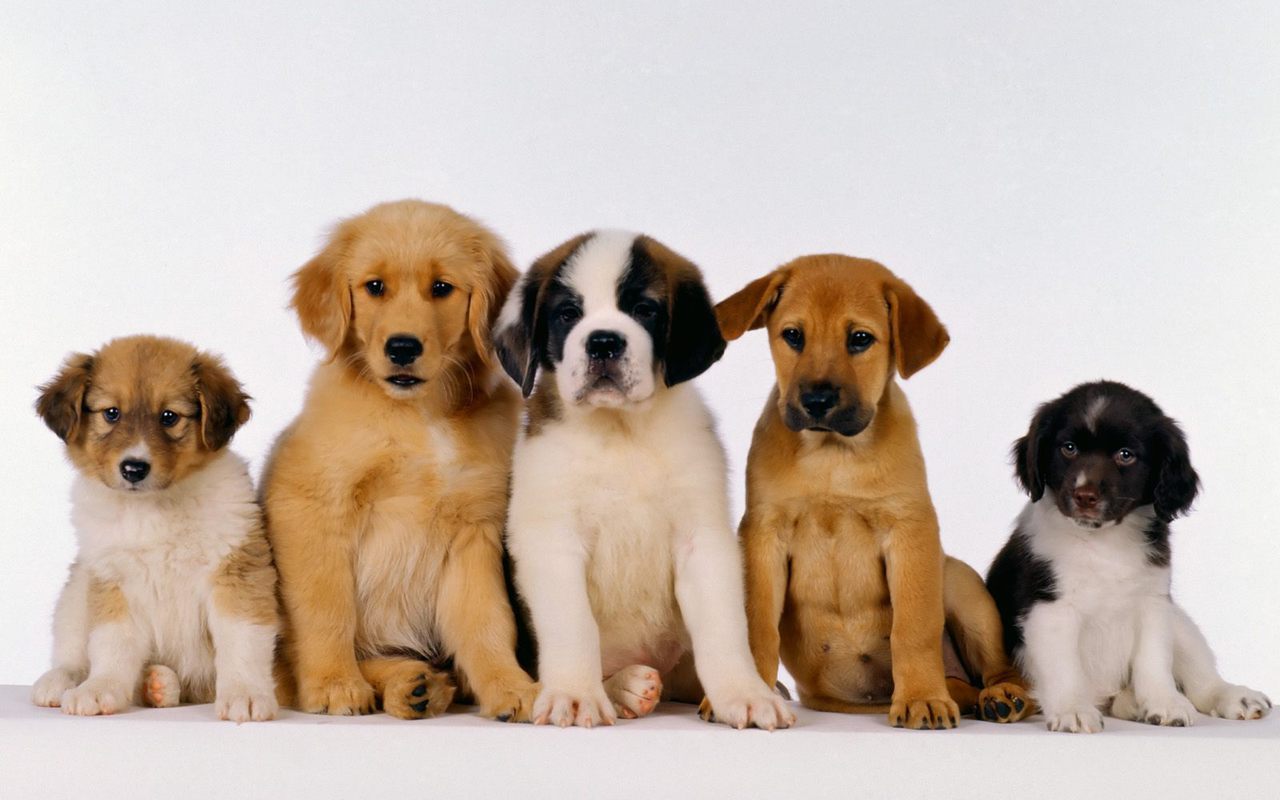
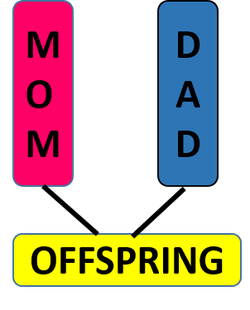
If two organisms reproduce sexually, then their offspring will exhibit a genetic makeup that is -
a)
identical to only one parent
b)
identical to all of its siblings
c)
a unique combination of traits
d)
the recessive traits of each parent
47.
Prokaryotes (bacteria) reproduce asexually via -
a)
spore formation
b)
bud creation
c)
vegetative propagation
d)
binary fission
48.
Provided is a table of organisms and some data on their characteristics. Based on the information in the table, which organism is likely to produce offspring with the greatest genetic diversity?
a)
Black mold
b)
Bell tree dahlia
c)
Spruce
d)
Hydra
49.
All of the offspring of an organism have the same genetic material, which is identical to the parent organism. From this, we can conclude that this organism -
a)
makes its own food
b)
is unicellular
c)
live in a marine habitat
d)
reproduces asexually
50.
When comparing the offspring of sexually and asexually reproducing organisms, we would expect the genetic material (DNA) of the sexually reproducing organism to -
a)
contain fewer mutations
b)
be lesser in quantity
c)
be simpler overall
d)
show more variation
51.
The genetic material of an offspring of sexually reproducing organisms is best described as–
a)
identical to that of the other offspring
b)
a copy of the genetic material of the mother
c)
a copy of the genetic material of the father
d)
genes from both parents, in unique combinations
52.
Fishermen work hard to catch and remove all the starfish that get into their “underwater farms” where they raise clams & oysters. In the past, they put the starfish into their boats, cut them up with knives, and then throw the pieces of starfish overboard. They thought this would kill the starfish. What they did not know was that each piece of starfish will grow into a whole new animal. What type of asexual reproduction is taking place?
a)
Regeneration
b)
Vegetative propagation
c)
Budding
d)
Fission
53.
This is when a new organism grows by cell division on the body of its parent. The bud, or offspring is identical to the parent. The bud, when large enough, can break off of the parent and live on its own.  Examples of this include yeast, hydra and potatoes.
 
a)
Regeneration
b)
Vegetative propagation
c)
Fission
d)
Budding
54.
The male typically deposits a spermatophore on the ground or in the water and the female picks this up.  The female salamander then lays its eggs on a stick or rock near water or on land.   There are several different species of salamanders with different colorful patterns.
Which type of reproduction is taking place?
a)
Asexual reproduction with uniform offspring
b)
Sexual reproduction with diverse offspring
c)
Asexual reproduction with diverse offspring
d)
Sexual reproduction with uniform offspring
55.

A mode of reproduction in which an organism arises from two organisms and inherits half of its DNA from each parent

a)

Sexual Reproduction

b)

Asexual Reproduction

c)

Cloning

d)

Fragmentation

56.

Requires two parents

a)

sexual

b)

asexual

57.

How many centimeters are in a meter?

a)

10

b)

100

c)

1,000

d)

10,000

58.

How many centimeters are in 5 meters?

a)

100

b)

500

c)

5,000

d)

1,000

59.

Which is longer: 500 centimeters or 6 meters?

a)

500 centimeters

b)

6 meters

60.

How many meters are in 1 kilometer?

a)

10

b)

100

c)

1,000

d)

10,000