
 Worksheets
Motion, Forces, and Newton’s Law
Total questions: 106
Worksheet time: 2hrs 37mins


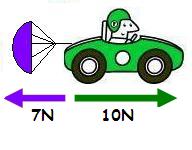
An unbalanced force is when objects move in one direction because the force is greater from that direction.
true
false
An automobile you are riding in suddenly stops, why does your body continue to go forward?
An object in motion stays in motion.
Gravity pulls your body towards the earth.
Friction makes your body slow down.
If you push a tennis ball, a bowling ball, and a basketball with the same amount of force, which one will go farthest?
bowling ball
tennis ball
basketball
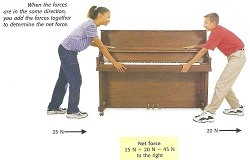
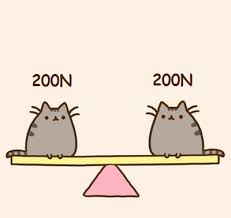
What is an example of a balanced force?
a person pushing a car across the road
two people pushing a box with the same force
a boat slowing down on a lake


The distance between a moving object's final position and its starting position.
speed
reference point
velocity
displacement
The process of changing position.
distance
motion
reference point
speed
The measure of how quickly the velocity of an object changes.
acceleration
speed
distance
reference point
How is velocity different from speed?
it includes the displacement of the object
it includes the direction of the object
it includes the distance of the object
it includes the acceleration of the object
When an object has a negative acceleration, it is:
speeding up
slowing down
constant speed
When an object has a positive acceleration, it is:
speeding up
slowing down
constant speed
What is the least distance between the starting and ending points?
motion
displacement
reference point
distance
The distance an object moves is
velocity
speed
displacement
acceleration
When you change position you are in motion.
true
false
The velocity of an object is its
speed and direction
displacement
distance
acceleration and distance

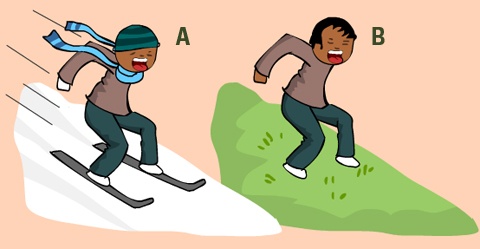
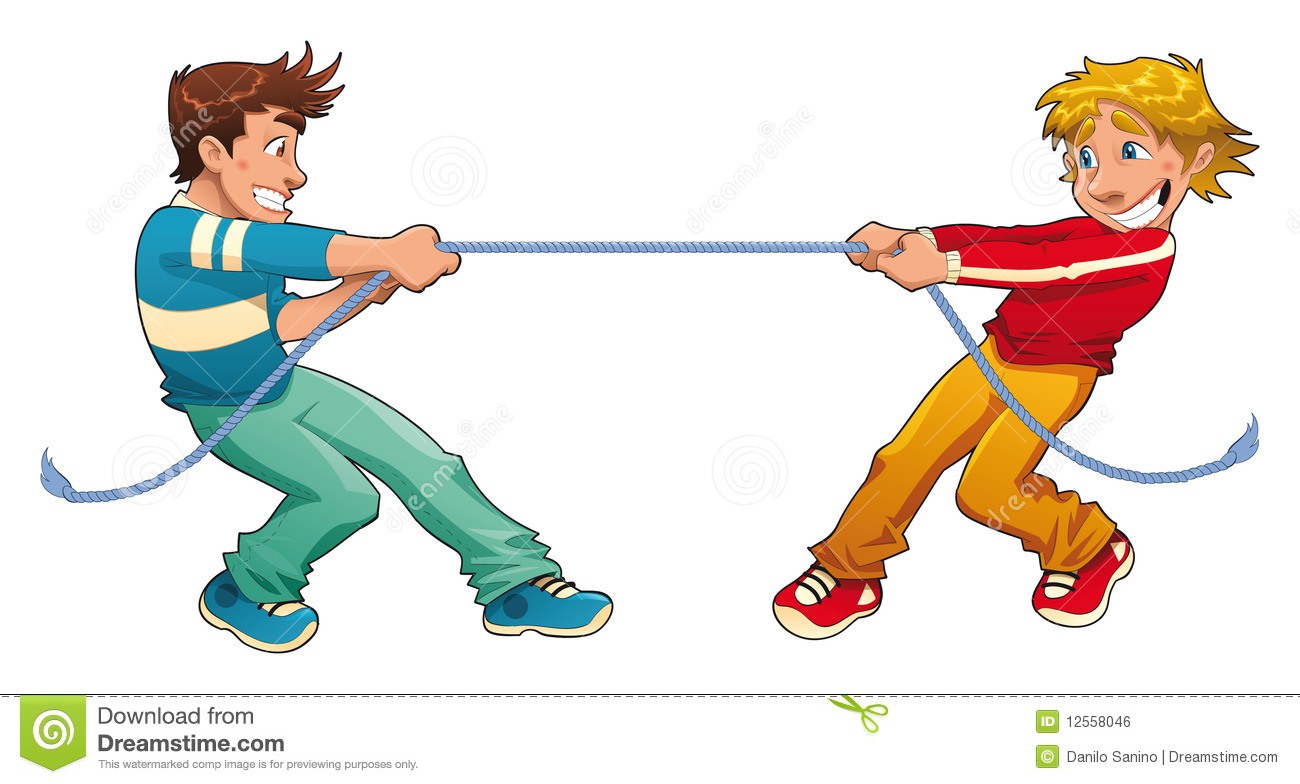
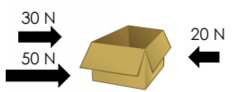

How much force is needed to accelerate a 3kg skateboard at 5m/s2.
8N
1.6N
0.6N
15N

The shortest path between an object's starting and ending point is its:
Distance
Disturbance
Disenfranchisement
Displacement
You calculate acceleration by ..?
subtracting starting speed from ending speed and dividing by time
subtracting ending speed from starting speed and dividing by time
subtracting distance by direction
Dividing initial speed by final speed
Which of these objects is NOT accelerating?
A plane slowing down to land
A rocket taking off into space
A hiker moving at the same speed for hours
A rollerblader heading downhill

If you traveled from Point A to Point B to Point C, what would your DISPLACEMENT be?
3 miles
4 miles
5 miles
7 miles
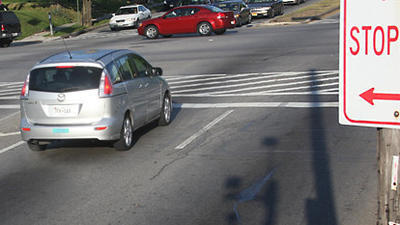
A stopped car begins moving and reaches a speed of 25m/s in 5 seconds. What is its acceleration?
+25m/s2
-0m/s2
+5m/s2
5m/s

What is Acceleration?
How long it takes me to win at fortnite
The direction of an object
A change in Motion
How fast something is moving
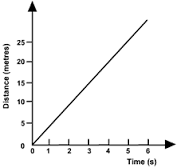
What is the line on this graph showing?
moving away from starting point at a constant speed
moving back towards the starting point at a constant speed
acceleration (getting faster)
deceleration (getting slower)


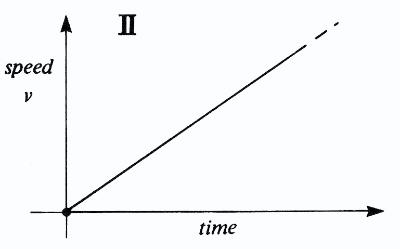
What is represented by this graph?
constant speed
not moving
speed increasing
speed increasing at a constant rate

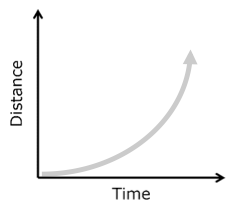
what is the motion described in the graph
all of above
constant speed
acceleration
constant position


On this position vs time graph, describe the motion of A.
constant positive velocity
constant negative velocity
positive acceleration
negative acceleration
velocity is zero

A contact force is from
objects physically touching
far apart objects
not touching object
always a pull
A non-contact force is between
two objects that aren't touching
two objects that are touching
the ground and wheels
you and me
Which factor is NOT a characteristic of forces?
size
speed
direction
Which factor is a contact force?
gravity
applied force
electrical force
If the net force acting on an object is 0 N, you can be sure that the forces acting on the object are...
balanced
unbalanced
acting in the same direction
If a car drives one full circle on a 5-km circular track, which combination describes its motion?
distance 5 km, displacement 5 km
distance 5 km, displacement 0 km
distance 0 km, displacement 5 km
distance 0 km, displacement 0 km
Which type of graph gives the most information about how the position of a moving object changes relative to a reference point?
speed-time
acceleration-time
displacement-time
Which two characteristics do all forces have?
motion and size
size and direction
direction and speed
balance and direction
The First Law of Motion is also called what?
Acceleration
Velocity
Inertia
Force
The Second Law of Motion is also written as what?
y = mx + b
f = ma
a^2 + b^2 = c^2
d / t = v
The Third Law of Motion states that for every action there is an opposite and equal what?
action
reaction
force
burst
what laws are Newton’s law select all the apply
Gravity exists
For every action there is an equal and opposite reaction.
Every object in a state of uniform motion will remain in that state of motion unless an external force acts on it.
All of the above
Force equals mass times acceleration
Things at rest stay at what?
motion
rest
home
school
Thing in motion stay in what?
water
motion
school
place


The First Law of Motion is also called what?
Acceleration
Velocity
Inertia
Force

An object in motion will stay in motion, or an object at rest will stay at rest unless acted on by an unbalanced force
Newton's 1st law
Newton's 2nd law
Newton's 3rd law
Law of conservation of momentum
Which factor is needed to describe velocity but is not needed to describe speed?
distance
direction
a unit of time
A force acting on an object can cause the....
object to accelerate
object to have inertia
object’s mass to change
What determines an object’s acceleration when a force acts on it?
the object’s velocity and the type of force
the object’s mass and the size of the force
the object’s speed and the distance of the force
Which term is NOT a part of a complete description of motion?
inertia
direction
displacement
reference point
An object’s velocity gives which two pieces of information?
its speed and its direction
its acceleration and its mass
its displacement and its speed
its distance and its displacement
1st
Law of Motion
2nd
Law of Motion
3rd
Law of Motion

1st
Law of Motion
2nd
Law of Motion
3rd
Law of Motion
1st
Law of Motion
2nd
Law of Motion
3rd
Law of Motion
1st
Law of Motion
2nd
Law of Motion
3rd
Law of Motion
1st
Law of Motion
2nd
Law of Motion
3rd
Law of Motion
1st
Law of Motion
2nd
Law of Motion
3rd
Law of Motion

