wayground logo

Free Printable Worksheets

Font size

S
M
L
XL
Worksheets

Science Review

Total questions: 105

Worksheet time: 1hrs 21mins

Name
Class
Date
1.
What is this?
a)
Balance
b)
Triple beam balance
c)
Mass
d)
Graduated cylinder
2.

What measurement are we finding when we use a digital scale?

a)

mass

b)

volume

c)

length

d)

weight

3.
What measurement are we finding when we use a graduated cylinder?
a)
mass
b)
volume
c)
length
d)
weight 
4.

What is the length of the straw?

a)

8 cm

b)

0 cm

c)

7 cm

d)

1 cm

5.
A possible explanation to a problem that has not yet been tested. 
a)
data
b)
theory
c)
hypothesis
d)
fact
6.
This variable in an experiment is the one being deliberately changed by the scientist. 
a)
dependent variable
b)
independent variable
c)
data
d)
control group
7.
A series of steps used by scientists to solve a problem or answer a question. 
a)
scientific method
b)
recipe
c)
data collection
d)
metric system
8.
Recording data on how yellow or orange leaves turn in October by describing them as "green" "slightly yellow" "very yellow" or "orange" is ____ data
a)
quantitative
b)
qualitative
9.

What property of water is responsible for the penny, in the Lincoln Lab, holding so much water?

a)

surface tension

b)

photosynthesis

c)

water cycle

d)

chemosynthesis

10.
How many grams are in a kilogram?
a)
100
b)
1000
c)
10
d)
0.001
11.
Grams are to mass, as meters are to what?
a)
density
b)
area
c)
volume
d)
length
12.
The summary at the end of an experiment that explains the results. 
a)
conclusion
b)
procedures
c)
materials
d)
responding variable
13.
Testing a hypothesis often involves a(n):
a)
answer
b)
experiment
c)
problem
d)
safety check
14.

What is the 1st step to the Scientific Method?

a)

hypothesis

b)

state the question

c)

repeat

d)

form a conclusion

15.
What measures the amount of matter in an object?
a)
Distance
b)
Mass
c)
Time
d)
Volume
16.
What is this tool called and what would it be used to measure?
a)
Meter stick and distance
b)
Meter stick and mass
c)
beaker and volume
d)
graduated cylinder and volume
17.
The base unit for length is the
a)
second
b)
gram
c)
meter
d)
liter
18.
The base unit for volume is the
a)
second
b)
gram
c)
meter
d)
liter
19.
The base unit for mass is the
a)
meter
b)
gram
c)
kilogram
d)
liter
20.
What subatomic particles would you find in the nucleus of an atom?
a)
Protons only
b)
Protons and Neutrons
c)
Neutrons and Electrons
d)
Protons and Electrons 
21.
What subatomic particle is electrically neutral (no charge)?
a)
Proton
b)
Ion
c)
Neutron
d)
Electron
22.
What subatomic particle(s) would be found orbiting the nucleus?
a)
Neutrons only
b)
Electrons only
c)
Protons and Neutrons
d)
Protons and Electrons
23.

The first electron shell can hold up to how many electrons?

a)

8

b)

4

c)

2

d)

5

24.
All matter is made of...
a)
energy 
b)
atoms 
c)
electrons 
d)
compounds 
25.
The positive particles of an atom are 
a)
electrons 
b)
positrons 
c)
neutrons 
d)
protons 
26.

The center of an atom where its neutrons and protons are is called the _____________.

a)

nucleus

b)

electron cloud

c)

core

d)

center

27.
What are the 3 subatomic particles that make-up the atom?
a)
protons, neutrons, and isotopes
b)
neutrons, isotopes, and electrons
c)
positives, negatives, and electrons
d)
protons, neutrons, and electrons
28.
The horizontal row on the periodic table is called a
a)
group
b)
family
c)
period
d)
atomic number
29.

A vertical column is called...

a)

group or family

b)

tower

c)

period

d)

crew

30.

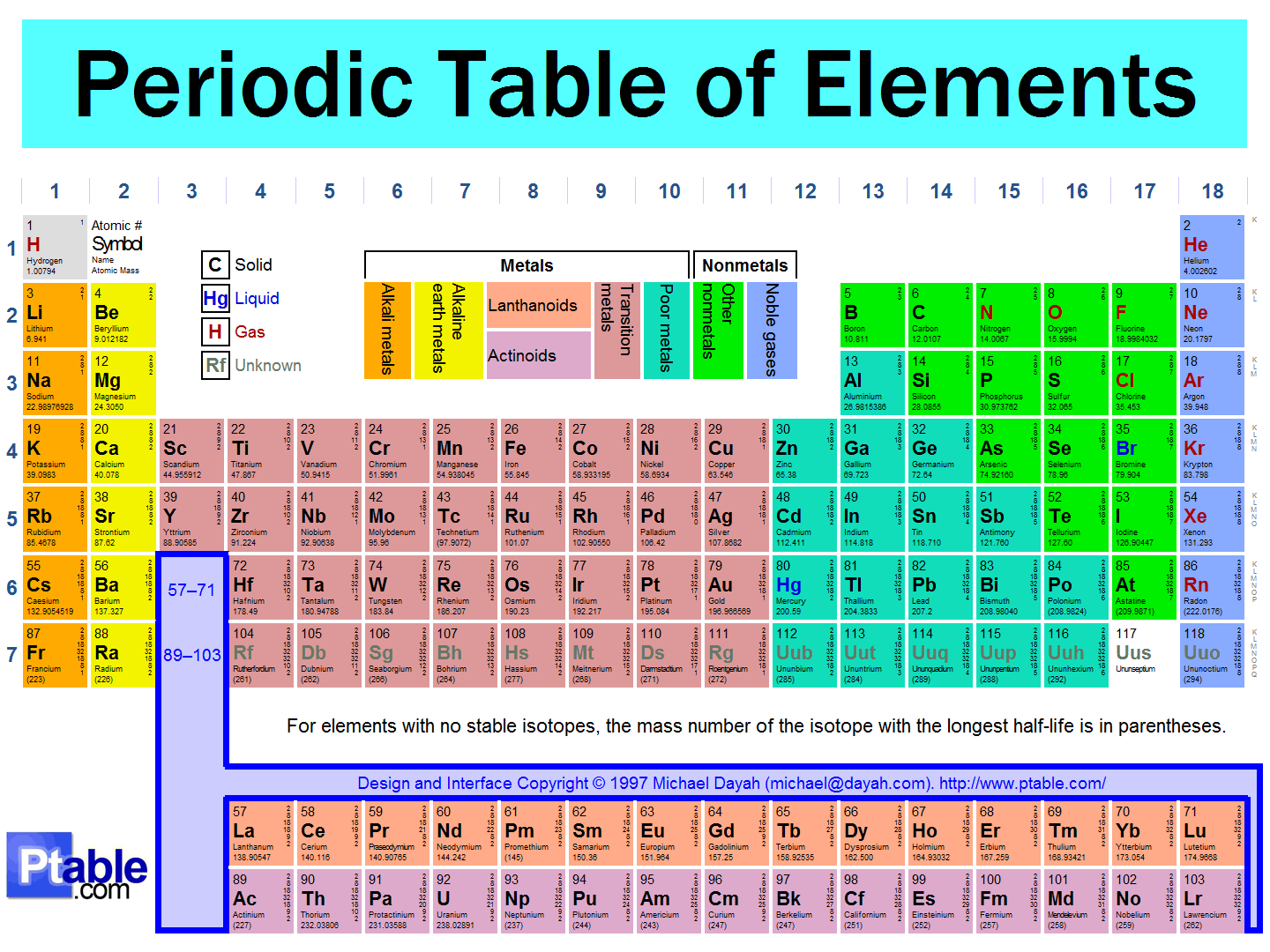
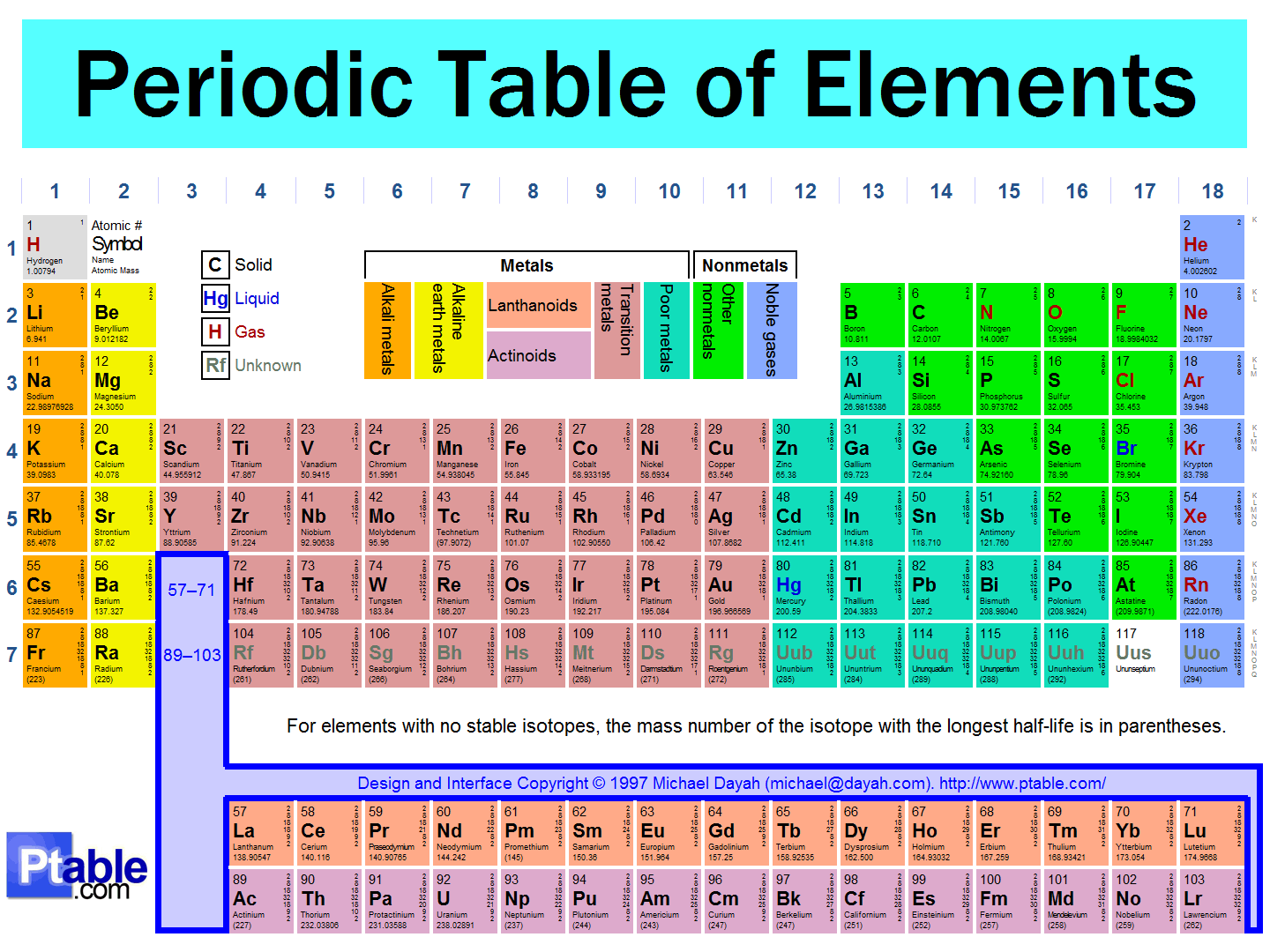
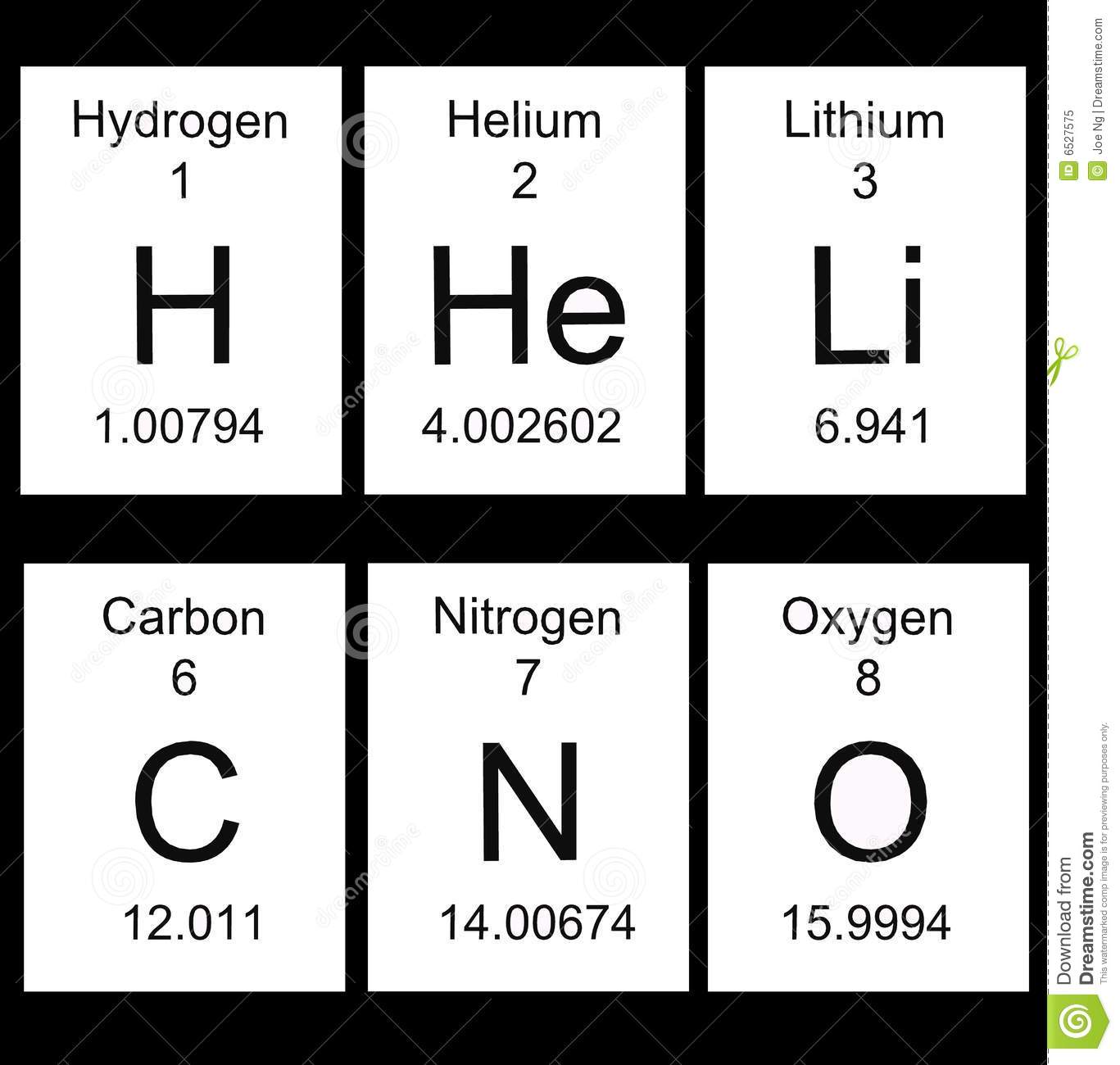
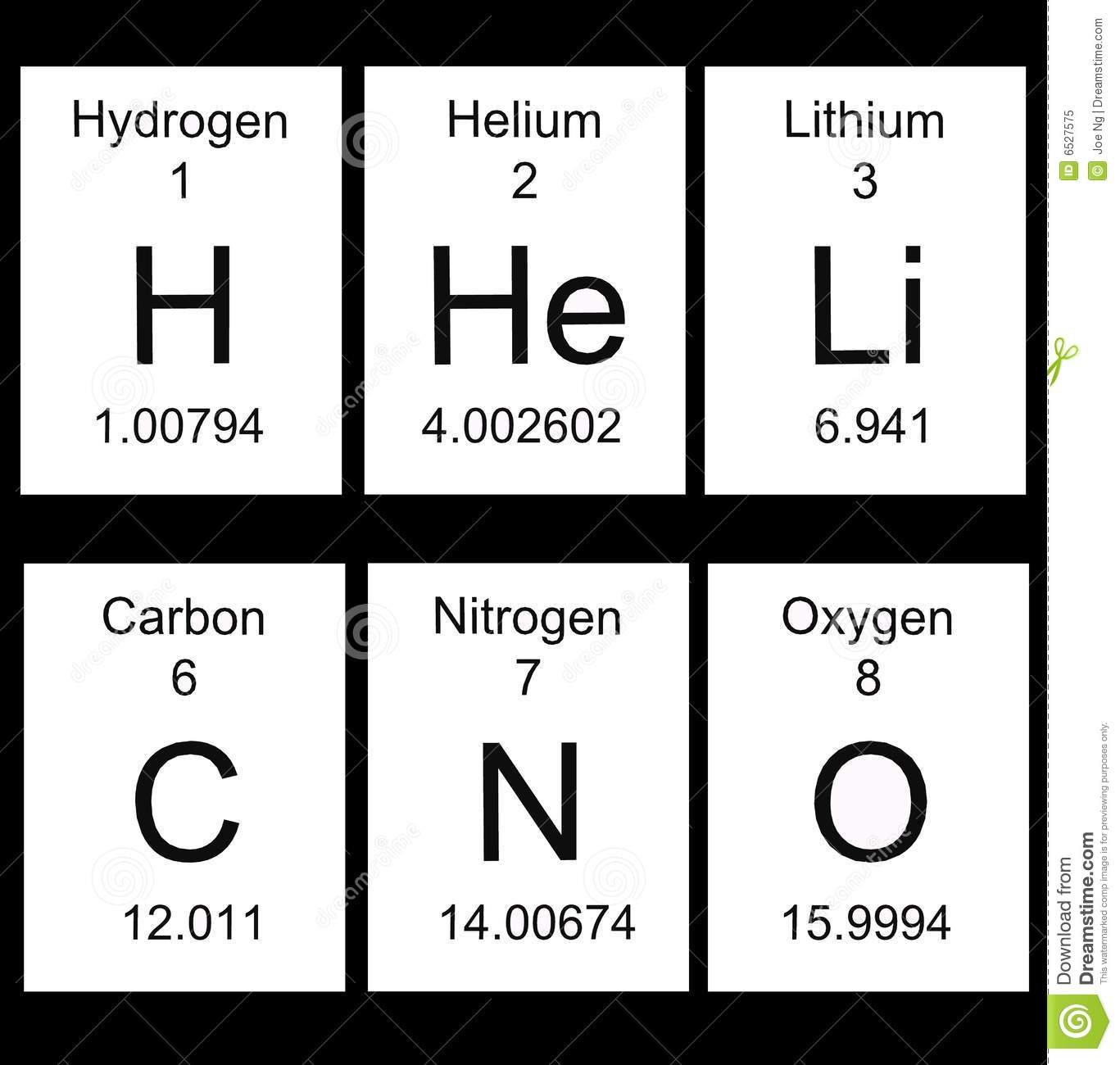
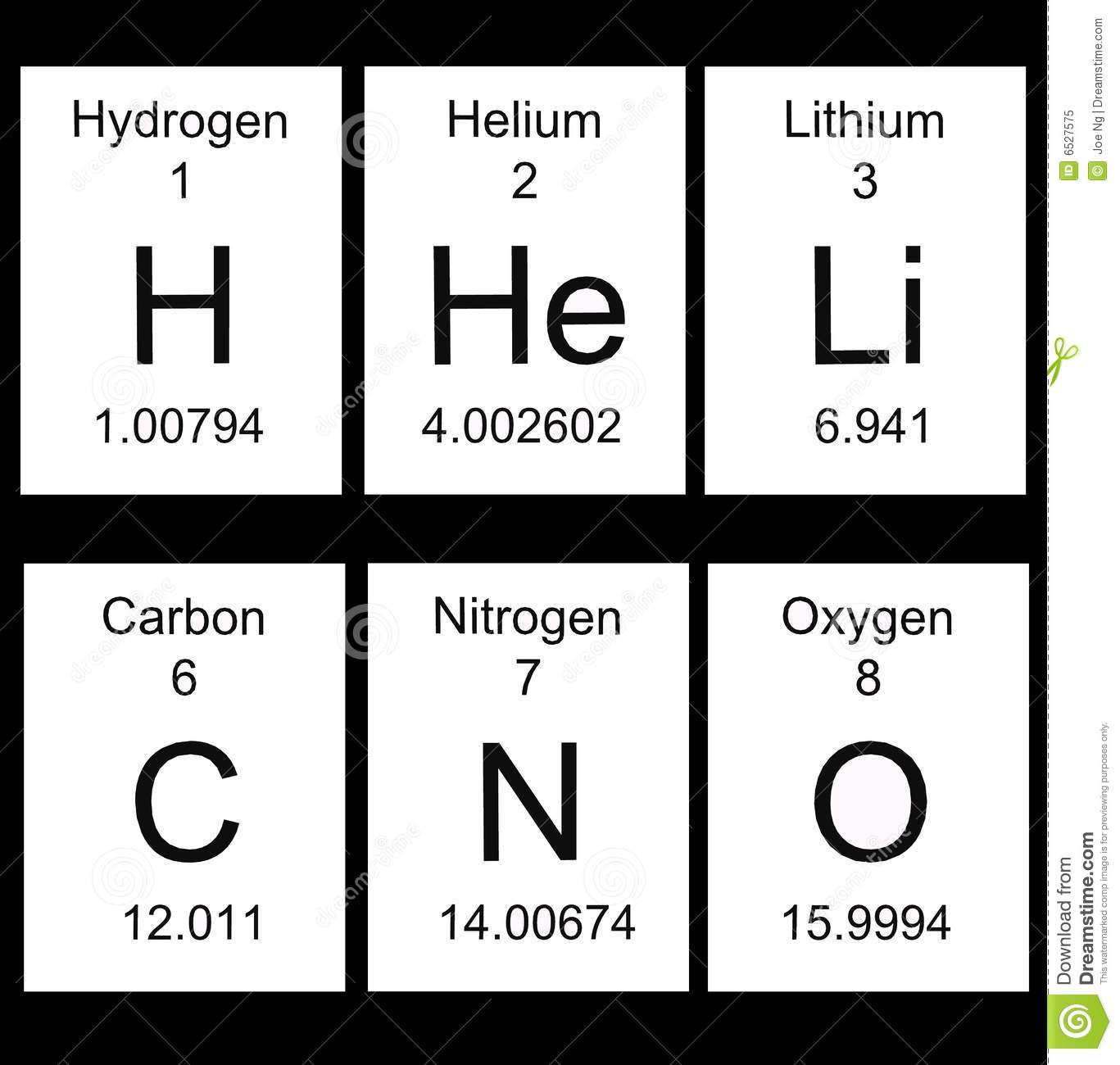
The number at the bottom of each square on the periodic table is the ...

a)

atomic number

b)

atomic mass

c)

chemical symbol

d)

element name

31.
The number at the top of each square on the periodic table is the ...
a)
atomic number
b)
atomic mass
c)
Chemical Symbol
d)
Element Name
32.
What is the chemical symbol for Lithium?
a)
H
b)
He
c)
Li
d)
N
33.
A proton is....
a)
A negatively charged subatomic particle
b)
A positively charged subatomic particle
c)
A neutrally charged subatomic particle
d)
The only subatomic particle located in the nucleus
34.
Energy due to motion is ____________ energy. 
a)
Potential 
b)
Energy
c)
Kinetic
d)
Friction
35.
The faster an object moves, the ________ kinetic energy it has. 
a)
more
b)
less
c)
none of the above
d)
all of the above 
36.
__________ is stored energy. 
a)
Potential
b)
Kinetic
c)
None of the above 
d)
All of the above 
37.
What kind of energy is in a rock at the edge of a cliff?
a)
Potential
b)
Kinetic
38.
What kind of energy is in a moving skateboard?
a)
Potential
b)
Kinetic
39.
What kind of energy is in a stretched rubber band?
a)
Potential
b)
Kinetic
40.
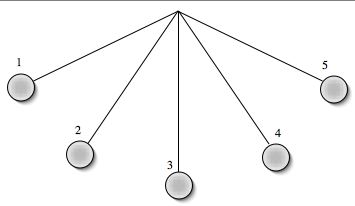
When a pendulum swings, at which point is kinetic energy highest?
a)
1
b)
2
c)
3
d)
4
41.

What type of energy is occuring when a basketball is being held in the hands of a player?

a)

Potential

b)

Kinetic

42.
The Law of Inertia
a)
Newton's
1st
Law of Motion
b)
Newton's
2nd
Law of Motion
c)
Newton's
3rd
Law of Motion
43.
F=ma
a)
Newton's
1st
Law of Motion
b)
Newton's
2nd
Law of Motion
c)
Newton's
3rd
Law of Motion
44.
For every action, there is an equal and opposite reaction.
a)
Newton's
1st
Law of Motion
b)
Newton's
2nd
Law of Motion
c)
Newton's
3rd
Law of Motion
45.
An automobile you are riding in suddenly stops, but you continue to go forward.
a)
Newton's
1st
Law of Motion
b)
Newton's
2nd
Law of Motion
c)
Newton's
3rd
Law of Motion
46.
A stationary bumper car is set in motion by the outside force of another bumper car colliding with it.
a)
Newton's
1st
Law of Motion
b)
Newton's
2nd
Law of Motion
c)
Newton's
3rd
Law of Motion
47.
The harder you hit a baseball, the faster it accelerates.
a)
Newton's
1st
Law of Motion
b)
Newton's
2nd
Law of Motion
c)
Newton's
3rd
Law of Motion
48.
You push against the floor when you walk and the floor pushes back on you.
a)
Newton's
1st
Law of Motion
b)
Newton's
2nd
Law of Motion
c)
Newton's
3rd
Law of Motion
49.
What is the thickest layer of the Earth?
a)
the crust
b)
the mantle
c)
the outer core
d)
the inner core
50.
The thinnest layer of the Earth is the ___________.
a)
mantle
b)
crust
c)
core
51.
What is the core made of?
a)
steel
b)
iron 
c)
aluminum
d)
iron and nickel
52.
What describes the outer core?
a)
solid
b)
liquid
c)
viscous
d)
gas
53.
Why is the inner core solid?
a)
its unknown
b)
what it's made of
c)
the pressure
d)
it is colder than the outer core
54.
What is the correct order (starting from the surface) of Earth's layers?
a)
crust, outer core, inner core, mantle
b)
mantle, outer core, inner core, crust
c)
crust, mantle, outer core, inner core
d)
outer core, inner core, crust, mantle
55.
What happens to temperature as we move from the crust to the inner core?
a)
Decreases
b)
Increases
c)
Nothing
56.

Which layer of Earth is made up of tectonic plates?

a)

outer core

b)

inner core

c)

mantle

d)

crust

57.

large, ancient landmass that was composed of all the continents joined together

a)

seafloor spreading

b)

continental drift

c)

Pangaea

d)

converge

58.

Who suggested the Continental Drift theory?

a)

Aldrin Walden

b)

Alfred Wegener

c)

George Williams

d)

Mrs. Toler

59.
What does the theory of continental drift state?
a)
The continents were once joined in a super-continent and have moved over time
b)
Continents are stationary and do not move
c)
The Earth is broken into lithospheric plates that move due to convection currents
d)
none of the above
60.
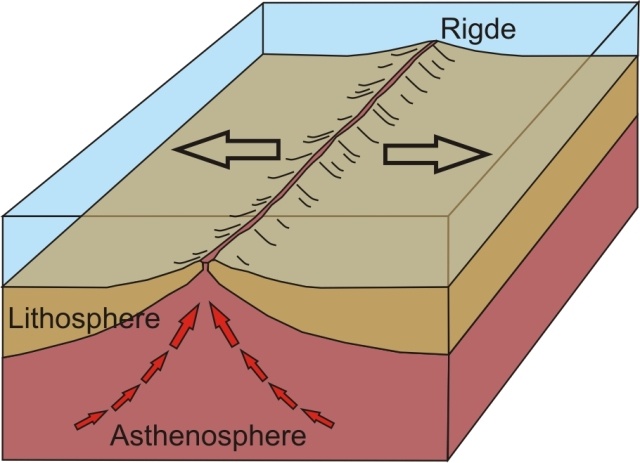
What kind of plate boundary is shown here?
a)
divergent
b)
convergent
c)
transform
d)
subducting
61.
What kind of plate boundary is shown here?
a)
divergent
b)
convergent
c)
transform
d)
submergent
62.
What kind of plate boundary is shown here?
a)
divergent
b)
convergent
c)
transform
d)
strike slip
63.
What geologic feature/event you be most likely to find at a transform boundary?
a)
Earthquakes
b)
Volcanoes
c)
Mountains
d)
Rift Valleys
64.
What geologic feature/event would you most likely to find at a divergent boundary between two pieces of continental crust?
a)
Mid-Ocean Ridge
b)
Mountain
c)
Rift Valley
d)
Island Arc
65.
What geologic feature/event would you most likely to find at a convergent boundary between two pieces of continental crust?
a)
Volcano
b)
Mountain
c)
Rift
d)
Island Arc
66.
What geologic feature/event would you most likely to find at a divergent boundary between two pieces of oceanic crust?
a)
Rift Valley
b)
Mid-Ocean Ridge
c)
Island Arc
d)
Flat land
67.
A subduction zone is formed...
a)
when one tectonic plate sinks below another
b)
at every type of convergent plate boundary
c)
at every type of divergent plate boundary
d)
at transform boundaries
68.
Refers to a mineral's resistance to being scratched. 
a)
color
b)
cleavage
c)
hardness
d)
breakage
69.
The way a surface reflects light.
a)
color
b)
luster
c)
streak
d)
density
70.
Color of a mineral in powdered form.
a)
hardness
b)
streak
c)
breakage
d)
density
71.
A shiny material is described as having a __________________ luster
a)
metallic
b)
nonmetallic
72.
A dull material is described as having a __________________ luster.
a)
metallic
b)
nonmetallic
73.
_________________ is the tendency of a mineral to break along a flat surface.
a)
Cleavage
b)
Fracture
74.
__________________ is the tendency of a mineral to break along curved or irregular surfaces.
a)
Cleavage
b)
Fracture
75.
Moh’s scale of hardness ranks minerals from 1 which is the _______________ to 10 which is the ________________.
a)
softest, hardest
b)
hardest, softest
76.
________________ is the softest mineral.
a)
Talc
b)
Diamond
77.
________________ is the hardest mineral.
a)
Talc
b)
Diamond
78.
Which mineral property is being tested in the diagram below?
a)
Streak
b)
Cleavage
c)
Breakage
d)
Luster
79.
What type of rock forms from molten magma under the surface?  
a)
Sedimentary
b)
Extrusive Igneous
c)
Intrusive Igneous
d)
Metamorphic
80.
What type of rock forms at the bottom of a water source such as a river and can contains smaller rocks itself?  
a)
Intrusive Igneous
b)
Extrusive Igneous
c)
Metamorphic
d)
Sedimentary
81.

What type of rock looks like a piece of glass due to rapid cooling by air or water after melting?

a)

Intrusive Igneous

b)

Extrusive Igneous

c)

Metamorphic

d)

Sedimentary

82.

What type of rock is this?

a)

Intrusive Igneous

b)

Extrusive Igneous

c)

Metamorphic

d)

Sedimentary

83.

What type of rock has striations or ribbons?

a)

Extrusive Igneous

b)

Intrusive Igneous

c)

Metamorphic

d)

Sedimentary

84.

What type of rock is this?

a)

Intrusive Igneous

b)

Extrusive Igneous

c)

Sedimentary

d)

Foliated Metamorphic

85.

Why is this rock extrusive igneous?

a)

glass appearance

b)

striations

c)

holes

d)

fossils

86.
Spinning of Earth on its axis.
a)
Rotation
b)
Revolution
87.
Movement of Earth around the sun.
a)
Rotation
b)
Revolution
88.
what causes day and night?
a)
rotation
b)
revolution
c)
solstice
d)
equinox
89.
Of the Earth, Sun, and Moon, which ones orbit another object?
a)
the Sun and the Earth
b)
the Sun and the Moon
c)
the Moon and the Sun
d)
the Moon and the Earth
90.
Which location on Earth receives the most direct sunlight?
a)
The deserts
b)
The South Pole
c)
The Equator
d)
The Western Hemisphere
91.
Which is NOT a waxing phase of the Moon?
a)
first quarter
b)
full moon
c)
third quarter
d)
waxing gibbous
92.
How long does the lunar cycle last?
a)
27.3 days
b)
29.5 days
c)
365.24 days
d)
June 20 through December 22
93.
An imaginary line on which the Earth rotates is its __________.
a)
equator
b)
solstice
c)
rotational axis
d)
ellipse
94.

The tilt of Earth's rotation axis, combined with Earth's revolution around the Sun causes the ___________.

a)

seasons

b)

highlands

c)

moon's reflection

d)

thermal energy

95.
When the Moon moves into Earth's shadow this is known as a ______________.
a)
lunar eclipse
b)
solar eclipse
c)
waning crescent 
d)
equinox
96.
A solstice occurs...
a)
June
b)
March
c)
September
d)
on Fridays
97.
When the Moon is between the Earth and Sun and can't be seen it is called a ________.
a)
new moon
b)
waxing crescent
c)
first quarter
d)
waning gibbous
98.

How long does it take the Earth to make one complete revolution around the Sun?

a)

365.25 days

b)

27.3 days

c)

one month

d)

from March to September

99.
Which organism make their own food through the process of photosynthesis? 
a)
decomposer
b)
consumer
c)
herbivore
d)
producer 
100.
Field mice eat corn. Which would most likely happen if the field mouse population grew?
a)
There would be more corn to feed the field mice.
b)
There would be less corn due to the mice eating it.
c)
The habitat would get overpopulated because the mice woudl eat too much.
101.
Which describes a decomposer?
a)
an organism that eats only plants
b)
an organism that makes its own food
c)
an organism that breaks down dead matter
d)
an organism that recieves energy from the sun
102.
If the population of prey increases, the population of predators will ________because of the availability of food.
a)
decrease
b)
stay the same
c)
increase
103.
What are interconnected food chains called?
a)
consumers
b)
predators
c)
food web
104.
A lion, captures and eats other animals. What is he considered? 
a)
prey
b)
predator
c)
producer 
d)
healthy 
105.

All the members of one kind of species that live within an area of an ecosystem

a)

population

b)

community

c)

niche